
Faith, Law, and LGBTQ Protection in School Anti‑Bullying Debates
How school anti-bullying policies became a flashpoint between LGBTQ protections, religious liberty concerns, and competing visions of student safety.
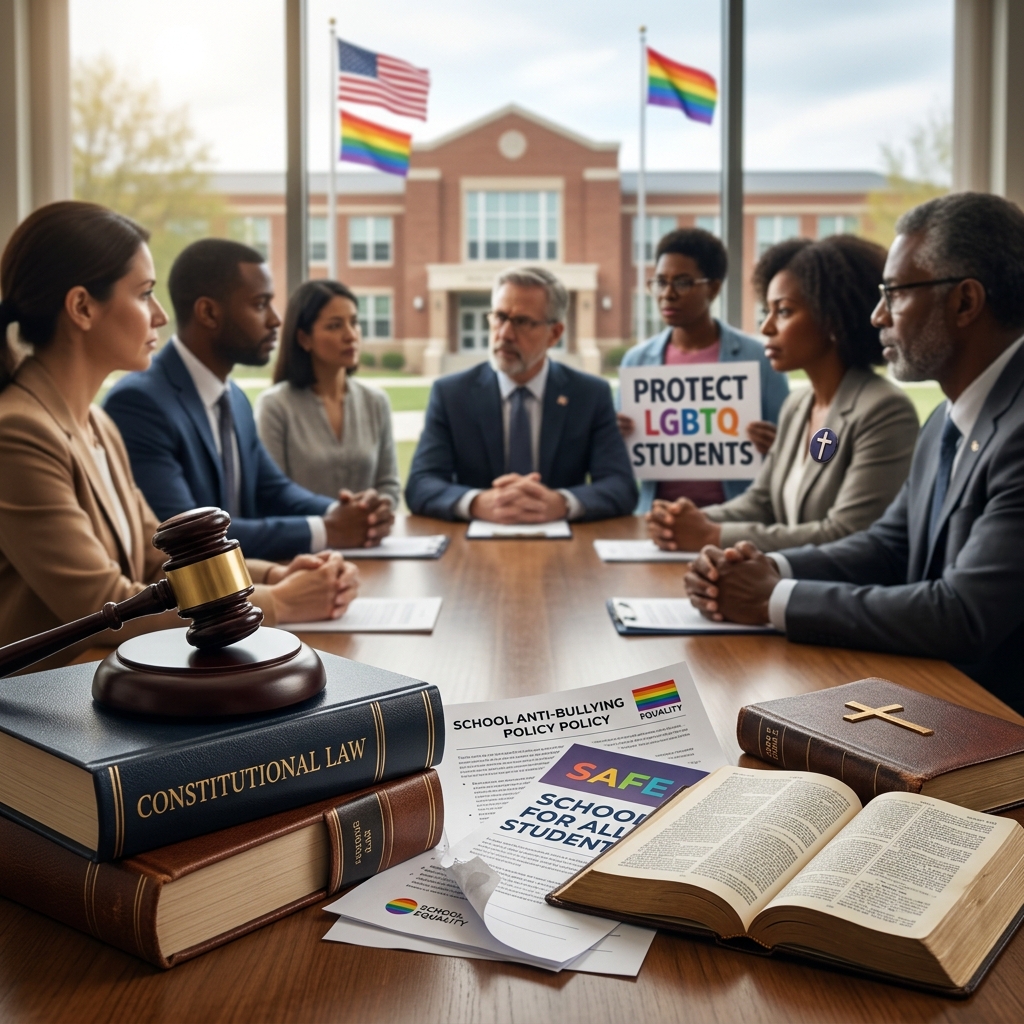
In many communities, laws designed to curb bullying in schools have become deeply contested political and religious issues. When anti-bullying policies explicitly mention sexual orientation or gender identity, some Christian advocacy groups argue that these measures are less about safety and more about advancing a “pro-gay” agenda. At the same time, civil rights organizations and public health researchers emphasize that LGBTQ students face disproportionate levels of harassment and need clear, enforceable protections.
This article explores how anti-bullying laws work, why they often include LGBTQ-specific language, and how religious liberty concerns intersect with student safety. It draws on legal guidance, advocacy documents, and research to provide a balanced, evidence-based overview of a debate that continues to shape classrooms, communities, and courts.
Why Anti-Bullying Laws Focus on LGBTQ Students
Bullying is generally defined as repeated, unwanted, aggressive behavior that involves a real or perceived power imbalance. For LGBTQ students, bullying can take the form of homophobic slurs, threats, social exclusion, physical violence, or online harassment. Research and federal guidance highlight several patterns:
- Higher risk of victimization: Studies find that LGBTQ youth are bullied at higher rates than their non-LGBTQ peers, including verbal harassment, physical assaults, and cyberbullying.
- Serious health impacts: Victimized LGBTQ youth show elevated risks of depression, anxiety, substance use, school avoidance, and suicidal ideation compared to peers.
- School climate effects: A hostile school environment can reduce attendance, weaken academic performance, and disconnect students from supportive adults.
Because of these disparities, many policy proposals and local school rules explicitly name sexual orientation and gender identity among protected characteristics, alongside race, disability, religion, and sex. Advocates argue that naming these categories signals to staff and students that harassment based on LGBTQ status is recognized as serious misconduct, not just “teasing” or interpersonal conflict.
Legal Foundations of LGBTQ-Inclusive School Protections
Although federal law does not contain a single, comprehensive anti-bullying statute, several legal frameworks shape schools’ responsibilities toward LGBTQ youth.
Existing Federal Obligations
- Equal protection and due process: Under the U.S. Constitution, public schools must respond to bullying and harassment in a way that does not target or neglect students because of their identity.
- Title IX and sex-based harassment: Federal civil rights guidance explains that harassment based on gender nonconformity or perceived sexual orientation may constitute sex-based harassment, triggering schools’ duties under Title IX to address hostile environments.
- Civil rights enforcement: The U.S. Department of Education’s Office for Civil Rights has issued guidance that failure to address serious bullying and harassment can lead to investigations and potential loss of federal funding.
These frameworks do not mandate any specific religious or moral viewpoint. Instead, they require schools to ensure that no student is forced to endure severe or pervasive harassment that interferes with their education.
State-Level Safe School and Anti-Bullying Laws
Because federal law is fragmented on bullying, states have developed their own statutes and model policies. Many state “safe school” or “anti-bullying” laws:
- Define bullying and cyberbullying, including repeated harassment through electronic communications.
- Require districts to adopt written policies, reporting procedures, and disciplinary frameworks.
- Encourage or require training for teachers, administrators, and staff on recognizing and responding to bullying.
- Explicitly list protected characteristics, including sexual orientation and gender identity, as categories that must not be targeted.
Some Christian organizations characterize these LGBTQ-inclusive lists as ideological endorsements, but lawmakers and civil rights groups frame them as practical tools to ensure clarity and consistency in enforcement.
Religious Liberty Concerns: What Faith Groups Argue
As anti-bullying policies have become more specific and LGBTQ-inclusive, certain religious advocacy organizations—particularly conservative Christian groups—have raised objections. Their concerns tend to fall into several categories:
- Compelled speech worries: Some argue that policies requiring staff to use particular pronouns or avoid negative moral comments about same-sex relationships could infringe on religiously motivated speech.
- Fear of viewpoint discrimination: Opponents worry that students with traditional religious beliefs about sexuality could be punished for expressing those views, even in non-harassing ways.
- Suspicion of “hidden agendas”: Policies referencing sexual orientation and gender identity are sometimes framed as “pro-gay” initiatives designed to normalize or promote LGBTQ identities in schools.
Where policy language is broad or poorly drafted, these conflicts can become sharper. However, legal standards generally distinguish between protected religious expression and unprotected harassment or threats. Courts and civil rights agencies look at the context, severity, and impact of speech and conduct, not merely the religious or moral content.
How Advocates Respond: Safety, Rights, and Evidence
Civil rights advocates, medical organizations, and many faith communities respond to “pro-gay” critiques by emphasizing evidence of harm and legal obligations.
- Focus on risk and vulnerability: Research consistently shows LGBTQ youth are at greater risk of bullying and negative health outcomes, providing a strong policy rationale for explicit protections.
- Distinction between belief and conduct: Advocates typically acknowledge that students and staff may hold traditional religious views, but insist that no belief justifies harassment, threats, or persistent targeting of a student based on identity.
- Neutral application: Anti-bullying laws apply to all students and all protected characteristics. A Christian student bullied for their faith is entitled to the same protection as a gay student bullied for their orientation.
- Constitutional balancing: Free speech and free exercise rights coexist with equal protection and the duty to provide a safe learning environment. Policies must be carefully drafted to respect this balance.
In practice, many districts seek to craft language that protects vulnerable students while explicitly preserving room for respectful, non-harassing religious expression.
What Effective LGBTQ-Inclusive Anti-Bullying Policies Usually Include
Beyond the rhetorical battles, researchers and advocacy organizations have identified common elements of effective school anti-bullying policies.
| Policy Element | Purpose | LGBTQ-Relevant Considerations |
|---|---|---|
| Clear definition of bullying and harassment | Helps staff and students distinguish bullying from normal conflict. | Includes examples of homophobic or transphobic slurs, outing, and gender-based taunting. |
| Protected characteristics list | Signals that harassment based on identity is unacceptable. | Names sexual orientation and gender identity alongside other traits. |
| Reporting and response procedures | Provides multiple ways to report, with timelines for investigation. | Allows confidential reporting for students afraid of being outed. |
| Staff training | Ensures educators can recognize, intervene, and document incidents. | Covers LGBTQ terminology, bias awareness, and bystander intervention. |
| Support resources | Connects bullied students to counseling and peer support. | Encourages inclusive clubs (such as gay-straight alliances) and affirming mental health services. |
Christian Perspectives That Support Anti-Bullying Laws
Christian responses to anti-bullying laws are not monolithic. While some organizations oppose LGBTQ-inclusive language, others support it or work to adapt it within a faith framework. Frequently cited principles include:
- Protection of the vulnerable: Many Christian leaders emphasize a moral obligation to protect children from abuse, humiliation, and violence, regardless of their identity.
- Distinguishing pastoral care from policy: Churches may maintain traditional theological positions on sexuality while supporting school policies that prevent harm to LGBTQ students.
- Respectful dialogue: Some Christian educators advocate for guidelines that encourage respectful expression of beliefs while prohibiting personal attacks or degrading language.
These viewpoints highlight potential common ground: that schools should be places where all students are safe from bullying, even amid deep disagreements about sexuality and gender.
Student Rights: Both LGBTQ Youth and Religious Students
Understanding how rights work in practice can reduce fear and confusion. Advocacy guides explain that both LGBTQ students and students of faith have enforceable protections.
Rights of LGBTQ Students Experiencing Bullying
- Right to a safe environment: Public schools must address serious bullying and harassment that interferes with a student’s ability to learn, including abuse targeting sexual orientation or gender identity.
- Right to report: LGBTQ students can report bullying to teachers, administrators, or designated staff, and may ask for confidentiality to avoid being outed.
- Right to equal treatment: Schools may not ignore harassment simply because the victim is LGBTQ; they must respond as they would in other cases.
- Right to support: Many districts provide counseling, coordination with community resources, and the option to form student-led clubs that promote safety and inclusion.
Rights of Religious Students and Staff
- Free expression of beliefs: Students generally may express religious views on sexuality in non-disruptive, non-harassing ways, especially in voluntary discussions or student-led groups.
- Protection from religious bullying: Harassment targeting a student’s faith is also prohibited under most anti-bullying policies.
- Limits on speech: When expression crosses into targeted, repeated, or threatening behavior toward an individual student, schools may intervene even if the speaker claims religious motivation.
In short, rights do not give anyone a license to bully. They protect both conscience and safety, requiring thoughtful application in specific situations.
Policy Design: Avoiding False Choices Between Safety and Faith
Debates framed as “pro-gay vs. Christian” often present a false choice: that schools must either fully align with LGBTQ advocacy or side with religious opponents. In reality, policy design allows for nuanced approaches:
- Precise language: Clearly defining bullying and harassment helps distinguish non-harassing expression of beliefs from conduct that creates a hostile environment.
- Viewpoint neutrality: Policies can prohibit abusive conduct based on any identifiable characteristic without endorsing or condemning particular moral viewpoints.
- Stakeholder engagement: Drafting and revising policies with input from parents, students, educators, faith leaders, and LGBTQ advocates can surface legitimate concerns and potential solutions.
- Training that addresses religion: Staff development can include scenarios involving religious speech, helping educators respond in ways consistent with constitutional protections.
Where this kind of careful design and dialogue occurs, conflicts over “pro-gay” labeling may soften, and attention can return to the shared interest in preventing harm.
Frequently Asked Questions (FAQ)
Are LGBTQ-inclusive anti-bullying policies legally required?
Explicit mention of sexual orientation and gender identity is not uniformly required by federal law, but many states and districts choose to include these categories because LGBTQ students face disproportionate bullying and legal guidance recognizes that harassment based on gender nonconformity may implicate sex discrimination protections.
Can a student be punished just for saying they believe same-sex relationships are wrong?
Generally, public schools may not punish students solely for holding or respectfully expressing religious beliefs. Discipline is more likely when speech becomes targeted, repetitive, or threatening harassment toward specific individuals, interfering with their education.
Do anti-bullying laws promote a particular moral view of sexuality?
Anti-bullying laws are written to prevent harm, not to mandate a religious or moral position. They seek to ensure students are not bullied because of who they are, while leaving room for families and communities to teach their beliefs about sexuality and gender.
How can schools protect LGBTQ students without infringing religious liberty?
Schools can adopt policies that clearly prohibit harassment based on identity, provide training and support services, and affirm students’ rights to express religious views respectfully. Careful drafting and ongoing training help maintain this balance.
Where can bullied LGBTQ students learn more about their rights?
Civil rights organizations, university-based advocacy centers, and federal resources provide guides explaining how to report bullying, what schools are required to do, and options if a school fails to act.
References
- Safe School Laws — Movement Advancement Project. 2024-01-01. https://mapresearch.org/equality-map/safe-school-laws/
- Lawmakers, Advocates, and Families of Victims of Bullying Urge Action for Safe Schools — National Center for Lesbian Rights. 2010-05-20. https://www.nclrights.org/about-us/press-release/lawmakers-advocates-and-families-of-victims-of-bullying-urge-action-for-safe-schools/
- Harassment and Bullying — American Civil Liberties Union. 2013-09-01. https://www.aclu.org/issues/lgbtq-rights/lgbtq-youth/harassment-and-bullying
- Bullying of LGBTQ+ Children and Adolescents in Schools — Ribeiro et al., Children (Basel). 2023-05-20. https://pmc.ncbi.nlm.nih.gov/articles/PMC11543415/
- Bullying of LGBT Youth — StopBullying.gov / U.S. Department of Health and Human Services. 2017-09-01. https://www.stopbullying.gov/sites/default/files/2017-09/lgbtyouthtipsheet.pdf
- Know Your Rights: Guide for LGBT Youth Experiencing Bullying — Georgia State University School Climate Resource Center. 2026-01-15. https://schoolclimate.gsu.edu/2026/01/15/know-your-rights-a-guide-for-lgbt-youth-experiencing-bullying/
Similar Articles








Read full bio of medha deb


