
Expunging a DUI: A Practical Guide to Clearing Your Record
Understand when a DUI can be expunged, who qualifies, and how the process works so you can move forward with a cleaner record.
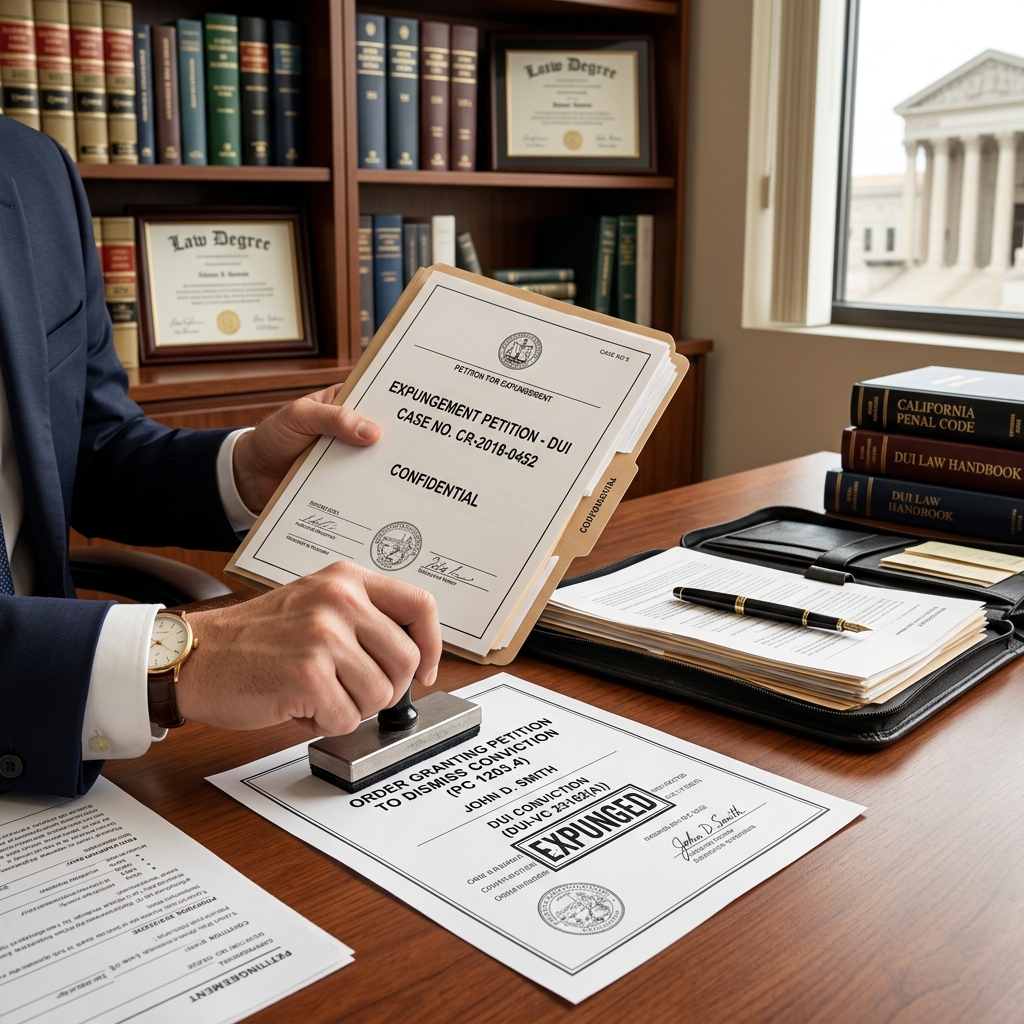
Driving under the influence (DUI) is a serious criminal offense that can affect employment, housing, professional licensing, insurance rates, and overall peace of mind long after the case is resolved. Many people eventually ask the same question: Can I expunge my DUI conviction and start over? This guide explains what expungement is, how it works for DUI cases, and what realistic options may be available depending on your circumstances and the law in your state.
What DUI Expungement Really Means
Expungement is a legal process that removes or seals certain criminal records so that they are no longer available to the general public. When a court grants expungement, the law often treats the arrest or conviction as though it “never happened” for most background checks. However, expungement has limits, especially in DUI cases.
- Criminal record impact: Expungement typically clears the DUI from your public criminal history used by employers and landlords.
- Driving record impact: Your motor vehicle record may still show the DUI for purposes of license suspensions, insurance ratings, and repeat-offender laws.
- Court and law enforcement access: Courts and some agencies may still access expunged records for sentencing in future cases or security-related checks.
Because of these limits, expungement should be understood as a powerful tool to reduce the everyday impact of a DUI, not a complete erasure of all legal consequences.
Key Benefits of Expunging a DUI
For people who qualify, expungement can significantly improve daily life and long-term opportunities.
- Employment opportunities: Many employers rely on criminal background checks. If the DUI is expunged, it often will not appear, reducing barriers to hiring.
- Housing applications: Landlords frequently review criminal histories. Expungement can make it easier to secure rental housing.
- Professional licensing: Some licensing boards consider expunged records differently from convictions, potentially leading to better outcomes.
- Social stigma: Removing a conviction from public records can reduce the personal and reputational impact of a past mistake.
Given these benefits, it is important to understand who qualifies and why DUI expungement is not available in every jurisdiction.
Not All States Allow DUI Expungement
Expungement is controlled by state law, and the rules vary dramatically across the United States. Some states offer broad expungement options for first-time offenders; others prohibit expungement of any impaired driving conviction.
Examples of State Differences
| State | DUI Expungement Policy (Illustrative) | Notes |
|---|---|---|
| South Carolina | DUI conviction itself cannot be expunged. | Expungement generally available only if charges are dismissed, reduced to certain lesser offenses, or result in not guilty verdict. |
| North Carolina | DWI (their term for DUI) conviction is not eligible for expunction. | State law explicitly bars expunction of DWI convictions filed or pending after statutory changes; dismissed or acquitted cases may be expunged. |
| California | True expungement does not exist; however, there are procedures to clean or modify records after successful completion of sentencing. | California offers record “clean-up” mechanisms rather than classic expungement. |
| Other states | Some allow expungement of certain DUI convictions after a waiting period. | Eligibility often depends on prior record, offense severity, and completion of probation. |
Because of these differences, a person with a DUI in one state may have expungement options that simply do not exist in another. The first step in any expungement analysis is to identify the rules in the state where the case occurred.
Typical Eligibility Requirements for DUI Expungement
Where expungement is possible, courts usually impose strict criteria. While the details differ by jurisdiction, several common requirements appear across state laws.
Common Eligibility Factors
- Completion of probation: Many states require that you successfully complete all terms of probation, including treatment programs, community service, and fines.
- No new criminal charges: You typically must have no pending criminal cases at the time you file and no new convictions during a specified waiting period.
- Waiting period: States often require a minimum time between conviction or completion of sentence and filing for expungement; one year or more is common, but some misdemeanors or felonies may require five to ten years.
- Type of offense: Serious, repeat, or injury-related DUI offenses may be excluded from expungement, even where first-time non-injury DUIs are eligible.
- Prior record: Expungement statutes frequently limit relief to people with few or no prior criminal convictions.
It is also important to note that in states like South Carolina and North Carolina, the statutory scheme focuses on expungement of non-DUI offenses or dismissed cases rather than the DUI conviction itself.
Situations Where Expungement Is More Likely
Even in jurisdictions that restrict or prohibit expungement of DUI convictions, certain scenarios may open the door to clearing your record.
- Dismissed charges: If the prosecutor drops your case or the court dismisses it, you may be able to expunge the arrest record so it does not appear on background checks.
- Not guilty verdict: A full acquittal at trial often entitles you to expungement of the arrest or charge, even in states that bar expungement of convictions.
- Reduced charges: Negotiated pleas that reduce DUI to a different offense (for example, certain non-impaired traffic misdemeanors) may allow expungement of the lesser charge, depending on state law.
- Non-conviction records: Some statutes specifically target records of arrests or charges that did not result in conviction, making relief more accessible in those situations.
Because these pathways depend heavily on early case outcomes, many people consider expungement implications when deciding whether to challenge a DUI charge or negotiate a plea.
The Legal Process: How a DUI Expungement Case Moves Through Court
Where expungement is legally available and you meet the eligibility criteria, the process generally follows several formal steps. While the names of documents differ among states, the overall structure is similar.
Step-by-Step Overview
- Confirm eligibility under state law.
Study the relevant statutes or consult a qualified attorney to determine whether DUI expungement (or expunction of non-conviction records) is permitted in your state and for your offense level. - Gather documentation.
Collect certified copies of the judgment, proof of probation completion, treatment or education certificates, and evidence of restitution or fine payment. - Prepare and file a petition.
Most jurisdictions require a formal petition or motion, often accompanied by an affidavit explaining why expungement should be granted. Filing fees can range from modest to several hundred dollars, depending on the court. - Notify the prosecutor.
Court rules often require that the prosecutor’s office be served with your petition, giving them a chance to support, oppose, or remain neutral. - Prosecutor’s review and response.
The prosecuting attorney may review your history, circumstances of the offense, and any compliance issues with probation before filing a response. - Court hearing.
Many jurisdictions schedule a hearing where a judge considers evidence and arguments. You or your attorney may be asked to explain why expungement is appropriate, address any objections, and demonstrate rehabilitation. - Judicial decision.
The judge decides whether to grant or deny expungement based on statutory criteria, public safety considerations, severity of the DUI, and your overall record. - Record update.
If expungement is granted, court clerks and law enforcement agencies update their files. Criminal records may change within days, while federal or statewide databases can take longer.
Processing times vary widely. Some expunction procedures take several months, and more complex cases or multi-conviction petitions may require close to a year before records fully reflect the outcome.
Limits of DUI Expungement You Should Understand
Even when the court grants expungement, several important limits remain, especially for drunk driving offenses.
- Repeat-offender laws: Expunged DUIs may or may not be counted for future sentencing purposes, depending on your state. In some jurisdictions, the expunged conviction can still enhance penalties for another DUI.
- Driving record: State motor vehicle agencies may retain the DUI on your driving history for a look-back period that affects license suspensions or habitual offender classifications.
- Government and security checks: Certain agencies, especially in law enforcement, immigration, or national security, may have statutory authority to view expunged records.
- Private reporting services: Some commercial background-check companies may take time to update databases, meaning prior records could appear until their systems refresh.
These limitations make it critical to clarify with an attorney or court official exactly how expungement will affect your record in your state and for the purposes that matter most to you.
Alternative Strategies When DUI Expungement Is Not Available
If your state law does not permit expungement of DUI convictions, you may still have options to reduce the long-term impact of your case.
- Focus on avoiding conviction: In states like South Carolina and North Carolina, fighting for dismissal or acquittal is key because non-conviction records may be eligible for expungement even when convictions are barred.
- Pursue reduced or alternative charges: Negotiating a plea to a different traffic or criminal offense that is expungeable after a waiting period can provide a path to clearing your record later.
- Seek record “clean-up” mechanisms: Some states, including California, provide options to modify or clean records rather than fully expunge them, such as setting aside certain convictions after completing probation.
- Consider pardons or other relief: Gubernatorial or board-issued pardons may restore civil rights and mitigate stigma, although they usually do not erase the conviction from the record.
While these alternatives may be more limited than full expungement, they can still improve employment prospects and reduce collateral consequences over time.
Practical Checklist Before You File for Expungement
To prepare effectively, it helps to work through a short checklist so that your petition is complete and persuasive.
- Confirm whether your state allows expungement of DUI convictions or only non-conviction records.
- Verify that all probation terms, fines, and treatment requirements have been satisfied.
- Obtain certified court documents, including the judgment, dismissal order, or proof of acquittal.
- Gather evidence of rehabilitation, such as employment history, education, volunteer work, and letters of support.
- Check for any pending criminal charges that could block eligibility.
- Consult an attorney or legal aid organization familiar with expunction statutes in your state.
Taking these steps beforehand reduces delays and strengthens your case when it reaches the judge and prosecutor.
FAQs About DUI Expungement
Does expungement erase my DUI from my driving record?
No. Even where criminal expungement is granted, your driving record often continues to show the DUI for administrative and insurance purposes. Courts and vehicle agencies treat criminal and driving records separately.
Can a first-time DUI be expunged?
In some states, first-time DUI offenders who complete probation and meet other criteria may qualify for expungement or similar relief. In other states, any DUI conviction is categorically ineligible. You must check your state’s exact rules.
How long do I have to wait before applying?
Wait times vary. Some jurisdictions allow petitions after roughly one year from conviction or completion of probation, while others require several years or longer, especially for felony-level offenses.
Will employers still see my DUI after expungement?
Generally, an expunged DUI will not appear on standard private background checks used by most employers. However, certain government agencies or regulated industries may have access to sealed records.
Is a lawyer required to file for expungement?
Some people file expungement petitions on their own, using court-provided forms or self-help resources. However, because statutes are technical and eligibility rules can be complex, many applicants benefit from assistance from an attorney or legal aid program.
What if my DUI case was dismissed or I was found not guilty?
Dismissed and acquitted cases often have stronger expungement rights than convictions, even in states that bar expungement of DUI convictions themselves. In those situations, filing for expungement can be an effective way to ensure the arrest does not continue to appear on background checks.
Using Reliable Legal Help
DUI expungement law is technical, state-specific, and frequently amended through new legislation or court decisions. Because of this complexity, relying on outdated information or informal advice can lead to missed opportunities or unsuccessful petitions.
- Review current state statutes, court self-help materials, and official government resources.
- Consider contacting a criminal defense attorney with experience in expungement or expunction petitions.
- Where cost is an issue, explore legal aid organizations and public-interest law clinics that provide free or low-cost assistance.
With accurate information and careful planning, many people can significantly reduce the long-term impact of a DUI arrest or conviction, even in jurisdictions with limited expungement options.
References
- DUI Expungement Process, Eligibility, and Checklist — Recovered.org. 2023-08-01. https://recovered.org/drug-offense-resources/dui-expungement
- How to Clear Your Record of a DUI – DUI Expungement — Alcohol.org (American Addiction Centers). 2022-05-10. https://alcohol.org/dui/clear-your-record/
- Is Expungement Possible After a DUI? Understanding Your Options — Austin & McDaniel Law Firm. 2025-10-24. https://austinmcdaniellaw.com/2025/10/24/is-expungement-possible-after-a-dui-understanding-your-options/
- Can I Expunge a DWI From My Record in North Carolina? — Arnold & Smith PLLC. 2023-03-15. https://www.arnoldsmithlaw.com/can-i-expunge-a-dwi-from-my-record-in-north-carolina.html
- Can a DWI be expunged? Is a prior DWI conviction a bar to relief? — University of North Carolina School of Government. 2017-09-06. https://www.sog.unc.edu/resources/faqs/traffic-violations-and-driving-while-impaired-dwi-can-dwi-be-expunged-prior-dwi-conviction-bar
- Clean your record — California Courts Self-Help Guide. 2023-06-30. https://selfhelp.courts.ca.gov/clean-your-record
- Criminal Record Expunction — Legal Aid of North Carolina. 2022-04-01. https://legalaidnc.org/video/criminal-record-expunction/
Similar Articles








Read full bio of medha deb




