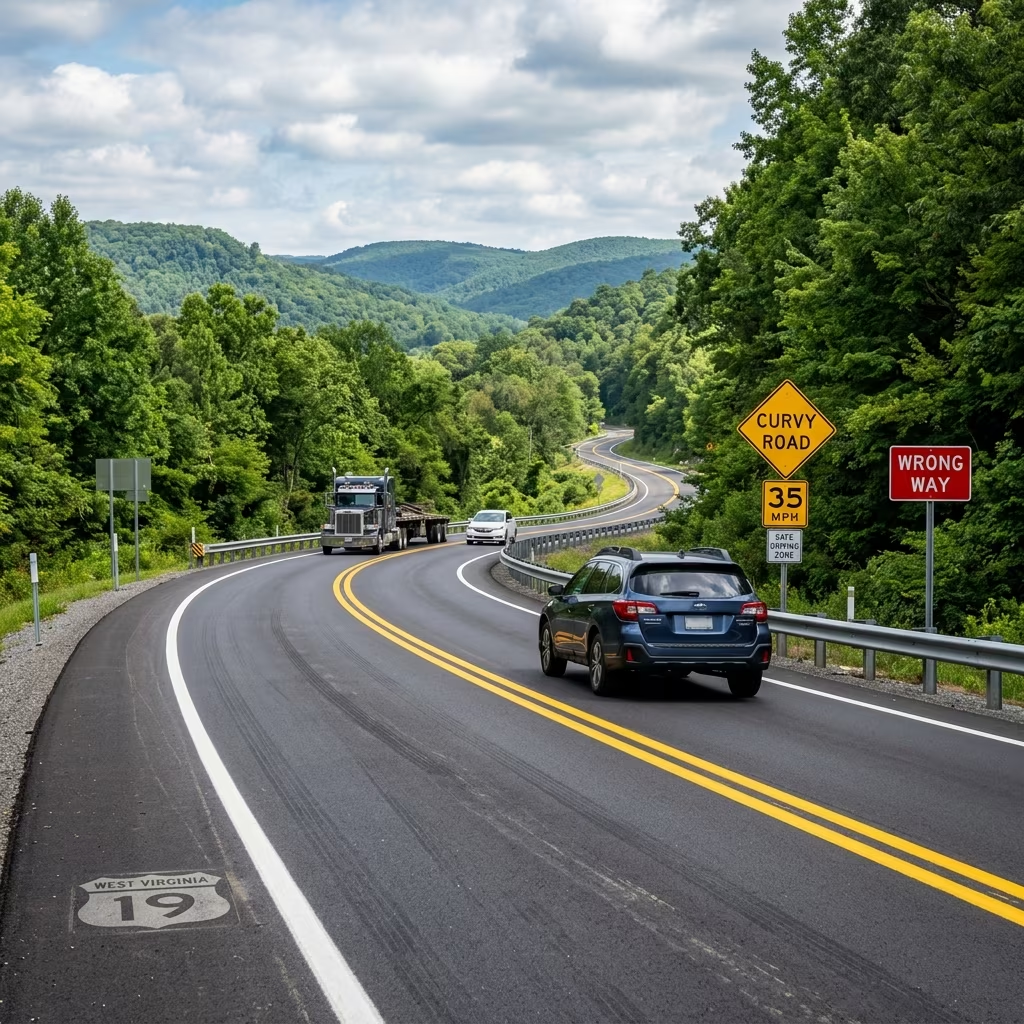
West Virginia traffic laws provide the framework for how drivers, pedestrians, and cyclists must behave on the road. These rules govern everything from speed limits and seat belt use to driving under the influence, vehicle equipment, and right-of-way at intersections.
This guide explains the major traffic regulations that apply in the Mountain State. It is designed as a practical overview to help you avoid tickets, protect your driving record, and reduce your risk of crashes. For exact wording and legal enforcement, always consult the official West Virginia Code and state agencies.
Legal Foundation of West Virginia Traffic Rules
Most driving-related rules in West Virginia are collected in Chapter 17C of the West Virginia Code, titled “Traffic Regulations and Laws of the Road.” These statutes define how vehicles must be operated, what equipment is required, and how serious violations are punished.
- Articles 1–3 define terms and regulate traffic signs, signals, and basic obedience to traffic control devices.
- Articles 4–5 address accidents and serious traffic offenses, including DUI and reckless driving.
- Other articles cover topics such as administrative license suspension for DUI, funeral processions, autonomous vehicles, and turnpike regulations.
Together, these laws form the legal baseline for everyday driving in West Virginia.
Speed Limits and Safe Driving Speeds
Speed rules in West Virginia combine fixed posted limits with a general duty to drive at a speed that is reasonable and prudent for existing conditions. Even if you are below the posted limit, you may be cited if your speed is unsafe for weather, traffic, or road design.
Typical Speed Limit Ranges
While individual roadways may differ, common speed limit ranges include:
- Residential areas: often around 25 mph.
- Open rural roads: commonly about 55 mph.
- Interstate highways: generally between 65 and 70 mph, depending on location.
- School zones: typically 15 mph when children are present or flashing signals are active.
Drivers must also pay attention to short-term conditions. Heavy rain, snow, fog, or congested traffic may require traveling well below the posted limit to remain compliant with the basic speed law.
Basic vs. Absolute Speed Concepts
Legal analysis of speeding in West Virginia often distinguishes between a basic speed rule, which focuses on safety, and absolute limits, which are the highest speeds allowed under ideal conditions. Exceeding posted limits can result in fines, points on your license, and increased insurance costs.
| Road Type | Common Limit | Key Safety Consideration |
|---|---|---|
| Residential street | 25 mph | Presence of children, parked cars, and frequent driveways. |
| Two-lane rural road | 55 mph | Curves, limited visibility, wildlife, and narrow shoulders. |
| Interstate highway | 65–70 mph | Heavy traffic, lane changes, and fast-moving vehicles. |
| School zone (active) | 15 mph | Children crossing and school buses loading or unloading. |
Seat Belts and Child Passenger Safety
Seat belt and child restraint rules are designed to reduce fatalities and injuries in crashes. West Virginia law requires proper restraint for drivers, front-seat passengers, and many rear-seat occupants.
- Drivers and front seat passengers must wear seat belts at all times when the vehicle is in motion.
- Rear-seat passengers ages 8 to 17 must also be buckled.
- Children under 8 generally must ride in a federally approved car seat or booster seat, appropriate to their size and age.
Failing to use seat belts or proper child restraints can lead to fines and may aggravate injuries in the event of a collision. In civil lawsuits, non-compliance may also be raised when evaluating damages.
Driving Under the Influence (DUI) Standards
Impaired driving is one of the most serious traffic offenses in West Virginia. The law sets specific blood alcohol concentration (BAC) thresholds to define DUI for different classes of drivers.
- Adult drivers (21 and older): It is illegal to operate a vehicle with a BAC of 0.08% or higher.
- Underage drivers (under 21): A BAC of 0.02% or higher can trigger DUI liability.
- Commercial drivers: Stricter limits apply, with DUI defined at 0.04% BAC or above while operating a commercial motor vehicle.
DUI penalties may involve license suspension, fines, mandatory treatment or education, ignition interlock requirements, and possible jail time. Because DUI law is complex and penalties escalate for repeat offenses, drivers facing charges should review the relevant sections of Chapter 17C and consider legal counsel.
Vehicle Registration, Inspection, and Licensing Basics
Operating a vehicle in West Virginia also involves compliance with rules about registration, inspection, and driver licensing. These requirements are administered largely through the West Virginia Division of Motor Vehicles (DMV).
Vehicle Safety Inspections
Every vehicle registered in West Virginia typically must pass a periodic safety inspection, often on an annual basis, to ensure key components are in working order.
- Brakes and brake lights
- Headlights, tail lights, and turn signals
- Tires and basic structural safety
- Other safety-related equipment as required by regulation
Inspection stickers provide proof of compliance. Driving without a valid inspection can result in citations and may limit your ability to renew registration.
Driver Licensing and Renewals
Obtaining and maintaining a driver’s license involves passing knowledge and skills tests, meeting age and residency requirements, and renewing before expiration through the DMV.
- Vision screenings are commonly required at renewal to confirm that drivers can safely observe traffic and road conditions.
- Special licensing rules apply to commercial drivers, including additional testing and federal safety standards.
For forms, office locations, and current procedures, the official DMV site should be consulted.
Right-of-Way, Intersections, and Lane Use
Right-of-way rules explain who must yield and who may proceed first at intersections, crosswalks, and other conflict points. Proper yielding is essential to prevent collisions.
Basic Right-of-Way Principles
- Intersections: When two vehicles reach an intersection at roughly the same time, the driver on the left must typically yield to the driver on the right.
- Left turns: A driver turning left within an intersection must yield to oncoming traffic that is close enough to pose an immediate hazard.
- Pedestrians: Drivers must generally yield to pedestrians in crosswalks and may need to stop fully when traffic signals or signs require it.
- Bicycles and motorcycles: These are treated as full vehicles with equal rights and responsibilities on the road.
Drivers must also respond correctly to traffic signals. Standard red, yellow, and green signals control movement, while flashing red should be treated as a stop sign and flashing yellow demands extra caution.
Following Too Closely (Tailgating)
Tailgating is specifically addressed under West Virginia law. A driver may not follow another vehicle more closely than is reasonable and prudent, taking into account speed, traffic, and road conditions.
For heavier vehicles, such as trucks and buses, there are additional rules about maintaining minimum distances when traveling outside business or residential districts. These separations are meant to allow other vehicles to merge safely and to reduce multi-vehicle collisions.
Move Over and Slow Down Around Incidents
West Virginia has a move-over style requirement to protect first responders, road crews, and stranded motorists. When drivers approach emergency or maintenance activity using hazard lights or warning signals, they are expected to change lanes if it is safe and slow to a reasonable speed for conditions until fully past the incident.
This combination of lane change and speed reduction is essential to reduce the risk of secondary crashes and injuries among workers and responders.
Common Violations and How to Avoid Them
Several types of infractions frequently lead to citations in West Virginia. Understanding them can help drivers avoid unnecessary penalties and maintain good driving records.
- Speeding above posted limits, particularly in school zones and on rural roads.
- Failure to yield at intersections, during left turns, or to pedestrians in crosswalks.
- Improper following distance, resulting in tailgating violations.
- Seat belt or child restraint non-compliance for drivers or passengers.
- DUI and alcohol-related offenses due to exceeding BAC limits.
Staying attentive, using defensive driving techniques, and reviewing current traffic laws through official sources can reduce the likelihood of infractions.
Frequently Asked Questions About West Virginia Traffic Laws
1. Can I turn right on red in West Virginia?
In most situations, you may turn right on a red light after coming to a complete stop, provided there is no sign prohibiting the turn, and you yield to oncoming traffic and pedestrians before proceeding.
2. Do I have to yield to pedestrians at every crosswalk?
Drivers generally must yield to pedestrians in marked crosswalks, and often at unmarked crosswalks at intersections, especially when traffic signals or signs indicate pedestrian priority. Failing to yield can result in citations and increased civil liability if a collision occurs.
3. What happens if I follow another vehicle too closely?
If you follow another vehicle more closely than is considered reasonable and prudent for the conditions, you may be cited for following too closely (tailgating). This is particularly strict for heavy vehicles such as trucks and buses outside business or residential districts.
4. Are there special rules for school zones?
Yes. School zones often have reduced speed limits (commonly around 15 mph) when children are present or when warning lights or signs are active. Drivers should also watch for school buses and must stop when buses are loading or unloading children as required by law.
5. Where can I find the official text of West Virginia traffic laws?
The official text of traffic regulations is available in Chapter 17C of the West Virginia Code through the state legislature’s website. For practical information on licensing, registration, and DMV procedures, consult the West Virginia Division of Motor Vehicles.
References
- West Virginia Code, Chapter 17C – Traffic Regulations and Laws of the Road — West Virginia Legislature. Accessed 2026. https://code.wvlegislature.gov/17C/
- West Virginia Code §17C-7-10 – Following Too Closely — West Virginia Legislature. Accessed 2026. https://code.wvlegislature.gov/17C-7-10/
- West Virginia Division of Motor Vehicles — West Virginia Department of Transportation. Accessed 2026. https://transportation.wv.gov/DMV/Pages/default.aspx
- West Virginia Traffic Laws Decoded: What Every Driver Needs to Know — GSAS Law Firm Blog. 2024. https://gsaslaw.com/blog/west-virginia-traffic-laws/
- West Virginia Driving Laws You Should Know — Salango Law. 2023. https://www.salangolaw.com/west-virginia-driving-laws-you-should-know/
- 7 West Virginia Traffic Laws Drivers Commonly Ignore — Injury Claim Coach. 2022. https://www.injuryclaimcoach.com/west-virginia/traffic-laws.html
- West Virginia Officials Review Important Traffic Law — WV Public Safety Coverage, YouTube. 2025. https://www.youtube.com/watch?v=Nbj7eU_RZ54