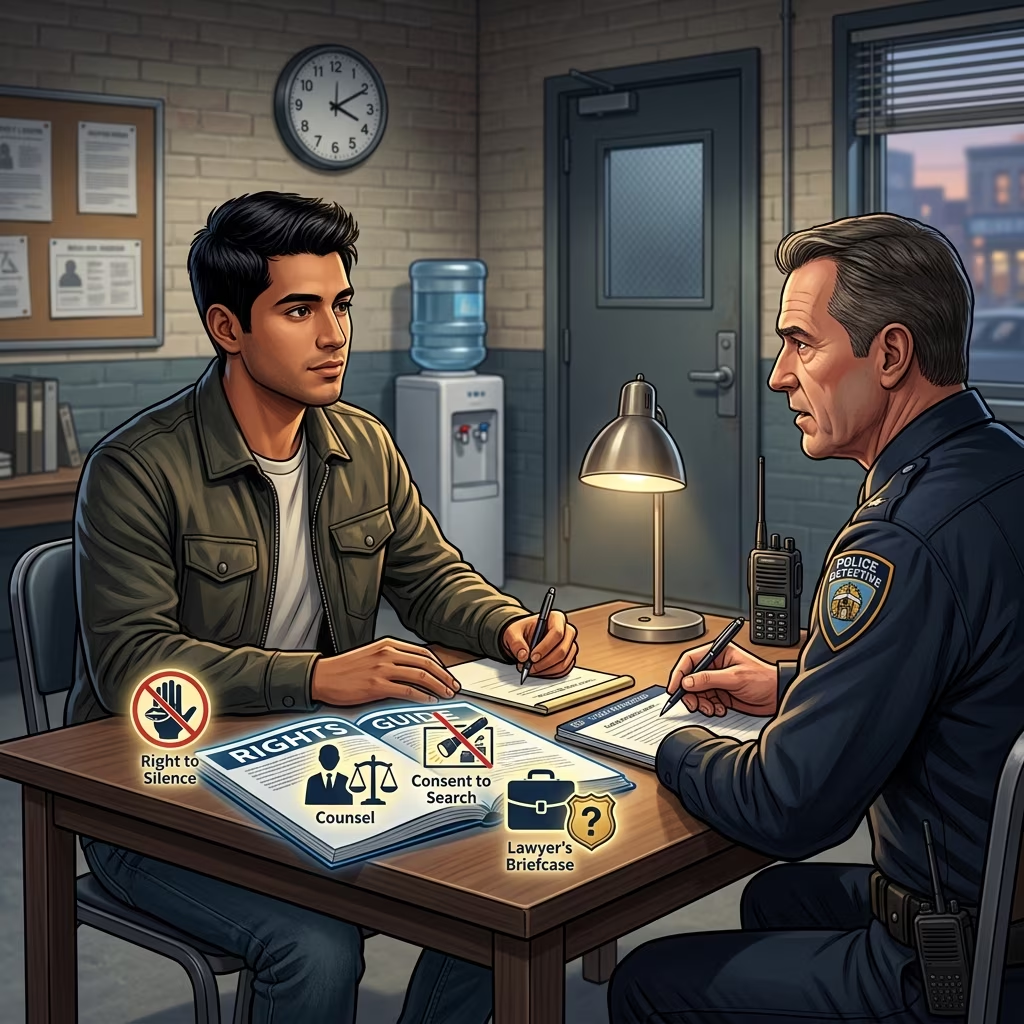
Encounters with law enforcement can be stressful, confusing and sometimes frightening. Yet in most situations, you are protected by clear legal rights that control what officers may ask of you, what you must do, and how any information you provide can be used. Understanding those rights before you are questioned can make a critical difference to your safety and to any future case.
This guide explains the most important rights you have when police question you, highlights common scenarios, and offers practical language you can use to assert your rights calmly and clearly. While the details of state law can vary, the core protections described here are grounded in constitutional principles and widely accepted legal standards.
Why Knowing Your Rights Matters
Questioning by police may happen on the street, in your car, at your home, or in a station or interview room. Sometimes it is informal and voluntary; other times it is part of an arrest and a formal investigation. In every case, what you say and do can have significant consequences.
- Statements can be used against you in court, even if you thought you were helping or believed you were innocent.
- Consent you give to searches or questioning can expand what officers are allowed to do.
- Silence and a request for counsel can limit the use of your statements and protect your legal position.
Because encounters are fast-moving and stressful, relying on memory in the moment is difficult. Having a clear mental checklist of rights and simple phrases ready in advance helps you stay focused and avoid saying more than you intend.
Core Rights During Police Questioning
Most people facing police questions should be aware of at least three core protections:
- The right to remain silent and refuse to answer most questions.
- The right to legal counsel if you are arrested or subject to custodial interrogation.
- The right to refuse consent to searches of yourself, your vehicle, or your home, absent a warrant or other legal justification.
These rights derive primarily from the U.S. Constitution, especially the Fifth Amendment privilege against self-incrimination and the Fourth Amendment protections against unreasonable searches and seizures. While there are limited exceptions, learning these baseline rules is the best starting point.
Your Right to Remain Silent
The right to remain silent is one of the most powerful protections you have when dealing with law enforcement. In general, you do not have to talk to police or other government agents, and you cannot be punished for refusing to answer most questions.
What This Right Covers
Silence can protect you in several ways:
- You may refuse to answer questions about where you have been, what you were doing, or what you know about an incident.
- You may decline to discuss your immigration or citizenship status in most situations.
- Your refusal to speak generally cannot be treated as a crime or used to punish you.
Some jurisdictions require you to identify yourself by name or provide basic information such as a driver’s license during a traffic stop, but this is different from answering investigative questions about potential criminal activity.
How to Clearly Invoke Your Right to Silence
Courts typically require that you assert your right to remain silent in a clear and unambiguous way. Simply staying quiet without explanation may not be treated as an invocation. Instead, you should use explicit language.
Examples of clear statements include:
- “I am exercising my right to remain silent.”
- “I refuse to answer any questions.”
- “I want to speak to a lawyer before answering questions.”
After saying this, you should stop answering questions entirely. Continuing to talk may weaken your invocation or create additional evidence that can be used against you later.
Miranda Warnings and Custodial Interrogation
If you are under arrest and officers want to question you, they are generally required to inform you of certain constitutional rights—often called Miranda rights—before interrogation. These usually include:
- The right to remain silent and not answer questions.
- Notice that anything you say can be used against you in court.
- The right to consult with an attorney and to have one present during questioning.
- The right to stop answering questions at any time and request a lawyer, even if you already began talking.
Importantly, your right to remain silent exists even if you are not given these warnings. You can exercise it during informal questioning, on the street, or in your car, not just after an arrest.
Your Right to Legal Counsel
Having a lawyer is often essential to protecting your interests when you are questioned or arrested. The law protects your ability to seek legal advice and to have an attorney present in key stages of the process.
When the Right to a Lawyer Applies
In most criminal contexts:
- If you are under arrest or subject to custodial interrogation, you have the right to speak privately with an attorney before answering questions.
- If you cannot afford a lawyer and jail time is a potential penalty for the alleged offense, the court must provide you with an attorney at no cost.
- You may request that your lawyer be present during questioning to advise you and help you decide whether to answer specific questions.
In many jurisdictions, you also have the right to make a local phone call, and officers are not allowed to listen to calls with your lawyer.
How to Request a Lawyer
As with the right to remain silent, you must invoke your right to a lawyer clearly. Vague references to needing help or wanting advice may not be enough. Use direct phrases such as:
- “I want to speak to an attorney.”
- “I will not answer any questions without my lawyer present.”
- “I want a lawyer and I am asserting my right to counsel.”
Once you request a lawyer, questioning should generally stop until your attorney is present. If officers keep asking questions, you should continue to remain silent and repeat that you want counsel.
Your Right to Refuse Consent to Searches
Police often ask to “take a look” in your pockets, bag, vehicle or home during questioning. Even if they sound casual, these are requests for consent to a search. In many circumstances, you have the right to decline.
What Searches You Can Refuse
Unless officers have a warrant, probable cause, or another recognized legal basis, you may refuse consent to searches of:
- Your person (beyond limited pat-downs allowed for officer safety in some situations).
- Your vehicle, including the trunk and locked compartments.
- Your home and the areas around it, such as porches and yards, if the search is not already authorized by warrant or emergency circumstances.
Consenting to a search may allow officers to explore areas and containers that they would otherwise need a warrant or stronger justification to access.
How to Withhold Consent
To preserve your rights and create a clear record, you should state your refusal explicitly. Examples include:
- “I do not consent to a search.”
- “I am asserting my right not to have my property searched without a warrant.”
- “I will not agree to any search of myself or my belongings.”
Even if officers proceed with a search despite your refusal, having clearly withheld consent may affect how evidence is treated later in court and may support legal challenges to the search.
Key Differences: Voluntary Encounters vs. Detention and Arrest
Your rights and practical options depend heavily on whether you are free to leave. A useful step in many encounters is to ask the officer directly about your status.
| Encounter Type | Typical Features | What You Can Do |
|---|---|---|
| Voluntary conversation | Officer approaches and asks questions; you are not told you must stay. | You may remain silent, decline to answer, and walk away if you wish. |
| Investigative stop | Officer indicates you are temporarily detained based on suspected activity. | You must stay for the duration of the stop but can still refuse most questions and withhold consent to searches. |
| Arrest | You are told you are under arrest and not free to leave. | You have enhanced rights to Miranda warnings, to counsel, and to know the nature of the charges. |
Practical Question to Ask
A simple phrase can clarify your situation:
- “Am I free to leave?”
If the officer says “yes,” you may choose to end the interaction calmly and walk away. If the officer says “no,” you should remain where you are, avoid arguing, and rely on your rights to silence and counsel.
Checklist: How to Behave During Police Questioning
Rights are most effective when combined with safe, measured behavior. Advocacy groups and legal organizations consistently emphasize several practical steps.
- Stay calm. Do not run, shout, or make sudden movements.
- Keep your hands visible. This reduces safety concerns and tension.
- Do not physically resist, even if you believe your rights are being violated.
- Ask if you are free to leave; if you are, walk away quietly.
- Clearly invoke your rights to silence, counsel, and freedom from unwarranted searches.
- Provide required documents, such as driver’s license, registration and proof of insurance, when lawfully requested during traffic stops.
After the encounter, it is wise to write down everything you remember, including officer names, badge numbers, patrol car numbers, and witness contact information, especially if you believe your rights were violated.
Frequently Asked Questions
Do I have to answer any questions at all?
In most situations, you do not have to answer investigative questions and may rely on your right to remain silent. However, some jurisdictions allow officers to require basic identifying information, such as your name, and traffic laws may require you to show your driver’s license and related documents during a lawful stop.
Can police question me without reading my Miranda rights?
Officers may ask questions in many contexts without giving Miranda warnings. The obligation to provide these warnings generally arises when you are under arrest or otherwise in custody and subject to interrogation. Your right to remain silent, however, exists regardless of whether you were given warnings, and you may invoke it at any time.
What if I already started talking—can I change my mind?
Yes. You may stop answering questions at any time and assert your rights, even if you have already made statements. You can say, “I am going to remain silent now” or “I want to talk to a lawyer before answering more questions.” Police are expected to respect this change and halt questioning once you clearly invoke your rights.
Does my immigration status affect my rights?
Constitutional protections generally apply regardless of immigration or citizenship status. You typically do not have to answer questions about where you were born, how you entered the country, or whether you are a citizen, and you may assert your right to remain silent and request legal counsel.
Should I ever consent to a search?
Whether to consent is a personal decision, but many legal advocates recommend declining consent, because it is hard to know in the moment how a search may affect your situation. By saying, “I do not consent to a search,” you preserve your rights and leave it to officers to rely on lawful grounds such as warrants or probable cause if they choose to proceed.
What should I do after a troubling encounter with police?
Once you are safe, write down the details of the encounter, including the time, place, officer names, and what was said and done. If you believe your rights were violated, you may wish to consult with a lawyer or a reputable legal aid organization and consider filing a written complaint with the appropriate agency or oversight body.
References
- Stopped by the Police: Know Your Rights — ACLU of North Carolina. 2023-05-01. https://www.acluofnorthcarolina.org/know-your-rights/stopped-police/
- What Rights Do I Have When Being Questioned by Police? — Rendelman Law. 2021-09-10. https://rendelmanlaw.com/what-rights-do-i-have-when-being-questioned-by-the-police/
- Your Rights if Questioned, Stopped or Arrested by Police — Ohio State Bar Association. 2020-02-01. https://www.ohiobar.org/globalassets/law-facts/pamphlet-pdfs/lf_police_stop_pdf.pdf
- Know Your Rights: A Guide to Police Encounters — Law Office of Stein & Markus. 2022-07-15. https://www.california-attorney.us/articles-faqs/know-your-rights-a-guide-to-police-encounters/
- If Questioned by Police, FBI, Customs Agents, or Immigration Officers — ACLU of Southern California. 2023-03-20. https://www.aclusocal.org/know-your-rights/if-questioned-police-fbi-customs-agents-or-immigration-officers/
- Your Rights When You Are Approached by the Police — National Employment Law Project. 2015-03-01. https://www.nelp.org/app/uploads/2015/03/Fact-sheet-formatted.pdf
- What To Do When Encountering Questions from Law Enforcement — ACLU. 2014-10-15. https://www.aclu.org/know-your-rights/what-do-when-encountering-law-enforcement-questioning