
Essential Legal Rights During Traffic Stops
Master your rights and best practices when pulled over to ensure safety and protect against violations of the law.
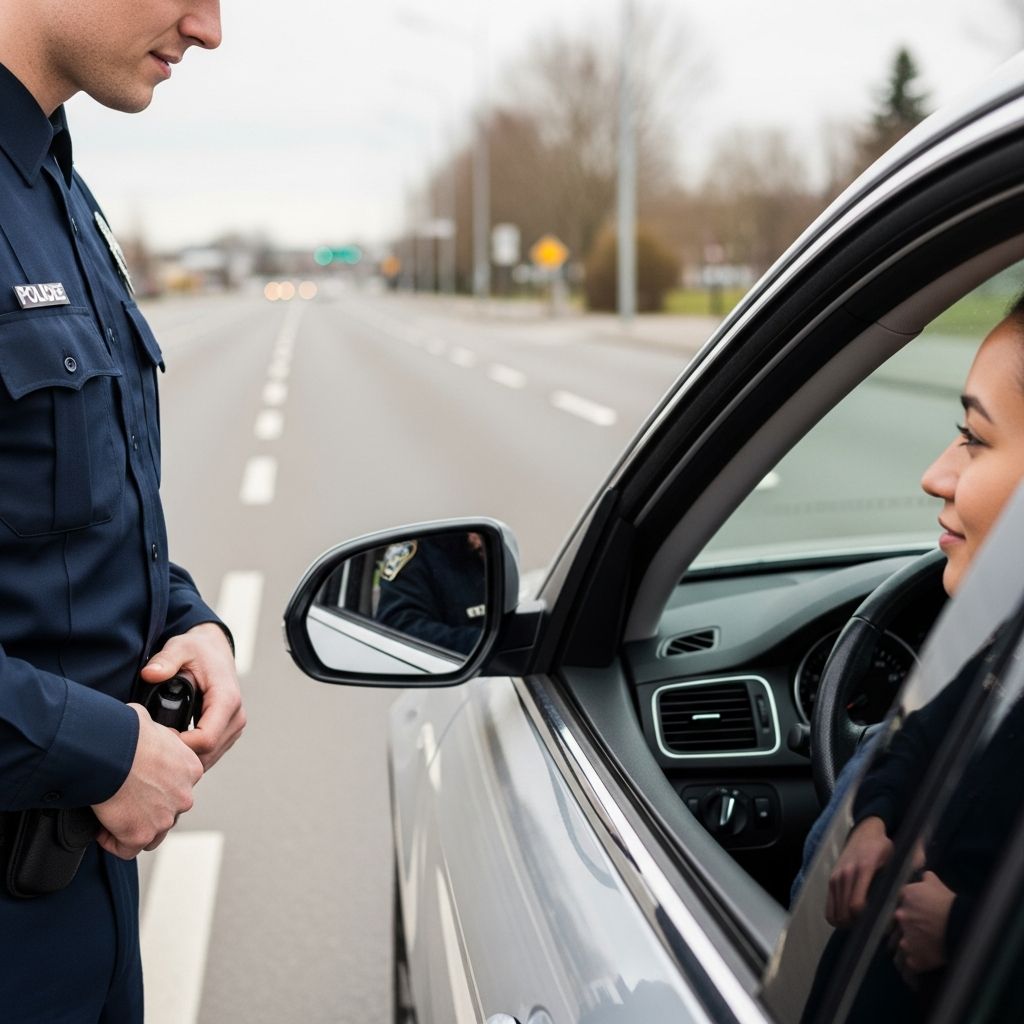
Encountering flashing lights in your rearview mirror can trigger immediate stress for any driver. Understanding the legal framework governing traffic stops empowers you to navigate these situations confidently, minimizing risks and safeguarding your constitutional protections. This guide draws from established legal standards to outline when stops are lawful, your obligations, and strategies for compliance.
Understanding Lawful Reasons for a Traffic Stop
Police cannot stop your vehicle arbitrarily; they require reasonable suspicion of a violation or crime. This standard, rooted in the Fourth Amendment, demands specific observable facts, not mere hunches.
Common valid justifications include:
- Traffic infractions: Exceeding speed limits, ignoring stop signs or signals, or improper lane changes provide clear grounds.
- Vehicle defects: Issues like faulty taillights, expired tags, or equipment failures justify intervention.
- Erratic operation: Swerving or delayed reactions may signal impairment, prompting a stop.
- Suspicion matching: If your vehicle fits a broadcast description of a suspect, officers act on that basis.
Absent these, a stop risks suppression of evidence in court. For instance, racial profiling or random checks without cause violate protections.
Immediate Actions: Pulling Over Safely
Your first response sets the tone. Officers assess compliance through the ‘patience test,’ noting pull-over speed and location.
| Do | Don’t |
|---|---|
| Slow gradually, signal, and stop in well-lit, safe areas like shoulders or lots. | Delay excessively or drive past multiple safe spots, raising evasion suspicions. |
| Activate hazards if immediate stop is unsafe. | Panic or make abrupt maneuvers. |
Once stopped, remain seated with hands at 9-and-3 on the wheel, engine off if safe, and windows partially down. Illuminate interior at night.
Interacting with Officers: Compliance and Demeanor
Politeness de-escalates encounters. Officers observe body language for nervousness or concealment attempts.
- Keep hands visible; inform of weapons upfront.
- Passengers: Stay buckled, silent unless addressed.
- Avoid reaching without permission to prevent misinterpretation.
In Massachusetts, drivers must provide license, registration, and insurance upon request; failure constitutes a crime. Passengers generally need not identify unless probable cause exists.
Core Constitutional Protections You Retain
Traffic stops do not suspend rights. Key safeguards include:
- Right to silence: Beyond documents, invoke the Fifth Amendment politely: ‘I respectfully decline to answer.’
- No consent to searches: Politely refuse: ‘I do not consent to searches.’ Officers need warrants, probable cause, or exceptions like plain view.
- Recording: Film interactions in public (one-party consent in many states); inform officer if required locally.
- Exit orders: Comply if directed, but question prolonged detentions.
Admissions during stops often lead to charges; silence prevents self-incrimination.
Search and Seizure Rules: What Officers Can Do
During valid stops, the ‘plain view’ doctrine allows scanning for crimes without consent. K-9 sniffs are permissible if not prolonging the stop unreasonably.
Full vehicle searches demand:
- Probable cause (e.g., drug odor, visible contraband).
- Your voluntary consent (which you can withhold).
- Warrant or inventory post-arrest.
Trunk or locked areas stay protected absent justification.
Special Scenarios: DUI Suspicions and Arrests
If impairment is suspected post-stop, field tests follow. You can refuse preliminary breath tests in some jurisdictions (with license penalties), but post-arrest chemical tests carry stricter consequences.
Arrest cues: Handcuffing, reading Miranda rights. Request attorney immediately; do not discuss case.
Post-Stop Documentation and Follow-Up
Record details: Officer name/badge, patrol car number, stop reason, witnesses. Note time, location, weather.
Contest citations in court; videos from dashcams or body cams aid challenges to unlawful stops.
Frequently Asked Questions
Can I be pulled over without a clear violation?
No. Officers need reasonable suspicion based on specific facts, not intuition or demographics.
Do passengers have to show ID?
In Massachusetts, no, unless reasonable suspicion targets them. Keep seatbelts on.
What if I can’t stop right away?
Drive to safety with hazards on; explain calmly upon stopping.
Should I argue at the scene?
No. Comply, then challenge in court to avoid escalation.
Can I record the stop?
Yes, in public spaces, without interfering.
State Variations and Professional Advice
Laws differ; e.g., Massachusetts mandates driver ID. Consult local statutes or attorneys for specifics. This is not legal advice—seek professionals for cases.
Proactive steps like dashcams enhance records. Regular license checks prevent compounding issues.
References
- Valid Reasons for Stops in a Massachusetts OUI Investigation — OUI Attorneys. Accessed 2026. https://ouiattorneys.com/oui-massachusetts/valid-reasons-for-oui-stops/
- What Police Don’t Tell You About Their Tactics and Your Rights During a Traffic Stop — Kevin R. Collins Law. Accessed 2026. https://www.kevinrcollinslaw.com/what-police-dont-tell-you-about-their-tactics-and-your-rights-during-a-traffic-stop/
- Know Your Rights: Stopped by Police (Massachusetts) — ACLU of Massachusetts. 2023-03-23. https://www.aclum.org/app/uploads/2023/03/id_to_police_-_draft_know_your_rights_-_updated_march_23.pdf
- Know Your Rights During a Traffic Stop — Daniel Stark Injury Lawyers. Accessed 2026. https://www.danielstark.com/blog/what-to-do-during-a-traffic-stop-legal-rights-safety-and-practical-guidance/
- Top 5 Things You Must Know When Pulled Over — Virtuoso Criminal and DUI Lawyers (YouTube). Accessed 2026. https://www.youtube.com/watch?v=hkbDGXD4IH8
- Flashing Lights, Legal Rights: What to Know if You’re Pulled Over — R.F. Lawyers. Accessed 2026. https://www.rflawyers.com/flashing-lights-legal-rights-what-to-know-if-youre-pulled-over-by-the-police/
- Stopped by Police — American Civil Liberties Union. Accessed 2026. https://www.aclu.org/know-your-rights/stopped-by-police
Similar Articles








Read full bio of Sneha Tete




