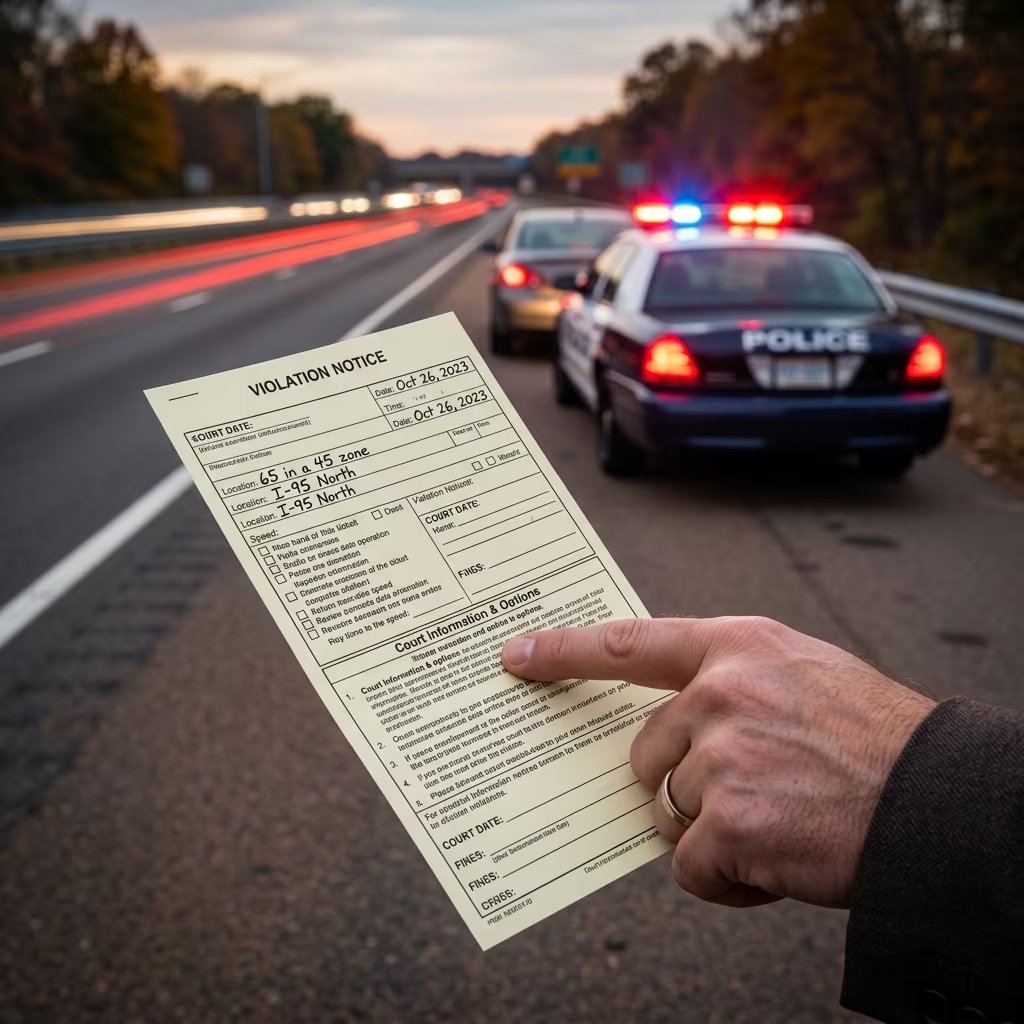
Getting stopped and handed a traffic ticket can be stressful, confusing, and expensive. Many drivers are unsure whether to pay, contest, or ignore a citation, and they often don’t realize how a simple ticket can affect their driving record, insurance costs, and even their right to drive. This guide explains the most common questions about traffic tickets, using general principles that apply in many U.S. states. Always check your local law because details and procedures vary.
Understanding What a Traffic Ticket Really Is
A traffic ticket is more than a warning on paper; it is a formal notice that you are accused of violating a motor vehicle law and that you must respond in a legally recognized way. Courts and self-help sites typically describe a traffic ticket as a citation or summons requiring you to answer the charge, often by paying a fine or appearing in court.
Types of Traffic Offenses
Traffic violations are usually divided into several categories, which affect how serious the consequences can be:
- Infractions — Minor offenses such as most speeding or parking violations; they typically carry fines and points, but no jail time.
- Misdemeanor traffic crimes — More serious conduct like reckless driving or driving without required insurance in some jurisdictions; these may carry higher fines, possible jail, and longer-term consequences.
- Felony traffic crimes — The most serious cases, such as vehicular homicide or repeat DUI offenses; penalties can include long license suspensions and prison.
Most tickets that everyday drivers receive are infractions, but multiple infractions or a single serious violation can quickly escalate the situation.
Common Examples of Ticketed Violations
Typical situations that lead to tickets include:
- Driving above the posted speed limit.
- Running a red light or failing to stop at a stop sign.
- Improper lane changes or failure to signal.
- Texting or using a phone illegally while driving.
- Driving without proof of insurance or registration available.
- Parking where it is not allowed or exceeding a meter time limit.
Even when these seem minor, they can add points to your license, increase your insurance premiums, and lead to more serious issues if repeated.
Your Options After Receiving a Traffic Ticket
Once you receive a citation, you usually have several ways to handle it. Court self-help portals emphasize that you typically can pay, fix certain issues, or request a trial if you disagree with the ticket.
Option 1: Paying the Ticket
Paying the fine is the simplest way to resolve a ticket, but it has important consequences. In many states, paying a traffic ticket is treated legally as a guilty plea. You accept the violation, the fine, and any points or record entries that follow from that plea.
In many jurisdictions you can pay:
- Online through an official court or government payment portal.
- By mail, usually by sending a check or money order with your ticket or case number.
- In person, at the clerk’s office or designated payment window.
This is convenient but may not be the best option if the ticket will cause a big insurance increase or push you close to a license suspension threshold.
Option 2: Fixing Correctable Violations
Some tickets are issued for conditions that can be corrected, such as a broken taillight, an expired registration, or failing to carry proof of insurance. Self-help guides often describe these as “fix-it tickets.” With these tickets, you may be able to reduce your penalties if you can show that the problem has been resolved.
Resolving a correctable ticket typically involves:
- Repairing or updating the issue (for example, renewing an expired registration).
- Obtaining proof that the correction was completed (a receipt, repair order, or insurance card).
- Having the ticket or a court form signed or stamped to confirm the correction.
- Submitting the signed proof to the court and paying a reduced fee.
If you ignore a fix-it ticket or miss the deadline, the originally minor violation can turn into a more serious problem, such as additional fines or a hold on your vehicle registration.
Option 3: Contesting the Ticket
If you believe the ticket is wrong or you want to avoid the long-term consequences, you can usually plead not guilty and request a hearing or trial.
Typical steps when contesting a ticket include:
- Indicating a not guilty plea on the ticket or on a court form and submitting it by mail, online, or in person.
- Receiving notice of a court date, time, and location for your appearance.
- Appearing in court, where the prosecution must prove the violation and you can present evidence or legal arguments.
Some courts allow you to request virtual hearings or use written declarations to contest certain tickets, while others require in-person appearances. If you plan to contest a citation, consider consulting an attorney, especially if the violation carries heavy penalties or you already have points on your record.
Do You Have to Appear in Traffic Court?
Whether you must go to court depends on the type of ticket and local rules. Court systems commonly distinguish between tickets that can be resolved without a personal appearance and those that require one.
When a Court Appearance Is Typically Required
You may be required to appear in court when:
- The ticket indicates that a mandatory appearance is required (often printed on the citation).
- The offense is a misdemeanor or involves serious allegations like reckless driving or driving under the influence.
- You plan to plead not guilty and the court schedules a hearing or trial.
- You failed to respond to earlier notices, leading the court to demand your presence.
Municipal and state courts often provide online systems to check whether your offense can be resolved without appearing in person.
Handling Court Logistics
If you do have a court date, pay attention to practical details:
- Verify your case number, ticket number, and the correct court location through official court websites or by calling the clerk’s office.
- If you lose your ticket, contact the court or appropriate law enforcement agency to obtain your case information.
- If you cannot attend the scheduled date, some courts allow you to request a new date, often through an online system or written motion.
Failing to appear can trigger additional penalties, including license suspension and extra fines.
How Traffic Tickets Affect Your Driver’s License
Most states use a point system to track certain traffic violations on your driving record. Accumulating too many points can lead to license suspension, additional fees, and mandatory driver improvement programs.
Points and License Suspension
While every state’s system is different, a common framework is:
- Each qualifying moving violation adds a specific number of points to your record.
- Serious violations carry more points; minor speeding may be fewer, reckless driving more.
- Reaching a defined point total (for example, 12 points in some states) can trigger suspension.
- Driving with a suspended license can bring further penalties and longer suspension periods.
Some jurisdictions offer point reduction over time if you drive without new violations. For instance, one state removes several points from a driver’s total for each year without additional infractions.
Typical Reasons Your License Might Be Suspended
In addition to points, courts and motor vehicle agencies may suspend a license for reasons such as:
- Failing to appear in court or to pay fines related to a ticket.
- Failing to pay mandatory surcharges.
- DUI, reckless driving, or being at fault in a serious or fatal crash.
- Driving without required insurance or ignoring proof-of-insurance requirements.
After a suspension, you normally must pay a restoration fee and receive written notice of reinstatement before driving again.
Sample Point Impact Table
| Type of Violation (Example) | Possible Points Added* | Potential Consequences |
|---|---|---|
| Minor speeding over limit | 2–3 points | Higher insurance, approaching suspension threshold. |
| Running a red light | 3–4 points | Record entry, insurance increase, possible court appearance. |
| Reckless driving | 5+ points | POSSIBLE misdemeanor, high fines, risk of suspension. |
| Driving under the influence | Varies; often severe | License suspension, potential jail, mandatory programs. |
*Values are illustrative; actual point assignments vary by state.
Impact of Traffic Tickets on Insurance and Record
Tickets can significantly affect your financial life, especially through higher auto insurance premiums. Insurance companies commonly review your motor vehicle record and use violations as risk indicators.
Insurance Consequences
While each insurer has its own rating policies, typical outcomes include:
- One minor ticket may cause a small premium increase or no change, depending on the company.
- Multiple moving violations within a short period often result in noticeable rate hikes.
- Serious offenses such as reckless driving or DUI can lead to very high premiums or policy non-renewal.
Some states and courts offer traffic school or driver improvement courses that might help reduce points or keep a violation off your public record, which can indirectly protect your insurance rates.
How Long Tickets Stay on Your Record
Most violations stay on your driving record for several years. The exact timeframe depends on state law and the seriousness of the offense. During that period, insurers and employers who check driving records may see the violations and respond accordingly.
Practical Tips When You Are Pulled Over
How you behave during a traffic stop can influence both your safety and the outcome of the encounter. Traffic attorneys often provide practical guidance on staying calm and avoiding statements that could be used against you later.
- Pull over safely as soon as you can, using signals and hazard lights if appropriate.
- Keep your hands visible, usually on the steering wheel, and avoid sudden movements.
- Wait for the officer to request documents before reaching for your license, registration, or insurance card.
- Speak politely and answer basic identifying questions, but avoid admitting to speeding or other violations. Admissions can be used as evidence if you contest the ticket later.
Remaining respectful does not require you to agree with the accusation or waive your right to challenge the ticket.
Frequently Asked Questions About Traffic Tickets
Do I admit guilt by signing the ticket?
In many jurisdictions, signing a ticket is not an admission of guilt; it is typically an acknowledgment that you received the citation and a promise to appear or respond. Legal FAQs emphasize that paying the fine, rather than signing, is what usually counts as pleading guilty. Always read the language on your specific ticket and local rules.
Can I ignore a traffic ticket if I think it is unfair?
Ignoring a ticket almost always makes things worse. Courts and attorneys warn that failing to respond can result in additional fines, a default judgment, and license suspension. If you believe the ticket is unfair, contest it through official procedures rather than ignoring it.
What if I lost my copy of the ticket?
If you lose your ticket, you can usually recover the information by contacting the court listed on the citation or the agency that issued it. Some states advise contacting the relevant law enforcement troop or the motor vehicle department if you are unsure which court has your case. Provide your name, driver’s license number, and approximate date and location of the stop.
Is traffic school always available to avoid points?
Traffic school or driver improvement programs are not guaranteed. Availability depends on the state, the type of offense, your prior record, and local court policy. In some places, attending approved courses can reduce points or keep a conviction from appearing on your public record; in others, it may not change the outcome.
Do parking tickets affect my license points?
Parking tickets are generally treated differently from moving violations. Many states do not add license points for parking citations, but unpaid tickets can lead to other problems, such as registration renewal blocks or collection actions. Check your state’s rules to see how parking fines are enforced.
Key Takeaways for Drivers
- A traffic ticket is a formal accusation that requires a response; treating it casually can lead to serious consequences.
- You typically can pay, fix certain issues, or contest the ticket through the court, but paying is often legally equivalent to pleading guilty.
- Repeated or serious violations can add points to your license and eventually cause suspension or higher insurance premiums.
- Official court and government websites provide reliable information about how to find, pay, or contest your tickets and whether you must appear in person.
- When pulled over, stay calm, be polite, and avoid admitting to violations if you might later want to challenge the ticket.
References
- Traffic Ticket FAQs — LawInfo. 2023-05-01. https://www.lawinfo.com/resources/traffic-violations/traffic-tickets-faq.html
- Municipal Court Self-Help — New Jersey Courts. 2024-01-10. https://www.njcourts.gov/self-help/municipal-court
- Guide to Traffic Tickets — California Courts Self-Help Guide. 2024-03-15. https://selfhelp.courts.ca.gov/traffic
- Frequently Asked Questions (FAQ) — Alabama Traffic Service Center. 2023-09-20. https://traffic.alacourt.gov/FAQ.aspx
- Traffic Tickets — New York State Police. 2023-11-02. https://troopers.ny.gov/traffic-tickets
- Traffic Charges FAQ — Rudnick, Addonizio, Pappa & Casazza Law Firm. 2023-08-01. https://www.rudnicklaw.com/traffic-violations/new-jersey-traffic-violations-faq/
- Traffic Ticket Frequently Asked Questions — Ellis B. Klein & Associates. 2022-10-10. https://www.elliskleinlaw.com/practice-areas/traffic-offenses/traffic-ticket-faqs/