
Earthquake Insurance for Small Businesses
Learn when earthquake insurance makes sense for your small business, what it covers, and how to evaluate risk and cost effectively.
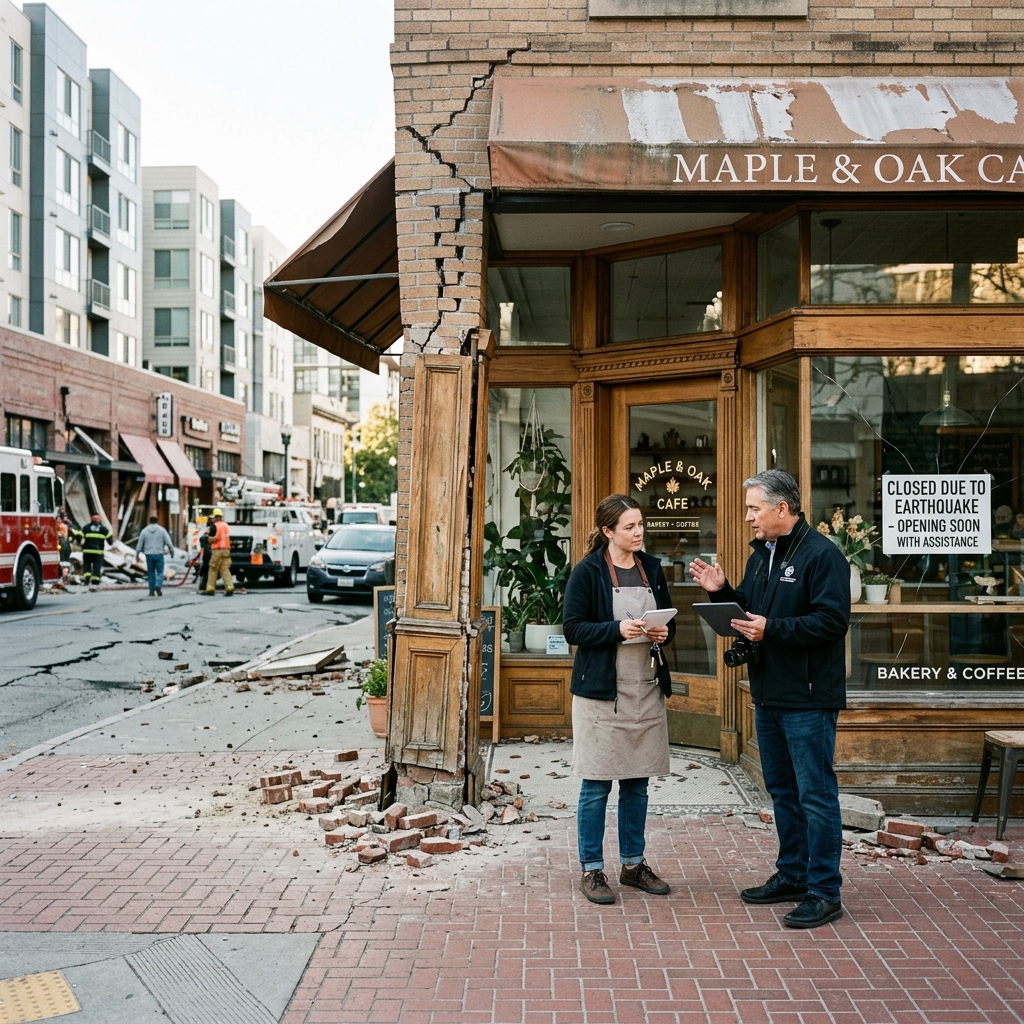
Earthquakes are low-frequency but high-impact events, and for many small businesses they represent one of the most serious physical and financial risks. According to the U.S. Geological Survey, the United States experiences roughly 20,000 earthquakes per year, mostly small, and damaging earthquakes have occurred in all 50 states since 1900. In this context, small business owners need to understand if, when, and how to purchase earthquake insurance and how it fits into their broader risk management and legal compliance strategy.
This article explains how earthquake insurance works for small businesses, how to evaluate your risk, what typical policies cover and exclude, and how to make a legally informed decision about whether to buy coverage.
Why Standard Business Insurance Usually Excludes Earthquake Damage
Many small business owners assume their commercial property insurance will cover earthquakes. In most cases, this assumption is wrong. Standard commercial property policies and business owner’s policies (BOPs) generally exclude earthquake damage, treating it as a separate catastrophic risk that requires specific coverage.
In typical commercial property insurance:
- Covered events include fire, theft, certain types of storm damage, and other common perils.
- Excluded events often include earthquakes and floods, which must be insured separately or via endorsements.
Because earthquakes can cause extreme, widespread damage to structures and contents, insurers usually manage this exposure through separate specialty policies or endorsements rather than including it automatically in standard coverage.
What Is Commercial Earthquake Insurance?
Commercial earthquake insurance is a specialty coverage that protects a business against damage directly caused by ground movement during an earthquake. It is normally obtained either as:
- An endorsement (rider) added to an existing commercial property policy or BOP.
- A standalone policy issued by a specialty or excess and surplus (E&S) carrier.
From a legal and financial planning perspective, earthquake insurance functions as a contract that specifies what kinds of damage will be covered, up to what limits, and subject to what deductibles. Because deductibles for earthquake policies are often expressed as a percentage of the property value—rather than a fixed dollar amount—businesses must pay close attention to how much out-of-pocket exposure they would face in a worst-case scenario.
Typical Coverage Elements
While policy terms vary by provider and jurisdiction, commercial earthquake insurance often includes coverage for:
- Structural damage to commercial buildings, such as cracked foundations, collapsed walls, broken windows, and damage from ground shaking.
- Business personal property, including equipment, furniture, machinery, and inventory damaged by the earthquake.
- Business interruption, compensating for lost income and extra expenses when the premises are unusable due to quake damage.
- Debris removal and cleanup costs associated with restoring the premises to a functional condition.
Many policies can be customized to adjust limits for each category of coverage, enabling small businesses to align protection with their assets and risk tolerance.
Common Exclusions
At the same time, earthquake insurance typically excludes certain types of damage, such as:
- Land damage, including sinkholes, erosion, or land movement not directly covered by the policy[10].
- Flooding or tsunami triggered by an earthquake, which often requires separate flood insurance[10].
- Normal wear and tear or pre-existing structural defects that are not caused by the event.
Because exclusions can significantly affect how much protection you actually have, it is essential to review policy language carefully, preferably with guidance from legal counsel or a knowledgeable insurance agent.
Who Should Consider Earthquake Insurance?
Not every small business faces the same level of earthquake risk. However, the geographic spread of damaging earthquakes across the U.S. means many businesses may face more risk than they realize.
Experts and regulators often highlight the following high-risk factors:
- Location in quake-prone states such as California, Alaska, and Hawaii, where earthquakes are more frequent and severe.
- Proximity to geological fault lines or areas known for significant seismic activity.
- Building characteristics, including construction type, age, and compliance with modern seismic codes.
- Soil conditions (e.g., soft or liquefiable soils), which can amplify shaking and increase damage.
For some properties, earthquake coverage is not merely optional but may be required by lenders. For example, guidance for multifamily mortgage loans may require earthquake insurance to cover 100% of the insurable value of certain properties when specified by the lender or investor. This kind of contractual requirement makes quake coverage a matter of legal compliance as well as risk management.
Home-Based Businesses
Owners who operate their business from home face an additional layer of complexity. In states like California, homeowners insurance must include an offer of earthquake coverage, and the California Earthquake Authority (CEA) provides most residential earthquake policies. However, these residential policies may not automatically cover business assets located at home.
Home-based business owners typically need to:
- Confirm how their homeowners and renters policies treat earthquake-related losses to personal and business property.
- Consider endorsements or a BOP that specifically covers business equipment and inventory stored at home.
Comparing Earthquake Insurance to Other Catastrophic Coverages
Earthquakes are often grouped with floods under the category of catastrophic risks. Both types of events are commonly excluded from standard property policies, require separate coverage, and can cause extensive damage. Nonetheless, they differ in how damage occurs and how insurers structure policies.
| Aspect | Earthquake Coverage | Flood Coverage |
|---|---|---|
| Primary cause of damage | Ground movement, structural stress, shaking | Water entering from ground level, rising and spreading |
| Typical deductible structure | Percentage-based (e.g., 5–20% of insured value) | Fixed dollar amount in many policies |
| Risk assessment focus | Fault lines, soil type, building construction | Elevation, proximity to water, floodplain maps |
| Common policy source | Private insurers, specialty carriers, endorsements | National Flood Insurance Program (NFIP) and private flood insurers |
Understanding these differences helps small businesses design a comprehensive insurance strategy that accounts for multiple catastrophic hazards, not just one.
Evaluating Your Earthquake Risk and Financial Exposure
Deciding whether to purchase earthquake insurance requires a structured risk assessment. At minimum, small businesses should evaluate:
1. Physical Risk
Physical risk refers to the likelihood and potential severity of quake damage to your property and operations. Consider:
- Historical seismic activity in your region, based on USGS data and state insurance resources.
- Construction quality and whether your building meets current earthquake-resistant standards.
- Concentration of high-value assets (e.g., specialized machinery, inventory) at a single location.
2. Financial Risk
Financial risk includes both direct repair costs and indirect business losses. Key questions include:
- How much would it cost to repair or replace your building and contents after a major quake?
- How long could you survive a prolonged business interruption without insurance support?
- Are there contractual obligations (leases, loans, key customer agreements) that require continuity of operations or specific coverage?
3. Legal and Contractual Requirements
Finally, evaluate legal and contractual obligations:
- Mortgage or loan agreements that require earthquake insurance for certain properties.
- Leases that assign responsibility for repairs and insurance to the tenant or landlord.
- State-level rules or recommended practices from insurance commissioners that may affect available products.
Combining these three dimensions—physical, financial, and legal—provides a more complete picture of whether earthquake insurance is prudent, mandatory, or unnecessary for your business.
Understanding Deductibles, Limits, and Policy Structure
Earthquake insurance often looks expensive at first glance, but much of the perceived cost is tied to its unique deductible and limit structure. To make an informed decision, small businesses should focus on:
Percentage-Based Deductibles
Unlike typical property policies that use fixed-dollar deductibles, earthquake policies frequently set deductibles as a percentage of the insured value. For example:
- A 10% deductible on a building insured for $1,000,000 means the business would absorb $100,000 of loss before insurance pays.
- Higher deductibles often reduce premiums but increase the business’s out-of-pocket exposure.
From a legal and financial planning standpoint, this structure requires careful cash-flow analysis. Businesses must consider whether they could realistically fund the deductible if a major quake occurred.
Coverage Limits
Policy limits define the maximum the insurer will pay for covered losses. Small businesses should examine:
- Separate limits for building, contents, and business interruption coverage.
- Any sub-limits for debris removal, code upgrades, or temporary relocation expenses.
- Whether limits reflect full replacement cost or a lower valuation.
Practical Steps to Decide Whether to Buy Earthquake Insurance
Once you understand the basics, you can follow a structured decision-making process:
- Step 1: Map your risk. Use public resources from the U.S. Geological Survey and your state’s insurance department to determine local earthquake risk.
- Step 2: Inventory your assets. List buildings, equipment, inventory, and key systems that could be damaged in a quake.
- Step 3: Review existing insurance. Confirm exclusions in your commercial property policy and BOP; assume earthquakes are excluded unless the policy clearly says otherwise.
- Step 4: Check contracts. Review loan documents, leases, and key customer or vendor agreements for insurance requirements.
- Step 5: Request quotes. Work with an agent or broker to obtain quotes for endorsements or standalone earthquake policies that match your risk profile.
- Step 6: Compare cost vs. exposure. Evaluate premiums alongside potential loss scenarios, deductibles, and coverage limits.
- Step 7: Document your decision. For legal and governance purposes, document how you evaluated earthquake risk and why you chose to buy or decline coverage.
Risk Reduction Measures Beyond Insurance
Insurance is only one component of earthquake readiness. Many losses can be reduced or avoided by implementing physical and procedural safeguards. State regulators and insurers often recommend practical steps such as:
- Seismic retrofitting older buildings to meet modern code requirements.
- Securing heavy items like bookcases, file cabinets, and machinery to walls or floors.
- Creating an emergency plan that includes evacuation routes, staff roles, and communication protocols.
- Training employees in earthquake safety (e.g., “drop, cover, and hold on”) and basic first aid.
- Maintaining emergency supplies such as water, food, flashlights, first-aid kits, and fire extinguishers.
These measures not only protect people and property but may also reduce the severity of insured losses and improve your ability to resume operations quickly.
Frequently Asked Questions (FAQs)
Does my standard commercial property policy cover earthquakes?
In most cases, no. Commercial property insurance covers certain natural events like wind or fire, but earthquakes are typically excluded and require separate coverage via a policy or endorsement.
Is earthquake insurance legally required for my business?
It is usually not required by statute for small businesses, but lenders, investors, or landlords may require it in loan or lease agreements—especially for properties in higher-risk areas. Always review your contracts to confirm obligations.
What types of losses does earthquake insurance typically cover?
Coverage often includes structural damage to the building, loss or damage to business property (equipment, inventory), business interruption losses, and debris removal. Exact terms depend on the policy and insurer.
How are earthquake deductibles different from other deductibles?
Earthquake deductibles are frequently expressed as a percentage of the insured value of the property, which can result in very large out-of-pocket amounts after a major loss. Most other property policies use fixed dollar deductibles.
Do earthquake policies cover flooding or tsunamis that follow a quake?
Generally not. Flooding, including tsunami-related water damage, is usually excluded and requires separate flood insurance. Earthquake policies focus on damage caused by ground movement[10].
How should home-based businesses handle earthquake risk?
Home-based businesses should confirm whether their homeowners or renters policies include earthquake coverage and whether business property is covered. Where necessary, they can add endorsements or obtain a business policy that specifically protects their commercial assets.
Key Takeaways for Small Business Owners
For small businesses, earthquakes represent a complex risk that blends physical exposure, financial vulnerability, and legal obligations. Standard commercial property insurance usually does not protect against quake damage, meaning business owners must actively decide whether to secure separate earthquake coverage.
In high-risk areas, or where lenders and landlords require it, earthquake insurance can be essential for protecting both the business and the personal assets of owners and guarantors. Even in moderate-risk regions, the combination of low probability and high severity makes it important to conduct a deliberate risk assessment, compare insurance options, and document your decision.
References
- Does my business need earthquake insurance? — Insurance Information Institute. 2023-06-01. https://www.iii.org/article/does-my-business-need-earthquake-insurance
- Business Earthquake Insurance — Insureon. 2024-01-15. https://www.insureon.com/small-business-insurance/commercial-property/earthquake-insurance
- Flood & Earthquake Coverage in Commercial Property Insurance — Fuller Insurance. 2023-02-10. https://www.fullerins.com/blog/flood-vs-earthquake-coverage-commercial-property-insurance
- Earthquake Insurance — California Department of Insurance. 2022-09-30. https://www.insurance.ca.gov/01-consumers/105-type/95-guides/03-res/eq-ins.cfm
- Earthquake Insurance — Washington Office of the Insurance Commissioner. 2023-05-12. https://www.insurance.wa.gov/insurance-resources/natural-disasters/disaster-preparedness/earthquake-insurance
- Catastrophic Risk Insurance (Multifamily Guide) — Fannie Mae. 2023-11-01. https://mfguide.fanniemae.com/node/4451
- Commercial Earthquake Insurance — FNIC Insurance. 2022-07-20. https://www.fnicgroup.com/commercial-insurance/commercial-earthquake-insurance/
Similar Articles








Read full bio of Sneha Tete




