
Driving Under the Influence of Electronics Explained
How modern distracted driving laws treat electronic devices like a DUI risk and what drivers need to know.
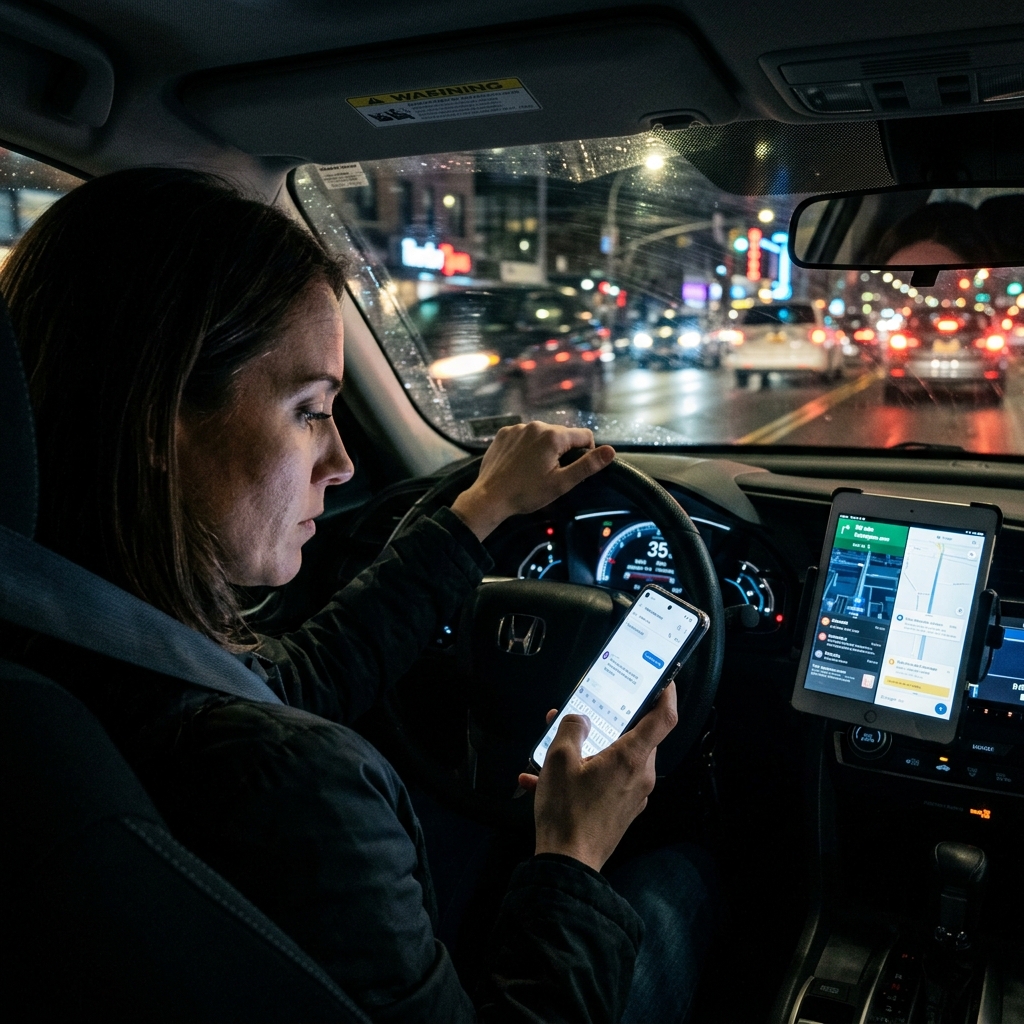
Using a phone or other electronic device behind the wheel is no longer just a bad habit; in several jurisdictions, it is treated like a serious traffic offense known as Driving Under the Influence of Electronics (often abbreviated as E-DUI or DUI-E). These laws recognize that digital distraction can be as dangerous as alcohol impairment, and they impose meaningful penalties on drivers who choose to interact with their devices while driving.
From Simple Text Bans to Comprehensive Device Laws
Distracted driving laws have evolved considerably over the last two decades. Early rules focused on prohibiting texting while driving, but many states now address the broader problem of handheld electronic device use. Legislatures increasingly understand that watching videos, checking social media, or even reading emails can divert attention from the road just as much as composing a text message.
Comprehensive laws go beyond specific activities and instead regulate any interaction with a personal electronic device that requires the driver to hold or manually manipulate it while the vehicle is in traffic. This shift is a major reason the term “driving under the influence of electronics” has gained traction: the core idea is that electronic devices themselves can impair driving performance.
What “Driving Under the Influence of Electronics” Means
Although details vary by state, E-DUI or DUI-E laws generally share key features. They define a personal electronic device as a portable device capable of wireless communication or retrieving electronic data—such as mobile phones, tablets, laptops, two-way messaging devices, or electronic games.
Under a typical statute, a driver commits an E-DUI infraction when they use such a device while operating a motor vehicle on a public roadway, unless a narrow exception applies. “Use” can include a wide range of actions, such as:
- Holding a phone or device in the hand while the vehicle is in traffic
- Manually composing, reading, or sending text messages or emails
- Browsing websites, social media platforms, or apps
- Watching videos or live streams on the device
- Using the built-in camera to take photos or record video
Some laws make clear that the prohibition applies even when the vehicle is temporarily stopped at a red light, stop sign, or in traffic congestion. In practice, that means glancing down to read a text at a stoplight can still lead to an E-DUI ticket.
Core Prohibitions: What Drivers Typically Cannot Do
To understand how strict E-DUI rules can be, it helps to look at a jurisdiction with a fully developed law. In one such state, the rules apply whenever the vehicle is on a public highway and include the following prohibitions:
- Handheld use banned: Drivers may not hold a personal electronic device in their hand while driving.
- Typing or reading messages: Writing, sending, or reading texts, emails, or other written communications is prohibited while in traffic.
- Viewing content: Watching videos or other streaming media on a device is expressly forbidden.
- Using cameras: Taking photos, recording video, or otherwise using the device’s camera features is not allowed while driving.
These restrictions are often enforced as a primary offense, meaning an officer can stop a driver solely for observing device use, without needing another reason like speeding or failing to signal. This primary status is a major aspect of E-DUI enforcement, because it greatly increases the likelihood that violations will be detected and penalized.
Limited Exceptions and Hands-Free Use
E-DUI laws are not designed to prevent all interaction with technology. Instead, they aim to remove manual and visual distraction from driving. To that end, most statutes include narrowly tailored exceptions for both emergency use and specific hands-free operations.
Common exceptions include:
- Emergency calls: Using a phone to contact emergency services, such as calling 911, is permitted.
- Transit and commercial drivers: Certain professional drivers may use communication systems or devices within the scope of their employment if federal or state rules allow it.
- Authorized emergency vehicles: Police, fire, and ambulance drivers are often exempt when using devices as part of their official duties.
For ordinary drivers, the key concept is hands-free use. Many laws allow devices that are mounted and controlled through voice commands or minimal manual input. Typical hands-free rules include:
- The device must be mounted or integrated into the vehicle (for example, using a dashboard mount or in-car infotainment system).
- The driver may only use a single finger or a brief tap to initiate a voice-activated function.
- Extended typing, scrolling, or interaction with the device screen is not permitted while the vehicle is in traffic.
Navigation assistance is generally allowed if the device is secured and the driver does not hold it in their hand while driving. However, entering an address or searching for destinations should be done before driving or when the vehicle is safely parked.
Penalties, Fines, and Insurance Consequences
E-DUI offenses are typically classified as traffic infractions, but their financial impact can be significant. In a representative state, a first offense carries a fine of about $136, with a second or subsequent offense within a set period (often five years) resulting in double the penalty. The law explicitly directs courts to apply the higher fine for repeat violations.
Beyond statutory fines, E-DUI citations usually show up on the driver’s record and are visible to insurance companies. One legal source notes that premiums can rise substantially—potentially by more than twenty percent—after an electronic-device-related infraction. These long-term cost increases often far exceed the immediate ticket amount.
In addition, many jurisdictions enforce a separate category of “secondary” distractions, such as eating, smoking, grooming, or reading unrelated materials while driving. These behaviors may carry lower fines but can be added to a primary citation, compounding the total cost of unsafe driving.
| Type of Offense | Example Behavior | Typical Consequence |
|---|---|---|
| First E-DUI violation | Holding a phone and reading a text at a red light | Base fine (around $136) and record of infraction |
| Second E-DUI within 5 years | Watching a video on a phone while driving | Fine doubled (around $234), potential insurance increase |
| Secondary distraction | Eating or grooming while committing another traffic offense | Additional fine on top of the primary violation |
Why Legislatures Treat Electronics Like Impairment
Public safety agencies recognize that electronic devices can dramatically reduce a driver’s ability to process information and react in time to avoid crashes. The Governors Highway Safety Association (GHSA) has emphasized that drivers should not use cellphones or other electronic devices at all while driving, regardless of what the law technically permits. The rationale is straightforward:
- Visual distraction: Looking at a screen instead of the road delays hazard detection.
- Manual distraction: Typing, swiping, or holding a device removes at least one hand from the wheel.
- Cognitive distraction: Focusing on messages or apps reduces attention to traffic signals and surrounding vehicles.
Research and crash data indicate that these forms of distraction can be as serious as moderate alcohol impairment, especially at highway speeds. As a result, many states now treat handheld device use with similar seriousness, making it a primary enforcement offense and pairing laws with public education campaigns.
How States Differ: A Brief Overview
While the term E-DUI is closely associated with one particular state’s law, aspects of electronic device regulation are now widespread. According to a recent survey of electronic device laws, numerous states prohibit handheld cellphone use for all drivers and maintain separate text messaging bans. However, approaches vary:
- Some states focus specifically on texting and emailing, barring writing, sending, or reading messages while driving.
- Others adopt more comprehensive rules that address any handheld use, including video streaming and social media browsing.
- Many states apply stricter limits to novice drivers or school bus drivers, banning all device use for those groups.
In addition, states differ in whether device laws are primary or secondary offenses. GHSA notes that the most effective laws tend to have clear definitions, primary enforcement, appropriately scaled penalties, and robust public awareness campaigns.
Practical Steps to Avoid an E-DUI Violation
Because E-DUI laws can be strict and penalties are rising, drivers benefit from making conscious choices to minimize device use behind the wheel. The following strategies can help keep you both safe and compliant:
- Plan before you drive: Enter navigation routes and adjust playlists or podcasts before leaving.
- Use proper mounts: Secure your phone in a dashboard or windshield mount so it remains hands-free.
- Enable voice control: Use built-in voice assistants or car-integrated systems to handle necessary calls or commands.
- Silence notifications: Turn on “do not disturb” modes while driving to reduce temptation.
- Pull over safely: If you must read a message or handle a complex task, stop in a safe location outside the flow of traffic.
- Model good behavior: Avoid using devices around teen or novice drivers; your habits influence theirs.
Common Misconceptions About E-DUI Laws
Because these rules are relatively new and often more comprehensive than older texting bans, drivers frequently misunderstand what is allowed. Here are some typical misconceptions:
- “It’s okay if I’m stopped at a red light.” In many jurisdictions, the law applies whenever the vehicle is on a public road, even if it is temporarily stopped in traffic.
- “Navigation use is always legal.” While using GPS is typically permitted, holding the device in your hand or typing while in traffic is not.
- “Hands-free means I can still scroll.” Hands-free exceptions are narrow and usually allow only brief, minimal interaction to initiate voice commands, not continuous screen use.
- “It’s just a small fine.” Repeat violations can be costly, and insurance surcharges can make E-DUI a long-term financial burden.
Frequently Asked Questions (FAQs)
Is an E-DUI the same as a regular DUI involving alcohol or drugs?
No. A traditional DUI involves driving while impaired by alcohol or other substances and often carries criminal penalties, possible jail time, and license suspension. An E-DUI is generally a traffic infraction focused on handheld electronic device use. The penalties are serious but usually limited to fines and record points rather than criminal convictions.
Can I pick up my phone just to check the time or see who is calling?
In states with strict E-DUI laws, simply holding the phone while on a public road can be enough to trigger a violation. Even brief checks can be considered “use” because they involve looking at the screen and taking a hand off the wheel. To stay safe and legal, rely on mounted displays, in-car clocks, or voice notifications.
Is it legal to use a smartwatch while driving?
Smartwatches occupy a gray area not always explicitly addressed by statutes. Many laws focus on devices that the driver holds in hand, but similar principles of distraction apply. If interacting with a smartwatch requires multiple taps, scrolling, or attention away from the road, it could contribute to unsafe driving and might be cited under broader distracted driving rules, even if not strictly under E-DUI provisions.
What should I do if I receive an E-DUI ticket?
If you receive an E-DUI citation, review the ticket carefully and consider consulting a qualified traffic or criminal defense attorney familiar with local device laws. They can explain your options, including contesting the ticket, negotiating reductions, or understanding the potential impact on your insurance and driving record. Legal advice is especially important if you have prior violations or if the ticket might affect employment that involves driving.
How can parents help teen drivers avoid electronic distraction?
Parents can set clear rules about device use, require phones to be stored out of reach while driving, and use available apps or built-in phone features that limit functionality when the vehicle is in motion. Modeling good behavior—such as never texting or scrolling while driving—is one of the most effective ways to influence teen habits.
Key Takeaways for Modern Drivers
Driving under the influence of electronics laws reflect a broader shift in how society views digital distraction on the road. Using a phone or similar device while driving is no longer treated as a minor lapse; in many states, it is a clearly defined infraction with substantial financial and safety consequences.
To navigate this environment responsibly, drivers should:
- Understand whether their state treats handheld device use as a primary offense.
- Know what qualifies as “use” under local statutes, including texting, browsing, video viewing, and camera operation.
- Take advantage of hands-free technology responsibly, focusing on voice commands and brief interactions.
- Minimize any non-essential device use, keeping both eyes and attention on the road.
By treating electronic devices with the same caution as other known impairments, drivers can reduce crash risk, avoid costly penalties, and contribute to safer roads for everyone.
References
- RCW 46.61.672: Using a personal electronic device while driving — Washington State Legislature. 2017-07-23. https://app.leg.wa.gov/rcw/default.aspx?cite=46.61.672
- Driving Under The Influence of Electronics: The New Law — Wendy Sue Swanson. 2017-07-22. https://www.wendysueswanson.com/new-dui/
- What to Know About E-DUIs — Washington State DUI Lawyer. 2018-04-01. https://www.washington-dui.com/blog/2018/april/what-to-know-about-e-duis
- DUI-E — SQ Attorneys. 2017-07-01. https://sqattorneys.com/dui-e/
- Electronic device laws — Insurance Institute for Highway Safety (IIHS). 2026-07-01. https://www.iihs.org/research-areas/distracted-driving/electronic-device-laws
- Distracted Driving — Governors Highway Safety Association (GHSA). 2025-02-01. https://www.ghsa.org/state-laws-issues/distracted-driving
- ‘DUI-E’ law taking effect in Washington to crack down on distracted driving with electronics — NBC4 / YouTube. 2017-07-23. https://www.youtube.com/watch?v=-rnAwsdUL0E
Similar Articles








Read full bio of Sneha Tete


