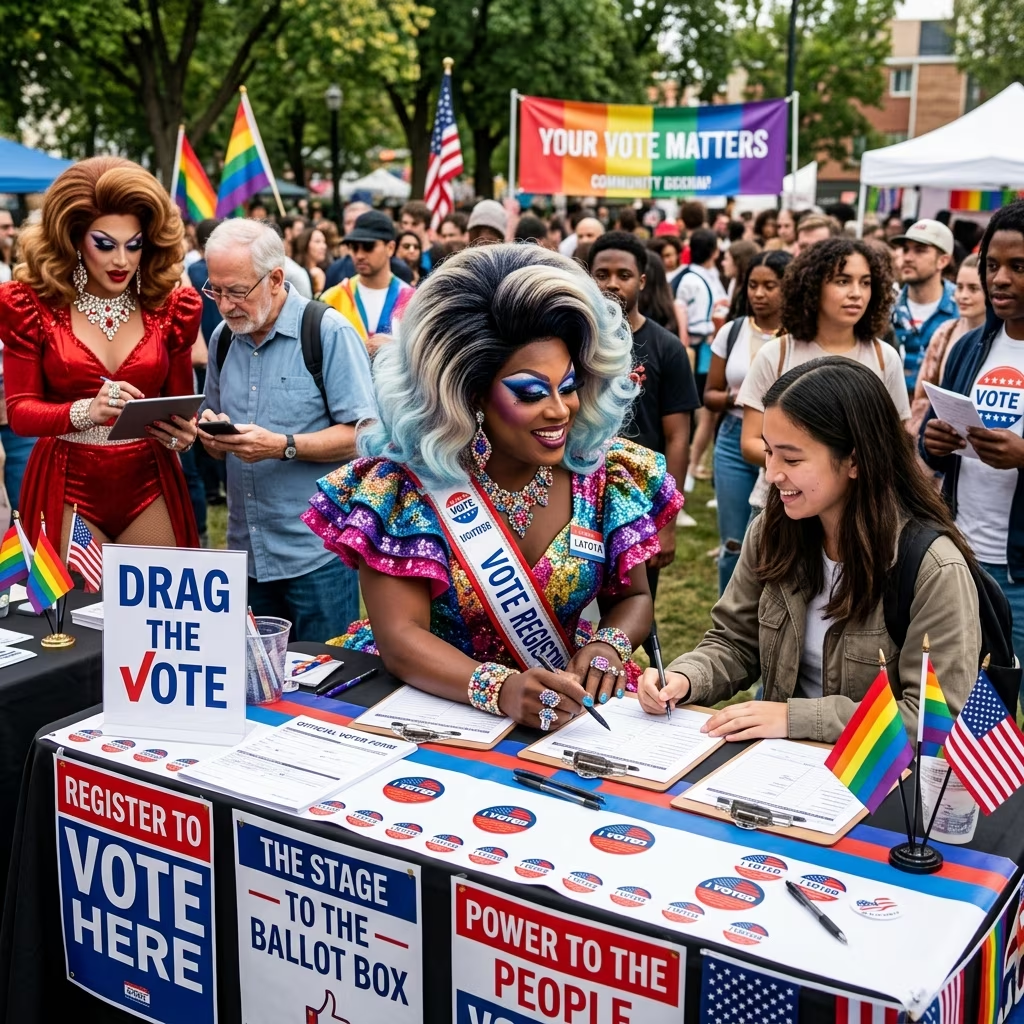
In an era characterized by intense political polarization and a rapidly shifting legislative landscape, marginalized communities are finding innovative ways to secure their fundamental democratic rights. Among the most vibrant and unexpected champions of civic engagement are drag performers. Moving beyond the confines of nightlife entertainment and theatrical stages, drag artists have seamlessly integrated political activism into their art form, spearheading nationwide voter registration campaigns. By leveraging their platforms, community influence, and visibility, these performers are not only encouraging democratic participation but also fighting back against a tidal wave of restrictive policies designed to silence the LGBTQ+ community.
The Roots of Performance as Advocacy
To understand the current phenomenon of drag-led voter registration, one must first recognize that drag has inherently always possessed a political dimension. Long before it became a mainstream cultural touchstone featured on international television, drag served as an act of defiance. In the mid-20th century, simply wearing clothing associated with a different gender was a criminal offense in many jurisdictions across the United States. Drag artists and transgender women—particularly women of color—were frequently at the forefront of the early LGBTQ+ rights movement, most notably leading the charge during the historic 1969 Stonewall Uprising.
Today’s drag performers are continuing this legacy of resistance, shifting their focus from fighting archaic sumptuary laws to battling modern forms of systemic disenfranchisement. The stage is no longer just a place for lip-syncing and elaborate choreography; it has transformed into a powerful pulpit for civic education. By reminding audiences that the rights they enjoy today were won through relentless political struggle, these performers are effectively bridging the gap between historical activism and contemporary electoral participation.
Navigating the Labyrinth of Voter Disenfranchisement
The urgency of these voter registration drives is amplified by the unique structural hurdles that LGBTQ+ individuals face at the ballot box. While voter suppression impacts many minority groups, transgender and gender-nonconforming voters encounter highly specific bureaucratic obstacles, primarily due to strict voter identification laws. The right to vote is a fundamental pillar of democracy, yet accessing that right can become a labyrinthine nightmare for individuals whose identification documents do not align with their gender presentation.
A staggering amount of administrative red tape is required to update a name and gender marker on a state-issued ID. The process often involves expensive court orders, published notices, medical certifications, and high processing fees. As a result, many transgender citizens are forced to navigate the voting process using outdated credentials. According to comprehensive data from the Williams Institute, an estimated 210,800 voting-eligible transgender citizens lack identification documents that correctly reflect their name and/or gender. When these voters arrive at polling stations in states with stringent photo ID requirements, they risk facing invasive questioning, discrimination, or outright denial of their right to cast a ballot.
This reality has made localized, community-driven education crucial. Drag performers have stepped up to demystify these complex bureaucratic processes. During their shows, they frequently provide resources on how to navigate provisional ballots, update voter registrations, and understand local voter ID requirements, effectively serving as both entertainers and civic navigators.
Key Impacts of Voter Identification Barriers
| Barrier Type | Impact on LGBTQ+ Voters | Community Response |
|---|---|---|
| Strict Photo ID Laws | Disproportionately affects transgender individuals whose IDs do not match their gender identity, leading to potential disenfranchisement at polling places. | Drag queens hosting dedicated informational sessions on securing valid IDs and understanding state-specific provisional voting rights. |
| Name Change Bureaucracy | Costly and legally complex processes prevent many from updating official records, creating discrepancies on voter rolls. | Providing financial grants, legal clinics, and step-by-step guides distributed during LGBTQ+ nightlife events and pride festivals. |
| Polling Place Intimidation | Fear of harassment or being “outed” by poll workers significantly suppresses voter turnout among gender-nonconforming citizens. | Organizing “vote-tripling” initiatives and community chaperones to ensure marginalized voters do not have to go to the polls alone. |
The Staggering Legislative Avalanche
The mobilization of drag queens as voter registration advocates is not happening in a vacuum; it is a direct response to a historically unprecedented surge in state-level legislation targeting the LGBTQ+ community. In recent years, lawmakers across the country have introduced and passed bills that fundamentally threaten the bodily autonomy, civil rights, and freedom of expression of queer individuals. The sheer volume of this legislation is staggering. The American Civil Liberties Union (ACLU) has tracked over 500 anti-LGBTQ+ bills introduced in U.S. state legislatures in 2026 alone. These bills encompass a wide array of restrictions, ranging from censoring LGBTQ+ topics in educational curricula to criminalizing gender-affirming healthcare for minors and adults alike.
Notably, drag performance itself has become a primary target of legislative action. Several states have attempted to categorize drag shows as “adult cabaret” and ban them from public spaces or venues where minors might be present. This legislative assault has deeply politicized the art form, forcing performers to defend their livelihoods and their First Amendment rights in federal courts. The aggressive nature of these political attacks has acted as a catalyst, transforming casual entertainers into fiercely dedicated political organizers. Performers recognize that the most effective way to protect their art, their community, and their rights is to alter the composition of the legislatures drafting these restrictive bills.
Innovative Grassroots Mobilization Strategies
To combat this legislative avalanche, drag performers have developed highly effective, unconventional methods for grassroots organizing. Recognizing that traditional political canvassing often fails to reach marginalized communities, performers are bringing the ballot box directly to their audiences. This strategy relies on meeting people where they are—in nightclubs, community centers, and local bars—and utilizing the captivating nature of drag to capture attention.
- Integrating Registration into Performances: Many artists pause their acts midway to deliver impassioned monologues about the importance of voting. Some even incorporate QR codes into their elaborate costumes or project them onto stage screens, allowing audience members to register to vote directly from their smartphones while enjoying the show.
- Hosting Democracy Drag Brunches: By partnering with local civic organizations, drag performers frequently host daytime events entirely dedicated to voter registration. Admission to these events is often contingent upon checking voter registration status or committing to vote in upcoming local elections.
- Digital Advocacy and Social Media Campaigns: Performers with large online followings utilize platforms like Instagram and TikTok to break down complex ballot measures, explain down-ballot races, and remind their followers of critical registration deadlines. Their digital reach extends far beyond the physical walls of any nightclub.
- Creating Safe Spaces for Civic Education: For many young LGBTQ+ individuals, traditional political spaces can feel unwelcoming or unsafe. Drag shows offer a familiar, affirming environment where individuals can ask questions about the voting process without fear of judgment or discrimination.
Demographics and the Electoral Power of the LGBTQ+ Community
The ultimate goal of these drag-led initiatives is to harness the immense electoral power of the LGBTQ+ voting bloc. As the population grows and younger generations identify as LGBTQ+ at higher rates than ever before, this demographic holds the potential to swing critical local, state, and national elections. Civic engagement organizations have long noted that when marginalized communities vote at high rates, they possess the numerical strength to unseat hostile incumbents and protect vulnerable civil rights protections.
The motivation within the community is already palpable. According to comprehensive polling conducted by GLAAD, an overwhelming 94% of LGBTQ+ registered voters reported being highly motivated to cast their ballots in upcoming elections. This high level of enthusiasm is a direct reflection of the existential stakes many feel regarding current legislative trends. Drag performers are uniquely positioned to convert this high motivation into tangible electoral action, ensuring that enthusiasm translates into actual registered voters who show up on election day. By focusing heavily on local and down-ballot races—such as school boards and city councils—these advocates are working to enact change at the grassroots level, where policies most directly impact daily life.
Combating the Rising Tide of Disinformation
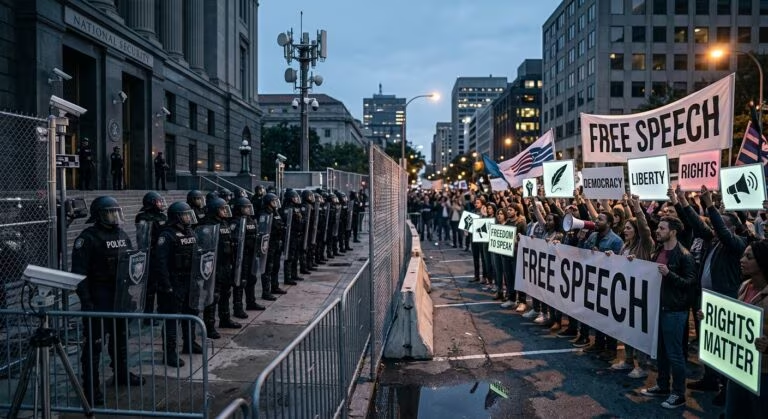
Unfortunately, as drag performers have stepped into the political arena, they have simultaneously become the targets of intense right-wing disinformation campaigns. The art form has frequently been cast in a false, malicious light by political commentators and activists who falsely equate drag performances with the “grooming” or sexualization of children. This harmful rhetoric not only endangers the physical safety of performers—leading to protests and armed intimidation outside of venues—but also seeks to delegitimize their voices as civic leaders.
Despite these coordinated smear campaigns, drag queens continue to use their visibility to push back against the narrative. By steadfastly continuing their voter registration efforts and engaging directly with the public, they dismantle these harmful stereotypes. Their civic advocacy serves as a powerful counter-narrative, proving that they are engaged, responsible citizens deeply invested in the health of American democracy. The resilience required to perform in the face of such adversity only strengthens their message to voters: if drag queens can stand up to armed protests to protect their rights, ordinary citizens can certainly find the courage to cast a ballot.
Frequently Asked Questions
Why are drag performers specifically focusing on voter registration?
Drag performers have unique access to the LGBTQ+ community and their allies. Because the community is facing an unprecedented number of legislative attacks, performers are using their platforms as safe, community-centric spaces to mobilize people who might otherwise be disengaged from the traditional political process.
How do voter ID laws uniquely impact transgender voters?
Many states require government-issued photo identification to vote. For transgender voters whose IDs do not match their name or gender presentation due to the high costs and legal barriers of updating state documents, this can lead to harassment or being turned away at the polls entirely.
Are drag-led voter registration events partisan?
Most grassroots voter registration drives led by drag performers, particularly those partnered with non-profit organizations, focus on nonpartisan civic engagement. Their primary goal is to ensure the LGBTQ+ community is registered and informed about how, where, and when to vote, rather than endorsing specific political candidates.
How can I ensure my voter registration is current?
You can verify your voter registration status through your state’s official Secretary of State website or through national nonpartisan platforms like Vote.org. It is crucial to check your status well before your state’s registration deadline, especially if you have recently moved or changed your name.
Conclusion
The transformation of drag queens from underground entertainers to vital political advocates is a testament to the resilience and ingenuity of the LGBTQ+ community. Faced with deliberate legislative attempts to erase their identities and restrict their freedoms, these artists have chosen to fight back with the most powerful tool available in a democracy: the vote. By marrying the joy and defiance of drag with the critical necessity of civic duty, they are not only expanding the electorate but also ensuring that the most marginalized voices are heard loud and clear at the ballot box. Their efforts remind us all that democracy requires constant vigilance, participation, and, occasionally, a healthy dose of theatrical flair.
References
- The Potential Impact of Voter Identification Laws on Transgender Voters in the 2024 General Election — Williams Institute. 2024-09-15. https://williamsinstitute.law.ucla.edu/publications/trans-voter-id-2024/
- Mapping Attacks on LGBTQ Rights in U.S. State Legislatures in 2026 — American Civil Liberties Union. 2026-05-29. https://www.aclu.org/legislative-attacks-on-lgbtq-rights
- GLAAD Releases 2024 Voter Poll — GLAAD. 2024-03-07. https://glaad.org/releases/glaad-releases-2024-voter-poll/
- Analysis: Political rhetoric, false claims obscure the history of drag performance — PBS News. 2022-10-30. https://www.pbs.org/newshour/politics/political-rhetoric-false-claims-obscure-the-history-of-drag-performance