
DOJ Dismisses Southwest Key Lawsuit: Migrant Child Impact
DOJ drops migrant shelter abuse lawsuit, sparking accountability debate.
Introduction to a Major Policy Pivot
In March 2025, the U.S. Department of Justice (DOJ), operating under the directives of the new Trump administration, executed a controversial and highly consequential policy pivot. Federal officials formally dismissed a massive civil lawsuit against Southwest Key Programs, the nation’s largest private provider of temporary shelter for unaccompanied migrant children. Originally filed during the summer of 2024, the lawsuit levied severe allegations against the organization, claiming structural failures that permitted rampant sexual abuse, harassment, and mistreatment of vulnerable minors across its network of facilities over an eight-year timeframe.
Rather than pursuing this complex litigation through the federal court system to secure judicial accountability, mandated operational reforms, and financial restitution, the current administration chose an entirely different enforcement route: complete institutional detachment. Simultaneously with the DOJ’s legal dismissal, the Department of Health and Human Services (HHS) announced it had entirely ceased the placement of migrant youth in Southwest Key facilities. Government officials defended this dual approach as the swiftest and most decisive method to neutralize immediate threats to child safety.
However, legal scholars, civil rights advocates, and child welfare experts have forcefully argued that severing federal contracts without securing a definitive legal verdict leaves a dangerous accountability vacuum. This article thoroughly examines the intricacies of these severe allegations, the strategic pivot in federal regulatory oversight, and the profound long-term implications for the multi-billion-dollar private immigration shelter industry.
The Foundation of the Private Shelter Network
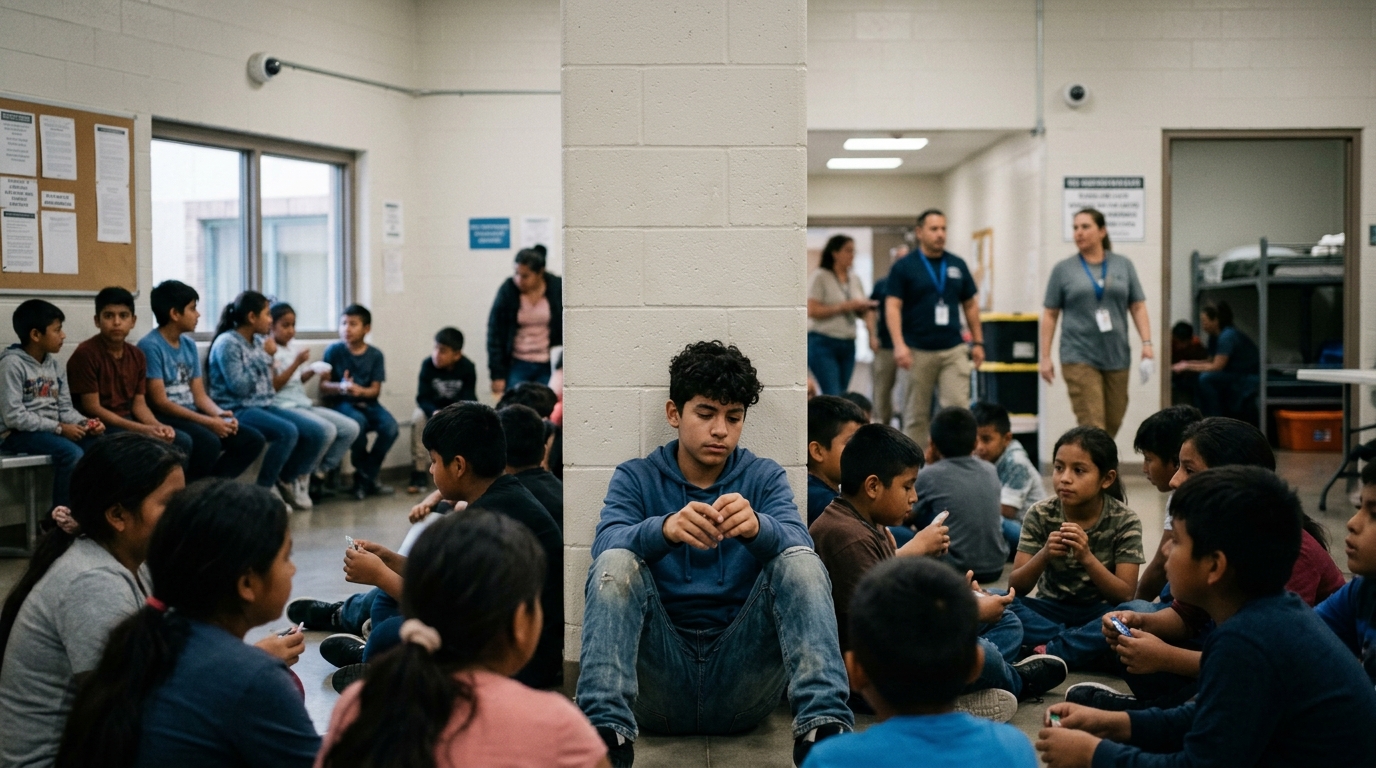
To fully comprehend the magnitude of the DOJ’s legal reversal, it is necessary to examine the sprawling infrastructure of Southwest Key Programs and its historically entrenched relationship with the federal government. For more than a decade, the Texas-based non-profit organization functioned as the operational backbone of the federal government’s housing strategy for unaccompanied alien children (UAC). Operating a peak network of 27 residential shelters heavily concentrated across the border states of Texas, Arizona, and California, the organization was the primary destination for thousands of minors apprehended at the southern border without a parent or legal guardian.
The scale of this logistical operation was immense, underwritten almost entirely by taxpayer dollars through lucrative grant agreements administered by the HHS Office of Refugee Resettlement (ORR). Over the years under intense scrutiny, Southwest Key successfully secured nearly $3 billion in federal contracts, cementing its status as an indispensable partner to successive administrations desperate to manage surges in border crossings and emergency housing shortages.
However, rapid expansion frequently outpaces the implementation of rigorous internal oversight. As the organization rapidly scaled its footprint to accommodate the federal government’s urgent logistical demands, structural vulnerabilities within its child welfare protocols began to emerge. Industry critics and independent watchdogs persistently warned that relying so heavily on private contractors to manage delicate humanitarian operations creates inherent risks. While the organization publicly promoted a corporate mission centered on delivering culturally sensitive care, educational enrichment, and psychological support to traumatized youth, a much darker reality was allegedly unfolding behind closed doors. The growing tension between the government’s desperate need for available shelter beds and the fundamental moral imperative to guarantee child safety ultimately precipitated a catastrophic breakdown in federal oversight.
Unpacking the Allegations of Systemic Abuse
The bedrock of the recently dismissed lawsuit rested on the horrifying findings of a comprehensive, multi-year federal investigation. In its initial 2024 civil complaint, the Justice Department presented a deeply disturbing narrative detailing systemic and catastrophic failures to protect children in Southwest Key’s physical custody. According to the court filings, from at least 2015 through 2023, employees stationed at various regional facilities engaged in severe, pervasive, and objectively offensive sexual harassment and abuse of unaccompanied minors.
Crucially, these allegations were not framed as isolated incidents perpetrated by a few rogue individuals slipping through the cracks. Instead, federal investigators painted a grim picture of an entrenched organizational culture where predatory behavior was inadequately policed, and internal reporting mechanisms were effectively paralyzed. The government alleged that staff members, sometimes including those in trusted supervisory roles, engaged in inappropriate physical contact, solicited explicit photographs from minors, and, in the most egregious documented cases, committed outright sexual assault.
The core legal argument centered on the assertion that Southwest Key executive leadership consistently failed to implement industry-standard safeguards strictly essential for preventing child exploitation. The DOJ highlighted dangerously inconsistent employee background checks and a severe deficiency in comprehensive staff training regarding trauma-informed care. When allegations of abuse did eventually surface, internal responses were reportedly defensive, sluggish, or entirely dismissive. By allegedly violating the Fair Housing Act and creating an aggressively hostile living environment, the very institutions funded to serve as protective sanctuaries were accused of transforming into sites of profound, inescapable vulnerability. For advocacy groups, the 2024 lawsuit was a watershed moment, signaling an aggressive federal commitment to pursuing formal judicial remedies for exploited youth.
The Administration’s Pragmatic Shift: Severing Ties
The sudden decision to abandon the civil litigation in early 2025 was strategically framed by the administration not as a retreat from justice, but as a pragmatic, results-oriented administrative maneuver. Executive branch officials articulated a straightforward defense for the policy pivot: the paramount objective was guaranteeing the immediate physical safety of the children. They argued this was most effectively achieved by removing the minors from Southwest Key’s custody entirely, rather than engaging in a protracted, multi-year judicial battle that could leave children in limbo.
By definitively freezing all new placements and rapidly transferring the remaining minors to alternative, fully vetted facilities across the country, the Department of Health and Human Services effectively dismantled the organization’s primary federal revenue stream. Agency leaders publicly characterized this sweeping intervention as a bold and necessary effort to eradicate human trafficking and institutional exploitation, portraying the administrative contract freeze as a fatal blow to dangerous actors within the immigration shelter industry.
From the government’s current operational perspective, abandoning the civil suit was a logical administrative sequence. Because the federal government had permanently severed its business relationship with the organization, the immediate, actionable danger to the children had been neutralized. Officials argued that the prior administration’s dual approach—continuing to fund the organization while simultaneously suing it in federal court—represented a contradictory and inefficient enforcement strategy. By decisively cutting the financial lifeline, the new administration aimed to broadcast a chilling deterrent to other federal contractors: severe oversight failures will result in the absolute and immediate loss of federal grants, a financial penalty that serves as a corporate death sentence.
The Accountability Vacuum: Human Rights Advocates Respond
Despite the administration’s vocal assertion that terminating the massive federal contracts constitutes a definitive victory for child welfare, legal scholars and human rights organizations have sharply criticized the total dismissal of the lawsuit. Organizations strictly dedicated to defending the civil rights of marginalized migrant children argue that merely walking away from a federal legal battle leaves a hazardous void in institutional accountability and long-term justice.
The foundation of the advocates’ counterargument is that contract termination, while an absolutely necessary first step to ensure immediate physical safety, is a fundamentally insufficient response to years of systemic civil rights violations. Dismissing the lawsuit effectively releases the organization from the rigorous legal mechanisms that would have forced a comprehensive, public accounting of its internal operational failures. Without the intensive discovery process inherent in civil litigation, crucial internal documents, executive communications, and sworn testimonies regarding organizational complicity will remain permanently concealed from public scrutiny.
Furthermore, child advocates strongly emphasize the glaring absence of financial restitution. A successful civil prosecution could have yielded massive financial penalties and established court-mandated trusts dedicated to funding long-term psychological therapy and medical care for the victims of the alleged abuse. By completely abandoning the litigation, the federal government has theoretically allowed a contractor that accumulated billions in taxpayer dollars to shutter its operations without ever financially compensating the traumatized children who suffered beneath its roof. This specific approach, critics warn, prioritizes administrative convenience over restorative justice, leaving victims to grapple with the lifelong consequences of institutional betrayal entirely on their own without dedicated federal support.
Broader Implications for the Federal Contracting Ecosystem
The shockwaves from the DOJ’s legal dismissal extend far beyond the immediate fate of Southwest Key; they establish a deeply consequential precedent for the entirety of the private detention and federal shelter industry. The United States government relies heavily on a fragmented, multi-billion-dollar network of non-profit organizations and private defense contractors to manage complex immigration logistics and vulnerable populations.
On one hand, the administration’s swift action serves as a severe and undeniable warning: federal agencies possess the authority and willingness to unilaterally terminate lucrative, long-standing grants at the first sign of unresolvable structural failures. The sudden evaporation of HHS funding clearly signals to other shelter operators that they must rigorously audit their internal compliance protocols or face immediate financial ruin.
Conversely, the complete removal of the threat of civil litigation drastically alters the risk management calculus within corporate boardrooms. If federal contractors perceive that the maximum possible penalty for severe human rights violations is merely the cancellation of a contract—entirely bypassing devastating judicial judgments, public trials, and forced financial restitution—companies may begin to view civil rights compliance more as a baseline business risk rather than a strict legal imperative. Ultimately, the long-term legacy of this specific policy pivot will depend on whether this administrative severity genuinely deters future misconduct or merely emboldens a culture of institutional opacity.
Timeline of Federal Oversight
| Timeframe | Key Event | Implication |
|---|---|---|
| 2015 – 2023 | Period of Alleged Misconduct | Federal investigators document systemic reporting failures and widespread alleged abuse. |
| July 2024 | DOJ Files Civil Lawsuit | The Biden administration pursues judicial remedies and seeks significant financial penalties. |
| Early 2025 | HHS Halts Child Placements | The incoming administration freezes federal contracts, actively removing all minors from facilities. |
| March 2025 | DOJ Dismisses Lawsuit | The Trump administration drops litigation entirely, concluding direct administrative action is sufficient. |
Frequently Asked Questions (FAQs)
What is an unaccompanied alien child (UAC)?
In U.S. federal law, an unaccompanied alien child (UAC) is strictly defined as a minor under the age of 18 who enters the United States without lawful immigration status and without a parent or legal guardian available to provide direct care and physical custody. The Office of Refugee Resettlement (ORR) is legally mandated to provide shelter and care for these children until they can be safely placed with a sponsor.
Why did the government rely so heavily on Southwest Key Programs?
For well over a decade, the organization provided the massive physical infrastructure necessary to absorb sudden, unpredictable influxes of migrants at the southern border. They offered specialized bilingual staffing and expansive, readily available facilities, making them the largest and most reliable operational partner for the Department of Health and Human Services during multiple border crises.
Can the victims of the alleged abuse still seek legal justice?
Yes, legal avenues remain open. While the Department of Justice has officially dropped the federal civil lawsuit, individual victims or their legal representatives can technically file private tort claims against the organization. However, successfully pursuing private civil litigation against a well-funded corporate entity without the investigative weight, data access, and financial resources of the federal government is extraordinarily difficult and time-consuming.
What happened to the minors housed in these specific facilities?
Following the immediate administrative freeze, all unaccompanied minors previously housed in the disputed facilities were safely transported and transferred to other vetted, federally funded shelters across the country. They will remain in these alternative facilities while awaiting eventual reunification with family members or approved sponsors.
Conclusion
The abrupt termination of the federal lawsuit against the nation’s largest private provider of child migrant shelters marks a defining and highly polarizing moment in U.S. immigration policy. While the current administration’s decisive action to immediately remove minors from potentially hazardous environments addresses the pressing physical crisis, abandoning formal legal proceedings leaves profound, unresolved questions regarding corporate accountability and long-term restorative justice. As the federal government continues to outsource the critical care of highly vulnerable populations to private entities, the delicate balance between swift administrative action and rigorous, transparent legal oversight will undoubtedly remain a critical frontier for policymakers, legal scholars, and human rights advocates alike.
References
- HHS, DOJ Move to End Sexual Abuse and Harassment of Unaccompanied Alien Children in Shelters Operated by Southwest Key Programs — United States Department of Justice. 2025-03-12. https://www.justice.gov/opa/pr/hhs-doj-move-end-sexual-abuse-and-harassment-unaccompanied-alien-children-shelters
- Trump administration drops lawsuit against a large provider of child migrant shelters over alleged abuse of minors — The Associated Press. 2025-03-12. https://apnews.com/article/migrant-children-abuse-lawsuit-dropped-southwest-key-6f0a3e819b1241a8
- Trump administration drops lawsuit against company over alleged abuse at its child migrant shelters — Children’s Rights. 2025-03-12. https://www.childrensrights.org/news-voices/trump-administration-drops-lawsuit-against-company-over-alleged-abuse-at-its-child-migrant-shelters
Similar Articles








Read full bio of medha deb


