Digital Rights vs Child Safety: The Filtering Alternative
Empowering families through software rather than government censorship.
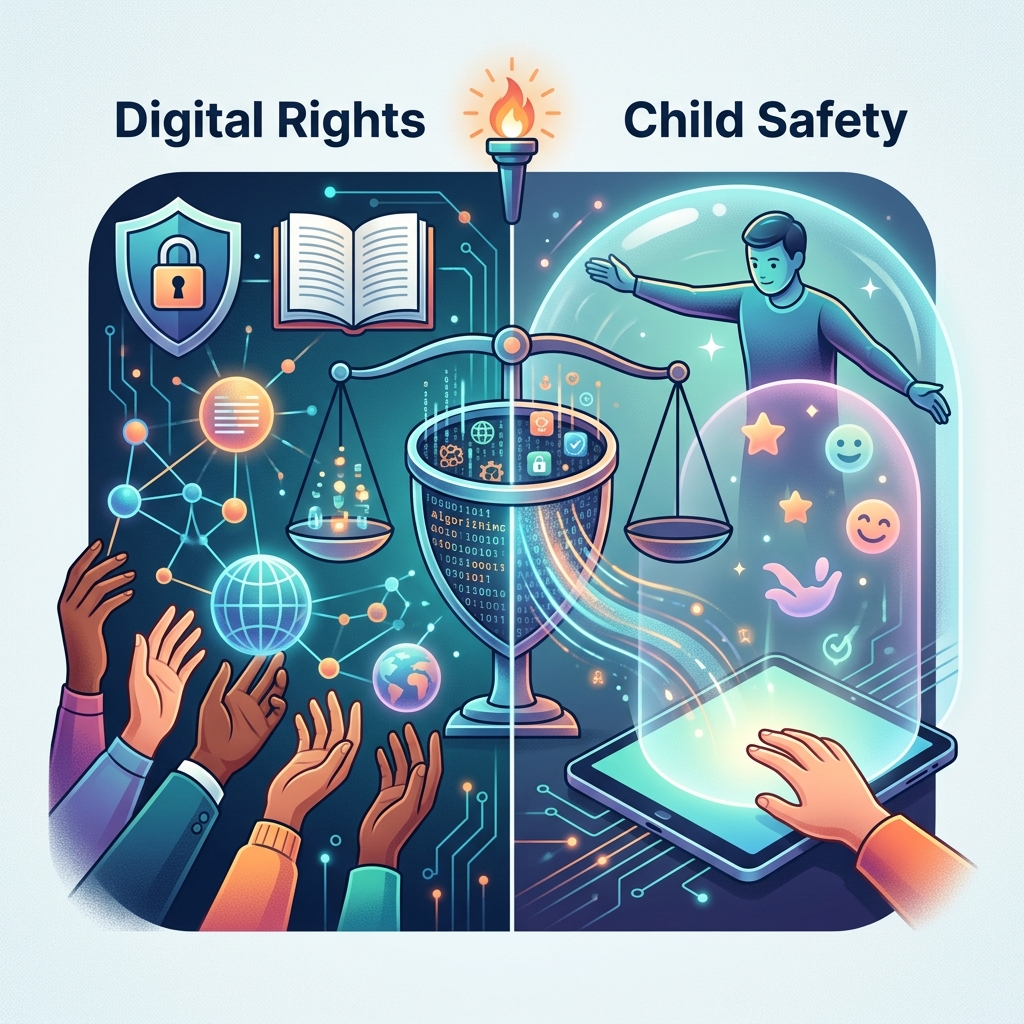
Over the past decade, ensuring that the digital landscape remains safe for young people has evolved into one of the most hotly contested issues in public policy. As parents, educators, and lawmakers witness the expansive reach of the modern web, the collective instinct is naturally geared toward aggressive protection. However, the methods proposed to achieve this safety have sparked fierce debates regarding data privacy, freedom of speech, and technological feasibility. Recently, lawmakers at both the state and federal levels have increasingly leaned toward implementing sweeping, government-mandated internet censorship and age-verification protocols. While these legislative initiatives are usually born out of a genuine desire to shield minors from inappropriate or harmful content, they often threaten to dismantle the fundamental architecture of a free, private, and open internet.
This article explores why empowering parents and guardians through user-side filtering software and comprehensive digital literacy programs is vastly superior to imposing broad legislative censorship. By evaluating the structural risks of mandatory age-gating and analyzing the constitutional hurdles of state-level digital restrictions, we can better understand how to protect vulnerable internet users without stripping adults of their digital rights or sacrificing consumer privacy on a massive scale.
The Core Problem with Mandated Internet Restrictions
A prominent trend in contemporary digital policy involves the introduction of bills that force platforms to verify the age of every user before granting access to certain content. Prominent examples include legislative frameworks resembling the Kids Online Safety Act (KOSA) and various state-level age-gating mandates. Proponents of these laws argue that age-gating the internet is no different from requiring identification to purchase restricted goods in physical stores. While carding users might sound analogous to checking a driver’s license at a local convenience store, the digital reality of how this data is processed, stored, and utilized is vastly more complex and hazardous.



Legal Options and Support for Sexual Abuse Survivors >

Age Verification as a Massive Privacy Vulnerability
When a bartender or store clerk checks your identification, they briefly glance at your date of birth and hand the card back. The physical interaction leaves no paper trail and creates no permanent, searchable record of your whereabouts or purchasing habits. In stark contrast, online age verification requires users to digitally submit sensitive government-issued identification, biometric data like live facial scans, or exhaustive third-party credit histories to private technology vendors. This requirement effectively dismantles online anonymity and forces every internet user into a pervasive surveillance network just to browse the web.
According to a May 2026 study from Georgia Tech Research, leading age-verification providers frequently collect and share highly sensitive personal information—including device fingerprints and facial profiles—with third-party networks. This creates a severe and arguably unnecessary privacy vulnerability for all users. Centralized databases containing government IDs and biometric markers are prime, highly lucrative targets for cybercriminals. If a malicious actor breaches a digital age-verification vendor, the fallout extends far beyond a compromised password; it involves stolen identities and biometric exposure on a massive scale.
Furthermore, academic research underscores how the public reacts to these intrusive verification mechanisms. Research presented by Carnegie Mellon University’s CyLab at a 2026 Federal Trade Commission (FTC) workshop demonstrated that as age verification methods become more invasive, internet users actively push back. Participants in the study often abandoned platforms altogether rather than surrendering personal data to unknown and potentially insecure digital portals. Treating online age verification as a simple technical hurdle ignores the profound social and privacy implications of forcing adults and teens alike to routinely digitize their most sensitive documents.
Navigating First Amendment Friction
Beyond the immense data security risks, government-mandated content filters and age-verification laws routinely crash into formidable constitutional barriers. In the United States, the First Amendment protects the rights of adults to freely access lawful, albeit potentially controversial, political, or mature, speech. When legislation demands that platforms lock general knowledge, social spaces, or adult content behind digital checkpoints, it inherently chills free expression and curtails information access.
The Congressional Research Service (CRS) has extensively highlighted these First Amendment concerns, noting in a 2024 analysis that federal and state laws attempting to broadly filter or age-gate internet platforms frequently face strict judicial scrutiny. Because algorithms and human platform moderators struggle to perfectly discern the exact age of a user or the nuanced context of digital content, platforms inevitably default to over-censorship to avoid steep regulatory fines and legal penalties. Consequently, lawful speech regarding healthcare, political activism, art, and identity is inadvertently suppressed. This over-blocking disproportionately impacts marginalized communities who heavily rely on these open online resources for support, community building, and vital information.
The Power of User-Controlled Software Solutions
If broad government censorship and data-harvesting age checks are not the optimal paths forward, how do we effectively protect young people online? The answer lies in technological decentralization: placing the power and responsibility back into the hands of those who know the children best—their parents, guardians, and educators. User-controlled software solutions provide a highly targeted, customizable, and privacy-respecting alternative to blanket governmental bans.
Modern Device-Level and Network-Level Filtering
Instead of forcing every single citizen to prove their age and identity to access a website, parental control software operates directly on the user’s specific device or local home network. These technological tools have evolved significantly from the clunky, easily bypassed programs of the early internet era. Today’s commercial and open-source software provides highly sophisticated, granular control over what a child can access, download, view, and share.
Device-level filters can be precisely configured to block explicit imagery, restrict predatory in-app purchases, set daily screen-time limits, and even monitor digital interactions for signs of cyberbullying or grooming. Because these filtering tools are installed voluntarily on the end-user’s device, they do not require global website operators to collect biometric data or government IDs from the broader adult public. The content filtering happens locally and privately, meaning the data security and anonymity of the general internet populace remains completely intact and unaffected.
Customization Over Categorical Bans
One of the primary and most frustrating failings of government-mandated internet censorship is its blunt, one-size-fits-all approach. A 17-year-old high school senior researching biology, historical conflicts, or classic literature requires vastly different internet access privileges than a 7-year-old playing basic educational games. Rigid legislative bans cannot easily account for varying maturity levels, diverse cultural backgrounds, or the specific educational values of individual families.
Parental control software inherently empowers families to dynamically tailor the digital experience. A guardian can whitelist specific educational sites, completely block known predatory platforms, and gradually loosen restrictions as the child demonstrates greater responsibility and digital maturity over time. This high level of customization ensures that online safety measures do not become an arbitrary digital straightjacket, but rather a flexible, evolving tool that grows alongside the adolescent’s development.
The Crucial Role of Digital Literacy
Software and network filters, no matter how technologically advanced, are only one piece of the broader child safety puzzle. True online safety is achieved not just by building taller digital walls, but by equipping users with the critical thinking skills required to navigate the landscape safely. Digital literacy programs represent a proactive, rather than reactive, approach to long-term internet safety.
Moving Beyond Technological Firewalls
No software filter is one hundred percent foolproof. Dedicated and tech-savvy teenagers will eventually find workarounds, and new, potentially dangerous platforms emerge faster than blocklists can be realistically updated. Therefore, relying solely on technology—whether it is a parent-installed application or a government-mandated firewall—is a fragile and ultimately incomplete strategy.
Comprehensive digital literacy education teaches young people how to critically identify misinformation, recognize the subtle signs of predatory behavior, fiercely protect their personal information, and deeply understand the permanence of their digital footprint. When children understand the core reasoning behind internet safety rules, they are exponentially more likely to make intelligent, secure decisions when they inevitably encounter unfiltered spaces. Furthermore, encouraging open, non-judgmental dialogue between parents and children about their online experiences fosters a healthy environment. In such an environment, kids feel comfortable reporting harassment, bullying, or disturbing content without the paralyzing fear of punitive device confiscation or extreme parental overreaction.
Comparative Analysis: Government Mandates vs. User-End Filtering
To fully appreciate the divergence between these two fundamentally different philosophies of digital safety, it is highly beneficial to examine them side-by-side. The table below outlines the stark contrasts between state-mandated restrictions and localized, software-based empowerment.
| Feature / Impact Focus | Government Mandated Age-Gating & Censorship | User-Controlled Software & Local Filtering |
|---|---|---|
| Data Privacy Risk | Extremely High. Requires the centralized collection and processing of government IDs and sensitive biometric data from all users. | Very Low. Operates strictly locally on the user’s personal device or home network without exposing data to third-party web servers. |
| First Amendment Impact | Significant. Actively chills free speech and limits adult access to lawful information due to algorithmic over-blocking and liability fears. | None. The voluntary adoption of software by private individuals in their homes does not infringe upon public constitutional rights. |
| Flexibility & Customization | Poor. Relies on a rigid, one-size-fits-all approach dictated by broad legislative age thresholds and definitions of harm. | Excellent. Parents and educators can easily adjust settings based on a child’s specific maturity, educational needs, and age. |
| Security Vulnerabilities | Creates massive data honeypots of sensitive identity information that are highly vulnerable to cyberattacks and identity theft. | Data is firmly confined to the family’s local network, drastically reducing the incentive and opportunity for large-scale hacking. |
A Smarter Path Forward for Digital Policy
Lawmakers eager to protect children are not without viable, highly effective legislative options. However, their focus should rapidly pivot away from inherently flawed speech restriction and mass surveillance, and instead move toward establishing robust consumer privacy protections that benefit all users.
Civil liberties organizations have long argued that the absolute best way to protect children online is to pass comprehensive data privacy legislation that legally prohibits tech conglomerates from endlessly tracking, profiling, and monetizing user data—regardless of the user’s age. If platforms are legally restricted from utilizing invasive behavioral surveillance algorithms that push extreme, addictive content solely to boost engagement metrics, the internet naturally becomes a significantly safer environment for everyone, children included.
Federal agencies are already making strides in this direction. The Federal Trade Commission (FTC) continues to vigorously enforce and adapt the Children’s Online Privacy Protection Act (COPPA), signaling a clear regulatory commitment to managing how data is fundamentally handled rather than strictly dictating what speech is permitted. By expanding these types of privacy-first, data-minimization frameworks, lawmakers can effectively dismantle the exploitative business models that make the modern internet hazardous. This approach solves the root cause of algorithmic harm while leaving the fundamental freedoms of the web entirely intact. Ultimately, protecting the youth should never necessitate the total transformation of the internet into a heavily surveilled, heavily censored environment.
Frequently Asked Questions (FAQ)
Why is online age verification considered more dangerous than showing an ID at a physical store?
When you show a physical ID to a store clerk, they simply look at it to verify your age, leaving no permanent record. Online verification requires you to digitally transmit that ID or use biometric facial scans, which are then processed and stored by third-party database vendors. This practice creates a massive, permanent digital record that is highly vulnerable to hacking, data breaches, and unauthorized behavioral tracking.
Don’t laws like the Kids Online Safety Act (KOSA) just protect children?
While the stated intent behind such legislative bills is clearly child safety, the practical, real-world application often results in broad, unconstitutional censorship. Because technology platforms cannot perfectly determine who is a minor and who is an adult, they frequently over-restrict content to avoid liability. This limits lawful speech, blocks educational resources, and restricts information access for everyone, including adults.
How effective is parental control software in reality?
Modern parental control tools are highly effective when configured and used correctly. They offer granular, robust control at the device or router level, allowing parents to block specific content categories, limit screen time, and monitor application usage entirely locally, without infringing on the privacy or access rights of the broader internet public.
Can filtering technology entirely replace the need for parental supervision?
No. Software filters are excellent tools to assist guardians, but they absolutely cannot replace active parenting and comprehensive digital literacy. Teaching children how to critically evaluate online situations, recognize dangers, and fostering open, honest communication are the most reliable methods for ensuring long-term digital safety and maturity.
References
- Online Age Checks Create a Pointless Privacy Risk — Georgia Tech Research. 2026-05-19. https://research.gatech.edu/online-age-checks-create-pointless-privacy-risk
- CyLab’s Sarah Scheffler discusses new research on age verification technologies at FTC workshop — Carnegie Mellon University. 2026-01-26. https://www.cylab.cmu.edu/news/2026/01/26-scheffler-ftc.html
- Kids Online Safety Act — Congressional Research Service. 2024-08-05. https://crsreports.congress.gov/product/pdf/R/R48135
- COPPA – Enforcement Policy Statement Promoting the Adoption of Age-Verification Technology — Federal Trade Commission. 2025-04-22. https://www.ftc.gov/legal-library/browse/cases-proceedings/coppa-enforcement-policy
Similar Articles








Read full bio of medha deb