
Defending Student Free Speech: The Florida Campus Crackdown
How a student group fought Florida's unconstitutional deactivation order.
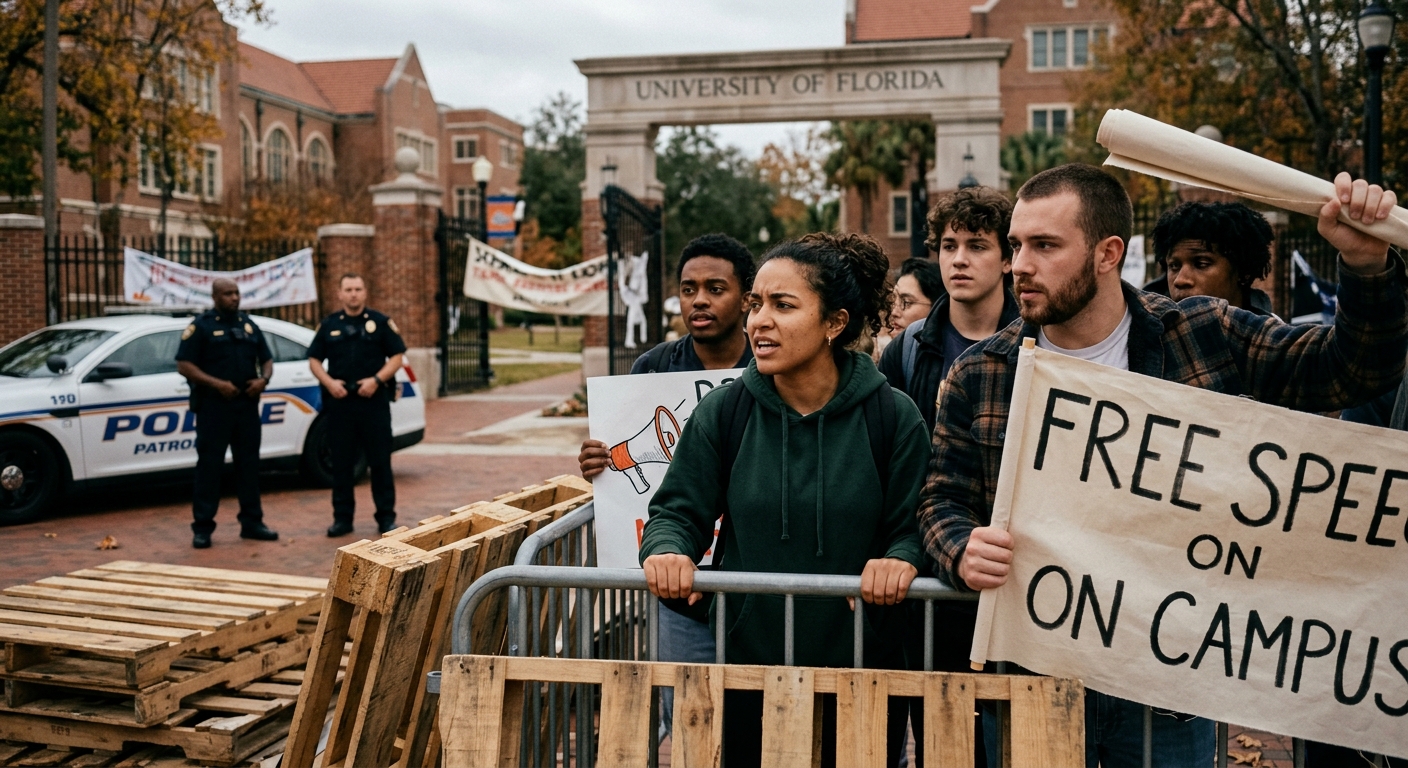
The Bedrock of Campus Free Expression
Public universities in the United States have long served as vital marketplaces of ideas, where intellectual boundaries are tested, and rigorous debate is encouraged. As institutions funded by taxpayer dollars, they are bound by the strictest interpretations of the First Amendment. The Constitution guarantees that these educational institutions cannot punish, defund, or silence individuals simply because their views are unpopular, controversial, or politically inconvenient. This means that campus quads and lecture halls are designed to be arenas where diverse ideologies clash and evolve.
However, this foundational principle is periodically challenged when external political pressures mount and elected officials attempt to dictate the bounds of acceptable campus discourse. A striking recent example occurred in Florida, where state officials targeted a specific student organization for its political advocacy regarding the Israeli-Palestinian conflict. This incident ignited a fierce legal battle, highlighting the precarious nature of civil liberties on modern college campuses and serving as a crucial test of how far government entities can go in policing student speech. The resilience of the students involved demonstrates the ongoing necessity of vigilant legal defense in the face of state-sponsored censorship.
The Catalyst: Florida’s Sweeping Deactivation Directive
In October 2023, the political climate surrounding international affairs reached a boiling point on domestic college campuses following escalated violence in the Middle East. Against this volatile backdrop, the State University System of Florida, operating under the guidance of Governor Ron DeSantis and Chancellor Ray Rodrigues, issued an extraordinary directive . The order instructed state university presidents to immediately “deactivate” local chapters of Students for Justice in Palestine (SJP), specifically naming the actively organizing chapters at the University of Florida (UF) and the University of South Florida (USF).
The “Material Support” Allegation
The justification provided by state officials hinged on a highly controversial and legally precarious interpretation of a “toolkit” published by the national SJP organization. Florida authorities argued that the national group’s rhetoric—which framed certain militant actions as “the resistance”—constituted unlawful “material support” for a designated foreign terrorist organization under state and federal criminal law . Consequently, the state argued that local university chapters associated with the SJP name were inherently complicit, inherently dangerous, and must be dismantled to protect the student body and comply with anti-terrorism statutes.
However, this broad stroke ignored the operational reality and legal distinctness of university student groups. The University of Florida chapter of SJP was an entirely independent, student-run organization. It possessed its own localized governing board, managed its own finances, and did not operate under the direct headship, command, or financial umbrella of the national entity. By attempting to dissolve the local chapter based on the provocative speech of a separate, out-of-state national organization, Florida officials bypassed standard university disciplinary procedures. They bypassed due process entirely, directly targeting the students’ constitutionally protected rights to peacefully assemble, organize, and advocate for their deeply held political beliefs.
The Legal Counteroffensive: Suing the State
Recognizing the severe constitutional violations at play, the University of Florida chapter of SJP refused to quietly disband and accept the forfeiture of their rights. On November 16, 2023, represented by a formidable coalition comprising the American Civil Liberties Union (ACLU), the ACLU of Florida, and Palestine Legal, the student group filed a comprehensive federal lawsuit against Chancellor Rodrigues, Governor DeSantis, and university leadership . The lawsuit sought a preliminary injunction to halt the deactivation order, setting the stage for a major First Amendment showdown that captured national attention.
Core Constitutional Arguments
The plaintiffs built their compelling case on two distinct yet deeply intertwined constitutional pillars that form the bedrock of civil liberties on public property:
- Freedom of Association: The U.S. Supreme Court has long established that the government cannot penalize a local group solely because of its loose or nominal affiliation with a national organization whose views the government deems objectionable. In the landmark 1972 case Healy v. James, the Supreme Court ruled that a public college could not deny official recognition to a student group simply because the administration disagreed with the group’s philosophy or its association with a controversial national movement. The Florida lawsuit heavily echoed this precedent, arguing that UF SJP could not be held legally liable for the rhetoric or publications of the national SJP, nor could they be punished by association.
- Freedom of Speech and Viewpoint Discrimination: The First Amendment strictly prohibits “viewpoint discrimination”—a scenario where the government regulates or suppresses speech based on the specific ideology, opinion, or perspective it expresses. Viewpoint discrimination is considered an egregious form of censorship because it allows the state to pick winners and losers in the marketplace of ideas. The legal team argued that the deactivation order was a transparent, politically motivated attempt to silence a specific political viewpoint regarding Palestinian human rights. Punishing students for engaging in human rights advocacy strikes at the very heart of what the First Amendment was designed to prevent.
The Chilling Effect: When Political Threats Stifle Dialogue
Even when a government directive is ultimately proven unconstitutional in a court of law, the mere issuance of such an order can inflict profound and lasting damage on democratic engagement. In constitutional jurisprudence, this phenomenon is known as a “chilling effect.” When the state threatens severe consequences for political participation, individuals naturally self-censor to avoid becoming targets. For the students at the University of Florida, the looming threat of immediate deactivation created an atmosphere of intense fear, paranoia, anxiety, and profound uncertainty .
Student leaders were suddenly forced to navigate a hostile administrative environment where their academic standing, future professional careers, and personal safety felt entirely precarious. Organizing peaceful protests, hosting educational seminars, distributing informational pamphlets, and even openly discussing the humanitarian crisis in the Middle East suddenly carried the threat of university sanction, disciplinary hearings, or outright expulsion. This psychological and operational burden is exactly what the First Amendment seeks to prevent; citizens, especially young adults engaging in the civic process, should never have to choose between expressing their deeply held political beliefs and facing the wrath of the state apparatus.
The ACLU and Palestine Legal emphasized in their court filings that while the local SJP chapter remained technically active while the lawsuit was pending, the looming specter of the Chancellor’s directive severely hampered their grassroots activism. The student group’s board and its members had to meticulously second-guess every event, flyer, and public statement. This pervasive self-censorship effectively granted the state a temporary victory through intimidation rather than legal due process, stifling the exact type of robust dialogue that universities are meant to foster.
The Court’s Resolution: A Strategic Retreat by the State
The legal confrontation reached a critical and decisive juncture in late January 2024. In the face of intense legal scrutiny, widespread media coverage, and the undeniable strength of the First Amendment precedents cited by the ACLU, Florida officials executed a rapid strategic retreat . During federal court proceedings, Chancellor Rodrigues and legal counsel representing the state made a stunning admission: the deactivation order was not actually being enforced, and there were no immediate plans to execute the disbandment.
Behind the scenes, university leaders had been strongly advised by their own independent legal teams that carrying out the politically motivated directive could expose them to severe personal liability for willfully violating the students’ established civil rights. Fearing the consequences of a drawn-out civil rights lawsuit, the state formally clarified on the record that they did not intend to forcibly deactivate the independent University of Florida SJP chapter. Because the immediate, actionable threat of deactivation had been formally walked back by the state authorities, the federal judge dismissed the lawsuit on January 31, 2024, concluding that there was no longer an imminent injury requiring a court-ordered injunction .
While the court did not issue a sweeping, definitive ruling on the broader merits of the First Amendment claims, civil rights advocates and legal scholars widely viewed the outcome as a massive, defacto victory for the students. The lawsuit achieved its primary goal: it effectively forced the government to abandon an unconstitutional mandate. As the ACLU of Florida noted following the dismissal, the state’s failure to implement the order due to overriding fears of personal liability was a classic example of administrators doing the right thing for the wrong reasons. Regardless of the state’s motives, the aggressive legal pushback successfully kept the student group alive and operational, safeguarding their constitutional liberties.
Timeline of the Florida Campus Free Speech Conflict
| Date | Key Event | Significance |
|---|---|---|
| October 24, 2023 | Florida Chancellor issues deactivation order. | Targeted specific pro-Palestinian student chapters for disbandment, sparking immediate free speech concerns . |
| November 16, 2023 | UF SJP files a federal lawsuit. | Supported by the ACLU, the lawsuit challenged the order on First Amendment grounds of free speech and association . |
| January 26, 2024 | Federal court hears arguments. | State officials admitted under pressure that the directive was not being actively enforced against the local chapters . |
| January 31, 2024 | Judge dismisses the lawsuit. | The immediate threat was dissolved after the state walked back its intentions, securing the students’ right to continue operating . |
The Broader National Context of Campus Censorship
The attempted suppression of the SJP chapter in Florida cannot be viewed in a vacuum. It represents a single, highly visible skirmish in a much larger, coordinated campaign to regulate thought and expression within American higher education. Across the nation, state legislatures have introduced bills aimed at defunding diversity, equity, and inclusion (DEI) programs, restricting the teaching of critical race theory, and directly policing the bounds of acceptable academic discourse.
When politicians attempt to weaponize the administrative bureaucracy of public universities to silence dissenting voices, they undermine the fundamental purpose of higher education. The resolution of the Florida case serves as a powerful reminder: the Constitution provides robust shields against state overreach, but these protections only function when citizens have the courage and the legal support to demand their enforcement. The vigilance of student activists and civil rights organizations remains the ultimate bulwark against authoritarian impulses on campus.
Frequently Asked Questions (FAQs)
What constitutional rights protect student organizations on public campuses?
Student organizations at public universities are protected by the First Amendment, which guarantees freedom of speech and freedom of association. These protections ensure that universities cannot deny recognition, funding, or operational rights to a group based purely on the political viewpoint it expresses or its affiliation with lawful national organizations.
Why did Florida officials try to ban the Students for Justice in Palestine chapter?
State officials claimed that a toolkit published by the national SJP organization provided “material support” to a designated foreign terrorist organization by using rhetoric that praised militant attacks. They attempted to use this national publication to justify shutting down completely independent, local student chapters in Florida.
What was the legal precedent cited by the students’ defense team?
A key precedent in this legal realm is the 1972 Supreme Court case Healy v. James, which established that public colleges cannot refuse to recognize a student group merely because the administration disagrees with its philosophy or because of its unproven, loose association with a national group the administration dislikes.
Why was the federal lawsuit eventually dismissed?
The federal judge dismissed the lawsuit because Florida officials conceded during court proceedings that they did not actually intend to enforce the deactivation order due to fears of incurring personal liability. Since the immediate threat to the students had been formally removed by the state’s strategic retreat, the court determined that a preliminary injunction was no longer necessary to prevent imminent harm.
References
- Students for Justice in Palestine at the University of Florida v. Raymond Rodrigues — American Civil Liberties Union. 2023-11-16. https://www.aclu.org/cases/students-for-justice-in-palestine-at-the-university-of-florida-v-raymond-rodrigues
- Florida orders state universities to disband pro-Palestinian student group — The Associated Press (AP News). 2023-10-25. https://apnews.com/article/florida-pro-palestinian-student-group-desantis-a1622cb547bd9fb7b8f2d5ee5cf166ec
- Federal Court Rules Florida Officials Do Not Intend to Deactivate University of Florida’s Students for Justice in Palestine — ACLU of Florida. 2024-01-31. https://www.aclufl.org/en/press-releases/federal-court-rules-florida-officials-do-not-intend-deactivate-university-floridas
Similar Articles








Read full bio of medha deb


