
Dangers of Personal Email in Professional Settings
Uncover the hidden risks of using personal email for business and government work, from security breaches to legal pitfalls.
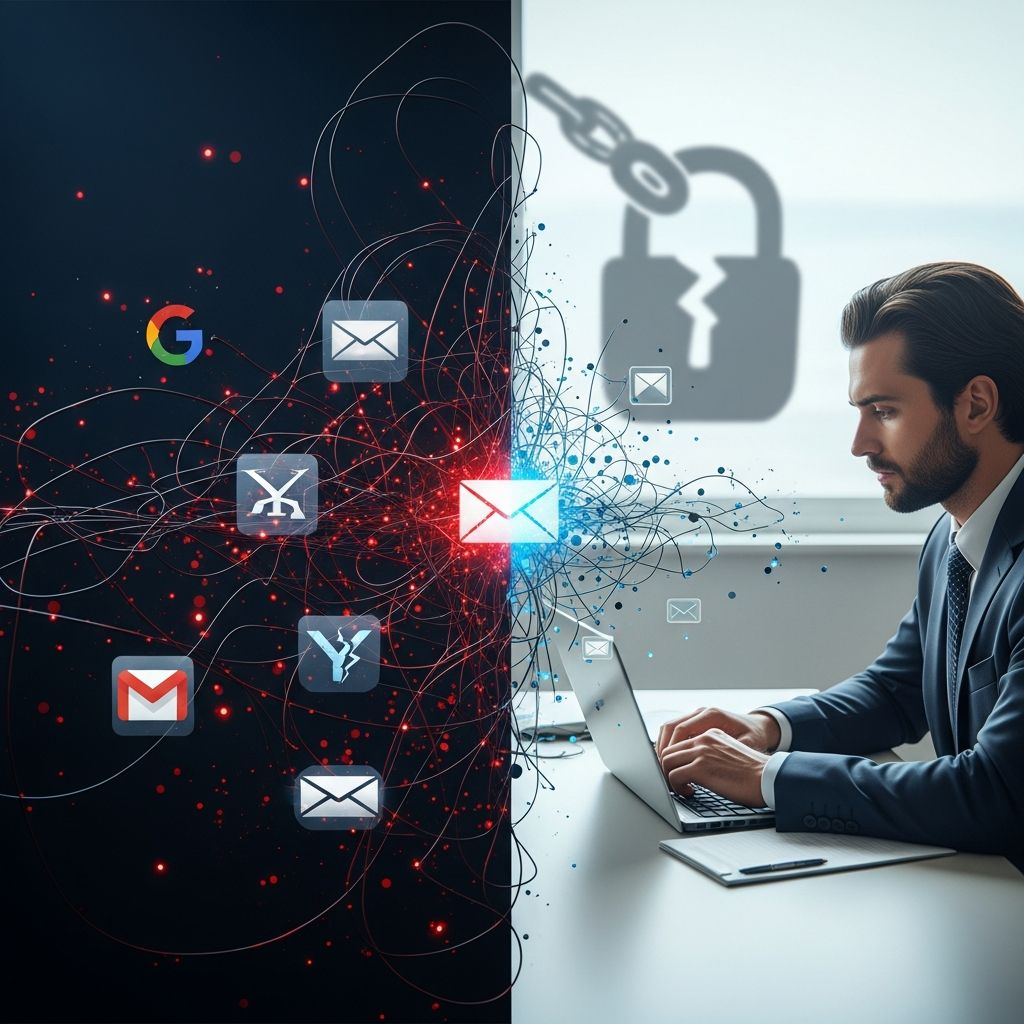
Using personal email accounts for professional purposes introduces numerous vulnerabilities that can compromise organizational security, violate regulations, and disrupt business continuity. This practice is particularly hazardous in government environments where transparency and accountability are paramount.
Security Vulnerabilities Exposed by Personal Accounts
Personal email services like Gmail or Yahoo often lack the advanced security protocols found in enterprise solutions. Without robust encryption, sophisticated spam filters, or mandatory multi-factor authentication enforced by IT teams, these accounts become easy targets for cybercriminals.
- Phishing and Malware Risks: Employees accessing personal email on work devices expose networks to phishing attacks and malware, as personal accounts frequently receive unsolicited malicious content.
- Data Transmission Weaknesses: Forwarding work emails to personal inboxes bypasses corporate encryption, storing sensitive information on unsecured third-party servers.
- Insider Threats: Unmonitored personal accounts can inadvertently leak intellectual property or customer data through casual sharing.
Business-grade email platforms provide centralized threat detection and response, which personal accounts simply cannot match, leaving organizations defenseless against evolving cyber threats.
Compliance and Legal Pitfalls
Regulatory frameworks such as HIPAA, GDPR, and FOIA impose strict requirements on data handling that personal emails fail to meet. These accounts do not support mandatory archiving, auditing, or retention policies essential for compliance.
| Regulation | Requirement | Personal Email Failure |
|---|---|---|
| HIPAA | Secure transmission of health data | No Business Associate Agreement (BAA); lacks encryption |
| GDPR | Data protection and breach reporting | Inadequate logging and access controls |
| FOIA | Public records accessibility | No centralized archiving; data loss on employee departure |
In government work, using personal email circumvents public records laws, as seen in high-profile cases where officials faced scrutiny for evading transparency requirements. This not only invites fines but can lead to legal actions against individuals and agencies.
Loss of Control and Operational Disruptions
Organizations forfeit oversight when employees use personal emails, complicating data recovery and continuity. If an employee departs, critical communications vanish into private inboxes, hindering e-discovery and project handovers.
- Account Termination Risks: Providers can suspend personal accounts without notice, severing access to business records tied to them.
- Unknown Storage Locations: Data resides on external servers beyond IT visibility, increasing breach exposure.
- Asset Management Issues: Services like domain registrations or cloud accounts linked to personal emails become inaccessible post-employment.
This lack of control amplifies risks in collaborative environments, where seamless data access is crucial for efficiency.
Professionalism and Brand Reputation Impacts
A personal email address undermines credibility. Clients and partners perceive @gmail.com domains as unprofessional compared to custom @company.gov or @business.com addresses, eroding trust and brand value.
In government contexts, this informality clashes with expectations of officialdom, potentially damaging public confidence. Moreover, breaches originating from personal accounts can lead to reputational harm, with leaked data fueling negative media coverage.
Government-Specific Perils and Policies
Government employees face heightened scrutiny due to mandates for official channels. Federal policies, including those from the National Archives and Records Administration (NARA), require records management through approved systems to ensure accountability.
Historical incidents, such as investigations into unauthorized email use, highlight consequences like congressional inquiries and policy overhauls. Personal accounts evade these controls, risking national security if classified information slips through.
- FOIA Evasion: Personal emails are not subject to Freedom of Information Act requests, obscuring public oversight.
- Security Clearances: Violations can jeopardize clearances and lead to disciplinary actions.
- Audit Failures: Lack of logging impedes internal audits and investigations.
Real-World Consequences and Case Studies
Organizations suffer tangible losses from personal email misuse. Data breaches have resulted in millions in fines, while operational disruptions from lost emails delay projects and inflate costs.
For instance, healthcare providers using personal emails for patient data have faced HIPAA penalties exceeding $100,000 per violation. In government, similar lapses have triggered prolonged legal battles and eroded public trust.
Best Practices for Secure Email Management
To mitigate these risks, organizations should enforce strict policies:
- Implement Company Domains: Mandate custom email addresses with built-in security.
- Deploy Mobile Device Management (MDM): Use tools like Microsoft MAM for sandboxed access without forwarding.
- Conduct Training: Educate staff on risks and alternatives like secure file-sharing.
- Monitor and Audit: Regularly review email usage for compliance.
- Adopt Zero-Trust Models: Verify all access regardless of device or account.
Transitioning to professional solutions enhances not just security but also productivity through integrated tools like calendaring and collaboration suites.
Frequently Asked Questions (FAQs)
Is it ever okay to use personal email for work?
No, it introduces unacceptable risks to security and compliance. Use approved business accounts instead.
What happens if I forward work emails to my personal account?
You expose data to unsecured servers, violating compliance and losing IT protections.
How does personal email affect government employees specifically?
It bypasses public records laws like FOIA, risking legal and security issues.
Can personal email damage my company’s reputation?
Yes, it appears unprofessional and increases breach risks leading to PR disasters.
What are affordable alternatives for small businesses?
Services like Google Workspace or Microsoft 365 offer secure, scalable business email at low cost.
Implementing a Secure Email Policy
Organizations must develop comprehensive policies prohibiting personal email for work. Include provisions for enforcement, such as automated blocking and regular audits. Leadership buy-in ensures cultural adoption, emphasizing that convenience never trumps security.
For government agencies, align policies with NIST frameworks, which recommend segmented networks and continuous monitoring. Regular simulations of phishing attacks build resilience.
Ultimately, prioritizing official channels safeguards data, complies with laws, and projects professionalism, fostering long-term success.
References
- The business risks of using personal email accounts — Barracuda Blog. 2019-08-02. https://blog.barracuda.com/2019/08/02/the-business-risks-of-using-personal-email-accounts
- The Pitfalls of Using Personal Email for Business Purposes — Unbound Digital. N/A. https://www.unbounddigital.net/pitfalls-personal-email-for-business/
- Why You Should Never Link Your Personal Email to Work — Infused Innovations. N/A. https://infusedinnovations.com/blog/secure-intelligent-workplace/why-you-should-never-link-your-personal-email-to-work
- What Are the Risks of Using Personal Email for Board Business? — BoardEffect. N/A. https://www.boardeffect.com/blog/what-risks-using-personal-email-board-business/
- The Risks of Using Personal Email for Business — TrueITPros. N/A. https://trueitpros.com/the-risks-of-using-personal-email-for-business/
- How dangerous is it to use work email addresses for personal — NWCRC. N/A. https://www.nwcrc.co.uk/post/work-emailaddresses-databreach
- The dangers of employees using personal email on a work device — Coro. N/A. https://www.coro.net/blog/the-dangers-of-employees-using-personal-email-on-a-work-device
Similar Articles








Read full bio of Sneha Tete


