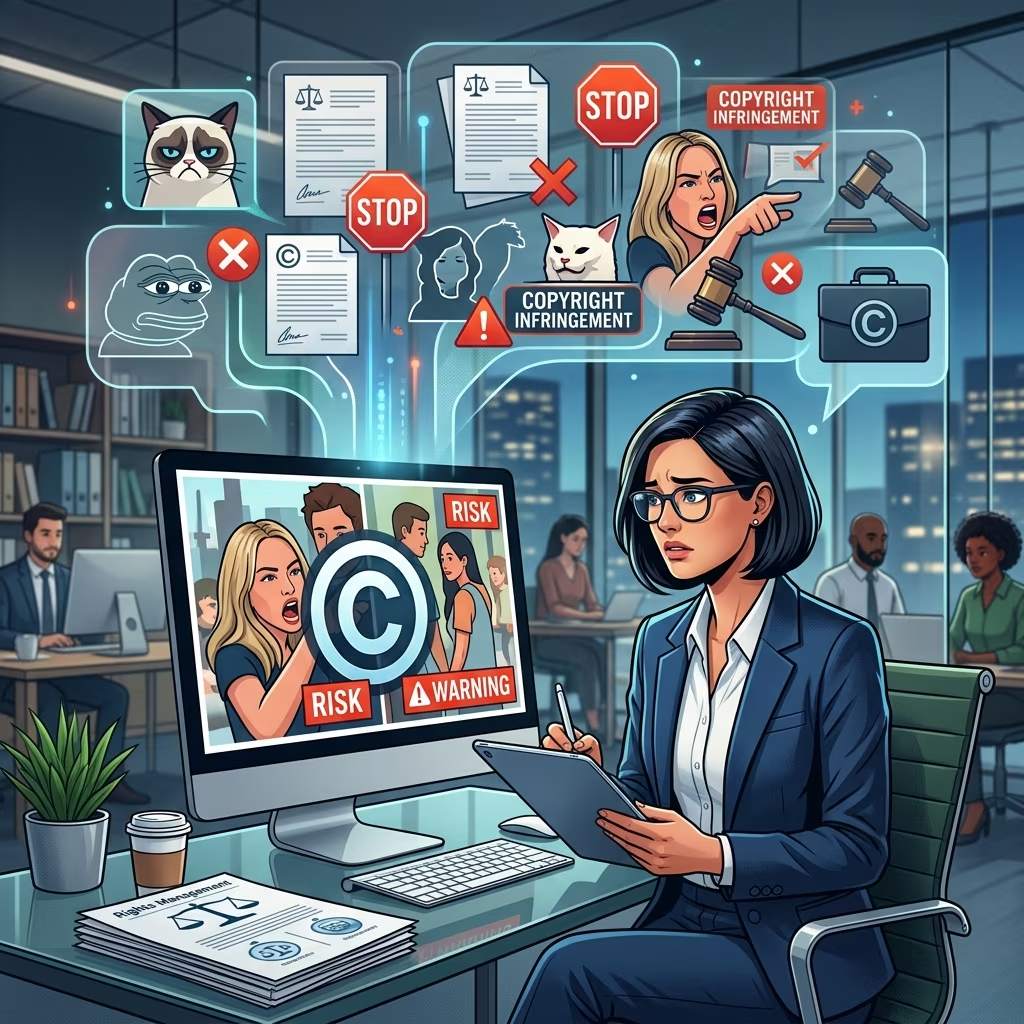
Internet memes can be a fast, cheap, and effective way for a company to speak the language of online audiences. But once a business turns a meme into marketing, the legal analysis changes. What may look like casual internet culture can become a commercial use of protected material, and that shift can expose a company to copyright, trademark, and publicity claims.
The safest approach is not to assume that a meme is free to use just because it is popular, widely shared, or funny. In many cases, the image, text, character, or phrase behind the meme belongs to someone else. A business that wants to use meme-style content should identify the underlying rights, evaluate whether fair use is realistic, and confirm that no third-party interests are being borrowed without permission. The law is fact-specific, and the commercial setting often matters more than the meme’s informal tone.
Why memes become a legal issue for companies
Memes often combine multiple layers of creative material: a photograph, a still from a movie or television show, a celebrity image, a quote, or a graphic that has been edited and reposted many times. That layered structure makes memes attractive for social media, but it also makes ownership difficult to trace. A business that uses a meme without investigating the source may copy a protected image, adapt someone else’s creative work, or exploit a recognizable face or brand in a way that creates liability.
The legal risk increases when the meme is used by a business account, in advertising, in sponsored posts, or in any campaign designed to promote a product or service. Commercial use is not automatically unlawful, but it tends to weaken arguments that the use is purely expressive or noncommercial. In practice, the more the meme is tied to sales, branding, or customer acquisition, the more careful the company must be.
The main rights that may be involved
Before posting a meme, a company should think about several different rights at once, because a single image can trigger more than one claim. Copyright protects original expression, including many photographs, illustrations, and edited images. Trademark law may apply if the meme uses a brand, logo, or phrase that points consumers to a source. The right of publicity may be implicated when a recognizable person’s name, face, or likeness is used for commercial gain without permission.
These rights are independent, which means that clearing one does not clear the others. A company may obtain permission from a photographer but still need consent from the person depicted. Likewise, a meme that avoids copyright problems could still create trademark confusion if it makes viewers think the post is affiliated with a brand or licensed by a famous character owner.
| Potential issue | What it protects | Why memes create risk |
|---|---|---|
| Copyright | Original creative expression | Memes often reuse photos, artwork, captions, or video stills |
| Trademark | Brand identifiers and source signals | Memes may use logos, slogans, or recognizable brand references |
| Right of publicity | Name, image, likeness, and persona in many jurisdictions | Memes often rely on celebrity faces or public figures for attention |
Why fair use is not a reliable business strategy
Many companies assume that internet culture automatically supports fair use. That assumption is risky. Fair use depends on context, including the purpose of the use, the amount taken, the nature of the original work, and the effect on the market for that work. A humorous post may still fail if it borrows too much, substitutes for licensed content, or serves a straightforward promotional function rather than commentary.
For a business, the commercial nature of the post is especially important. Courts often look more skeptically at uses that help a company attract attention or sell goods. A meme placed on a brand’s official social channel is not the same as a private joke among friends. The company is using the material to communicate commercially, and that can make fair use harder to defend.
- Fair use is fact-specific, not automatic.
- Commercial posts are harder to justify than commentary-focused posts.
- Using a meme as a sales tool can undermine a fair use argument.
- Transformative edits help, but they do not guarantee protection.
How ownership questions should be handled
A business should not begin with the assumption that the meme is ownerless. Some memes are based on independently created artwork, while others originate from older films, television scenes, photographs, or social media posts. In many cases, the creator of the meme may own only the original elements they added, while someone else may still control the underlying image or character.
That means a company should trace the meme as far back as possible. If the image came from a movie still, the studio may own the frame. If the meme uses a celebrity photograph, the photographer may own the photo even if the celebrity is famous. If the meme is built around a popular character, the rights may belong to the character’s owner rather than the person who edited the joke. The practical question is not simply, “Who posted it last?” but “Who owns the underlying material?”
What due diligence should include
Before using a meme in public-facing content, a company should run a short but disciplined rights review. That review does not need to be complicated, but it should be documented. A basic process helps avoid impulse posting and gives the company a chance to stop before it creates a legal problem.
- Identify the original source of the image, video still, or artwork.
- Check whether the meme includes a recognizable person, logo, or brand element.
- Confirm whether the content has been licensed for commercial reuse.
- Review whether the intended use is promotional, editorial, or purely expressive.
- Consider whether a safer original graphic could deliver the same message.
If the source cannot be verified, the company should treat the meme as risky. Uncertainty is often a signal to choose another image rather than hope that no one complains.
Why a license is often the best answer
When a company wants to use a meme for a campaign, the most predictable path is to obtain a license from the relevant rights holder. A license can clarify what is allowed, where the content can appear, how long it can be used, and whether the company may edit it. This is especially useful when the meme has recognizable commercial value or when the company plans to use it broadly across channels.
Even a license, however, should be reviewed with care. The company should make sure the agreement covers the exact uses planned and that the licensor actually controls the rights being granted. A permission letter from one party is not enough if another person owns the underlying photograph or the celebrity image rights. Businesses should also avoid relying entirely on broad promises of indemnity if they have not independently checked the rights chain.
Common mistakes businesses make
Most meme-related legal problems come from speed and informality. Social teams move quickly, content calendars are crowded, and a humorous post may seem too small to justify legal review. That mindset can create expensive errors later. A meme can become part of a campaign screenshot, advertising archive, or media report long after the original post is forgotten.
Some of the most common mistakes include assuming that reposting equals permission, relying on popularity as proof of legality, and using a celebrity image because it is already all over the internet. Another frequent mistake is treating internal humor as if it were private, even when the content is published on a corporate account. Once the business posts publicly, the post may be viewed as brand communication rather than casual conversation.
A practical risk-management checklist
Businesses do not need to ban memes altogether. They need a repeatable process that matches the level of risk to the size of the opportunity. A lightweight checklist can help social media teams make better decisions before publication.
- Use original graphics whenever possible.
- Avoid celebrity likenesses unless rights have been cleared.
- Do not assume that a meme found online is free for commercial reuse.
- Check whether the meme relies on copyrighted material from film, television, music, or photography.
- Review posts for possible brand confusion or endorsement implications.
- Escalate anything uncertain to counsel or a designated IP reviewer.
Companies that post frequently should also train employees on the difference between personal sharing and corporate marketing. A joke that might be acceptable on a personal account can be far more sensitive when used to represent a business.
When parody is not enough
Parody is often mentioned in meme discussions, but the label does not make a post lawful by itself. A true parody must usually comment on or criticize the original work, not merely borrow its style for attention. If the meme simply uses a famous image to make a different joke or to advertise a product, courts may treat it as ordinary commercial copying rather than protected parody.
That distinction matters because companies sometimes try to dress up marketing as humor. If the real goal is promotion, not commentary, the parody argument becomes weaker. Businesses should therefore ask whether the post is genuinely making a point about the source material or merely borrowing its popularity.
Frequently asked questions
Can a business use a meme if it gives credit?
Credit is helpful, but it does not replace permission. Attribution does not cure copyright, trademark, or publicity issues if the underlying use is unauthorized.
Is a meme safer if it is posted only on social media?
No. Social media is often where legal problems begin, especially when the post is tied to a brand, product, or campaign.
Are all memes copyrighted?
No. But many memes contain protected elements, and even a simple meme may include content owned by someone else. Each meme needs a source-by-source review.
What is the safest way to use memes in marketing?
The safest approach is to use original content, licensed content, or content that has been reviewed and cleared for the intended commercial use.
Can a meme create trademark problems even if there is no copyright issue?
Yes. A meme can still create confusion about sponsorship, affiliation, or endorsement, especially when it uses a brand name, logo, or famous character.
Building a smarter company policy
Organizations that regularly publish online content should address memes in their internal media policies. A good policy does not have to be long, but it should explain that social content is still subject to intellectual property rules. It should also tell employees who may approve meme-based posts, what review steps are required, and when the company must obtain a license or permission.
By building meme review into the normal workflow, a business can move quickly without acting carelessly. That balance is important because internet culture evolves rapidly, but legal risk does not disappear simply because a format is trendy. Careful review, clear ownership checks, and limited reliance on fair use are the most practical tools for keeping a funny post from becoming a costly dispute.
References
- Copyright Basics — U.S. Copyright Office. 2024-01-01. https://www.copyright.gov/circs/circ01.pdf
- Copyright Law of the United States: Fair Use — U.S. Copyright Office. 2024-01-01. https://www.copyright.gov/title17/92chap1.pdf
- Trademark Basics — U.S. Patent and Trademark Office. 2024-01-01. https://www.uspto.gov/trademarks/basics
- Right of Publicity — California Courts Self-Help Guide. 2024-01-01. https://selfhelp.courts.ca.gov/right-publicity
- Section 107: Limitations on Exclusive Rights: Fair Use — U.S. Copyright Office. 2024-01-01. https://www.copyright.gov/title17/92chap1.html#107