
Starting a Home‑Based Online Business in California
A practical legal and operational roadmap for launching a compliant home-based online business anywhere in California.
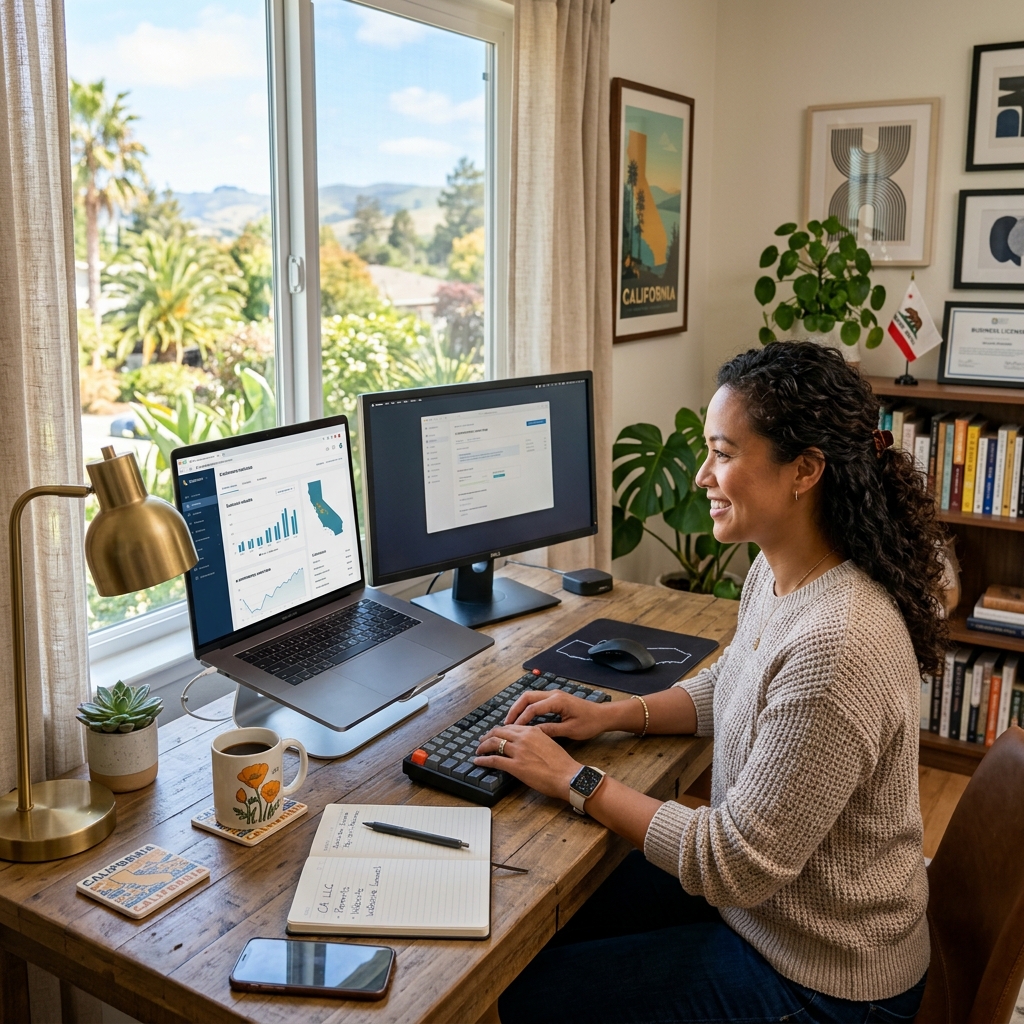
Running an online business from home in California combines flexibility with serious legal responsibilities. You may never meet customers in person, but you are still operating a business subject to state and local rules. This guide explains how to launch and legally manage a home-based online venture, from permits and taxes to home-use limitations and practical setup.
1. Understanding What Counts as a Home‑Based Online Business
Before registering anything, clarify what type of activity you are conducting from home. The rules that apply to you depend heavily on whether you sell physical goods, digital products, or services.
1.1 Common Types of Online Home Businesses
- E‑commerce retail: Selling physical products via a website, marketplace, or social platforms.
- Dropshipping: Taking online orders while suppliers ship directly to customers.
- Digital products: Offering downloadable templates, e‑books, online courses, or software.
- Remote professional services: Consulting, design, marketing, bookkeeping delivered online.
- Hybrid models: A mix of services and physical goods, such as coaching plus branded merchandise.
Your category determines licensing needs, tax obligations, and whether your home activities fit local zoning and home‑occupation rules.
1.2 When You Are Legally “Engaged in Business”
In California, you are generally considered to be engaged in business if you regularly sell or lease items or provide services for income, even if your operations are modest and entirely online. This status triggers registration, licensing, and tax requirements. Occasional sales may be treated differently from an ongoing commercial activity, but once you start advertising, maintaining a website, or tracking revenue, you are usually operating a business in the eyes of the law.
2. Choosing a Structure and Planning Your Business
Even small online ventures benefit from a clear plan and a chosen legal structure. These early decisions influence liability, taxes, and paperwork.
2.1 Basic Legal Structures for Home‑Based Online Businesses
| Structure | Liability | Tax Treatment | Typical Use |
|---|---|---|---|
| Sole Proprietorship | Owner personally liable for debts and claims | Income reported on personal tax return | Very small or low‑risk online businesses |
| Limited Liability Company (LLC) | Liability generally limited to company assets | Flexible; often treated as pass‑through | Growing businesses seeking liability protection |
| Corporation | Separate legal entity; stronger liability shield | Corporate tax rules; possible double taxation | Larger or investor‑backed online ventures |
Choosing between these options depends on risk, expected revenue, and whether you plan to hire employees or bring in partners. Many home‑based online entrepreneurs start as sole proprietors and later convert to an LLC once the business grows.
2.2 Essential Elements of a Simple Business Plan
A detailed business plan is not legally required, but it is helpful for organizing your ideas and financial expectations.
- Business concept: What you sell or offer and why customers will choose you.
- Target market: Who your customers are, where they live, and how they shop.
- Competitor overview: Key competitors, their pricing, and your advantage over them.
- Revenue model: How you will earn money (product sales, subscription, service fees).
- Startup costs: Licenses, website fees, equipment, marketing, and inventory.
- Operations from home: How orders, customer support, and shipping will be handled.
This plan guides financial decisions and helps you decide whether home‑based operations are sustainable or if you may eventually need a dedicated commercial space.
3. Naming Your Business and Using a “Doing Business As” (DBA)
Your online presence depends heavily on a clear, consistent name. In California, you must follow rules for business names and fictitious business names, especially when operating from home.
3.1 Selecting a Compliant Business Name
Before printing business cards or designing a logo, make sure your chosen name is available and legally usable:
- Check the California Secretary of State’s business name search to ensure no existing registered entity uses the same name.
- Review trademark databases through the United States Patent and Trademark Office to see if your preferred name is already protected for similar goods or services.
- Confirm that a related domain name and social media handles are available to support your online branding.
Using an unavailable or infringing name can lead to disputes, forced rebranding, or legal action, which is particularly disruptive for online businesses built on brand recognition.
3.2 When You Need a Fictitious Business Name (DBA)
If you are a sole proprietor using a name that does not include your own legal name, or if your company operates under a different public brand than its registered entity name, you may need to file a fictitious business name (DBA) at the county level.
- Sole proprietors using a brand name instead of their personal name.
- LLCs and corporations launching online shops under distinct product-line names.
- Businesses seeking clearer separation between legal entity and customer-facing brand.
Registering the DBA improves transparency and supports banking, contracts, and payments under that business name.
4. Licenses, Permits, and the California Seller’s Permit
One of the most important legal steps for home‑based online businesses is understanding when you must obtain a seller’s permit and other licenses. California regulates sales of tangible personal property even when those sales occur online.
4.1 The Seller’s Permit and Sales Tax Obligations
California requires businesses that sell goods subject to sales tax to obtain a seller’s permit or California sales tax certificate number. Once registered, you collect and remit applicable sales tax on taxable sales made within the state.
- You must obtain a seller’s permit if you are engaged in business in California and intend to sell or lease personal property ordinarily subject to sales tax.
- Sales conducted through websites, online auctions, or classified platforms are treated similarly to in‑person sales for permit purposes.
- Failing to register can result in penalties, interest, and possible enforcement actions from tax authorities.
Even home‑based businesses that only ship products from a residence can be required to collect sales tax once they have nexus with California (for example, storing inventory or operating from an address within the state).
4.2 Local Business Licenses and Home‑Occupation Rules
Most California cities and counties require a general business license or business tax certificate to operate legally, including for home‑based online ventures. In addition, many local governments have home‑occupation permits or rules that limit how you can use your residence for commercial purposes.
Common local requirements include:
- Business license or business tax certificate from your city or county.
- Home occupation permit or zoning clearance confirming that business activities are compatible with residential use.
- Restrictions on customer visits, signage, deliveries, noise, and on‑site employees to preserve residential character.
Because regulations vary widely across jurisdictions, using official city or county business portals and the state’s permit assistance resources (such as CalGold) can help identify which licenses and home‑occupation rules apply to your specific address.
4.3 Industry‑Specific Licensing Considerations
Some online activities require specialized licenses or professional credentials, even when operated from home:
- Professional services (like accounting or health‑related advice) may require state licenses or certifications.
- Highly regulated product categories (such as alcohol, firearms, or certain health products) involve complex permitting and restrictions that may not be compatible with residential settings.
- Financial or legal services may be subject to professional rules beyond ordinary business licensing.
For specific occupations, state and federal resources can help verify whether a license is required before you advertise or take clients.
5. Tax, Employer Identification Number, and Banking Setup
Even small home‑based online businesses must address tax registration and record‑keeping. Proper setup early on reduces problems with audits or financing later.
5.1 Obtaining an Employer Identification Number (EIN)
Many businesses benefit from an Employer Identification Number (EIN) issued by the Internal Revenue Service. The EIN functions similarly to a Social Security number for the business and is commonly required to open business bank accounts, file certain tax returns, or hire employees.
- Sole proprietors may operate without an EIN, but often obtain one to avoid using personal Social Security numbers with vendors and clients.
- LLCs, corporations, and partnerships typically require an EIN to handle federal and state tax obligations.
- Businesses that plan to hire staff or contractors subject to tax reporting should secure an EIN early.
5.2 Handling California State and Local Taxes
Tax obligations for a home‑based online business may include:
- Income tax: Business profits are reported on state and federal personal or corporate returns.
- Sales and use tax: If you hold a seller’s permit, you must file periodic returns and remit tax collected on taxable sales to California.
- Payroll taxes: Once you have employees, you must register for employer payroll accounts and complete required forms for withholding and unemployment taxes.
- Local business taxes: Some jurisdictions charge annual business taxes or gross receipts taxes separate from state obligations.
Keep accurate records of income and expenses, including shipping costs, transaction fees, home office expenses, and inventory purchases. This helps you meet tax requirements and may support deductions or credits where permitted.
5.3 Separating Business and Personal Finances
Even when working from a spare room or kitchen table, treating the business as financially distinct is crucial:
- Open a dedicated business bank account for income deposits and expense payments.
- Use separate payment processors and accounting software to track sales and costs.
- Maintain receipts and invoices to support tax filings and protect limited liability status if you form an LLC or corporation.
Clear separation simplifies tax reporting and reinforces the legal distinction between you and your business.
6. Making Your Home Legally Suitable for Business Use
Not every residence can be freely used for commercial purposes. Local rules and practical considerations affect what you can do from home.
6.1 Zoning and Home‑Occupation Limits
California cities and counties often limit business activity in residential zones.
- Some jurisdictions cap the amount of floor space that can be devoted to business activities.
- There may be limits on customer visits to your home, making purely online transactions more compatible than in‑person services.
- Local rules can restrict excessive deliveries, noise, and signage to preserve neighborhood character.
Before investing in inventory or equipment, check whether your planned operations comply with local zoning and home‑occupation policies. If your business is likely to generate significant traffic or deliveries, you may eventually need warehouse space or a commercial office.
6.2 Practical Setup for Orders, Storage, and Shipping
Beyond legal zoning rules, you must ensure your home environment can support an efficient online operation:
- Designate a secure area for storing inventory and business documents.
- Plan workflow for order processing, packing, and shipping so that business activities do not conflict with daily life.
- Evaluate your internet reliability and data security practices, especially if you handle customer information or payment details.
These measures help you operate professionally and reduce risks related to loss, damage, or privacy breaches.
7. Launching Your Online Presence
Once the legal groundwork is laid, you can develop your online presence and begin connecting with customers.
7.1 Building an E‑Commerce‑Ready Website
Key considerations for a home‑based online business website include:
- Clear product or service descriptions so visitors understand what you offer.
- Accurate pricing and tax information, including any applicable sales tax and shipping fees.
- Accessible terms and policies covering returns, privacy, and data protection.
- Mobile‑friendly design since many customers shop on phones and tablets.
Popular e‑commerce platforms and content management systems make it possible to set up a professional site without custom development while integrating with payment processors and shipping tools.
7.2 Compliant Marketing and Advertising Practices
Online marketing must stay honest and compliant with advertising and consumer protection rules:
- Avoid misleading statements about product benefits or availability.
- Clearly disclose the nature of digital products, subscription renewals, or any recurring charges.
- Respect email marketing rules by obtaining consent and allowing easy opt‑out options.
- Protect customer data and follow platform policies when using social media or marketplaces.
Transparent communication builds trust and helps you avoid complaints and regulatory scrutiny.
8. Frequently Asked Questions (FAQs)
8.1 Do I need a seller’s permit if I only sell occasionally online?
If you are engaged in business and sell items that are normally subject to sales tax, California generally requires a seller’s permit even when the sales occur through online platforms. Occasional, one‑time sales may be treated differently, but regular commercial activity, advertising, or maintaining an online shop usually triggers permit and tax obligations.
8.2 Is a general business license required for an online‑only shop?
Many California cities and counties require a general business license or business tax certificate for any local business, including those operating exclusively online from a residence. Check your local government’s business portal or guidance for home‑based operations to confirm specific requirements.
8.3 Can I run my online business from a rented apartment?
Yes, but your ability to operate a home‑based business may be affected by both local zoning rules and your lease agreement. Some landlords restrict commercial activities, and cities may limit certain types of business operations in multi‑unit residential buildings. Review your lease and consult local home‑occupation rules before starting.
8.4 Do digital products require a seller’s permit?
Digital goods and services may be treated differently from physical products for sales tax purposes. Whether a seller’s permit is required depends on whether what you sell is considered taxable tangible personal property under California rules. Because the distinction can be technical, it is advisable to review official tax guidance or consult a qualified advisor.
8.5 When should I consider forming an LLC or corporation?
Forming an LLC or corporation can provide liability protection and may support growth if you expect substantial revenue, higher risk, or employees. Very small, low‑risk home‑based ventures may begin as sole proprietorships, then convert to a formal entity once the business becomes more established or when additional protections and structure are needed.
References
- Business Quick Start Guide: Online Business — California Office of the Small Business Advocate. 2021-07-01. https://calosba.ca.gov/wp-content/uploads/BQSG_ONLINE-BUSINESS.pdf
- Guide to Opening a Home-Based Business — City and County of San Francisco. 2023-03-15. https://www.sf.gov/guide-opening-home-based-business
- Starter Kit for E-Commerce — Los Angeles Business Navigator. 2022-09-10. https://business.lacity.gov/plan-business/starter-kits/starter-kit-e-commerce
- How to Start a Business in California: 13-Step Guide — Shopify. 2025-01-20. https://www.shopify.com/blog/how-to-start-a-business-in-california
- How to Start an Online Business in California — Volusion. 2020-05-05. https://www.volusion.com/blog/how-to-start-an-online-business-in-california/
- How to Open an Online Business Out of My Home in California — LegalMatch Law Library. 2018-11-02. https://www.legalmatch.com/law-library/article/how-to-open-an-online-business-out-of-my-home-in-california.html
Similar Articles








Read full bio of medha deb


