
How to Receive Alimony in South Carolina
A practical guide to qualifying for, requesting, and protecting spousal support in South Carolina family court.
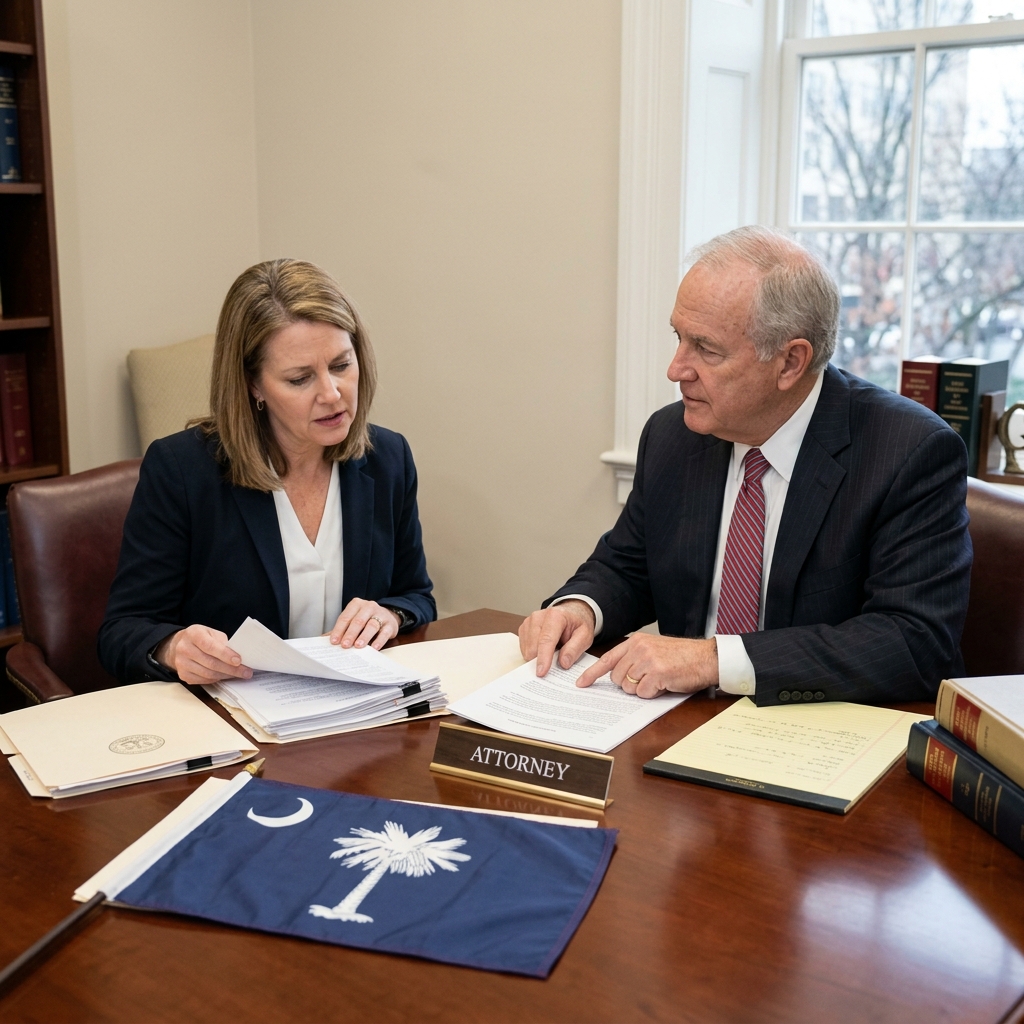
Alimony, also called spousal support or maintenance, is money one spouse may be ordered to pay the other during or after a divorce in South Carolina. It is designed to soften the financial impact of ending a marriage when one spouse has significantly fewer resources or earning ability than the other. Understanding how alimony works, who qualifies, and how to request it is essential if you depend on your spouse’s income or sacrificed your earning potential during the marriage.
Understanding Alimony Under South Carolina Law
South Carolina law gives family court judges broad authority to award alimony “in such amounts and for such term as the court considers appropriate” based on the circumstances of the parties and the nature of the case. There is no preset formula or calculator; instead, decisions are made case by case.
In practical terms, this means:
- The judge decides whether alimony is appropriate.
- If awarded, the judge sets the amount and duration.
- The court must weigh a list of statutory factors before making a decision.
Because there is no fixed calculation, careful preparation and clear evidence of your financial needs and your spouse’s ability to pay play a major role in the outcome.
Types of Alimony Available in South Carolina
South Carolina recognizes several distinct forms of alimony, each serving a different purpose. A court may award one type or combine more than one, depending on the situation.
Overview of Common Alimony Types
| Type of Alimony | When It Is Paid | Primary Purpose |
|---|---|---|
| Temporary (pendente lite) | During divorce proceedings | Maintains financial stability until the case is resolved. |
| Permanent periodic alimony | After divorce, at regular intervals | Long-term support where income disparity is significant. |
| Rehabilitative alimony | For a defined period after divorce | Helps a spouse gain education or training to become self-supporting. |
| Reimbursement alimony | For a set time or amount | Repays contributions that helped the other spouse increase earning capacity. |
| Lump-sum alimony | Single payment or fixed installments | Provides a defined total support obligation that does not change. |
| Separate maintenance and support | When spouses live apart but remain married | Supports a spouse in actions without a final divorce. |
Temporary Support During the Case
Temporary alimony is awarded while the divorce or separate maintenance case is pending and is meant to keep basic needs met until a permanent order is entered. It can cover everyday expenses such as housing, utilities, food, and transportation.
Key points about temporary alimony include:
- It is based on your immediate needs and your spouse’s current ability to pay.
- It can be adjusted as circumstances change before the final hearing.
- It automatically ends when the court enters a final decree that replaces it.
Permanent Periodic Alimony
Permanent periodic alimony is the most common form of ongoing support in South Carolina. It is paid at regular intervals—usually monthly—after the divorce becomes final.
This type of alimony usually continues until:
- The death of either spouse.
- The recipient remarries.
- The recipient enters into continued cohabitation with a romantic partner for 90 or more consecutive days, or repeatedly separates to evade this requirement.
Permanent alimony can often be increased or reduced later if there is a substantial change in circumstances, unless the parties have agreed in writing that it is non-modifiable.
Rehabilitative and Reimbursement Alimony
Rehabilitative alimony is awarded for a limited time to help a spouse become self-supporting, commonly through additional education, training, or work experience. It assumes that the recipient can eventually meet their own needs but needs a bridge period to get there.
Reimbursement alimony compensates a spouse for contributions that helped the other spouse earn more, such as supporting them while they attended school or advanced their career. It is not necessarily tied to ongoing need; instead, it focuses on fairness for past sacrifices.
Lump-Sum Alimony
Lump-sum alimony involves a fixed total support obligation, paid either as a single payment or a series of installment payments. Because the total amount is set at the time of the order, it usually cannot be modified later.
Courts may use lump-sum support when:
- The parties want certainty and closure regarding alimony.
- The paying spouse has the resources to satisfy a defined obligation upfront.
Separate Maintenance and Support
South Carolina allows awards of separate maintenance and support when spouses live apart but are not ready or able to obtain a divorce. These orders can address support and other financial issues much like a divorce, while leaving the legal marriage intact.
Who May Qualify for Alimony?
Alimony is not automatic in every divorce. The requesting spouse must show both financial need and that the other spouse has the ability to pay. In addition, statutory factors guide the court’s decision.
Basic Eligibility Considerations
Judges commonly look for situations where:
- One spouse earns considerably less income than the other.
- The lower-earning spouse would face a significant drop in standard of living after divorce.
- The lower-earning spouse contributed to the marriage in non-financial ways, such as raising children or managing the home, instead of building a career.
Courts also assess whether the marriage itself created a dependence—for example, where one spouse stopped working or declined career opportunities because the other partner’s income covered the household.
Factors the Court Must Consider
South Carolina law lists numerous specific factors that judges must weigh when deciding whether to award alimony and how much.
Important factors include:
- Length of the marriage and the ages of each spouse at marriage and at divorce.
- Physical and emotional health of both spouses.
- Education levels and need for further training to earn an adequate income.
- Employment history and future earning potential of each spouse.
- The standard of living enjoyed during the marriage.
- Current and reasonably anticipated income and expenses of both parties.
- The marital and nonmarital property each spouse will have after equitable distribution.
- Child custody, especially if one parent’s caregiving duties limit their ability to work outside the home.
- Marital misconduct that has economic consequences or contributed to the breakdown of the marriage.
- Tax consequences of different support structures.
- Existing support obligations from prior relationships.
- Any other factor the judge considers relevant.
How Adultery Affects Eligibility
South Carolina has a strict rule regarding adultery and alimony. A spouse who commits adultery generally cannot receive alimony if the affair occurred before certain key legal milestones.
In particular, a judge is barred from awarding alimony to a spouse who committed adultery before:
- Both spouses signed a written property or marital settlement agreement, or
- The court entered a permanent order of separate maintenance and support or a permanent order approving such an agreement.
This rule can completely eliminate eligibility for support, even if other factors would favor an award, so timing and documentation of misconduct may be critically important.
How to Request Alimony in South Carolina
Alimony is typically requested as part of a divorce or separate maintenance action in family court. You must affirmatively ask for support; the court will not usually award it on its own initiative.
Step 1: Include Alimony in Your Pleadings
When you file for divorce, or respond to your spouse’s filing, you can request alimony in your complaint or answer, or by a separate petition. Failing to request support early may limit your options later in the case.
To make a clear request:
- State that you are seeking alimony or separate maintenance and support.
- Indicate whether you are asking for temporary support, permanent support, or both.
- Ask for any related relief (such as temporary attorney’s fees or suit money, if appropriate).
Step 2: Prepare Detailed Financial Disclosures
Courts rely heavily on documentation of both spouses’ financial situations to decide support issues. You will typically be required to complete sworn financial declarations listing your income, assets, debts, and regular expenses.
Your financial disclosure should:
- List all sources of income (wages, self-employment, benefits, investment income, etc.).
- Identify bank accounts, retirement funds, real estate, and other property.
- Describe regular monthly expenses, including housing, utilities, transportation, food, medical care, and child-related costs.
- Include documentation such as pay stubs, tax returns, and bank statements where available.
Complete, accurate disclosures are essential; omissions or misrepresentations can harm your credibility and potentially lead to sanctions.
Step 3: Demonstrate Need and Ability to Pay
In addition to disclosures, you should present evidence showing why you need support and why your spouse is able to contribute.
Useful supporting information may include:
- Work history and reasons for employment gaps (e.g., childcare, health issues).
- Educational background and realistic prospects for future employment.
- Proof of contributions to your spouse’s career or earning capacity (for reimbursement claims).
- Medical records documenting conditions that limit your ability to work.
- Evidence of the standard of living during the marriage, such as housing costs and lifestyle patterns.
Step 4: Seek Temporary Relief If Needed
If you need immediate support while the case is pending, you can request a temporary hearing for pendente lite alimony. The court may issue a short-term order based on limited evidence to stabilize the situation.
At a temporary hearing, judges often consider:
- Basic financial disclosures.
- Immediate housing and childcare needs.
- Whether one spouse is currently controlling most marital funds.
How Alimony Is Calculated Without a Formula
Unlike child support, South Carolina does not use a mathematical formula to calculate alimony amounts. Instead, judges balance need and ability to pay in light of the statutory factors.
Balancing Need and Ability to Pay
When setting the amount, courts generally aim to:
- Allow the recipient spouse to meet reasonable monthly expenses.
- Preserve, as much as practical, a lifestyle reasonably similar to that enjoyed during the marriage.
- Ensure that the paying spouse still has enough income to meet their own obligations.
Because every case is unique, two marriages with similar incomes can lead to very different alimony awards depending on health, age, property division, child custody, and other factors.
Impact of Property Division
Equitable distribution of marital property interacts closely with alimony. A spouse who receives substantial assets or income-producing property may need less ongoing support.
Judges therefore look at:
- The value of assets awarded to each spouse.
- Whether the recipient has liquid resources to cover expenses.
- How retirement accounts and long-term investments are divided.
Modification and Termination of Alimony
Alimony orders may be revisited over time when circumstances change, but not every type of support is modifiable.
When Alimony Can Be Changed
Periodic alimony can often be adjusted if one party can show a substantial change in circumstances, such as:
- Significant increase or decrease in the paying spouse’s income.
- Recipient spouse becoming employed at a much higher salary.
- Major changes in health affecting earning capacity.
- Unexpected financial windfalls or losses.
Lump-sum awards, and some rehabilitative arrangements tied to a fixed schedule, may not be modifiable once ordered. Parties can also agree in writing that an award is non-modifiable.
Events That End Alimony
Alimony usually terminates automatically upon certain events, which are often written directly into the court order.
Common termination triggers include:
- The death of either spouse.
- The recipient spouse’s remarriage.
- Continued cohabitation by the recipient with another person in a romantic relationship for at least 90 consecutive days.
South Carolina law also considers cohabitation to exist when a couple lives together in a romantic relationship for shorter periods but separates periodically to avoid meeting the 90-day threshold. This can still terminate alimony if the court finds that the separation periods are intended to evade the law.
Practical Tips for Protecting Your Right to Alimony
Receiving fair alimony often depends on planning and documentation, not just the legal rules. The following strategies can help you present a strong case.
- Start gathering financial records early. Build a complete picture of household finances before separation, including bank statements, tax returns, and retirement account summaries.
- Document non-financial contributions. Keep records or notes about childcare, eldercare, household management, or support of your spouse’s education or business growth.
- Be candid about your limitations. If health, education, or family responsibilities limit your ability to work, gather medical records, school schedules, or other proof.
- Avoid conduct that can bar alimony. Understand how adultery and cohabitation rules work before making decisions that could affect eligibility.
- Consider professional guidance. Family law practitioners who work regularly with South Carolina courts can help evaluate your situation and present it effectively.
Frequently Asked Questions About Alimony in South Carolina
Is there a simple formula to calculate alimony in South Carolina?
No. Unlike child support, South Carolina does not use a fixed formula or calculator for alimony. Judges make individualized decisions based on statutory factors, the spouses’ finances, and the specific facts of each case.
Can I get alimony if my marriage was short?
Short marriages are less likely to result in long-term permanent alimony, but temporary, rehabilitative, or reimbursement support may still be possible if there is genuine need and clear evidence of contributions or sacrifices. The length of the marriage is one factor among many.
What happens if my ex-spouse refuses to pay alimony?
If a court has ordered alimony and payments stop, you can seek enforcement through the family court. Remedies may include income withholding, contempt proceedings, and other enforcement tools. The specific options depend on the order and your jurisdiction’s procedures.
Does child custody affect alimony?
Yes. When one parent has primary custody and is expected to limit work outside the home to care for the children, that can weigh in favor of alimony. The court may allocate support between the spouse and the children in its orders.
Can we agree on alimony without going to trial?
Spouses can negotiate and sign a written settlement agreement that includes alimony terms. The family court typically reviews the agreement to ensure it is fair and then incorporates it into a final order. However, misconduct rules—such as the adultery bar—can still affect what the court will approve.
References
- South Carolina Code Section 20-3-130: Award of alimony and separate maintenance and support — South Carolina Legislature. 2025-01-01. https://law.justia.com/codes/south-carolina/title-20/chapter-3/section-20-3-130/
- South Carolina Code Title 20, Chapter 3 — South Carolina Legislature. 2025-01-01. https://www.scstatehouse.gov/code/t20c003.php
- Alimony in South Carolina — Charleston Law. 2023-08-01. https://charlestonlaw.net/calculate-alimony-in-south-carolina/
- Alimony in SC: Understanding Spousal Support & Laws — Harvey & Battey, P.A. 2023-05-10. https://harveyandbattey.com/alimony-in-sc-spousal-support-laws/
- Spousal Support in South Carolina: Do You Qualify for Alimony? — Melone Hatley, P.C. 2022-11-15. https://www.melonelawpc.com/blog/spousal-support-in-south-carolina-do-you-qualify-for-alimony/
- Divorce: Can I get alimony? – South Carolina — WomensLaw.org. 2024-03-01. https://www.womenslaw.org/laws/sc/divorce/can-i-get-alimony
- Alimony and Spousal Support Payments — Strom Law Firm. 2023-04-20. https://stromlaw.com/alimony-and-spousal-support-payments/
Similar Articles








Read full bio of Sneha Tete


