
Navigating Common Estate Planning Disputes
Explore frequent estate planning conflicts, what triggers them, and how to prevent costly probate litigation for your family.
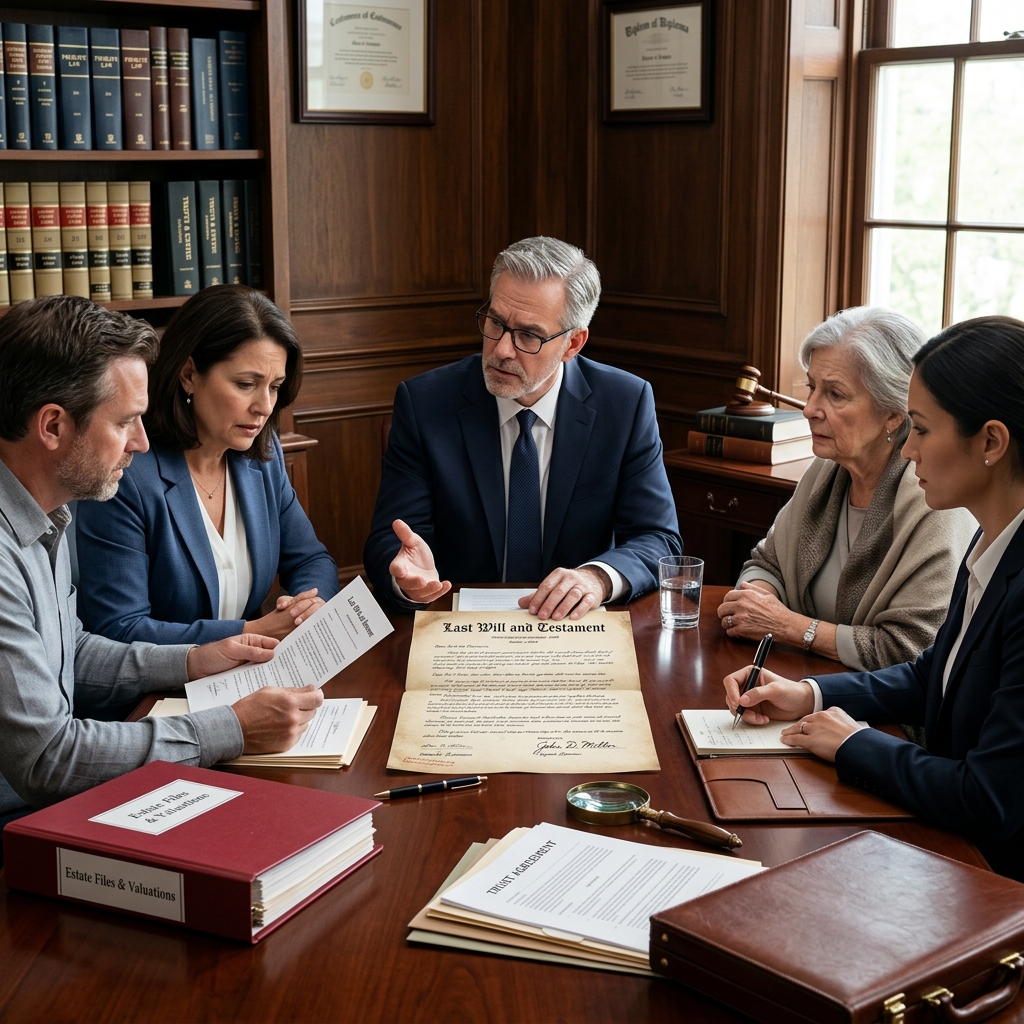
Estate planning is intended to provide clarity, security, and a smooth transition of assets when someone dies or becomes incapacitated.[10] Yet many families discover that disagreements over wills, trusts, and other planning documents can quickly become formal legal disputes in probate court. Understanding the most frequent sources of conflict helps individuals plan more carefully and reduce the risk of litigation.
Estate Planning, Probate, and Where Disputes Begin
Estate planning refers to the process of deciding how a person’s assets, debts, and responsibilities will be managed and distributed during incapacity and after death.[10] Core tools typically include:
- Wills – instructions for distributing property and naming an executor.
- Trusts – arrangements that allow a trustee to hold and manage assets for beneficiaries, often to avoid probate and preserve privacy.
- Powers of attorney – authorizations for someone to make financial or medical decisions if the person is unable to act.
After death, many estates are administered through a court-supervised process known as probate, where the will is validated, debts are paid, and assets are distributed. Disputes arise when family members, creditors, or other interested parties believe something has gone wrong in the planning or administration of the estate.
| Trigger | Typical Concern |
|---|---|
| Unexpected asset transfers | Property moved away from creditors or disinherited heirs |
| Questionable changes to a will or trust | Suspicion of undue influence or coercion |
| Executor or trustee misconduct | Mismanagement, self-dealing, or unfair distributions |
| Signs of cognitive decline | Debate over whether the person had legal capacity |
| Irregular documents or signatures | Concern that instruments have been forged or altered |
Fraudulent Transfers and Creditor Concerns
One recurring category of conflict involves fraudulent transfers, where a person moves assets away from their estate without receiving reasonable value in return, potentially placing those assets beyond the reach of creditors. Many states use concepts similar to the Uniform Fraudulent Transfer Act (UFTA) or more recent statutes to determine whether a transfer is improper.
Creditors may challenge transfers made shortly before death or while major debts were outstanding if those transfers:
- Occur for less than fair market value.
- Are made to close family members or entities controlled by the debtor.
- Leave the person unable to pay known obligations.
In probate disputes, creditors can ask the court to treat such transfers as void or recoverable so that the property is available to satisfy legitimate claims. Careful estate planning generally avoids last-minute transfers and considers outstanding debts when moving assets into trusts or gifting property.
Suing an Executor or Personal Representative
The executor (or personal representative) plays a central role in administering an estate: identifying assets, paying debts, filing tax returns, and distributing property according to the will and applicable law. Executors owe a fiduciary duty to the beneficiaries and must act honestly, prudently, and in good faith.
Legal action against an executor typically arises when beneficiaries allege that the executor has:
- Distributed assets contrary to the terms of the will or law.
- Used estate property for personal benefit.
- Failed to keep adequate records or provide required accountings.
- Neglected to safeguard assets, leading to loss or waste.
If a court finds that an executor has breached duties, remedies can include removal from the role, monetary surcharges, and in severe cases personal liability for losses. Appointing a trustworthy, financially literate executor and giving them clear instructions within the estate plan reduces the likelihood of these disputes.
Undue Influence: When Pressure Overrides Free Will
Undue influence is a frequent basis for challenging wills and trusts. In essence, it refers to situations where someone exerts such strong pressure or manipulation on the person making the plan that the resulting document no longer reflects that person’s independent wishes, but rather the influencer’s goals.
Courts typically look at factors such as:
- Whether the testator was vulnerable due to age, illness, or dependence.
- The nature of the relationship between the testator and the alleged influencer (for example, caregiver, new romantic partner, or controlling relative).
- Sudden or dramatic changes in the estate plan benefiting the influencer.
- The influencer’s involvement in arranging the attorney, drafting, or execution of documents.
If a will or trust is found to be the product of undue influence, a court can set it aside in whole or in part. To reduce such challenges, estate planners often encourage independent legal advice, private meetings without interested beneficiaries present, and thorough documentation of the client’s reasons for significant changes.
Breach of Fiduciary Duty in Estate Administration
Executors, administrators, and trustees all owe fiduciary duties to the estate and its beneficiaries. These duties typically include loyalty, prudence, impartiality, and adherence to legal and ethical standards. A breach of fiduciary duty occurs when the person in charge fails to meet these obligations, harming beneficiaries or the estate.
Common allegations in fiduciary breach cases include:
- Self-dealing or conflicts of interest.
- Ignoring the terms of the governing document (will or trust).
- Investing assets recklessly or failing to invest appropriately.
- Favoring one beneficiary over others without justification.
Courts may order fiduciaries to restore lost value, pay damages, or step down from their roles. Many estate plans now contain explicit language about investment standards, compensation, and expectations for communication to minimize misunderstanding and potential litigation.
Lack of Capacity: Was the Document Validly Made?
For a will or trust to be legally valid, the person creating it must have mental capacity at the time of signing. Capacity generally means that the person understands the nature and extent of their property, recognizes the people who would normally be expected to receive that property, and comprehends the effect of the document they are signing.
Disputes about capacity often arise when:
- There is a history of dementia, serious mental illness, or cognitive impairment.
- Planning documents were executed close in time to hospitalizations or crises.
- Different versions of a will appear over time with conflicting provisions.
Medical records, expert testimony, and observations from the drafting attorney may all be used to evaluate capacity. If a court concludes that the person lacked capacity, the will or trust can be declared invalid, and earlier instruments or default inheritance rules may apply instead.
Forged and Irregular Estate Planning Documents
Another serious category of probate conflict involves forged documents or altered signatures. These disputes surface when someone suspects that a will, trust, codicil, or beneficiary designation was not genuinely executed by the person whose estate is at issue.
Red flags for potential forgery include:
- Signatures that differ markedly from prior verified signatures.
- Documents appearing without the knowledge of close family or the usual attorney.
- Lack of proper witnesses or notarization where required by law.
- Physical evidence of erasures, substitutions, or additions.
Forensic document examiners, witness testimony, and notary records may all play a role in determining authenticity. When forgery is proven, courts can invalidate the document and, in some cases, pursue criminal or civil penalties against the responsible parties.
How Trusts Interact With Estate Disputes
People frequently use trusts to manage and distribute assets, often intending to reduce probate involvement and the risk of conflict. Trusts can hold property during the grantor’s lifetime and specify how and when beneficiaries receive assets, sometimes providing additional protections such as creditor shielding or tax planning.
However, trusts can themselves become the focus of disputes. Common trust-related conflicts include:
- Beneficiaries challenging amendments made late in life.
- Allegations that the trustee mismanaged investments or distributions.
- Claims that the trust was created under undue influence or without capacity, similar to will challenges.
- Disagreement over interpretation of vague or ambiguous trust provisions.
With proper drafting, trusts can still significantly reduce litigation risk. Clear language, well-chosen trustees, and routine reviews as circumstances change all contribute to more predictable administration.
Practical Strategies to Reduce Estate Planning Conflicts
While no plan can completely eliminate the possibility of litigation, thoughtful preparation can make disputes less likely and easier to resolve. Many government and educational resources emphasize the value of comprehensive, up-to-date planning documents and careful choice of fiduciaries.[10]
Consider these practical strategies:
- Use experienced counsel – Working with an attorney familiar with estates and trusts helps ensure compliance with formal requirements and reduces ambiguity.
- Document reasoning – When making unconventional choices (such as unequal distributions), clearly record the rationale to provide context if questions arise.
- Update documents regularly – Major life events like marriage, divorce, birth of children, or health changes warrant revisiting the plan.
- Choose fiduciaries carefully – Select executors and trustees who are organized, trustworthy, and able to handle complex financial tasks.
- Communicate expectations – Although not always comfortable, discussing the broad outlines of the plan with key family members can reduce surprise and resentment.
Frequently Asked Questions (FAQs)
What is the difference between a will contest and a trust dispute?
A will contest challenges the validity or interpretation of a will in probate court, often based on claims of lack of capacity, undue influence, or improper execution. A trust dispute similarly questions the validity, administration, or meaning of a trust, but may proceed in a different court division or under different procedural rules, depending on the jurisdiction.
Can creditors always reach assets placed in a trust?
Not always. Certain types of trusts, especially properly structured irrevocable trusts, may limit creditor access to assets. However, if transfers to a trust are deemed fraudulent—made to hinder or delay creditors—courts may allow those assets to be reached or the transfers to be unwound. Specific outcomes depend on state law and timing of the transfer.
How can families detect executor misconduct early?
Families can look for warning signs such as lack of financial transparency, unexplained delays in distributions, refusal to provide accountings, or inconsistent information about estate assets. Beneficiaries often have legal rights to request information and court oversight when concerns arise.
Does a medical diagnosis automatically mean someone lacks capacity to sign a will?
No. Capacity is evaluated at the time the document is executed and focuses on whether the person understands key facts about their assets and intended beneficiaries. A diagnosis of dementia or another condition may be important evidence but does not automatically invalidate every decision; courts consider the specific circumstances and available medical and legal testimony.
Are handwritten changes on a printed will enforceable?
Handwritten changes may or may not be valid, depending on state law and whether formal requirements for amendments (such as witnesses or notarization) are met. In many cases, informal alterations create uncertainty and disputes. It is generally safer to execute properly drafted revisions or codicils with legal guidance.
References
- Estate Planning – Wills and Trusts — California Department of Justice. 2022-05-01. https://oag.ca.gov/consumers/general/estate-finance
- Understanding Estate Planning — EBSCO Research Starters. 2019-01-15. https://www.ebsco.com/research-starters/business-and-management/understanding-estate-planning
- What Are the Different Types of Trusts in Estate Planning? — Frisch Financial Group. 2023-04-10. https://frischfinancial.com/what-are-the-different-types-of-trusts-in-estate-planning/
- Types of Trusts for Your Estate: Which Is Best for You? — U.S. Office of Personnel Management (LTCFEDS). 2021-09-30. https://www.ltcfeds.gov/care-navigator/types-of-trusts-for-your-estate-which-is-best-for-you
- The Complete Guide to Estate Planning — JustVanilla. 2023-02-20. https://www.justvanilla.com/blog/estate-planning
Similar Articles








Read full bio of medha deb


