
Divorce and Pets: How Ownership Is Decided
Understand how courts treat pets during divorce, and learn practical legal and emotional strategies to protect your companion animals.
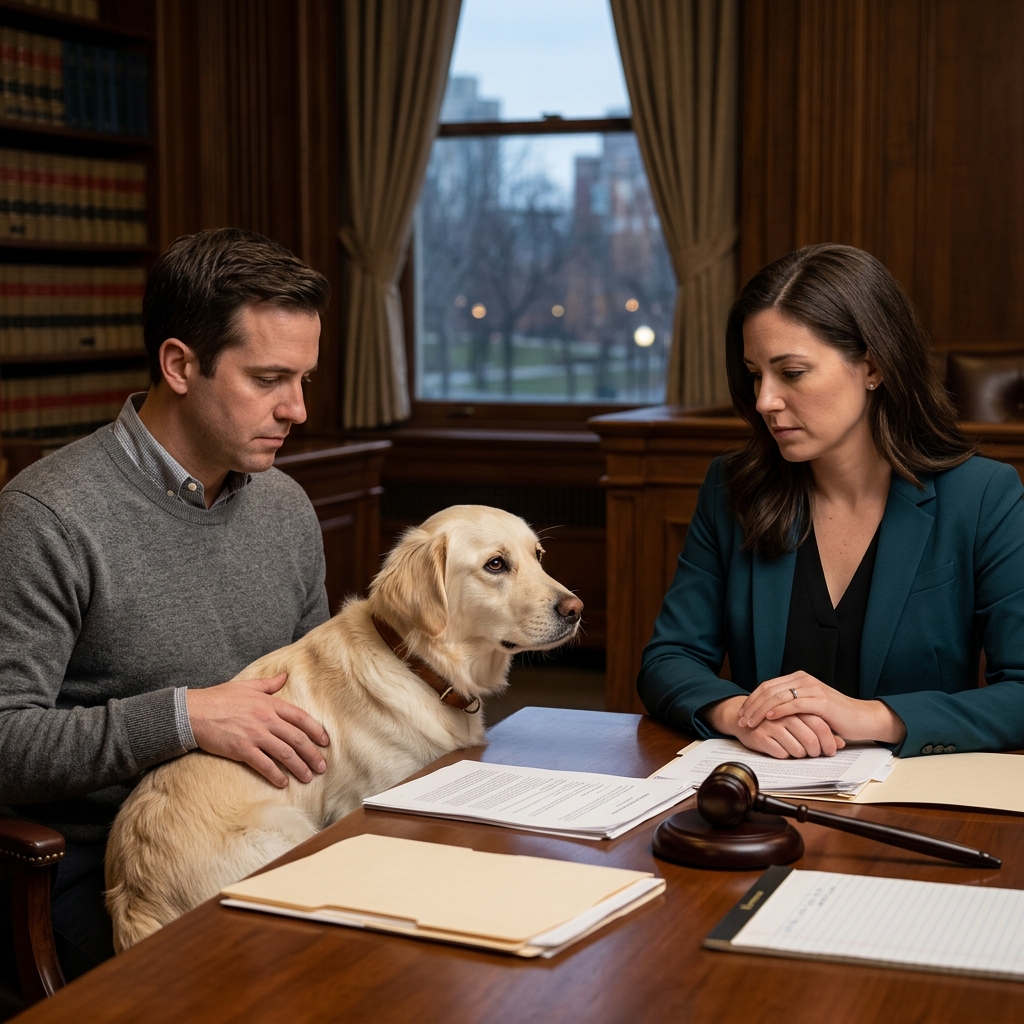
For many families, a pet is closer to a child than an object, but most divorce laws still treat animals as property rather than legal dependents. This difference between emotional reality and legal rules often surprises people who are separating and worried about who will keep the dog, cat, or other companion animal.
This article explains how courts typically address pets in divorce, what factors may influence ownership decisions, and how you and your spouse can proactively plan for your animal’s future care. It also covers emerging legal trends, negotiation tips, and answers to common questions about “pet custody” in family law cases.
Why Pets Are Treated as Property in Divorce
In almost all jurisdictions, companion animals are legally classified as a type of personal property, similar to furniture or vehicles, for purposes of ownership and division in divorce. Anti-cruelty and animal welfare statutes recognize that animals are sentient beings, but these laws usually operate separately from property rules and do not create custody standards comparable to those used for children.
When a married couple divorces, courts divide money and property according to the applicable regime, such as community property or equitable distribution. Under these frameworks, the pet is included in the list of assets that must be assigned to one spouse or the other.
- Community property states generally treat assets acquired during the marriage as jointly owned and subject to division at divorce.
- Equitable distribution states divide marital property in a way the court considers fair, which does not necessarily mean equal, based on various statutory factors.
- Separate property usually includes assets owned before marriage, individual inheritances, or certain gifts, and these typically remain with the original owner.
Because the law views pets through the lens of property, courts generally do not enter detailed custody or visitation schedules for animals in the way they do for children. Instead, the judge decides which spouse will own the pet after the divorce, and that determination is reflected in the final decree.
Marital vs. Separate Property: Who “Owns” the Pet?
Determining whether a pet is marital or separate property is often the first step in resolving who keeps the animal. The timing and circumstances of acquisition are fundamental to this characterization.
| Category | Typical Legal Treatment | Common Examples |
|---|---|---|
| Separate property | Usually awarded to the spouse who owns it; not divided between spouses. | Pet acquired before marriage; pet inherited by one spouse; pet clearly gifted to one spouse alone. |
| Marital property | Subject to division under community property or equitable distribution rules. | Pet adopted or purchased during marriage using joint resources; pet treated as family property. |
If a spouse owned the pet before the marriage or can show that the animal was inherited or individually gifted, many courts will treat the pet as that person’s separate property and award ownership accordingly. When the pet was acquired during the marriage, however, it is typically classified as marital property and must be assigned to one spouse as part of the overall division of assets.
How Judges Decide Which Spouse Keeps the Pet
Because a pet cannot literally be divided between spouses, courts must designate a single legal owner, even when both parties are deeply attached to the animal. The method used to reach this decision varies by jurisdiction, but several practical considerations commonly influence the outcome.
Traditional Property-Based Approach
Under the traditional approach, the judge looks at evidence of ownership and contribution rather than the animal’s emotional needs. Key factors can include:
- Proof of purchase or adoption such as contracts, receipts, or adoption papers showing who signed and paid for the pet.
- Licensing and registration records indicating whose name appears on municipal licenses or microchip information.
- Veterinary records documenting which spouse is listed as owner and who authorized medical decisions.
- Financial contributions demonstrating who bought food, paid for veterinary care, or covered insurance and training expenses.
In this property-centered model, the decision is often presented as an allocation of assets rather than a judgment about who is the “better” pet guardian. One spouse receives the animal; the other may receive offsetting property, or no compensation at all, depending on the broader division of the marital estate.
Emerging Trends: Considering the Pet’s Well-Being
Some states have recently begun to shift away from a purely property-based view of pets in divorce. A small but growing number of jurisdictions authorize courts to consider the well-being of the animal when deciding ownership. In these places, judges may weigh factors that resemble, in limited form, a “best interests” analysis.
Examples of considerations in these more progressive frameworks may include:
- Which spouse has historically provided most of the day-to-day care.
- The stability and suitability of each spouse’s post-divorce living arrangements.
- Work schedules and availability to supervise and exercise the animal.
- The presence of other pets or children with established bonds to the animal.
Even these modern laws generally stop short of full child-style custody doctrines, but they recognize that companion animals are more than ordinary household objects. Courts in such states may be more open to shared arrangements or to crafting orders that reflect the pet’s needs.
Agreements Between Spouses: Planning Pet Arrangements
Regardless of the default rules, spouses often have substantial control over how their pet will be treated by working out their own agreement. In many jurisdictions, couples can include detailed pet provisions in a negotiated settlement, separation agreement, or collaborative divorce plan, and the court may incorporate these terms into the final decree.
Types of Pet-Related Agreements
- Sole ownership with informal contact
One spouse is the legal owner, but the parties agree that the other can visit or occasionally care for the pet. This arrangement is usually informal and not heavily enforced. - Structured sharing or “visitation”
Although formal pet visitation is uncommon in court orders, spouses may privately agree to alternate weeks, weekends, or holidays with the animal, subject to practical constraints. - Cost-sharing arrangements
The parties can decide how veterinary bills, grooming, and other expenses will be divided, even if only one spouse retains legal title to the pet. - Relocation and travel terms
Agreements can address what happens if the primary pet owner moves, including notice requirements and travel permissions.
To be enforceable, pet provisions usually need to be written clearly and included in the final divorce decree or property settlement documents. Ambiguous or unwritten understandings can be difficult to enforce if conflict arises later.
Evidence That Can Help Your Case
If you anticipate a dispute over who will keep the animal, gathering documentation early can strengthen your position. Property and equitable distribution laws often rely heavily on records that show ownership, care, and financial responsibility.
- Veterinary files listing you as the owner or primary contact, including vaccination records, prescriptions, and appointment histories.
- Licensing and registration documents from local authorities or microchip registries in your name.
- Receipts and invoices for food, insurance, grooming, training, and boarding demonstrating your ongoing financial support.
- Photographs and digital records showing your daily involvement, such as time-stamped photos, messages, or social media posts relating to the pet.
- Correspondence indicating that the pet was gifted or left to you specifically, if inheritance or gifting is at issue.
In equitable distribution states, such evidence can help a judge understand both the legal ownership and the practical realities of who has functioned as the primary caregiver. It may also support arguments that the pet should be treated as your separate property, for example, when inheritance or an individual gift is involved.
Practical and Emotional Considerations for Pet Owners
Beyond legal rules, divorcing couples should consider what arrangement will best protect both the animal and the people involved. While shared time might sound emotionally appealing, it can be stressful if implemented without clear boundaries or if the parties remain highly conflictual.
Questions to Discuss with Your Spouse
- Who has the most stable housing and can safely accommodate the pet?
- How will work schedules affect the pet’s daily exercise and supervision?
- Are there children whose well-being is closely tied to the animal’s presence?
- Can both parties reliably follow a shared schedule without ongoing disputes?
- Is the pet likely to handle transitions between homes without anxiety or behavioral issues?
In some cases, it may be kinder to the animal to live primarily with one person who can provide consistent care, even if both spouses love the pet. In others, a cooperative, low-conflict shared arrangement may work well. The best outcome is one that balances emotional attachments with practical realities and the pet’s welfare.
Frequently Asked Questions About Pets in Divorce
Do courts recognize “custody” of pets like they do for children?
Generally, no. Most jurisdictions treat pets as property, so courts decide ownership rather than custody or visitation in the child-law sense. The final decree usually states which spouse is awarded the pet as part of the property division, not as a dependent.
Can a judge order shared pet time or visitation?
Many courts are reluctant to create ongoing enforcement obligations regarding pet visitation because animals are property, not legal dependents. However, spouses can often agree to a schedule and include it in their settlement documents. In some more progressive jurisdictions, judges may be willing to approve or incorporate such agreements, particularly where both parties consent.
What if my ex-spouse refuses to turn over the pet after the divorce?
If a divorce decree clearly awards the pet to you and your former spouse fails to comply, you may be able to pursue enforcement as a property division issue in the appropriate court. The specific procedures depend on local rules, but remedies can include orders compelling delivery of the animal or other enforcement measures.
Does it matter that I did most of the day-to-day care?
In strictly property-based systems, practical caregiving may matter less than documentary evidence of ownership, such as purchase and registration records. In states that allow courts to consider the animal’s well-being, the history of caregiving and your ability to continue that care can carry more weight.
Are there special rules for service animals or emotional support animals?
Where a pet also functions as a service animal or is closely tied to a person’s disability-related needs, broader disability and accommodation laws may come into play. While those laws do not usually override property rules directly, they can influence practical outcomes and how courts and parties approach the question of who should live with the animal.
Key Takeaways for Pet Owners Facing Divorce
- Legally, pets are almost always treated as property, not children, in divorce proceedings.
- The distinction between marital and separate property is crucial to determining who keeps the pet.
- Documentation of ownership and caregiving can significantly affect the outcome of a dispute.
- Some jurisdictions have begun to consider the pet’s well-being, not just paperwork, when deciding ownership.
- Negotiated agreements often provide the most flexible and humane solutions for both the animal and the people involved.
If you are worried about your pet during a divorce, consider speaking with a family law attorney familiar with local rules and, where available, newer statutes that address animals more explicitly. Understanding your rights and responsibilities early can help you protect your companion animal while navigating the broader challenges of separation.
References
- Pets Under Property Division Law — Justia. 2023-01-10. https://www.justia.com/family/divorce/dividing-money-and-property/divorce-and-pets/
- Pets in Family Law Cases — Texas Legal Services Center (TexasLawHelp.org). 2023-08-15. https://texaslawhelp.org/article/pets-in-family-law-cases
- Pet Custody in NC Divorce: How Equitable Distribution Affects Your Dog or Cat — Legal Aid of North Carolina. 2022-11-03. https://www.northcarolinalegalservices.org/article/pet-custody-in-nc-divorce-how-equitable-distribution-affects-your-dog-or-cat
- Michigan Divorce and Pet Custody — Alward Fisher. 2021-06-18. https://nmichlaw.com/blog/michigan-divorce-and-pet-custody/
- Custody of Pets in Divorce — Animal Legal & Historical Center, Michigan State University College of Law. 2020-09-01. https://www.animallaw.info/intro/custody-pets-divorce
Similar Articles








Read full bio of medha deb


