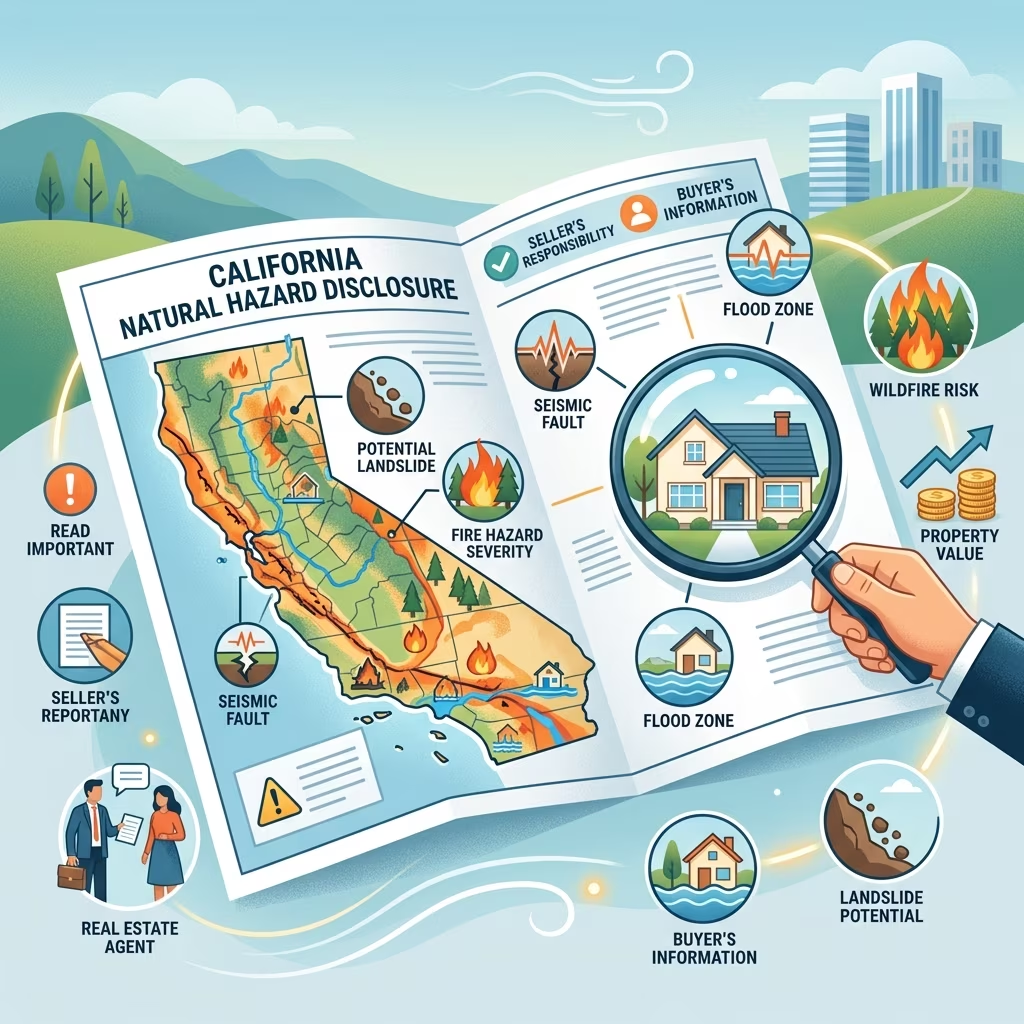
California real estate transactions often involve more than price, financing, and inspection reports. Sellers may also have a legal duty to reveal whether a property lies in a mapped hazard area, giving buyers information that can affect safety, insurance, development, and long-term value. These disclosures are designed to reduce surprises by making certain environmental and geological risks visible before a sale closes.
For buyers and sellers alike, the key issue is not whether a hazard might ever occur, but whether the parcel is located in a government-identified zone that triggers disclosure. California’s Natural Hazards Disclosure Act requires that information to be shared in a standardized way for many residential transfers. That structure helps create consistency across transactions and makes it easier for buyers to compare properties.
Why these disclosures matter
Natural hazard disclosures serve a consumer-protection purpose. A buyer considering a home in a floodplain, seismic zone, or wildfire-prone area may want to account for insurance costs, rebuilding concerns, financing restrictions, or future maintenance obligations. Without a disclosure regime, those facts might be difficult for a buyer to identify during the ordinary course of a transaction.
These disclosures also help limit disputes after closing. If a seller or broker provides the required notice, the buyer has a documented record that the property’s location was flagged before transfer. That can be important in a later disagreement about whether the property was properly described and whether the buyer had an opportunity to investigate further.
Which hazard zones are commonly disclosed
California’s standard natural hazard disclosure form centers on six mapped hazard categories. These are the zones that typically trigger the statutory notice in qualifying residential sales:
- Special flood hazard areas
- Areas subject to dam inundation
- Very high fire hazard severity zones
- Wildland fire areas
- Earthquake fault zones
- Seismic hazard zones, including landslide and liquefaction areas
These categories are based on official government maps, not a seller’s personal opinion or a private risk estimate. In other words, the disclosure asks whether the parcel falls within a mapped area established for regulatory or disclosure purposes.
Some reports may also include supplemental information that goes beyond the statutory minimum, such as radon, airport influence areas, or military ordnance notices. Those items can be useful, but they are not the core six hazards that define the California form.
Who is responsible for making the disclosure
Responsibility for disclosure is shared, but the exact duty can shift depending on the type of hazard and whether the seller is represented. In many transactions, the seller’s agent plays a central role in preparing or delivering the notice, while the seller remains responsible for ensuring the information is complete and accurate.
California materials also make clear that the seller and agent may use a qualified third party to prepare the report. That third party may be a disclosure company, engineer, surveyor, geologist, or another professional experienced in natural hazard data. The point is to provide a reliable report based on the relevant maps and official records.
Importantly, agents cannot force the seller to use a particular disclosure company or imply that the seller has no choice. If the agent has an affiliated relationship with a report provider, that relationship must be disclosed so the seller can decide whether to proceed with that report or select another one.
How the disclosure process usually works
In a typical residential sale, the disclosure is provided before closing so the buyer can review it during escrow. The standardized form identifies whether the property is located in any of the mapped hazard zones and gives the buyer notice of those conditions.
That notice does not predict future disasters. Instead, it tells the buyer that the property sits within an area already identified on official maps as one that may face heightened natural risk. A buyer can then decide whether to request more information, obtain insurance quotes, or consult experts before moving forward.
Because the form is standardized, it reduces confusion over wording and format. Sellers do not need to draft a custom explanation from scratch, and buyers can more easily spot the relevant sections. This consistency is one reason the California form has become a model for disclosure-driven consumer protection.
When disclosure is required and when it is not
The disclosure requirement generally applies to qualifying residential transactions that are subject to California’s transfer disclosure rules. Many resale transactions fall into this category, while some new subdivision sales and special transfer types may be exempt.
California materials also note that certain transfers do not require the full natural hazard disclosure package, including some foreclosure, bankruptcy, and probate situations. Those exceptions matter because a seller’s legal obligations are not identical in every real estate transfer. The exact answer depends on the transaction type, the status of the parties, and the applicable statutory framework.
Another important point is that the duty to disclose may arise even if the seller has no actual knowledge of the hazard zone, as long as the required maps or local lists have been made available and the law’s notice conditions are satisfied. This means the legal trigger is often objective rather than subjective.
What buyers should do after receiving the form
A disclosure form is not the end of the inquiry; it is the beginning of informed due diligence. A buyer who learns that a property is located in a mapped zone should consider what that means in practical terms. For example, a flood designation may affect flood insurance needs, while a seismic hazard designation may raise questions about soil stability or building reinforcement.
Buyers may also want to review the relevant maps, ask follow-up questions, and consult with inspectors or specialists depending on the nature of the hazard. The disclosure tells the buyer where to look next, but it does not replace a full property investigation. In many cases, the smartest response is to use the disclosure as a roadmap for additional review.
Buyers should also keep the document with their closing records. If questions arise later about whether the property was in a disclosed zone, the signed disclosure can help establish what information was available at the time of sale.
Practical tips for sellers and agents
Sellers and agents can reduce risk by treating natural hazard disclosure as a routine part of transaction planning, not as a task left for the last minute. Early review of the property’s location against mapped hazard data can prevent delays in escrow and reduce the chance of a rushed or incomplete disclosure.
- Confirm the property’s zoning and mapped hazard status early in the listing process
- Use a current disclosure report based on official map sources
- Make sure all required parties receive the form before closing
- Document any affiliated relationship with a disclosure vendor
- Keep copies of the signed disclosure in the transaction file
These steps are especially helpful when a property may fall into more than one hazard category. A carefully prepared report can prevent confusion and improve transparency throughout the sale.
Common misunderstandings about natural hazard disclosure
One common misunderstanding is that the disclosure is the same as a promise about future damage. It is not. The form only identifies whether the property is located in a mapped area tied to a recognized hazard category. A buyer still must evaluate the practical risk, which can vary widely even within the same zone.
Another misconception is that every property needs the same disclosure in every transaction. In reality, California’s requirements are tied to specific property types and transfer settings. The details matter, and an exemption in one context may not apply in another.
A third misunderstanding is that the seller can simply rely on guesswork. The system is built around official maps and statutory notice rules, not informal assumptions. That is why many parties use third-party disclosure reports rather than trying to piece together the answer themselves.
How this fits into the larger disclosure framework
Natural hazard disclosure is only one part of California’s broader real estate disclosure system. Sellers may also have to provide condition reports, material defect disclosures, and other notices depending on the property and transaction. The natural hazard form is distinctive because it focuses on government-mapped environmental and seismic risks rather than the physical condition of the house itself.
That distinction matters. A house can be well maintained and still sit in a flood or wildfire zone. Conversely, a property outside those zones may still have structural or maintenance issues. Buyers need both kinds of information to evaluate a purchase responsibly.
Frequently asked questions
Does the disclosure mean the property is unsafe? Not necessarily. It means the parcel is located in an officially mapped hazard area, which may affect insurance, planning, or buyer expectations.
Can a seller choose any disclosure provider? Yes. California materials indicate that sellers are free to select a provider and should not be pressured into using a particular one.
Do these rules apply to all sales? No. The disclosure generally applies to qualifying residential transfers, while some transaction types are exempt or handled differently.
What if a seller forgets to disclose? Failure to provide required disclosure can expose the seller and possibly the agent to liability, depending on the facts and governing law.
Is the buyer limited to the disclosure form alone? No. The form is a starting point. Buyers can and often should do additional investigation if a hazard designation appears on the report.
References
- Standardized Natural Hazards Disclosure Statement — Wikipedia. 2026-07-10. https://en.wikipedia.org/wiki/Standardized_Natural_Hazards_Disclosure_Statement
- Disclosure Information — Disclosure.com. 2026-07-10. https://orderform.disclosures.com/Resources/DisclosureInformation
- Natural Hazard Disclosure – The California Bar Journal — California Bar Journal archive. 1999-08-01. https://archive.calbar.ca.gov/archive/calbar/2cbj/99aug/mclestdy.htm
- Natural hazard disclosure report (NHD) — Rocket Mortgage. 2026-07-10. https://www.rocketmortgage.com/learn/nhd-report
- Natural Hazard Disclosure Report Guide — MRI Software. 2026-07-10. https://www.mrisoftware.com/blog/what-is-a-natural-hazards-disclosure-report/
- California: 5 of the Most Common Questions About NHD Reports and the Answer for Each — SnapNHD. 2026-07-10. https://www.snapnhd.com/blog/california-5-of-the-most-common-questions-about-nhd-reports-and-the-answer-for-ea