
Colorado Traffic Laws: Key Rules for Safe Driving
Learn the essential Colorado traffic rules on speed, right-of-way, phones, DUIs, and tickets before you hit the road.
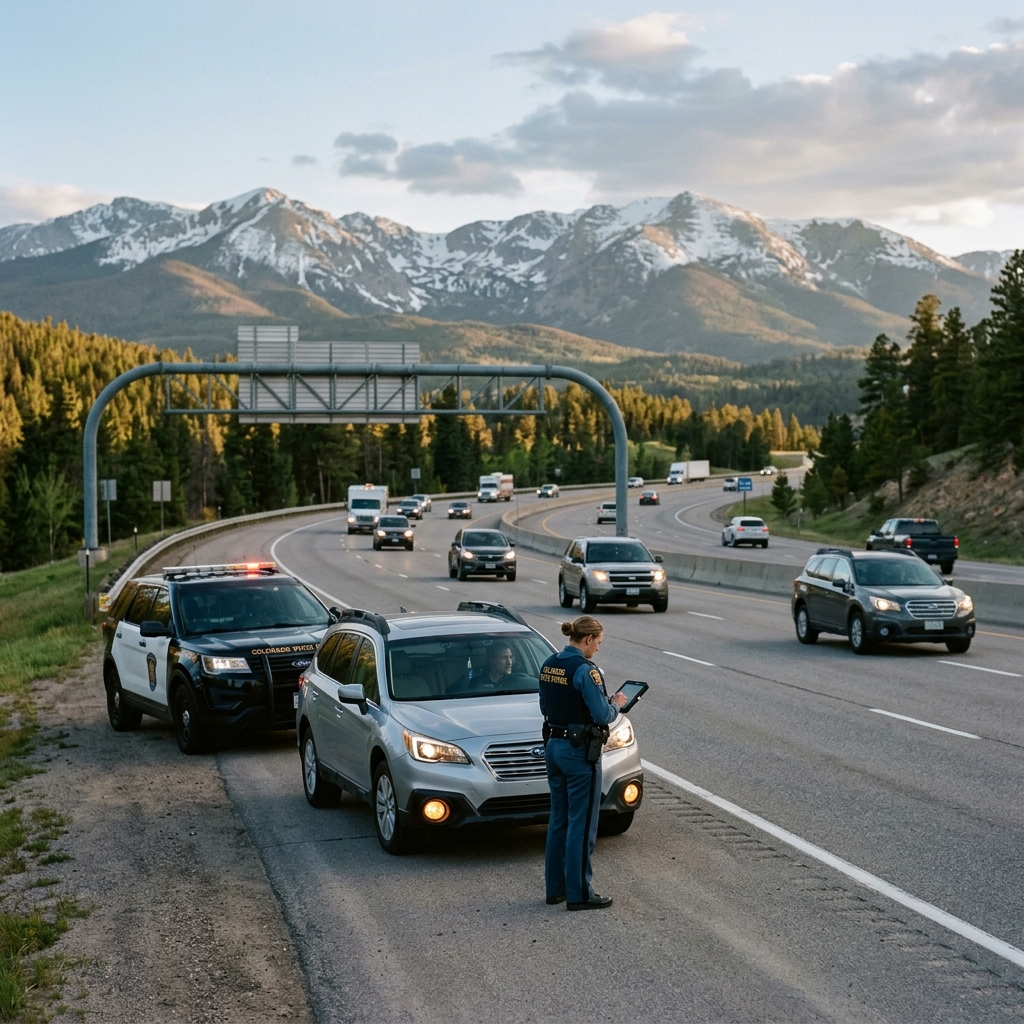
Colorado’s roads range from busy city streets to steep mountain passes, and the state’s traffic laws are designed to keep drivers, cyclists, and pedestrians safe in all of these environments. Understanding these rules is especially important if you are new to Colorado or just starting to drive here.
This guide explains core Colorado traffic rules in clear language: how speed limits work, when you must yield, what you can do at red lights, how phone and seat belt laws apply, what happens if you drink and drive, and what to expect when you receive a ticket.
Overview of the Colorado Traffic Code
Colorado regulates vehicles and traffic under Title 42 of the Colorado Revised Statutes, which sets statewide rules for driving behavior, enforcement, and penalties. Local governments can adopt a Model Traffic Code that mirrors these state rules to keep regulations consistent from one city or county to another.
In practice, this means that core rules—like speed limits, right-of-way, DUI thresholds, and basic signaling requirements—are largely uniform throughout the state, even though local roads may post different speed limits or have additional parking and safety rules.
Basic Driving Rules Every Colorado Driver Should Know
Several everyday rules shape how drivers move through Colorado traffic, especially at intersections and on multi-lane roads.
Turns at Red Lights
Intersections with traffic signals are a common source of confusion for new drivers. Colorado’s rules generally allow certain turns at red lights as long as you stop first and yield appropriately.
- Right turn on red: You may turn right at a steady red light after coming to a complete stop and yielding to cross traffic and pedestrians, unless a sign specifically prohibits a right turn on red at that intersection.
- Left turn on red from a one-way onto a one-way: If you are turning left from a one-way street onto another one-way street, you may turn left on red after a full stop and yielding to others, again unless signs say otherwise.
- Always yield: Even when these turns are allowed, oncoming traffic with a green light and pedestrians in crosswalks have priority, so you must wait until it is safe.
Using Lanes and Keeping Traffic Flowing
On multi-lane highways, Colorado emphasizes smooth traffic flow and safe passing. Drivers are expected to use lanes in ways that minimize congestion and sudden lane changes.
- Left lane for passing on high-speed highways: On multi-lane highways with speed limits of 65 mph or more, the left lane is generally reserved for passing. Remaining in the left lane while going slower than surrounding traffic can lead to a citation and points on your license.
- Signaling lane changes and turns: In urban areas, you must signal for at least 100 feet before changing lanes or turning; at speeds above 40 mph, the minimum distance increases to 200 feet.
- No shoulder driving: Drivers may not use the road shoulder for passing or regular travel except when directed by law enforcement or in an emergency.
Speed Limits and Safe Driving Speeds
Colorado’s speed limits differ by location and road type, and exceeding them can result in fines, points, or even criminal charges at higher speeds.
Default Speed Limits
Unless posted otherwise, standard Colorado speed limits are set out in state law and the Colorado Driver Handbook.
| Road Type | Typical Default Speed Limit |
|---|---|
| Narrow, winding mountain highways and blind curves | 20 mph |
| Business districts | 25 mph |
| Residential districts | 30 mph |
| Open mountain highways | 40 mph |
| Certain commercial vehicles (e.g., trash haulers) | 45 mph |
| Urban interstates and highways | 55 mph |
| Designated rural interstates and highways | 65–75 mph |
Drivers must always follow posted limits; temporary signs may impose lower speeds for construction, school zones, or special conditions.
Speeding and Potential Penalties
Colorado classifies speeding violations by how far over the speed limit a driver is traveling, which can affect both fines and whether a violation is treated as a civil infraction or a misdemeanor.
- Lower-level speeding: Driving less than 25 mph over the posted limit is typically a traffic infraction. Fines in this range can vary but may run roughly from several dozen to a few hundred dollars, depending on circumstances.
- Higher-level speeding: Excessive speeds can be charged as Class 2 or Class 1 misdemeanors, which carry higher fines and possible jail time, sometimes from around 10 days up to a year.
- Points on your license: Speeding violations also add points to your driving record, and accumulating too many points in a set time period can lead to license suspension.
Right-of-Way Rules for Intersections and Mountain Roads
Right-of-way laws determine who proceeds first when vehicles and pedestrians come into potential conflict, helping prevent crashes at intersections and narrow sections of roadway.
Intersections with Signs or Signals
- Stop signs: Drivers must come to a complete stop at the stop line, before a crosswalk, or at the point with the best view of oncoming traffic if there is no line.
- Four-way stops: The vehicle that enters the intersection first has the right-of-way. If two vehicles arrive at the same time, the driver on the left yields to the driver on the right.
- Traffic lights: A green light or green arrow allows movement, but left-turning drivers must yield to oncoming traffic and crossing pedestrians. Yellow arrows signal that a protected turn phase is ending, and turning drivers must still clear the intersection safely.
Uncontrolled Intersections
At intersections without stop signs or traffic lights, Colorado drivers must slow down and yield to vehicles already in the intersection or approaching from the right when arrival is roughly simultaneous.
Mountain Road Right-of-Way
Mountain driving introduces extra challenges. On narrow mountain highways with significant grades and turnouts, Colorado law gives the uphill driver the right-of-way over downhill traffic when passing would otherwise be difficult.
- Uphill priority: The driver traveling uphill generally has the right-of-way, because starting uphill from a stop can be more difficult, especially in winter or on steep grades.
- Use of turnouts: When it is more practical for the uphill driver to pull into a turnout to let downhill traffic pass, that driver should yield by using the turnout.
Pedestrians, Cyclists, and Shared Road Responsibilities
Colorado treats pedestrians and cyclists as key users of the roadway, and drivers must respect their rights while pedestrians and cyclists must also follow specific rules.
Pedestrian Rules and Protections
- Crosswalks: Drivers must yield to pedestrians lawfully in crosswalks at both signalized intersections and marked or unmarked crosswalks at intersections.
- Signals for pedestrians: Pedestrians must obey “Walk” and “Don’t Walk” indications. A steady “Walk” permits crossing; a steady “Don’t Walk” means do not start; a flashing signal usually means you should not begin crossing, while those already in the crosswalk may finish crossing.
- Crossing outside crosswalks: Pedestrians crossing mid-block or outside a crosswalk must yield to vehicles and may not cross diagonally unless allowed by a traffic control signal.
Cyclists and Their Duties
Bicycles are treated largely as vehicles under Colorado law. Cyclists must follow most of the same rules that apply to drivers, including obeying signs and signals and using proper lanes.
- Following traffic flow: Cyclists must travel in the same direction as motor vehicles, staying to the right as practicable and using bike lanes when available.
- Obeying right-of-way: At intersections, cyclists must respect stop signs, signals, and right-of-way rules just as drivers do.
- Visibility and safety: Although separate safety equipment rules are not fully detailed here, riders are encouraged to use lights, reflectors, and helmets to improve visibility and reduce injury risk.
Seat Belts, Child Restraints, and Passenger Safety
Colorado’s seat belt and child restraint laws aim to reduce serious injury and death in crashes by ensuring occupants are properly secured.
- Seat belts for adults: Drivers and front-seat passengers must wear seat belts in most situations. Failure to do so can result in a citation.
- Back-seat passengers: If the driver is under 18, passengers in all seats are required to wear seat belts.
- Child restraint systems: Children under eight must be secured in an appropriate child restraint system that fits their age, weight, and height.
Cell Phone Use and Texting While Driving
Colorado has tightened restrictions on electronic device use behind the wheel to address distracted driving risks.
- Adult drivers: Adults may generally talk on cell phones with hands-free systems, but using a device to text, scroll, or otherwise manually enter information while driving is prohibited.
- Under-18 drivers: Drivers under 18 may not use cell phones or hands-free devices while driving, except in limited emergency situations.
- Hands-free requirement: Recent changes have moved toward banning drivers from holding phones or electronic devices while driving, permitting only hands-free use with appropriate mounts or accessories.
DUI, DWAI, and Underage Drinking and Driving
Colorado enforces strict limits on alcohol and drug impairment behind the wheel. Violations can lead to fines, jail time, and loss of driving privileges.
Impairment Thresholds
- DUI (Driving Under the Influence): A blood alcohol concentration (BAC) of 0.08% or higher can lead to a DUI charge.
- DWAI (Driving While Ability Impaired): A BAC of 0.05% or higher can support a DWAI charge, reflecting impairment even below the DUI threshold.
- Underage Drinking and Driving (UDD): Drivers under 21 must keep BAC below 0.02. A BAC between 0.02 and 0.05 may result in UDD charges.
Testing and Express Consent
Colorado’s express consent law requires drivers arrested for suspected DUI to submit to a blood or breath test. Refusing a test can result in automatic license revocation and classification as a persistent drunk driver.
School Buses, Divided Highways, and Special Situations
Certain rules apply specifically to school buses and divided highways to balance child safety with efficient traffic movement.
- Stopping for school buses: Drivers must stop when a school bus displays flashing red lights and extends its stop arm—except when driving on the opposite side of a divided highway with a physical barrier between directions of travel.
- Freeway pedestrians: Pedestrians may not walk across freeways or expressways, and should use designated crossings and sidewalks whenever possible.
Tickets, Fines, and the Points System
When drivers violate Colorado traffic laws, they may receive a ticket that carries a fine and adds points to their driving record. Significant violations can also lead to criminal charges.
- Traffic infractions vs. misdemeanors: Many minor violations, such as lower-level speeding, are classified as traffic infractions that do not involve jail time. More serious conduct, such as reckless driving or extreme speeding, can be charged as misdemeanors.
- Fine payment deadlines: Drivers typically must pay fines within a specified period (often around 20 days) unless they contest the ticket in court.
- Points and license impact: Each violation carries a specific point value. Accumulating too many points within a set timeframe may lead to suspension or other consequences from the Colorado Division of Motor Vehicles.
Frequently Asked Questions About Colorado Traffic Laws
Do I always have to stop for a school bus?
You must stop when a school bus activates its red lights and stop arm, unless you are driving on the opposite side of a divided highway separated by a physical barrier. In that situation, you do not need to stop, but should still drive cautiously.
Can I turn right on a red light in Colorado?
Yes, you can generally turn right on a red light after coming to a complete stop and yielding to pedestrians and oncoming traffic, unless a sign at the intersection specifically prohibits right turns on red.
Are cyclists required to follow the same rules as cars?
In most respects, yes. Cyclists must obey traffic signals, stop signs, right-of-way rules, and lane usage requirements, and they must travel in the same direction as vehicle traffic.
What happens if I refuse a breath or blood test after a DUI arrest?
Under Colorado’s express consent law, refusing to take a chemical test after a lawful DUI arrest can lead to automatic revocation of your driver’s license and may cause you to be designated a persistent drunk driver, resulting in additional penalties.
How soon do I need to pay a traffic ticket?
For most tickets, you are expected to pay the full fine within a relatively short time frame, often around 20 days, unless you choose to contest the citation in court. Details will appear on the ticket itself.
References
- 2024 Model Traffic Code for Colorado — Colorado Department of Transportation. 2024-01-01. https://www.codot.gov/safety/traffic-safety/assets/documents/model-traffic-code-for-colorado.pdf
- Colorado Driver Handbook — Colorado Department of Revenue, Division of Motor Vehicles. 2022-01-01. https://dmv.colorado.gov/sites/dmv/files/documents/Driver_Handbook_2022.pdf
- 2024 Colorado Revised Statutes, Title 42 – Vehicles and Traffic — Colorado General Assembly. 2024-01-01. https://law.justia.com/codes/colorado/title-42/regulation-of-vehicles-and-traffic/
- Important Traffic Laws to Know When Driving in Colorado — Bowman Law. 2023-05-10. https://www.mydenveraccidentlawfirm.com/news-resources/traffic-laws-to-know-when-driving-in-colorado/
- Colorado Right-of-Way Laws — The Wilhite Law Firm. 2022-09-15. https://www.wilhitelawfirm.com/blog/colorado-right-of-way-laws-the-wilhite-law-firm/
- Driver Safety Laws – Road Laws Series (Episode 1) — Denver7 / YouTube. 2024-04-01. https://www.youtube.com/watch?v=C7trrDIWWfo
- Rules That Keep Traffic Moving — Drive Smart Colorado. 2021-08-01. https://drivesmartcolorado.com/rules-that-keep-traffic-moving/
Similar Articles








Read full bio of Sneha Tete


