
Colorado Overtime Law: 3 Daily, Weekly, And Consecutive Rules
Understand when Colorado workers earn overtime, who is exempt, and how daily and weekly rules interact.
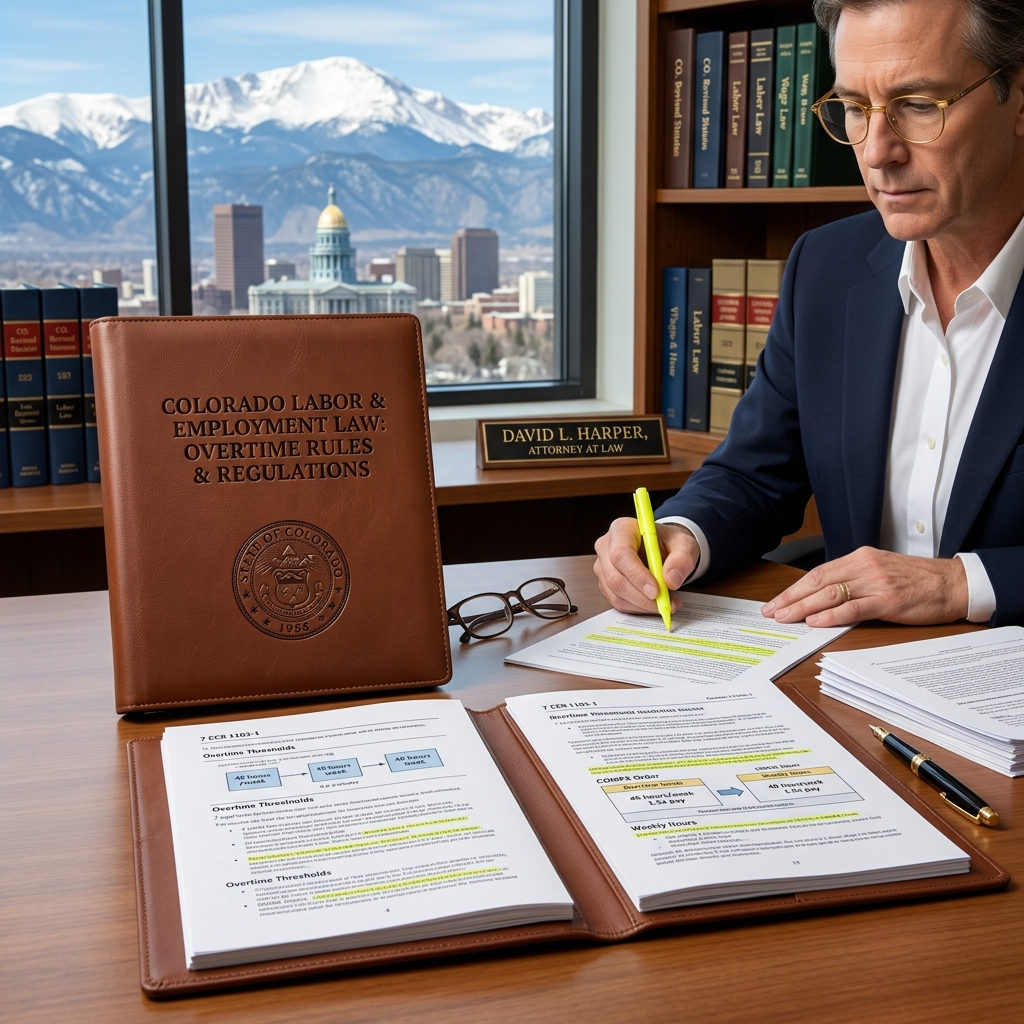
Colorado overtime law gives many workers broader protection than the federal baseline. In addition to the familiar weekly overtime trigger, state rules can require premium pay when an employee works long daily shifts or reaches a consecutive-hours threshold. That means payroll compliance in Colorado depends on more than simply counting hours from Monday to Sunday.
This guide breaks down how overtime works, which employees are covered, how exemptions operate, and what employers should watch for when scheduling staff or calculating wages. It also explains how Colorado and federal law fit together, because the rule that is most favorable to the employee generally controls.
How Colorado overtime differs from the federal standard
Under federal wage law, overtime usually starts after 40 hours in a workweek for nonexempt workers. Colorado keeps that weekly rule but adds extra triggers that can increase pay even before a worker reaches 40 hours for the week. In practice, Colorado’s rules can require overtime after a long day or after too many consecutive hours, regardless of the overall weekly total.
That structure matters in industries with long shifts, rotating schedules, and unpredictable staffing needs. Healthcare, transportation, hospitality, and manufacturing employers often need to review each shift separately, not just the weekly timesheet, to determine whether premium pay is due.
When overtime pay is required
In Colorado, an eligible employee generally earns overtime at 1.5 times the regular rate of pay when work exceeds any of the following thresholds:
- 40 hours in a workweek
- 12 hours in a workday
- 12 consecutive hours worked
The employee is entitled to the calculation that produces the greater payment. If the same hours could be treated under more than one rule, the more favorable rule applies to the worker rather than the employer.
This means a person might earn overtime even in a week with fewer than 40 total hours if a single shift crosses the daily limit. Likewise, a worker who stays on duty for 12 consecutive hours may trigger overtime even if the shift includes meal periods or spans parts of two calendar days.
Who is covered by overtime rules
Colorado overtime law primarily covers nonexempt employees. Those are workers who do not meet a recognized exemption under wage-and-hour rules. Many hourly employees fall into this category, but pay method alone does not decide exempt status. Some salaried employees are also nonexempt if their actual job duties do not satisfy exemption tests.
Coverage often turns on what the worker does, how much independence the role requires, and whether the position fits one of the specific exemption categories recognized by wage law. Employers cannot simply label a worker “exempt” and avoid overtime if the duties do not support that label.
Common exemption categories
Several job groups are commonly treated as exempt from overtime requirements when all legal tests are met. These often include employees whose main work is executive, administrative, or professional in nature, as well as some computer-related positions. Other jobs may also qualify based on industry-specific rules.
Typical exemption analysis looks at factors such as:
- Whether the employee is paid on a salary basis
- Whether the salary meets the required minimum threshold
- Whether the employee’s primary duties match the legal test for the exemption
- Whether the worker regularly exercises independent judgment or supervises others
Some occupations have special treatment under Colorado wage rules. Certain industries and roles may be exempt from one overtime trigger but not another, so an employer must check the exact rule that applies rather than assume one exemption covers everything.
How Colorado and federal law work together
When state and federal wage rules both apply, the rule that gives the employee greater protection usually governs. This is an important point because Colorado’s daily overtime protection can be stronger than the federal rule in many situations. A worker who is not entitled to federal overtime based on weekly hours alone may still be owed Colorado overtime based on a long shift.
For payroll purposes, employers should review both laws before finalizing pay. If the state standard creates a higher obligation, that standard is the one that must be followed.
| Rule | Typical trigger | Pay rate |
|---|---|---|
| Federal baseline | More than 40 hours in a workweek | 1.5 times regular rate |
| Colorado weekly rule | More than 40 hours in a workweek | 1.5 times regular rate |
| Colorado daily rule | More than 12 hours in a workday | 1.5 times regular rate |
| Colorado consecutive-hours rule | More than 12 consecutive hours | 1.5 times regular rate |
How overtime pay is calculated
Overtime is usually based on the employee’s regular rate of pay, not just the hourly wage printed on a pay stub. The regular rate can include more than base hourly pay, depending on the pay arrangement. If a worker receives nondiscretionary bonuses, shift differentials, or certain other forms of compensation, those amounts may affect the overtime calculation.
For example, if an employee’s regular hourly rate is $20, overtime is generally paid at $30 per hour. If the employee earns a bonus that must be included in the regular-rate calculation, the employer may need to recalculate the overtime premium using the higher adjusted rate.
Employers sometimes make mistakes by calculating overtime only on base pay. That shortcut can underpay workers and create liability for back wages and penalties.
Comp time is usually not a substitute
Private employers generally cannot replace overtime pay with compensatory time off, often called comp time. Giving a worker extra time off later does not erase the obligation to pay the proper overtime premium when overtime hours have already been worked.
This rule is important because some employers assume they can balance a long shift with a later short shift. Colorado wage rules do not usually allow that approach as a substitute for time-and-a-half pay in private employment settings.
Can employees waive overtime rights?
Employees generally cannot give up their overtime rights by agreement if the law requires premium pay. A signed form, verbal promise, or workplace policy does not override statutory wage protections. Even if a worker agrees to be paid straight time for extra hours, the employer may still owe overtime if the legal threshold was crossed.
That protection helps prevent pressure on workers to accept reduced pay in exchange for keeping a job or securing extra shifts.
Special scheduling issues employers should track
Colorado overtime compliance becomes more complicated when schedules cross midnight, include unpaid meal periods, or involve split shifts. Employers should pay attention to how hours are counted across the workday and not rely only on the calendar date.
Common risk areas include:
- Back-to-back shifts that create more than 12 consecutive hours
- On-call assignments that turn into active work time
- Missed meal breaks that affect total hours worked
- Multiple job duties for the same employer during one shift
In some industries, employers may also need to check whether a specific wage order or occupation-based exemption changes the result. That is especially important where employees work long shifts in regulated settings such as healthcare or transportation.
What workers should review on their pay stubs
Workers who suspect an overtime error should examine each pay statement for the following:
- The number of hours recorded each day and each week
- Whether any shift exceeded 12 hours
- Whether the pay stub shows overtime at 1.5 times the regular rate
- Whether bonuses or differentials were included correctly
- Whether all worked time was recorded, including short tasks before and after a shift
Even small timekeeping mistakes can create a wage underpayment over time. Repeated errors become more serious when they affect multiple pay periods or multiple workers.
When an employee may not be entitled to overtime
Not every worker qualifies for overtime. Exempt employees may lawfully be excluded if their roles satisfy the legal criteria for an exemption. Some workers in specialized industries may also fall under specific exclusions tied to their occupation or the type of work performed.
The key point is that exemption status depends on facts, not assumptions. Job titles can be misleading. A person called a “manager” may still be nonexempt if the actual duties are mostly routine and do not meet the exemption test. Likewise, a salaried worker may still be owed overtime if the salary and duties do not match the legal standard.
Practical compliance steps for employers
Employers can reduce overtime disputes by building clear payroll and scheduling systems. Good compliance practices include:
- Tracking all hours worked accurately and in real time
- Auditing overtime calculations before each payroll run
- Reviewing whether each role is properly classified as exempt or nonexempt
- Training supervisors not to ask workers to off-the-clock work
- Keeping written policies that explain meal breaks, shift changes, and time reporting
Employers should also update wage practices when schedules change. A job that was once safe to classify in one way may not remain compliant if the duties or compensation structure changes.
FAQs about Colorado overtime
Is overtime only based on weekly hours in Colorado? No. Colorado also recognizes daily and consecutive-hours triggers, so a worker can earn overtime before reaching 40 hours in a week.
Can an employer offer comp time instead of overtime pay? Private employers generally cannot use comp time as a substitute for legally required overtime pay.
Do salaried employees always get overtime? No. Some salaried employees are exempt, but salary alone does not decide the issue. Duties and pay level both matter.
What if an employee works 12 hours and 30 minutes? That additional time may trigger Colorado overtime because the daily and consecutive-hours thresholds are measured very strictly.
What happens if state and federal rules differ? The rule that gives the employee the greater protection generally applies.
When to ask for legal help
Wage disputes often involve details that are difficult to resolve without a full payroll review. If a worker believes overtime was underpaid, or if an employer wants to confirm its classification practices, legal guidance can help identify the correct rule set and calculate the amount owed.
Questions about exemption status, mixed job duties, bonus pay, shift differentials, and industry-specific rules are especially important in Colorado because the state overtime framework reaches beyond the federal 40-hour rule.
References
- State Overtime Laws Chart — Bloomberg Law. 2025-01-01. https://pro.bloomberglaw.com/insights/labor-employment/overtime-pay-laws-by-state/
- Minimum Wage Order and Overtime Rate Rules — Colorado Secretary of State. 2025-01-01. https://www.sos.state.co.us/CCR/GenerateRulePdf.do?ruleVersionId=3347
- Colorado Overtime & Minimum Pay Standards Order #37 Poster — Colorado Department of Labor and Employment. 2021-01-01. https://cdle.colorado.gov/sites/cdle/files/COMPS%20Order%20%2337%20(2021)%20Poster%20%5Baccessible%5D.pdf
- Colorado Overtime Laws: A Comprehensive Guide for Healthcare Employers — HR for Health. 2025-01-01. https://hrforhealth.com/blog/colorado-overtime-laws-a-comprehensive-guide-for-healthcare-employers
- Understanding Colorado Overtime Laws & COMPS Order No. 38 — Baird Quinn. 2025-01-01. https://www.bairdquinn.com/practice-areas/wage-and-overtime/
- Colorado Labor Law: Overtime Pay — Colorado Department of Labor and Employment. 2025-01-01. https://www.youtube.com/watch?v=JHSkZx2dd3A
Similar Articles








Read full bio of Sneha Tete




