
College Admissions Fraud: Crimes and Charges
How admissions bribery schemes become federal crimes and what charges can follow.
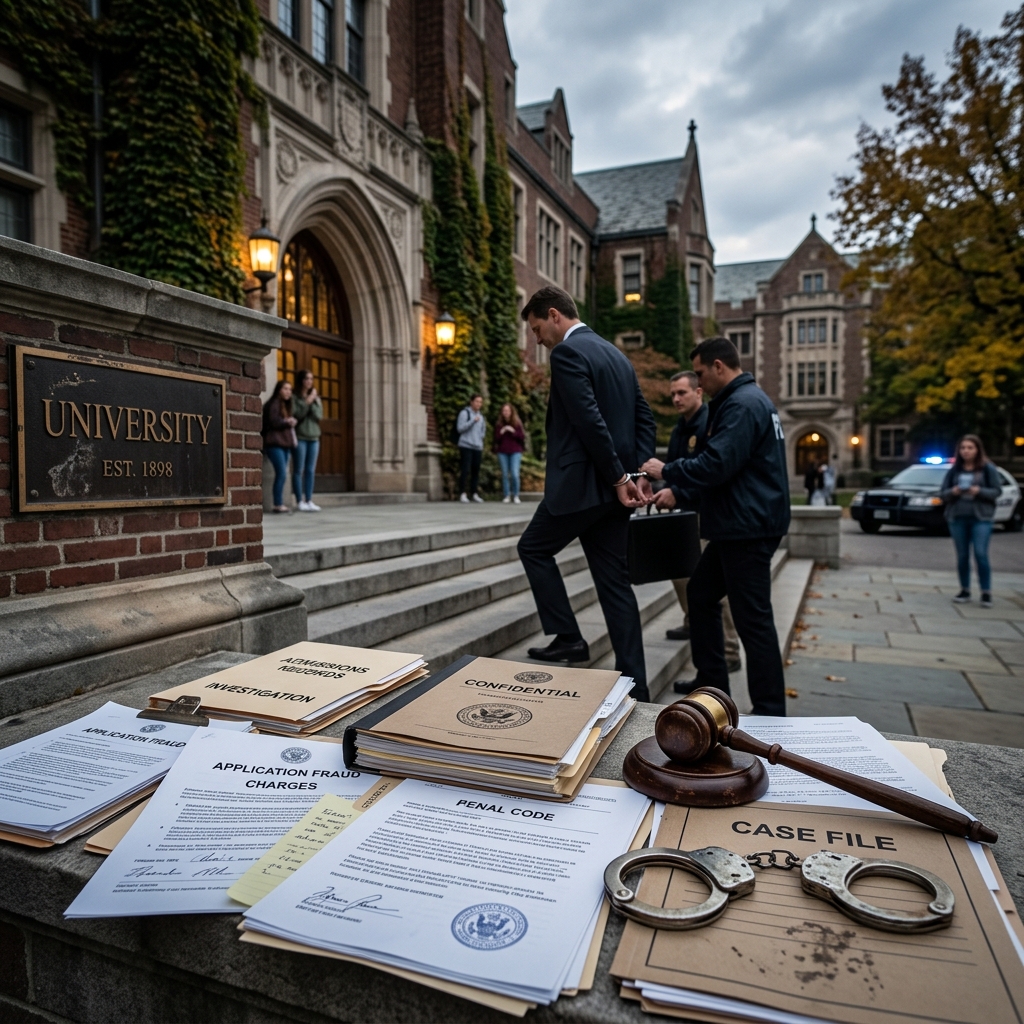
Understanding College Admissions Fraud
College admissions fraud refers to schemes designed to secure entry into a school through deception rather than merit. These schemes can involve false academic records, fake athletic credentials, bribery, or hidden payments to influence admissions decisions. Federal authorities have treated this conduct seriously because it can undermine fair access to education and involve multiple criminal statutes.
In many cases, the conduct is not limited to a single lie on an application. Instead, it may involve a coordinated plan among parents, consultants, exam administrators, coaches, and school officials. When those acts cross state lines, use electronic communications, or involve financial concealment, prosecutors may bring federal charges in addition to any state-law offenses.
Why These Schemes Become Criminal Cases
A college admissions scheme can become a criminal case when someone seeks an unfair advantage through fraud or bribery. The core issue is that the student is presented as qualified or deserving when key facts have been fabricated or manipulated. According to federal prosecutors, the large admissions investigation involved cheating on entrance exams and using bribes to secure admission under false pretenses.
- False test scores can be created by tampering with standardized exams or paying someone to alter results.
- Fake athletic profiles can be used to mislead colleges into treating a student as a recruited athlete.
- Hidden payments can be routed through charities or intermediaries to disguise the true source of money.
Even when the admissions outcome is the main goal, the methods used to reach it may independently violate federal law. That is why prosecutors often charge the scheme as a fraud, bribery, or conspiracy case rather than treating it as a simple admissions violation.
Common Federal Charges in Admissions Fraud Cases
Several criminal statutes may apply to college admissions fraud. The exact charges depend on the conduct, the number of participants, and how the scheme was carried out. Common charges include conspiracy to commit racketeering, mail fraud, wire fraud, money laundering, identity fraud, and honest services fraud.
| Charge | Typical Conduct |
|---|---|
| Conspiracy to commit racketeering | Coordinated illegal activity carried out as part of an organized fraudulent plan. |
| Mail fraud | Using the postal system or private delivery services to move bribes, documents, or fraudulent materials. |
| Wire fraud | Using phones, email, or other electronic communication to advance the scheme. |
| Money laundering | Moving or disguising funds so their illegal source or destination is concealed. |
| Identity fraud or theft | Using false identifying information or pretending to be someone else to obtain a benefit. |
| Honest services fraud | Depriving schools or institutions of the honest services of staff members who accept bribes. |
How Mail Fraud and Wire Fraud Fit the Scheme
Mail fraud and wire fraud are often central charges in admissions cases because the conduct usually involves repeated communications and transfers. Federal law treats schemes to obtain money, property, or services through false pretenses as fraud when the mail or electronic communications are used to carry them out.
In admissions bribery cases, the communication may include emails between parents and consultants, mailed documents describing fabricated credentials, or electronic transfers tied to the improper payment. Prosecutors in the well-known admissions investigation said these types of communications helped move the scheme forward and conceal the real purpose of the payments.
These charges are especially important because they allow the government to prosecute the broader scheme, not just the final payment or false application. That means an individual who never personally delivers a bribe can still face liability if they helped plan or execute the fraudulent communication chain.
Why Money Laundering Charges Often Appear
Money laundering charges may apply when participants try to hide the origin or destination of illegal funds. In college admissions fraud, this can happen when bribe payments are routed through fake nonprofits, consulting businesses, or layered transactions that make the money appear legitimate.
Federal investigators said one admissions scheme used a bogus charity to conceal bribe payments and create a misleading paper trail. That kind of structure matters because laundering is not only about spending illegal money; it is about disguising it so the true transaction becomes harder to detect.
- Payments may be mislabeled as charitable donations or consulting fees.
- Funds may be split into smaller transactions to reduce attention from banks or regulators.
- Shell entities may be used to make the deal look like a legitimate business arrangement.
Honest Services Fraud and Bribery of School Officials
Honest services fraud addresses situations where a person is deprived of the honest and faithful services of another person, often because that person accepted a bribe or kickback. In the admissions context, a coach or administrator who agrees to help an unqualified applicant gain admission in exchange for payment may be part of such a scheme.
This theory is particularly relevant when the bribe corrupts the normal admissions process. The injury is not just financial. It also affects the integrity of the institution and can displace students who followed the rules and competed fairly.
Federal prosecutors have used this theory where coaches or staff members allegedly pretended that students were recruited athletes, even when the athletic credentials were fabricated.
Who Can Be Charged
Admissions fraud cases can involve a wide range of defendants. Federal authorities have charged parents, admissions consultants, exam administrators, exam proctors, athletic coaches, and college administrators.
- Parents may be charged if they paid bribes or knowingly helped prepare false submissions.
- Consultants may face charges if they organized the scheme or arranged the payments.
- Coaches and administrators may be charged if they accepted money to falsify recruitment status or eligibility.
- Testing officials may be charged if they assisted with cheating or score manipulation.
Criminal exposure can therefore extend far beyond the student applicant. A case may reach anyone who knowingly helped plan, finance, disguise, or complete the fraud.
How Prosecutors Prove the Case
To prove a college admissions fraud case, prosecutors generally try to show a coordinated plan, false statements or disguises, and the use of interstate communications or financial channels. Evidence may include emails, text messages, bank records, consultant files, and witness testimony from cooperating participants.
In the public federal investigation, prosecutors described a broad conspiracy built around two main methods: cheating on exams and securing admission through bribes tied to athletic recruitment. They also described false paperwork and staged athletic profiles that made the applicants appear qualified.
That kind of evidence helps show both the intent to deceive and the steps taken to make the deception work. In fraud cases, intent is often the critical issue, because mistakes or misunderstandings are treated differently from knowing participation in a scheme.
Possible Penalties and Legal Consequences
Federal fraud and conspiracy charges can carry significant prison time, fines, restitution, and supervised release. The precise penalty depends on the offense level, the amount of money involved, the number of participants, and whether the defendant accepted responsibility or obstructed the investigation.
Beyond criminal sentencing, defendants may face collateral consequences such as loss of employment, professional discipline, civil suits, school sanctions, and long-term reputational damage. In some cases, schools may rescind admission or remove students if the application was obtained through fraud.
One reason these cases attract attention is that the financial amounts can be large. Reporting on the federal investigation described bribes ranging from hundreds of thousands of dollars to several million dollars in some cases.
How Colleges and Families Can Reduce Risk
The safest way to avoid admissions-related criminal exposure is to ensure that every part of the application is truthful and fully documented. Schools, families, and advisors should treat any arrangement involving payment for influence with extreme caution, especially when the payment is hidden or framed as something else.
- Do not exaggerate athletic, academic, or disability-related qualifications.
- Do not pay anyone to influence an admission decision.
- Keep records that accurately reflect the purpose of any consulting or advisory fee.
- Report suspicious requests for cash, kickbacks, or concealed donations.
For schools, stronger compliance procedures can also help. Clear controls over recruitment, testing, donor relations, and staff conflicts of interest reduce the chance that a fraudulent arrangement can take root.
Frequently Asked Questions
Is every false statement on a college application a crime?
No. Some false statements may lead to school discipline or civil consequences rather than criminal charges. A case usually becomes criminal when there is a deliberate scheme, material deception, bribery, or use of interstate communications or financial transactions.
Can parents be charged even if a consultant handled the details?
Yes. Parents may face charges if they knowingly joined the scheme, approved the payments, or participated in the deception. Federal prosecutors charged many parents in the nationwide admissions case for that reason.
Why are coaches and administrators so important in these cases?
Because their apparent endorsement can make the false application seem legitimate. If a coach is bribed to label a student as a recruited athlete, the college may rely on a false impression in making the admission decision.
Does the government have to prove the student personally knew everything?
Not always. Liability can depend on the role the student played, the evidence of knowledge, and whether the student knowingly benefited from the fraud. Each case is fact-specific.
References
- College Admissions Fraud Crimes — FindLaw. 2026. https://www.findlaw.com/criminal/criminal-charges/college-admissions-fraud-crimes.html
- Investigations of College Admissions and Testing Bribery Scheme — U.S. Department of Justice, U.S. Attorney’s Office for the District of Massachusetts. 2019-03-12. https://www.justice.gov/usao-ma/investigations-college-admissions-and-testing-bribery-scheme
- College Admissions Scandal — The New York Times. 2026. https://www.nytimes.com/news-event/college-admissions-scandal
- Dozens charged in college admissions fraud scheme — PBS NewsHour. 2023-08. https://www.pbs.org/newshour/classroom/posts/2023/08/5-things-to-know-about-the-college-admissions-scandal
- Dozens charged in college admissions cheating and bribery case — ABC News. 2019-03-12. https://abcnews.com/US/hollywood-actors-ceos-charged-nationwide-college-admissions-cheating/story?id=61627873
- Why the College Admissions Fraud is a Federal Crime — Calcagni Law. 2026. https://www.calcagnilaw.com/wisconsin-trial-lawyers/college-admissions-scandal-ends-with-criminal-fraud-charges
Similar Articles








Read full bio of medha deb




