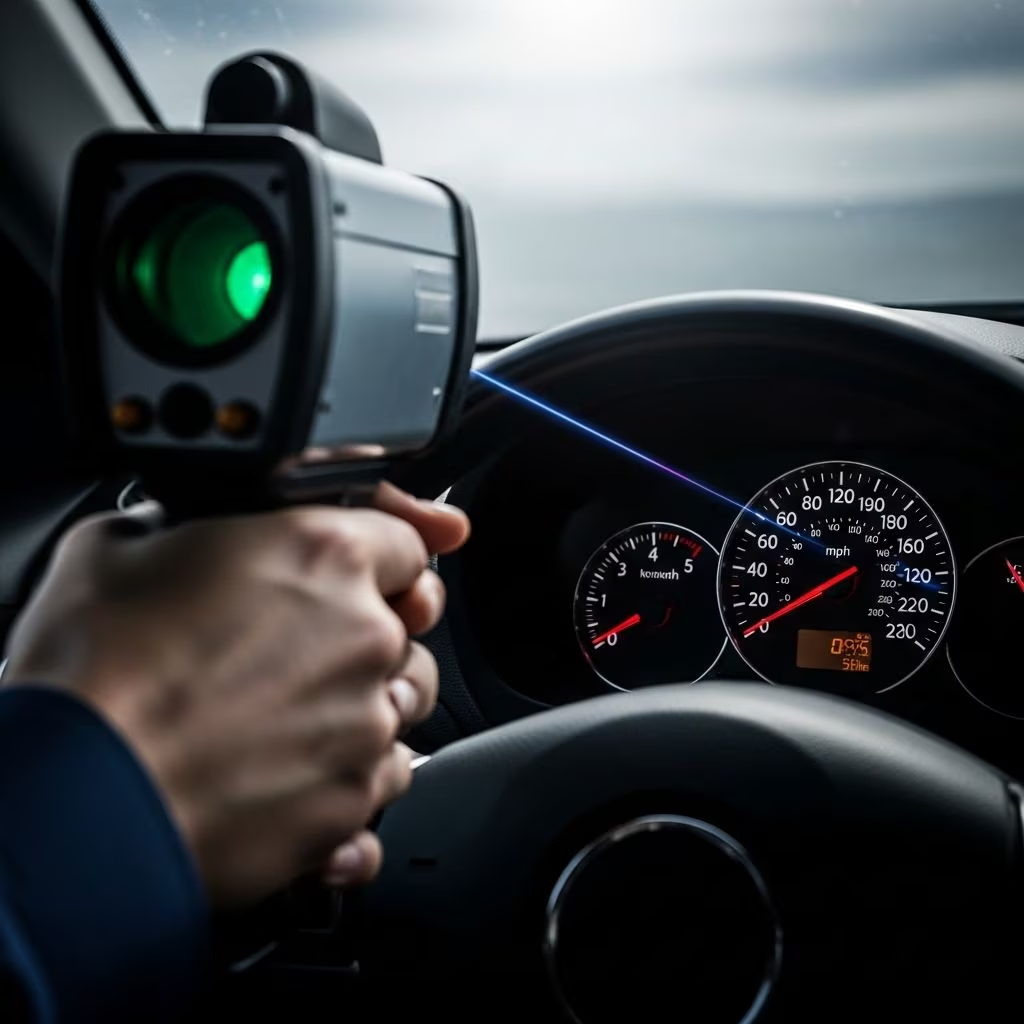
Understanding Speed Detection Technology and Legal Challenges
When law enforcement officers issue speeding citations based on radar or laser technology, the evidence often appears conclusive. However, the underlying technology and procedures used to measure vehicle speed are not infallible. Understanding how these detection systems work and their potential weaknesses is fundamental to constructing an effective legal defense. Many drivers fail to recognize that speed measurement devices must meet strict regulatory standards and operators must undergo specific training before their readings carry legal weight in court.
The legal system recognizes that radar and laser speed detection devices require proper calibration, maintenance, and qualified operators. When any of these elements fall short of established standards, the evidence may become inadmissible or unreliable. By examining the equipment used, the training of the officer, and the procedures followed during the citation process, defendants can identify vulnerabilities in the prosecution’s case.
Critical Equipment Standards and Calibration Requirements
One of the most significant defenses against speed detection citations involves questioning whether the equipment met mandatory operational standards. Speed measurement devices must conform to the minimal operational standards established by the National Traffic Highway Safety Administration. This requirement exists because even minor deviations from these standards can produce inaccurate readings.
Calibration represents another crucial element that must be verified. The device used to measure your speed should have been calibrated within three years prior to the citation date by an independent certified repair and testing facility. This calibration process ensures the equipment functions accurately and consistently. Without documented evidence of proper calibration, the reliability of the speed reading becomes questionable.
When preparing your defense, request documentation showing:
- The specific model and serial number of the device used
- Calibration records from certified facilities within the three-year window
- Maintenance logs demonstrating regular upkeep
- Any repair records or modifications made to the equipment
- Quality assurance testing procedures followed by the agency
If the prosecution cannot produce these records, or if gaps exist in the calibration timeline, this significantly weakens their case. Many law enforcement agencies fail to maintain meticulous documentation, creating opportunities to challenge the equipment’s reliability.
Officer Training and Certification Standards
Beyond equipment requirements, the officer operating the speed detection device must possess proper training and certification. These standards exist because untrained operators can misuse equipment or misinterpret readings, leading to inaccurate citations.
For radar operations, officers must complete a certified radar operator course of at least 24 hours, with the course approved and certified by the Commission on Peace Officer Standards and Training (POST). When laser or LIDAR (Light Detection and Ranging) technology is employed, officers require the same 24-hour radar training plus an additional minimum two-hour course specifically addressing laser equipment operation.
During your court hearing, request verification of the officer’s training credentials. Specifically determine:
- Whether the officer completed the required 24-hour radar operator course
- If laser was used, whether the additional two-hour laser training was completed
- The dates when training was completed
- Whether training was approved by the appropriate certifying body
- If the officer maintained current certification at the time of your citation
If the officer lacked proper certification or completed training that did not meet the requisite standards, the evidence may be deemed inadmissible. An uncertified operator’s readings carry little weight in court, regardless of what the radar or laser device displays.
Traffic Survey Requirements and Road Conditions
Many jurisdictions require that a traffic and engineering survey be conducted on the roadway where the citation was issued. This survey establishes whether speed enforcement on that particular road is appropriate and documents the conditions affecting safe travel speeds. The survey examines factors such as sight distance, road design, posted speed limits, accident history, and traffic patterns.
When speed enforcement occurs without a proper traffic survey, or when the survey reveals that the cited speed may have been unsafe based on conditions present at the time, this creates a meaningful defense. You should request documentation of any traffic survey conducted on the road where you received your citation. If no survey exists or if the survey indicates unsafe conditions, this supports an argument that the speed you were traveling may have been appropriate for those specific circumstances.
Technical Defects and Equipment Failures
Radar and laser devices, despite their technological sophistication, can fail in various ways. Understanding these technical limitations helps identify weaknesses in the prosecution’s evidence. Radar signals can bounce off multiple vehicles simultaneously, creating beam reflection issues where the device targets the wrong car. Multi-target detection problems occur when several vehicles travel in close proximity, causing the radar to lock onto an adjacent vehicle rather than yours.
Shadow effects represent another radar limitation, where a faster vehicle traveling near you can create a radar shadow, causing your vehicle to appear faster than it actually is. Cosine errors occur in laser measurements when the device is not aimed perpendicular to your vehicle’s direction of travel, producing inflated speed readings. Batching errors in LIDAR systems can cause the device to combine readings from multiple pulses, skewing the final speed calculation.
Additionally, officers must test their equipment for accuracy before and after each shift to ensure proper functioning. If the officer failed to perform these essential tests, or cannot produce documentation showing they were completed, this undermines confidence in the reading’s accuracy. Ask the officer whether equipment testing was performed and request records confirming this routine maintenance.
Gathering Essential Evidence and Documentation
Successfully challenging speed detection evidence requires thorough documentation and evidence gathering. Begin by understanding what method was used to measure your speed. On your citation, look for a box indicating whether radar, laser, or another measurement method was employed, along with the device’s serial number. This information proves essential for subsequent investigation.
Request copies of all maintenance records, calibration certificates, and testing logs for the specific device used in your case. These documents should demonstrate that equipment met standards and was properly maintained. Additionally, obtain POST training records confirming the officer’s qualifications to operate that particular type of speed detection equipment.
Photograph or document the exact location where you received the citation, noting road conditions, weather conditions, visibility, posted speed limit signs, and any other factors that might have affected safe driving speed. If available, dashcam footage from your vehicle showing speed and road conditions provides powerful evidence. GPS data from your vehicle’s navigation system can corroborate your actual speed.
Weather reports for the specific date and time of the citation can demonstrate conditions that might have affected radar or laser accuracy. Witness statements from passengers or nearby drivers who observed your driving provide additional support. The more evidence you compile showing weaknesses in the prosecution’s case or supporting your account of events, the stronger your defense becomes.
Speed Trap Defense Considerations
Many jurisdictions define speed traps as locations where enforcement is conducted without proper justification, often where speed limits are artificially low relative to road conditions or where the posted speed limit creates unsafe conditions. If your citation was issued in a recognized speed trap location, this may invalidate the enforcement action.
Speed trap defenses typically require showing that enforcement occurred without proper traffic surveys, that accident history does not justify the low speed limit, or that road design allows safe travel at higher speeds. If your citation occurred in an area commonly recognized as a speed trap, research whether case law in your jurisdiction supports challenging the citation on these grounds.
Courtroom Strategy and Presentation
When presenting your defense in traffic court, maintain focus on specific weaknesses in the prosecution’s evidence. Rather than attacking the validity of radar and laser technology generally, concentrate on how it was applied in your particular case. Question the officer about equipment maintenance, training credentials, operational procedures, and whether proper tests were conducted.
Present your evidence systematically, beginning with documentation regarding equipment standards and calibration, then addressing officer training, followed by traffic survey requirements, and finally any technical defects or procedural failures. Use visual aids if possible to explain technical concepts to the judge. Demonstrate that you understand the applicable legal standards and that the prosecution failed to meet the burden of proving all required elements.
Cross-examine the officer thoroughly but respectfully, drawing out admissions about missing documentation or incomplete compliance with procedures. If the officer cannot recall specific details about how your vehicle was targeted or admits uncertainty about equipment operation, these admissions strengthen your case.
Key Elements the Prosecution Must Establish
The prosecution bears the burden of proving every element required by law to support a speed detection citation. They must demonstrate:
- The officer completed required training for the specific equipment used
- The equipment met or exceeded National Traffic Highway Safety Administration standards
- The equipment was calibrated within the required timeframe by a certified facility
- A proper traffic survey was conducted on the roadway
- The officer operated the equipment in accordance with manufacturer specifications
- The speed reading was taken correctly and the correct vehicle was targeted
- No technical errors or equipment failures occurred
- The cited speed was unsafe for existing road and traffic conditions, or the violation involved a posted speed limit violation
When the prosecution fails to establish any of these elements, the citation should be dismissed or reduced. Focus your defense on identifying which requirements were not met and presenting evidence supporting your position.
Frequently Asked Questions
Q: Can I see the radar gun or laser device used to cite me?
A: You have the right to see and inspect any equipment used as evidence against you. If the officer refuses to show you the device or provide information about its model and specifications, document this refusal as it may support your defense.
Q: What if the officer cannot produce calibration records?
A: Missing calibration records significantly weaken the prosecution’s case. If proper documentation cannot be provided showing the device was calibrated within the required timeframe by a certified facility, the evidence reliability becomes highly questionable and may be inadmissible.
Q: How important is the officer’s training certification?
A: Officer training certification is critical. If the officer did not complete the required hours of approved training before using the speed detection equipment, this is a serious deficiency that can lead to dismissal of the citation.
Q: Can weather conditions affect radar and laser accuracy?
A: Yes, environmental factors including rain, fog, snow, and extreme temperatures can affect speed detection accuracy. Weather reports for the date and time of your citation can demonstrate conditions that may have impacted the reading.
Q: What is a speed trap and how does it help my defense?
A: A speed trap occurs when enforcement is conducted without proper justification, often where speed limits are artificially low. If your citation was issued in a recognized speed trap location without proper traffic surveys or engineering justification, this may invalidate the enforcement action.
Q: Should I hire an attorney for a speeding ticket case?
A: Hiring a traffic attorney increases your chances of success. Attorneys understand the technical and legal requirements for speed detection evidence and know how to identify procedural deficiencies that may lead to dismissal or reduction of charges.
References
- California Vehicle Code Section 40802 — State of California Legislative Counsel. https://leginfo.legislature.ca.gov/
- National Highway Traffic Safety Administration Speed Measurement Standards — U.S. Department of Transportation. https://www.nhtsa.gov/
- Commission on Peace Officer Standards and Training (POST) Requirements — State of California. https://post.ca.gov/
- LIDAR Technology in Law Enforcement — International Association of Chiefs of Police. https://www.iacp.org/
- Radar Accuracy and Calibration Standards — IEEE Standards Association. https://standards.ieee.org/