
Cell Phone Searches After Arrest: What the Law Allows
How the Supreme Court limited warrantless searches of phones taken during an arrest.
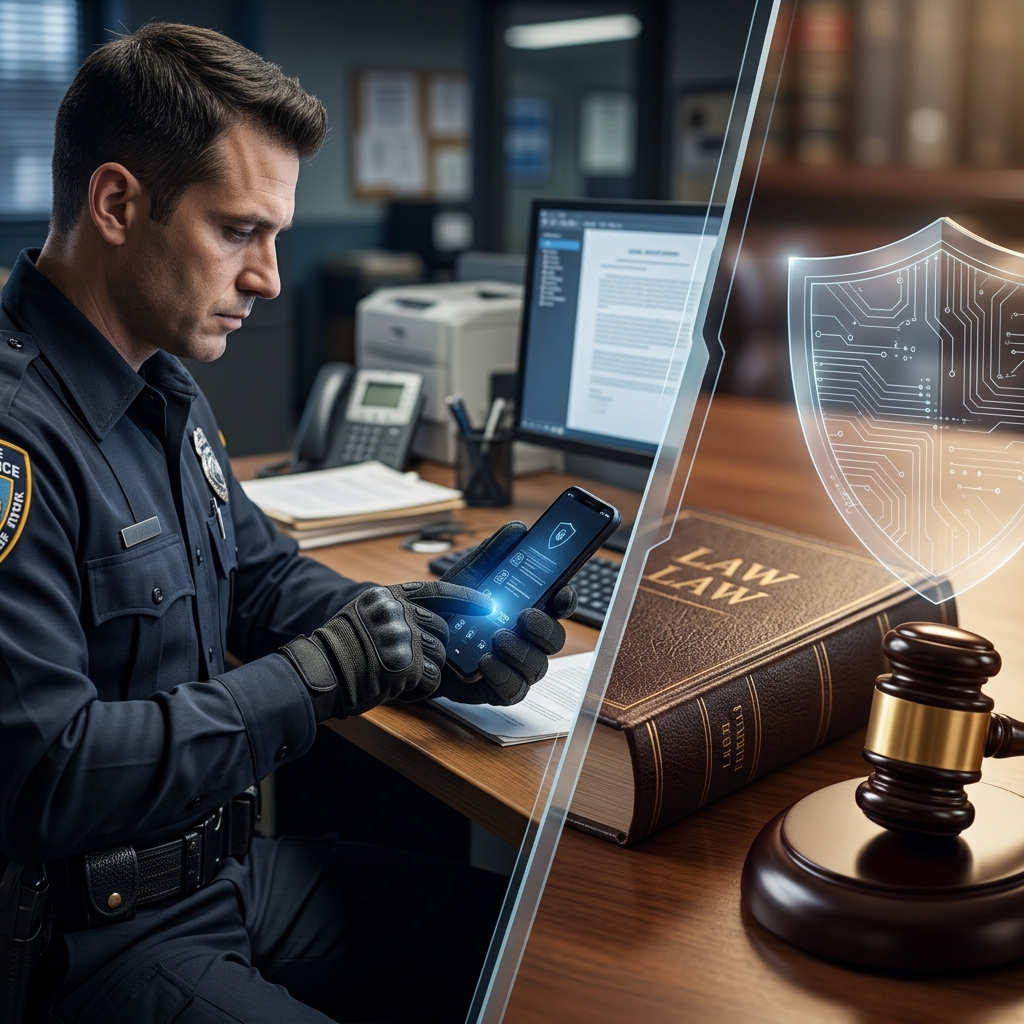
Police generally need a warrant before searching the contents of a cell phone taken from an arrested person. The Supreme Court’s modern approach treats phones as deeply personal digital devices, not as ordinary items that can be opened at will during an arrest search.
This issue sits at the intersection of privacy, public safety, and criminal procedure. The basic rule is straightforward, but the legal details matter because officers may still act without a warrant in limited emergency situations.
Why cell phones changed the search-and-seizure debate
For many years, searches incident to arrest were understood to allow police to inspect an arrested person and certain objects nearby. That doctrine is tied to two main concerns: officer safety and the need to prevent the destruction of evidence.
Cell phones do not fit neatly into that older model. Unlike a wallet, a pocketknife, or a paper address book, a smartphone can contain a large and constantly expanding record of private life. It may hold messages, photos, videos, contacts, browsing history, cloud-linked files, banking information, and location data.
The Court recognized that searching this digital record is far more intrusive than checking a physical object found on the person. That difference became central to the constitutional analysis.
The core rule: a warrant is usually required
The modern rule is that police ordinarily must obtain a warrant before reviewing the contents of a cell phone seized during an arrest. This means that taking possession of the device is not the same thing as gaining permission to look through it.
A warrant requirement forces law enforcement to explain the basis for the search to a judge before the contents of the phone are examined. In practice, this creates a constitutional checkpoint between arrest and data access.
- The phone may be seized during a lawful arrest.
- The data on the phone generally may not be searched immediately.
- Police usually must ask a judge for a warrant supported by probable cause.
Why the Court rejected the usual arrest-search exception
The traditional arrest-search rule exists to protect officers and preserve evidence that might be destroyed quickly. The Court concluded that those justifications do not map well onto digital data stored on a phone.
First, the contents of a phone do not create a weapon risk in the way that a hidden knife or gun might. Second, while evidence on a phone can be altered or deleted, modern technology offers tools to secure the device while officers seek judicial approval. The Court therefore viewed a full search as too broad to fit within the narrow arrest-search exception.
That reasoning reflects a broader constitutional principle: exceptions to the warrant requirement are limited, and they do not automatically expand just because technology makes access easier.
What makes smartphones different from ordinary containers
Courts often compare a search to opening a container, but a smartphone is not an ordinary container. Its storage capacity, searchability, and ability to link to remote accounts make it much more revealing than a physical item with a few pages or compartments.
That distinction matters because a phone can expose highly personal details in a way that a brief physical inspection cannot. A single device may show a person’s communications, associations, movements, habits, finances, and medical concerns.
| Ordinary object | Typical police concern | Why phones are different |
|---|---|---|
| Pocket item | Weapons or easily destroyed evidence | Usually contains limited physical contents |
| Notebook or wallet | Small amount of information | Limited compared with digital storage |
| Smartphone | Potentially vast stores of data | May reveal years of personal life in minutes |
What police can still do without a warrant
The warrant rule is strong, but it is not absolute. The Court did not eliminate every exception to the Fourth Amendment. If officers face a genuine emergency, other doctrines may still permit limited action.
For example, if officers reasonably believe a phone contains information needed to prevent immediate harm, they may be able to act under an emergency or exigent-circumstances theory. The key point is that the exception must be real and specific; routine investigative convenience is not enough.
- Officers may secure the phone to prevent loss or tampering.
- They may preserve the device while seeking judicial approval.
- They may rely on a true emergency when immediate access is necessary.
Why evidence preservation remains important
Evidence preservation is one of the strongest arguments for broader police authority during arrest, but the Court treated digital evidence differently from physical evidence. A phone can be isolated, protected, and later searched under warrant procedures.
That approach reflects the balance at the heart of the Fourth Amendment. The Constitution does not forbid police from gathering evidence; it requires that they do so through rules that limit arbitrary intrusion.
In practical terms, this means officers should think in stages: seize first if lawful, secure the device, then decide whether the facts justify a warrant request or a narrow emergency response.
How the rule affects criminal cases
The decision has major consequences for criminal prosecutions because digital evidence is often central to modern cases. Messages, call logs, search history, social media content, and geolocation records can all be important at trial.
If police search a phone without a valid warrant and no exception applies, the defense may challenge the evidence. That can lead to suppression, which means the government may not be allowed to use the unlawfully obtained material.
For prosecutors, the decision encourages careful warrant practice. For defense lawyers, it creates a clear basis to examine whether officers overstepped when accessing the contents of a device.
Practical effects for law enforcement and defense counsel
The ruling changed day-to-day procedures. Officers now need to distinguish between seizing a device and searching it. Training, documentation, and warrant drafting became more important after the Court made clear that the phone itself is not a free pass to its contents.
Defense attorneys, meanwhile, routinely ask several questions: Was the arrest lawful? Was the phone searched before a warrant issued? Did the search stay within a recognized exception? Were officers examining stored data, or only securing the device?
Those questions matter because a case may turn on a small timeline issue. If the search happened too soon, the evidence may be vulnerable.
Common misconceptions about phone searches after arrest
One misconception is that an arrest automatically opens the phone to inspection. That is not the law. Another is that because officers may seize the device, they may also read every message and examine every folder. That is also incorrect in the ordinary case.
It is also mistaken to assume that digital evidence is never searchable without a warrant. The law still allows narrow exceptions, but those exceptions must be justified by actual circumstances, not by a general desire to investigate more efficiently.
Frequently asked questions
Can police take my phone when they arrest me?
Yes. If the arrest is lawful, police may generally seize the phone so it is not lost, destroyed, or used in a way that interferes with the investigation.
Can police open my phone right away?
Usually no. In most situations, officers need a warrant before searching the contents of the phone.
Does the rule apply to texts, photos, and apps?
Yes. The protected information includes a wide range of digital data stored on the device, such as messages, images, call records, and app content.
What if police say evidence might be deleted?
That concern does not automatically allow a warrantless search. Officers must still justify why an exception applies, and in many cases they can secure the device while seeking a warrant.
Can a phone ever be searched without a warrant?
Yes, but only in limited circumstances, such as a genuine emergency or another recognized Fourth Amendment exception.
What the decision means for privacy
The deeper significance of the rule is that it treats digital privacy as worthy of strong constitutional protection. A modern smartphone is not simply a communication device; it is also a record of personal behavior, beliefs, and associations.
By requiring a warrant in the usual case, the Court confirmed that the convenience of investigation does not override the need for judicial oversight when the government wants access to highly sensitive personal data.
How the legal test is likely to be used in future disputes
Future cases often turn on details: what officers knew, how urgent the situation was, whether the search was limited, and whether the device was isolated rather than examined. Courts will likely continue to ask whether the facts truly fit one of the narrow exceptions to the warrant rule.
That means lawyers should focus on timing, scope, and necessity. The strongest cases for the government usually involve immediate danger or a tightly bounded emergency. The strongest cases for the defense usually involve routine searches carried out without judicial approval.
Related concerns about cell phone searches
Below are additional issues that often arise when a phone is seized during an arrest.
- Data stored remotely: Accessing cloud-based information can raise additional privacy questions.
- Locked devices: A locked phone does not eliminate the warrant requirement.
- Scope of search: Even with a warrant, officers must stay within its authorized limits.
Key takeaways for ordinary people
If you are arrested and your phone is taken, the government does not automatically get to read its contents. The usual rule is that officers need a warrant before searching the data inside the device.
That rule gives privacy stronger protection in the digital age, while still leaving room for urgent action when a true emergency exists.
References
- Supreme Court Requires Warrant for Cell Phone Searches by Police — ACLU. 2014-06-25. https://www.aclu.org/press-releases/supreme-court-requires-warrant-cell-phone-searches-police
- Supreme Court Says No to Cell-Phone Searches Incident to Arrest — Illinois State Bar Association. 2014-09-01. https://www.isba.org/ibj/2014/09/ussupremecourtsaysnocell-phonesea
- Supreme Court Protects Cell Phones from Routine Searches — Brookings Institution. 2014-06-25. https://www.brookings.edu/articles/supreme-court-protects-cell-phones-from-routine-searches/
- US Supreme Court rules on warrantless cellphone searches — Joel L. P. / legal analysis. 2014-07-01. https://joelsogol.com/articles/us-supreme-court-rules-on-warrantless-cellphone-searches/
Similar Articles








Read full bio of medha deb




