
Can You Sue for False Advertising and Deceptive Marketing?
Understand when misleading marketing crosses the legal line, what laws apply, and how consumers and businesses can respond.
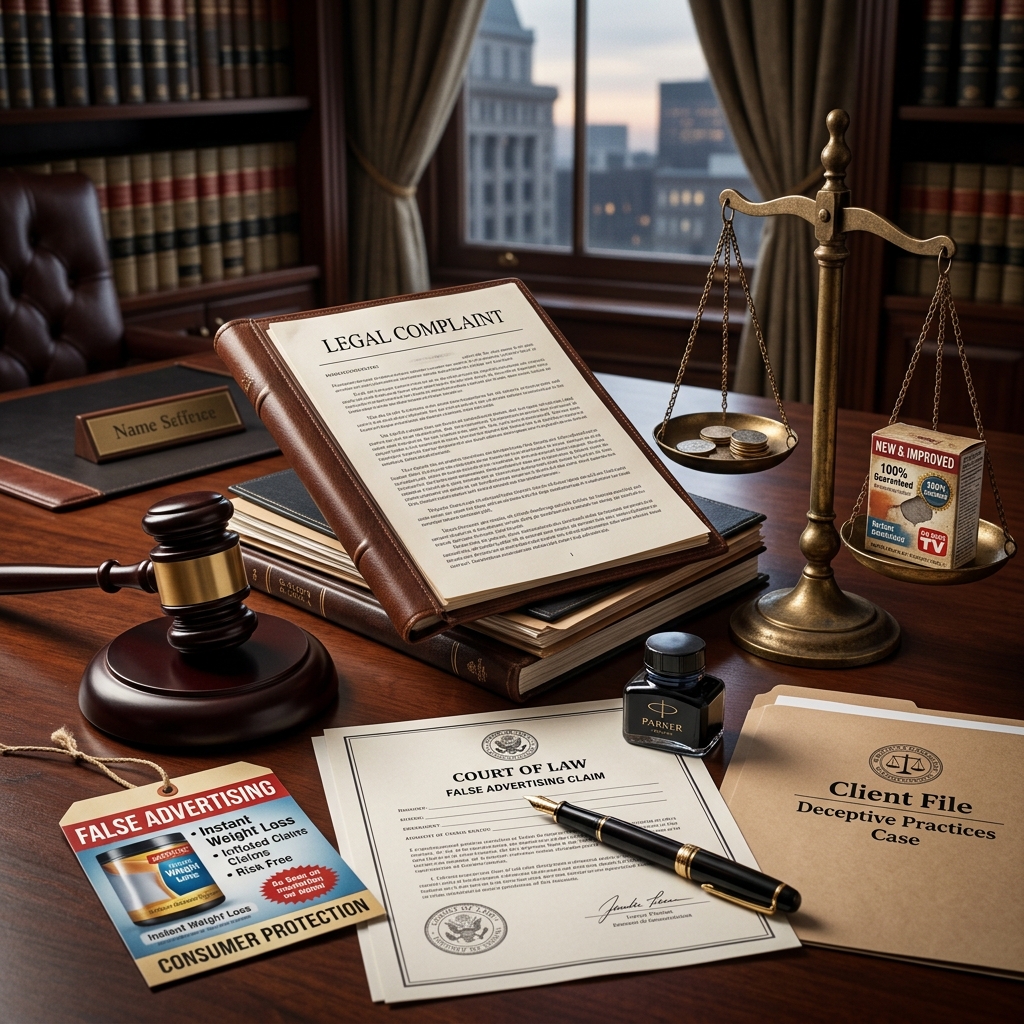
Advertising is designed to persuade, but it cannot legally cross the line into outright deception. In the United States, false and misleading marketing is regulated by federal and state consumer protection laws, and both consumers and businesses may have the right to sue when they are harmed by deceptive claims. Understanding when advertising becomes illegal and how claims are proven is critical if you are considering legal action.
What Counts as False or Deceptive Advertising?
False advertising generally refers to marketing that misrepresents the nature, characteristics, quality, or origin of goods or services. Deception can occur through explicit statements, images, or omissions that create a misleading impression in the mind of a reasonable consumer.
- Literally false statements – Claims that are factually incorrect, such as stating a product contains an ingredient it does not.
- Misleading but technically true claims – Statements that are literally accurate but presented in a way that misleads consumers about performance, safety, or quality.
- Deceptive omissions – Leaving out material information that a consumer would reasonably need to make an informed decision.
- Manipulative imagery or labeling – Using pictures, colors, or design to imply qualities the product does not have, such as suggesting a product is “organic” or “natural” without meeting relevant standards.
Many cases focus on whether a claim is material, meaning it is likely to influence a purchasing decision. Minor inaccuracies that do not affect choice usually do not support a claim, while misrepresentations about price, safety, health benefits, or quality often do.
Puffery vs. Actionable Misrepresentation
Law distinguishes between unlawful deception and legally permissible sales talk known as puffery. Puffery includes exaggerated statements that no reasonable buyer would take as factual, such as “the world’s best coffee.”
| Type of Statement | Example | Usually Actionable? |
|---|---|---|
| Non-specific puffery | “Unbeatable quality” | No, often considered opinion. |
| Specific factual claim | “Removes 99% of germs within 30 seconds” | Yes, requires proof and can be challenged. |
| Regulated term | “Organic” on food labels | Yes, must comply with regulatory standards. |
| Health or safety claim | “Clinically proven to reduce heart disease risk” | Yes, generally must be supported by competent scientific evidence. |
In lawsuits, courts look at the overall impression of the advertising, not just isolated phrases. Even if individual statements are literally accurate, the net effect can still be misleading and legally actionable.
Key Laws Governing False Advertising
False advertising in the U.S. is governed by a framework of federal and state laws that interact in different ways.
Federal Trade Commission Act and FTC Enforcement
The Federal Trade Commission Act (FTC Act) authorizes the Federal Trade Commission (FTC) to police unfair or deceptive acts or practices in commerce, including false advertising. Federal law requires that advertisements be truthful, not misleading, and, when appropriate, supported by adequate evidence—for example, scientific studies backing health or performance claims.
The FTC can:
- Investigate businesses suspected of deceptive marketing.
- File actions in federal court to stop misleading campaigns.
- Seek orders that freeze assets and obtain money to return to consumers harmed by scams.
Consumers and companies cannot file a private lawsuit directly under the FTC Act; enforcement is done by the government. However, FTC actions often influence how courts interpret deception standards and can lead to restitution for affected consumers.
Lanham Act: Competitor Lawsuits for False Advertising
Section 43(a) of the Lanham Act, a federal trademark and unfair competition statute, allows businesses to sue competitors for false or misleading advertising that misrepresents the nature, characteristics, qualities, or geographic origin of goods or services.
Under the Lanham Act, a business typically must show:
- A false or misleading statement of fact in a commercial advertisement about goods or services.
- That the statement deceived or has a tendency to deceive a substantial portion of the audience.
- That the deception is material, influencing purchasing decisions.
- That the goods or services traveled in interstate commerce.
- A likelihood of injury, such as lost sales or damage to reputation.
Successful plaintiffs may seek both injunctive relief (orders stopping the false advertising) and monetary damages for losses suffered. Proving damages usually requires evidence of sales declines, market confusion, or consumer surveys.
State Consumer Protection and “Little FTC Acts”
Each state has its own consumer protection laws that prohibit false advertising and other deceptive or unfair trade practices. Many of these are sometimes referred to as “little FTC acts” because they mirror federal standards and often provide a private right of action for consumers.
State laws typically:
- Prohibit untrue, misleading, or deceptive statements about products or services.
- Apply to a broad range of conduct, including advertising, labeling, pricing, and marketing representations.
- Allow consumers (and sometimes competitors) to sue for damages, attorney’s fees, and injunctive relief.
For example, some states explicitly allow both consumers and competing businesses to bring claims when they suffer financial harm due to deceptive marketing. In many jurisdictions, class actions are common because false advertising often affects large groups of buyers.
Who Can Sue for False Advertising?
The ability to sue depends on the law invoked and the type of harm suffered.
Consumers
Individual consumers may sue under state consumer protection statutes and other applicable laws when they are financially injured by misleading marketing. Typical scenarios include:
- Paying more for a product than it is worth because of inflated claims.
- Purchasing a product that does not perform as advertised.
- Relying on false health or safety claims and incurring medical or other costs.
Consumers often bring cases as part of a class action when many people have been deceived by the same marketing campaign. Courts may award damages and also require businesses to change their advertising and labeling practices.
Competitors and Other Businesses
Businesses harmed by a competitor’s false advertising can sue under the Lanham Act and, in many states, under state unfair competition or consumer protection laws.
Common grounds for competitor lawsuits include:
- False comparative claims that disparage a competitor’s products.
- Misleading performance claims that steal market share.
- Misrepresentation of geographic origin or quality that confuses customers.
Unlike consumers, businesses often must show detailed evidence of lost revenue, reputational harm, or market distortion to obtain monetary relief.
What Must Be Proven in a False Advertising Case?
Although specific elements vary by statute and jurisdiction, most false advertising claims require proof of several core components.
Typical Elements
- Misrepresentation or omission – A statement or omission of material fact in advertising or labeling.
- Likely to mislead – The representation is likely to deceive a reasonable consumer or a significant portion of the intended audience.
- Materiality – The deceptive aspect is important enough to affect purchasing decisions.
- Causation and injury – The plaintiff suffered financial or other legally recognized harm due to reliance on the false or misleading claim.
Evidence in these cases may include marketing materials, expert testimony, consumer surveys, sales data, and documents showing how the claims influenced behavior.
Burden of Proof
The burden of proof typically rests with the plaintiff, who must establish each essential element by a preponderance of the evidence, meaning it is more likely than not that the claim is true. In competitor suits under the Lanham Act, plaintiffs may not need to show actual consumer confusion if the advertising is literally false; literal falsity can allow courts to presume deception.
Available Remedies for False Advertising
Courts can fashion different remedies depending on the facts, the governing statute, and whether the plaintiff is a consumer or competitor.
Injunctive Relief
One of the most important remedies is an injunction, a court order requiring the defendant to stop engaging in deceptive advertising or to correct misleading claims. Injunctive relief can include:
- Prohibiting further use of specific statements or images.
- Mandating corrective advertising or labeling changes.
- Restricting marketing in certain media or channels until changes are made.
Monetary Damages
Successful plaintiffs may also receive financial compensation for actual losses attributable to false advertising.
- Compensatory damages – Reimbursement for money paid for products that did not conform to advertised claims or for lost business.
- Disgorgement of profits – In some cases, courts may require defendants to hand over profits earned from deceptive campaigns, especially in Lanham Act suits.
- Attorney’s fees and costs – Certain state consumer statutes allow successful plaintiffs to recover legal fees, making it easier for individuals to bring suit.
Class actions can result in large aggregate awards to consumers and changes in industry practices. However, recovery in any individual case depends on specific laws and evidence presented.
Practical Steps if You Suspect False Advertising
If you believe you have been harmed by deceptive marketing, taking systematic steps can strengthen your position whether you pursue a lawsuit or a complaint to regulators.
- Preserve documentation – Save copies of advertisements, product labels, screenshots, emails, and receipts. These documents often form the backbone of a claim.
- Record how you relied on the claim – Note why the specific statements mattered to your purchase and what harm you suffered, such as financial loss or health impacts.
- Check applicable laws – Research your state’s consumer protection statutes and any warranties that might apply. Many consumer agencies provide educational materials.
- Consider regulatory complaints – Consumers can report deceptive practices to the FTC or state attorneys general, which may trigger investigations even without a private lawsuit.
- Consult legal counsel – An attorney experienced in consumer protection or commercial litigation can evaluate the strength of your case and discuss options such as individual or class action suits.
Special Issues in Health, Safety, and Sensitive Claims
False advertising involving health, safety, or financial products can be especially serious because it poses risks beyond simple financial overpayment. Courts and regulators often require higher levels of substantiation for these types of claims.
Businesses making health-related promises should maintain robust evidence, such as clinical trials or scientific studies, to support what they say in marketing. When such evidence is absent or misrepresented, companies face heightened risk of enforcement actions and civil liability.
FAQs About Suing for False Advertising
Can I sue a company directly under federal law for false advertising?
You generally cannot sue under the FTC Act itself; enforcement under that statute is handled by the Federal Trade Commission. However, businesses can bring private lawsuits under the Lanham Act, and consumers and competitors often rely on state consumer protection laws for direct claims.
Do I need to show that I personally lost money to bring a claim?
Most consumer protection statutes and many common-law fraud claims require some form of actual injury, typically financial harm. In Lanham Act competitor cases, plaintiffs must show a likelihood of injury, such as lost sales or reputational damage, though they may not always need to prove detailed damages to obtain an injunction.
Are exaggerated slogans always legal?
Not always. While general puffery—vague, subjective claims—is usually permitted, specific statements about performance, safety, or measurable attributes must be truthful and substantiated. If a slogan includes concrete assertions that can be tested and proven false, it may be actionable.
Can online and social media advertising be challenged the same way as traditional ads?
Yes. Deceptive advertising rules apply to ads in all media, including websites, social platforms, and mobile apps. False or misleading statements shared online can provide grounds for regulatory enforcement or private litigation, just like TV or print advertisements.
What if the deception involves labeling rather than an advertisement?
Product labels are a common focus of false advertising lawsuits, particularly when they misstate ingredients, origin, or health characteristics. Courts can order label changes, damages, and in some cases restitution for consumers who purchased products based on misleading labels.
References
- False advertising | Wex — Legal Information Institute, Cornell Law School. 2023-05-01. https://www.law.cornell.edu/wex/false_advertising
- False Advertising Under Consumer Protection Laws — Justia. 2022-09-15. https://www.justia.com/consumer/deceptive-practices-and-fraud/false-advertising/
- False Advertising & The Lanham Act — Oberheiden P.C. 2024-03-10. https://federal-lawyer.com/lanham-act/can-you-sue-for-false-advertising/
- What Constitutes False Advertising? — Scott Hirsch Law Group, PLLC. 2023-08-01. https://www.scotthirschlawgroup.com/blog/what-constitutes-false-advertising/
- Navigating False Advertising Law in Consumer Health and Safety — Crowell & Stryker Attorneys. 2025-07-03. https://csattorneys.com/2025/07/03/false-claims-real-consequences-navigating-false-advertising-law-in-consumer-health-and-safety/
- Truth In Advertising — Federal Trade Commission. 2022-11-01. https://www.ftc.gov/news-events/topics/truth-advertising
- False Advertising and Misleading Labeling — Kohn, Swift & Graf, P.C. 2023-02-20. https://kohnswift.com/practice/privacy-consumer-protection-and-class-actions/false-advertising-and-misleading-labeling/
Similar Articles








Read full bio of medha deb


