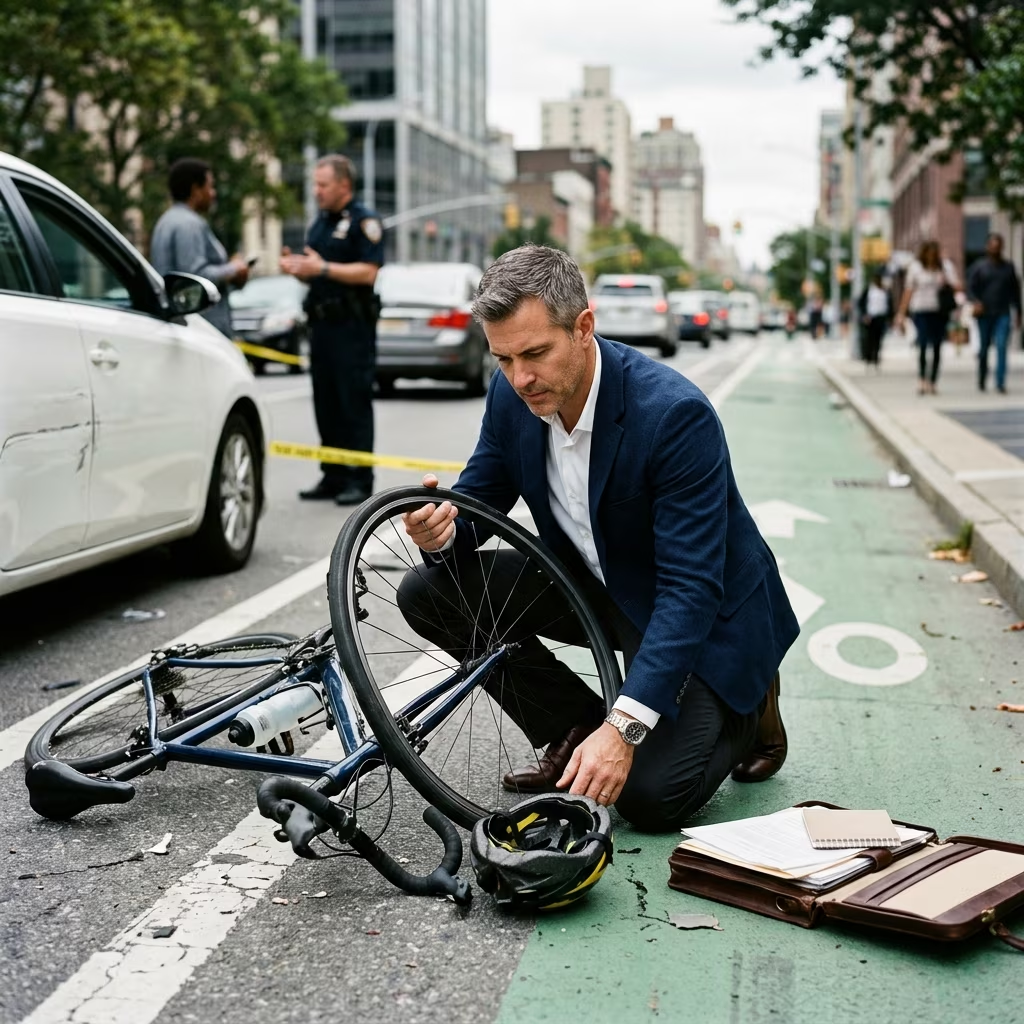
Bicycle crashes can be physically, emotionally, and financially devastating. When a careless driver, unsafe road, or defective bike part causes your injuries, you may have the right to sue and seek compensation. Understanding when a lawsuit is possible, what you must prove, and how to protect your claim is crucial to preserving your legal rights.
This guide explains in clear, practical terms how bicycle accident cases work, who can be held responsible, what types of damages may be available, and the steps you should take after a crash to strengthen a potential claim.
1. When Is a Bicycle Accident Lawsuit Possible?
In most jurisdictions, you can sue for a bicycle accident when another person or entity is legally at fault and you have suffered actual losses. Bicycle cases are usually brought under negligence law, similar to car accident claims.
1.1 Core legal elements you must prove
To succeed in a typical bicycle accident lawsuit, an injured rider generally must establish these four elements of negligence:
- Duty of care – The defendant had a legal duty to act reasonably to avoid causing harm. Drivers, other cyclists, and even some property owners have a duty to use reasonable care on roads and premises.
- Breach of duty – The defendant failed to act as a reasonably prudent person would under the circumstances, such as by speeding, running a red light, or failing to keep a property reasonably safe.
- Causation – The breach directly caused the collision and the rider’s injuries. If your injuries stem from another event, the defendant is not legally responsible.
- Damages – You suffered actual, compensable losses such as medical bills, lost income, pain and suffering, or property damage.
If any one of these elements cannot be proven with evidence, the lawsuit will likely fail, even if the crash itself is undisputed.
1.2 Common situations where a lawsuit may be appropriate
Examples of circumstances that frequently support a bicycle accident claim include:
- A driver turns right across your path without checking the bike lane.
- A motorist opens a car door into your lane (“dooring”) causing you to crash.
- A driver is speeding, distracted by a phone, or impaired by alcohol and strikes you.
- A property owner allows a dangerous pothole or loose gravel on a path they control, leading to your fall.
- A defective bike component such as a fork, brake, or quick-release mechanism fails under normal use.
In each of these scenarios, at least one responsible party may be sued if evidence shows negligent conduct and resulting harm.
2. Who Can Be Held Liable for a Bicycle Crash?
More than one person or entity can share fault for a single accident. Identifying all potential defendants is important because it increases the chance of full compensation.
2.1 Potentially responsible parties
| Potential Defendant | Typical Basis for Liability |
|---|---|
| Motor vehicle drivers | Speeding, distraction, failure to yield, unsafe lane changes, impaired driving. |
| Other cyclists or e-scooter riders | Reckless riding, ignoring traffic signals, unsafe passing. |
| Employers | Employee causes crash while driving a company vehicle or on work time. |
| Property owners / businesses | Dangerous conditions on driveways, parking lots, or access roads not properly maintained. |
| Government entities | Hazardous road design, missing signs, or failure to repair known roadway defects (subject to special rules and immunity limits). |
| Manufacturers / bike shops | Defective bicycles, components, or helmets under product liability theories. |
Each of these parties may have insurance coverage, such as auto liability, commercial general liability, or product liability policies, which often fund settlements and judgments.
2.2 Shared fault and comparative negligence
In many states, a rider can still recover compensation even if they are partially at fault, under systems known as comparative negligence or comparative fault.
Two common approaches are:
- Pure comparative negligence – Your compensation is reduced by your percentage of fault, even if you are mostly responsible.
- Modified comparative negligence – You can recover only if your fault is below a certain threshold (often 50% or 51%), and your award is reduced by your share of fault.
For example, in a modified comparative negligence state where recovery is barred at 51% fault, a bicyclist who is 40% responsible for the crash could still recover 60% of their damages.
3. What Damages Can Bicycle Accident Victims Recover?
If you are successful in a lawsuit or settlement, you may be able to recover several categories of damages. These typically fall into economic (financial) and non-economic (intangible) losses, and in rare cases, punitive damages.
3.1 Economic damages
- Medical expenses – Emergency transport, hospital stays, surgery, medication, physical therapy, medical equipment, and anticipated future treatment costs.
- Lost income – Wages or salary lost while you are unable to work, including time for medical appointments.
- Reduced earning capacity – Long-term loss of ability to work at the same level because of permanent injury or disability.
- Property damage – Repairs or replacement for your bicycle, helmet, clothing, and other personal items damaged in the crash.
- Out-of-pocket costs – Transportation to medical visits, home modifications, or hiring help for tasks you can no longer perform.
3.2 Non-economic damages
These damages compensate for real but less easily measured harms:
- Pain and suffering – Physical discomfort and the overall impact of pain on your daily life.
- Emotional distress – Anxiety, depression, sleep disturbances, or post-traumatic stress after the crash.
- Loss of enjoyment of life – Inability to participate in hobbies, sports, or social activities you previously enjoyed.
- Scarring and disfigurement – Visible injuries that alter appearance or cause ongoing psychological distress.
- Loss of consortium – Serious impacts on a marital relationship, often claimed by a spouse.
3.3 Punitive damages
In a small subset of cases, courts may award punitive damages to punish especially reckless or intentional conduct, such as a driver who intentionally “buzzes” a cyclist or drives while extremely intoxicated. These awards are generally rare and governed by strict legal standards.
4. Legal Deadlines: Statutes of Limitations
Even strong cases can be lost if they are filed too late. Every state has a statute of limitations that sets a deadline for bringing personal injury lawsuits, including bicycle accidents.
4.1 Typical time limits
While each jurisdiction is different, many states give injury victims around two to three years from the date of the accident to file suit. Some key points:
- Claims against government entities often have much shorter notice deadlines, sometimes only a few months.
- Minors or people who are legally incapacitated may have extended filing periods in some states.
- If you miss the statute of limitations, courts typically dismiss your case, and you lose the right to compensation entirely.
Because these rules are technical and vary by location, speaking with a lawyer as soon as possible after a crash is critical to avoid missing key deadlines.
5. How Insurance Interacts with Bicycle Accident Claims
Many bicycle accident cases resolve through insurance claims rather than a full trial. Several types of coverage may apply, depending on who was involved and what policies exist.
5.1 Common insurance sources
- At-fault driver’s auto insurance – Typically the primary source of compensation when a motorist hits a cyclist. Bodily injury liability coverage can pay for medical bills, lost wages, and other damages up to the policy limits.
- Your own auto policy – In some states, uninsured/underinsured motorist (UM/UIM) coverage on your auto policy may cover you as a bicyclist hit by a driver with no or insufficient insurance.
- Health insurance – Often pays medical expenses as they arise, subject to copayments and deductibles, but the insurer may later seek reimbursement from any settlement (subrogation).
- Homeowners or renters insurance – May provide coverage if another cyclist or pedestrian is at fault and insured under such a policy.
- Commercial insurance – Applies when the at-fault party was working for a business, such as a delivery driver or maintenance contractor.
Even when an insurer is involved, you still must prove fault, causation, and damages, and negotiations can be complex.
5.2 Filing a claim vs. filing a lawsuit
Frequently, the process begins with a claim to the at-fault party’s insurer. If negotiations do not result in a fair settlement, a lawsuit may be filed to preserve your rights and allow a court or jury to decide the case.
In some no-fault states, your own personal injury protection (PIP) coverage may pay certain medical expenses and lost wages regardless of fault, but serious injuries can still justify additional fault-based claims.
6. Practical Steps to Take Immediately After a Bicycle Accident
Your actions in the minutes, hours, and days after a collision can significantly influence the outcome of any future claim. Safety should always come first, but documenting what happened is also crucial.
6.1 Safety and medical care
- Move to a safe location if possible, away from ongoing traffic.
- Call emergency services or ask someone else to do so; request both police and medical assistance.
- Accept medical evaluation at the scene and follow up at a hospital or clinic, even if you feel “fine.” Some injuries, especially head and soft tissue injuries, are not immediately apparent.
Prompt medical care not only protects your health but also creates records that link your injuries to the crash, which is essential for proving damages.
6.2 Documenting the crash
- Get the driver’s name, contact details, driver’s license number, and insurance information.
- Collect contact information for any witnesses who saw the crash.
- Take photographs or videos of:
- Vehicle positions and damage
- Your bike and gear
- Road conditions, traffic signals, skid marks, and weather
- Visible injuries (cuts, bruises, swelling)
- Request a copy of the police report when it becomes available; officers’ observations and fault assessments can be critical evidence.
6.3 Preserving evidence and records
- Do not repair or discard your bicycle or helmet until you have documented them thoroughly; they may be important physical evidence.
- Keep all medical records, receipts, and bills associated with the accident.
- Maintain a journal noting pain levels, emotional changes, sleep problems, and limitations in daily activities.
- Avoid discussing fault or making detailed statements to insurers before understanding your rights; consider consulting an attorney first.
7. Do You Need a Bicycle Accident Lawyer?
While the law does not require you to hire an attorney, many riders find that legal representation significantly improves their chances of obtaining fair compensation, especially in serious or contested cases.
7.1 When legal help is especially important
Consider speaking with a lawyer if:
- You suffered serious injuries, such as fractures, head trauma, or long-term disability.
- There is a dispute over who caused the crash, or multiple parties may be responsible.
- Insurance companies are pressuring you to accept a quick settlement or are denying your claim.
- The crash may involve road defects or government liability, which have special procedural rules.
- You are close to the statute of limitations deadline.
7.2 How an attorney can assist
An experienced bicycle accident lawyer typically helps by:
- Investigating the crash, gathering evidence, and interviewing witnesses.
- Obtaining and analyzing police reports, medical records, and expert opinions.
- Identifying all potential defendants and available insurance coverage.
- Calculating the full scope of your damages, including future medical needs and lost earning capacity.
- Negotiating with insurance adjusters to seek a fair settlement.
- Filing a lawsuit and representing you at hearings, mediation, or trial if necessary.
Many personal injury attorneys offer free initial consultations and work on a contingency fee basis, meaning they are paid only if they recover money for you.
8. Frequently Asked Questions About Suing for Bicycle Accidents
8.1 Can I sue if I wasn’t wearing a helmet?
In many jurisdictions, you can still bring a claim even if you were not wearing a helmet. However, the defense may argue that your failure to wear a helmet contributed to the severity of head injuries, potentially reducing your compensation under comparative negligence rules. Local laws and helmet regulations can influence how this issue is handled.
8.2 What if I was partially at fault?
In states that follow comparative negligence, you may still recover damages even if you share some responsibility, but your total award will typically be reduced by your percentage of fault. In a modified comparative negligence state, you may be barred from recovery if your share of fault exceeds a threshold (commonly 50% or 51%).
8.3 How long will my case take?
Timeframes vary widely. Simple claims with clear fault and limited injuries may settle in a few months, while complex cases involving serious injuries, disputed liability, or multiple defendants can take a year or longer, especially if they go to trial. Factors include medical treatment length, evidence gathering, court schedules, and the willingness of insurers to negotiate.
8.4 Will my case go to trial?
Most personal injury cases, including bicycle crashes, settle before trial. However, if the parties cannot agree on liability or damages, a trial may be necessary to obtain a fair result. Filing a lawsuit is often a strategic step that can encourage more serious settlement negotiations, even if the case ultimately resolves before reaching a jury.
8.5 What if the driver who hit me doesn’t have insurance?
If the at-fault driver is uninsured or underinsured, you may still have options. Your own auto policy may include uninsured/underinsured motorist coverage that applies when you are riding a bike, depending on your state and policy terms. In some cases, you might also pursue claims against other responsible parties, such as employers or government entities, if they played a role in causing the crash.
8.6 Is there a minimum injury level to sue?
You generally must show some form of compensable damage—such as medical bills, lost wages, or property damage—to have a viable claim. In practice, lawsuits are more common when injuries are moderate to severe, because the cost and effort of litigation are higher than for insurer negotiations over minor scrapes and bruises.
9. Key Takeaways for Injured Cyclists
- You can often sue after a bicycle accident if another person or entity’s negligence caused your injuries and you suffered measurable losses.
- Potential defendants include drivers, other riders, employers, property owners, government entities, and manufacturers.
- Damages may cover medical bills, lost wages, pain and suffering, emotional distress, and more, with occasional punitive damages in egregious cases.
- Strict deadlines called statutes of limitations apply; missing them can completely bar your claim.
- Insurance is central to most cases, but insurers do not represent your interests—careful documentation and, often, legal guidance are essential.
If you have been injured while cycling, consulting a qualified personal injury attorney in your area can help you understand your rights, evaluate your options, and pursue the compensation the law may entitle you to receive.
References
- Bicycle Accident Victims: Know Your Legal Rights — Arthur Law Firm. 2023-05-01. https://lawbuilding.com/the-legal-rights-of-bicycle-accident-victims-what-you-need-to-know/
- Bike Accident Law — FindLaw. 2022-09-15. https://www.findlaw.com/injury/car-accidents/bike-accidents.html
- San Antonio Bicycle Accident Lawyer — Janicek Law. 2023-07-10. https://www.janiceklaw.com/bicycle-accident-lawyer/
- San Antonio Bicycle Accident Lawyer — The Aguirre Law Firm, PLLC. 2023-04-20. https://www.aguirrelawpllc.com/personal-injury/bicycle-accident-lawyer/
- San Antonio Bicycle Accident Lawyer — Alamo City Law Firm. 2023-03-05. https://www.alamocitylawfirm.com/personal-injury/bicycle-accidents/
- San Antonio Bicycle Accident Attorney — KRW Lawyers. 2023-06-12. https://www.krwlawyers.com/san-antonio/bicycle-accidents/
- San Antonio Bicycle Accident Attorney — Hill Law Firm. 2023-02-16. https://www.jahlawfirm.com/san-antonio-bicycle-accident-lawyer/
- Bicycle Accident Lawyers San Antonio, TX — The Law Offices of Pat Maloney. 2022-11-08. https://patmaloney.com/san-antonio-car-accident-lawyer/bicycle-accidents/
- San Antonio Bicycle Accident Lawyer — South Texas Law Firm. 2022-10-03. https://southtexaslawfirm.com/san-antonio-bicycle-accident-lawyer/