
California’s Arrestee DNA Databank Under High Court Scrutiny
How a California DNA databank case, Supreme Court precedent, and privacy challenges are reshaping the rules for collecting genetic evidence from arrestees.
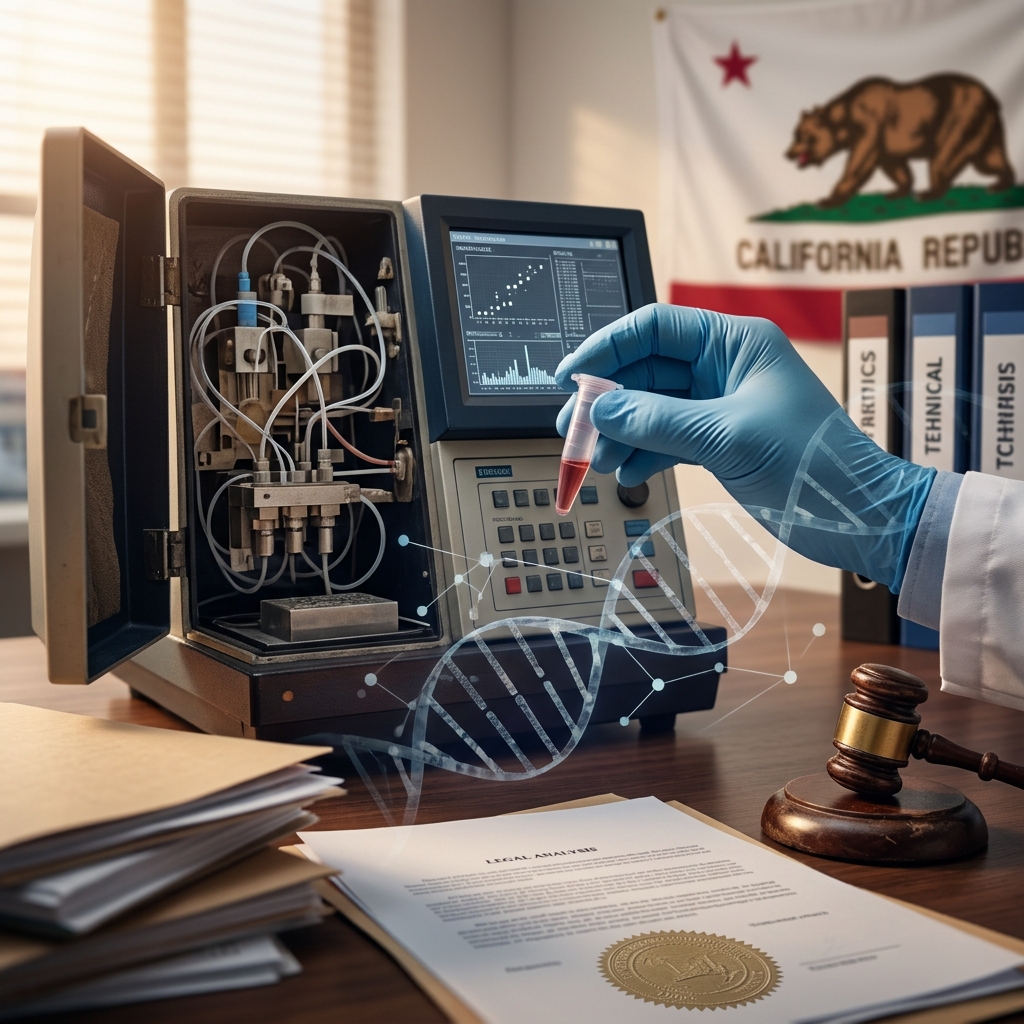
California’s effort to build a massive DNA databank of arrestees has triggered repeated legal review, including guidance from the U.S. Supreme Court and intense debate over privacy, civil liberties, and law enforcement needs. At the center of this controversy is the question of whether collecting DNA from people simply arrested, rather than convicted, is a reasonable search under the Fourth Amendment and the California Constitution.
From Proposition 69 to a Statewide DNA Collection Regime
In 2004, California voters approved Proposition 69, formally known as the “DNA Fingerprint, Unsolved Crime and Innocence Protection Act.” The initiative expanded the state’s authority to obtain DNA samples and create genetic profiles for law enforcement use.
- Scope of collection: Prop 69 authorized DNA collection from individuals convicted of certain crimes and, over time, from anyone arrested on suspicion of a felony.
- Method of sampling: Law enforcement typically uses a buccal (cheek) swab, a minimally invasive procedure that still raises significant privacy concerns because DNA contains extensive personal information.
- Database integration: Profiles are uploaded to California’s databank and the national Combined DNA Index System (CODIS), allowing continuous searches by local, state, and federal agencies.
Proponents argued that the law would help solve cold cases, identify suspects more quickly, and even exonerate innocent people. Critics countered that the databank would quietly fill with the genetic information of thousands of people who were never convicted of any crime, creating long-term risks for privacy and potential misuse.
The Buza Case: A Test of Arrestee DNA Collection
The key constitutional test for California’s arrestee DNA regime came in People v. Buza, a case involving a San Francisco man arrested on suspicion of arson.
| Issue | How It Arose in People v. Buza |
|---|---|
| DNA collection requirement | At booking, officials informed Buza he was required to provide a cheek swab under the DNA Act. |
| Refusal and prosecution | Buza refused to submit a sample and was later convicted of both arson-related felonies and a misdemeanor for refusing the DNA swab. |
| Appellate ruling | The Court of Appeal held that the DNA Act violated California’s protection against unreasonable searches and seizures when applied to felony arrestees like Buza. |
| Supreme Court review | The California Supreme Court ultimately reversed, upholding the DNA collection requirement as reasonable under both the U.S. and state constitutions in Buza’s specific circumstances. |
The state high court emphasized that Buza had been arrested on probable cause for a serious offense, and the cheek swab occurred during a routine booking process. In that narrow context, the justices concluded the search was reasonable and the statutory penalties valid.
Maryland v. King: U.S. Supreme Court Guidance
California’s decision in Buza did not occur in a vacuum. The court explicitly relied on the U.S. Supreme Court’s earlier ruling in Maryland v. King, which held that collecting DNA via cheek swab from individuals arrested for serious offenses is permissible under the Fourth Amendment.
In Maryland v. King, the Supreme Court reasoned that:
- DNA is a powerful identification tool, comparable in some ways to fingerprints, and helps link arrestees to unsolved crimes.
- The intrusion of a cheek swab is relatively minimal compared with other booking procedures.
- When limited to serious offenses, the balance between privacy interests and law enforcement needs favors the government.
Guided by this precedent, the California Supreme Court concluded that its own DNA Act was constitutional as applied to Buza, but deliberately refrained from settling the law’s validity for other categories of arrestees. That open question left room for further challenges and re-examination.
Privacy Backlash and Civil Liberties Concerns
Despite the court’s approval in Buza, civil liberties organizations and privacy advocates have continued to raise serious concerns about California’s broad DNA collection regime.
Key Privacy Objections
- Genetic scope: DNA contains extensive information about an individual’s family relationships, ancestry, and potential health traits, far beyond ordinary identity markers.
- Indefinite retention: Once a sample is taken, the resulting profile may be stored indefinitely and routinely searched against crime-scene DNA, even if the person is never convicted.
- Impact on innocent people: Between 2009 and 2017, California collected DNA from more than 750,000 people who were never convicted of a felony, yet their profiles entered the system.
- Limited expungement: Only a small fraction of eligible individuals have successfully removed their DNA from the database—just 1,282 out of those 750,000 during that period.
The Electronic Frontier Foundation and other groups argue that this sprawling database of genetic information belonging to innocent or minimally culpable individuals undermines California’s constitutional privacy protections and the prohibition on unreasonable searches.
Clearing the Databank: Judicial Pushback on Retention
One major development in the ongoing struggle over DNA databanks is a state court decision requiring California to take concrete steps to clear its database of profiles belonging to people who were never convicted.
According to litigation brought by the ACLU of Northern California:
- Since 2009, California has systematically collected DNA from everyone arrested on suspicion of a felony.
- Individuals who were never prosecuted, or who were acquitted, have a legal right to have their DNA sample destroyed and profiles removed from state and federal systems—but this right is rarely realized in practice.
- A state court ordered the California Department of Justice to develop and submit an automatic plan to destroy and remove DNA for hundreds of thousands of eligible people within a specified timeframe.
This ruling does not invalidate the core authority to collect DNA at arrest. Instead, it targets the retention and expungement process, insisting that the state actively protect the rights of innocent individuals by cleaning up its databases.
Beyond Felony Arrests: Local Programs and New Challenges
The Buza decision and Proposition 69 focus on felony arrests, but some local actors have experimented with even broader forms of DNA collection. For example, Orange County’s so-called “spit and acquit” program sought DNA from people charged with misdemeanors, prompting new constitutional challenges.
In litigation over that program:
- Plaintiffs argued that requiring DNA samples from misdemeanor defendants under coercive plea deals was unauthorized by California law and violated both federal and state constitutions.
- An appellate court allowed key parts of the lawsuit to proceed, rejecting a lower court’s decision to dismiss the challenge and ordering discovery.
- The case raises questions about whether local programs can expand DNA collection beyond the framework contemplated by statewide statutes like Proposition 69.
These localized initiatives underscore that the constitutional debate is not only about state-level statutes but also about how prosecutors and police implement DNA collection in practice.
Balancing Crime-Solving Benefits and Civil Liberties
Courts assessing DNA databank laws must weigh law enforcement benefits against individual privacy and the risk of overreach. The legal analysis often turns on a series of interrelated questions:
- Nature of the offense: Is DNA collection limited to those arrested for serious, violent, or sexual crimes, or does it sweep in minor offenses?
- Stage of the process: Does collection occur upon arrest, upon charging, or only after conviction?
- Retention and use: How long are samples and profiles kept, and for what investigative purposes can they be used?
- Expungement mechanisms: Are there clear, accessible procedures for innocent or acquitted individuals to remove their DNA from government databases?
- Technological evolution: As DNA analysis becomes more powerful, do earlier justifications still hold, or do new risks require updated safeguards?
In Buza, the California Supreme Court found the balance acceptable for a felony arrestee booked on probable cause, guided by Maryland v. King. Yet the court explicitly left open the constitutionality of applying the DNA Act to other groups of arrestees, signaling that the debate is far from settled.
Comparative Perspective: DNA Databases in Other Jurisdictions
California’s story unfolds against a broader backdrop of expanding state and federal DNA databases across the United States. As early as the 1990s, courts upheld laws requiring samples from convicted felons for inclusion in state databanks.
For example, the U.S. Court of Appeals for the Fourth Circuit upheld Virginia’s system requiring all felons to provide DNA samples, ruling that the database did not violate constitutional protections against unreasonable searches or ex post facto laws. These early decisions laid the groundwork for later statutes that extend collection to arrestees, not just convicted individuals.
However, extending DNA collection from convicted felons to broad categories of arrestees amplifies the tension between crime-solving benefits and the rights of people who may ultimately be found innocent or never charged. California’s ongoing litigation exemplifies this shift in focus.
Frequently Asked Questions (FAQ)
Is it legal for California to take DNA from people who are only arrested?
Under California’s DNA Act, law enforcement may collect DNA via cheek swab from individuals arrested on suspicion of a felony, and the California Supreme Court has upheld this practice as constitutional in the specific context of People v. Buza. However, the court did not decide the law’s validity for all possible categories of arrestees, leaving room for future challenges.
What happens to my DNA if I am arrested but never convicted?
Your DNA profile may still enter state and federal databases, where it can be searched against crime-scene evidence. If you are not prosecuted, acquitted, or later found innocent, you have a right under California law to seek destruction of your DNA sample and removal of your profile, and recent court orders are pushing the state to automate this process so that eligible individuals are cleared without having to navigate complex procedures.
How is DNA collection different from fingerprinting?
Both DNA and fingerprints are used to identify individuals and link them to criminal investigations, but DNA contains vastly more information, including potential clues about family relationships and genetic traits. Courts have sometimes analogized DNA collection to fingerprinting for purposes of assessing reasonableness, yet privacy advocates argue that DNA’s broader informational content deserves stronger safeguards.
Can local prosecutors require DNA for minor offenses?
Some local programs, such as Orange County’s “spit and acquit” system, have attempted to obtain DNA from misdemeanor defendants, often as part of plea deals. These efforts are now being challenged in court, with plaintiffs arguing that such programs exceed statutory authority and violate constitutional protections.
Will evolving technology change the legal analysis?
As DNA analysis becomes more sophisticated, the range of information that can be inferred from a simple cheek swab expands, which may alter how courts evaluate the balance between privacy and law enforcement interests. While current decisions draw heavily on existing precedents like Maryland v. King, future cases may revisit earlier assumptions as technology and public expectations evolve.
Key Takeaways for Policy and Practice
The saga of California’s arrestee DNA databank illustrates several core lessons for legislators, courts, and the public:
- Precedent matters: U.S. Supreme Court decisions like Maryland v. King can strongly influence state courts, but they do not answer every question about local implementation.
- Scope and limits are crucial: Narrow rulings upholding DNA collection in specific contexts (such as felony arrestees) do not automatically validate broader uses, such as for misdemeanors or mass retention without effective expungement.
- Rights after arrest: Even where DNA collection is allowed, courts may require more robust mechanisms to remove the genetic data of people who were never lawfully convicted, as seen in the order for California to clear large portions of its databank.
- Ongoing oversight: New litigation, local programs, and technological advances ensure that DNA databank policies remain under continuous scrutiny, with policy adjustments and judicial review likely to continue.
As California’s experience shows, the legal landscape surrounding DNA databanks is dynamic. Each new case—whether at the state supreme court or influenced by the U.S. Supreme Court—adds another layer to the evolving standards that govern genetic evidence collection, retention, and civil liberties in the digital age.
References
- Proposition 69 (DNA Fingerprint, Unsolved Crime and Innocence Protection Act) — California Department of Justice. 2004-11-02. https://oag.ca.gov/bfs/prop69
- People v. Buza — Supreme Court of California (Justia). 2018-04-02. https://law.justia.com/cases/california/supreme-court/2018/s223698.html
- People v. Buza: California Supreme Court Reverses Appellate Judgment Against Collecting DNA Samples Through Buccal Swab — Harvard Journal of Law & Technology Digest. 2018-04-13. https://jolt.law.harvard.edu/digest/people-v-buza-california-supreme-court-reverses-appellate-judgement-against-collecting-dna-samples-through-buccal-swab
- California Supreme Court Upholds the State’s Problematic Arrestee DNA Collection Law — Electronic Frontier Foundation. 2018-04-02. https://www.eff.org/deeplinks/2018/04/california-supreme-court-upholds-arrestee-dna-collection-law
- Court Requires California to Clear Its Massive DNA Database of People Never Convicted of a Crime — ACLU of Northern California. 2022-02-10. https://www.aclunorcal.org/news/court-requires-california-clear-its-massive-dna-database-people-never-convicted-crime
- Two Databases Filled With the DNA of Innocent People Face Uncertain Fate — WitnessLA. 2018-06-18. https://witnessla.com/two-databases-filled-with-the-dna-of-innocent-people-face-uncertain-fate/
- State And Federal DNA Database Laws Examined — PBS Frontline. 2001-05-08. https://www.pbs.org/wgbh/pages/frontline/shows/case/revolution/databases.html
Similar Articles








Read full bio of medha deb




