
Border Security vs Civil Liberties: A Profiling Case Study
Exposing the truth when law enforcement directives clash with civil rights.
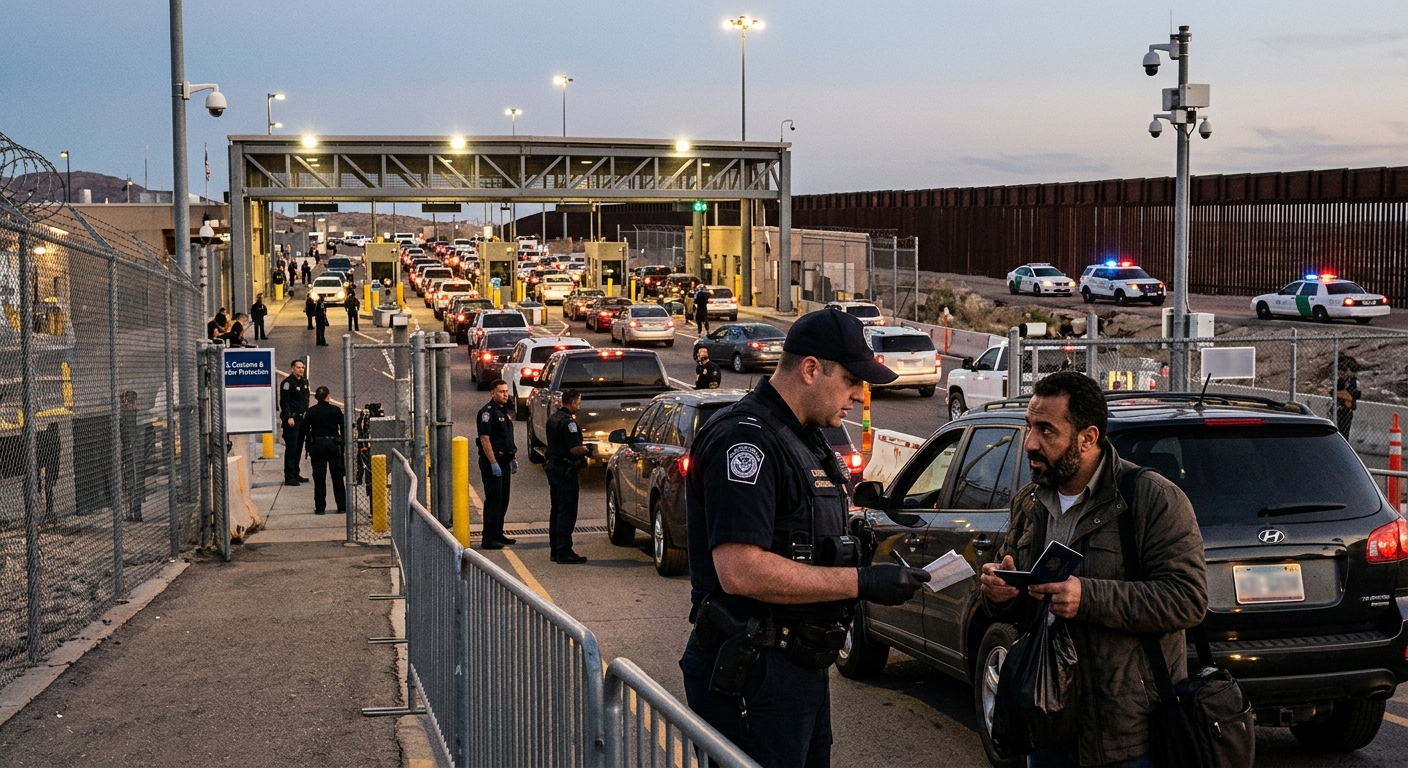
Navigating the Intersection of National Security and Civil Liberties
In modern democracies, few debates are as persistent and polarizing as the ongoing struggle to balance robust national security with the fundamental preservation of civil liberties. At international borders and ports of entry, this tension becomes remarkably pronounced. Government agencies tasked with regulating immigration, interdicting contraband, and preventing domestic threats are granted extraordinary powers. Yet, these sweeping authorities must legally coexist with the constitutional rights afforded to travelers, including United States citizens and lawful permanent residents. When global geopolitical events trigger heightened domestic security postures, the risk of overreach escalates dramatically, often testing the limits of constitutional protections.
The authority granted to border enforcement agencies is both broad and complex. Under established legal frameworks, such as Section 287 of the Immigration and Nationality Act, agents have the latitude to conduct warrantless searches and question individuals about their immigration status within a specific geographic range—traditionally defined as within 100 air miles of any external boundary . These powers are designed to serve as a critical shield against illegal entry and cross-border criminal enterprises. However, the legal mandate to secure the border is not a blank check for indiscriminate screening. Federal courts and constitutional law explicitly prohibit the targeting of individuals based solely on protected characteristics such as race, religion, or national origin. Navigating this fine line requires stringent oversight, clear and lawful policy directives, and an unwavering commitment to non-discrimination. When agencies substitute individualized reasonable suspicion with broad demographic targeting, they not only violate legal norms but also alienate the very communities whose cooperation is vital to domestic security.
Anatomy of a Border Incident: Profiling in Washington State
The events that unfolded in early January 2020 at the Blaine, Washington port of entry serve as a striking case study of what happens when international conflicts dictate local border policies. Following a high-profile overseas military strike that dramatically increased tensions between the United States and Iran, hundreds of travelers of Iranian descent found themselves caught in an unforeseen dragnet at the northern border. Many of these individuals were returning from a pop concert in Vancouver, British Columbia, expecting a routine reentry into their home country. Instead, they were subjected to prolonged detentions, some lasting up to twelve hours, entirely disproportionate to standard border processing times.
Travelers reported that their passports were confiscated and that they were ushered into secondary screening areas not because of any suspicious behavior, but solely due to their place of birth or heritage. During these extended detentions, individuals—including U.S. citizens, permanent residents, and visa holders—were allegedly subjected to invasive interrogations . Agents questioned them about their family lineages, their religious affiliations, and their personal political ideologies. This sweeping action highlighted a profound disconnect between the constitutional guarantees of freedom of religion and expression, and the on-the-ground execution of border security measures. The localized overreach was not an isolated mishap of a few rogue agents but rather a systemic operational shift at that specific port. It laid bare the inherent dangers of reactionary security postures. When geopolitical anxieties run high, the bureaucratic mechanisms designed to protect the homeland can easily misfire, transforming ordinary citizens into presumed threats based on their national origin.
The Role of Whistleblowers and Leaked Memoranda
In the immediate aftermath of the Blaine detentions, the public relations response from federal border authorities was swift and unequivocal. Agency spokespersons issued categorical denials, utilizing official channels and press statements to dismiss the mounting allegations as misinformation. The official narrative insisted that border wait times were merely the result of holiday traffic and understaffing, and emphatically denied that any directive had been issued to target individuals of Iranian descent. For a brief period, this blanket denial obscured the truth, framing the complaints of detained citizens as exaggerated or fabricated.
However, the landscape of the narrative changed dramatically due to the emergence of leaked internal documents. A memorandum, which was later revealed to have originated from a regional field office in Seattle, directly contradicted the agency’s public assertions . The leaked directive explicitly instructed border agents to conduct enhanced vetting and secondary inspections on individuals born in specific Middle Eastern countries, including Iran, Lebanon, and Palestine, between the years 1961 and 2001. The document provided a chilling, formalized framework for national origin profiling, explicitly directing officers to scrutinize travelers based on their demographic profiles rather than individualized suspicion.
This revelation underscored the critical importance of whistleblowers and unauthorized disclosures in maintaining government accountability. Without the leaked memorandum, the discrepancy between the agency’s public statements and its internal operations might have remained hidden indefinitely. The document served as undeniable proof that the detentions were a matter of targeted policy, forcing agency leadership to eventually acknowledge the error and retract their initial denials . It was a stark reminder that internal directives, shielded from public scrutiny, can easily bypass constitutional safeguards unless exposed.
Legal and Psychological Impacts on Targeted Communities
The consequences of national origin profiling extend far beyond the immediate inconvenience of a delayed border crossing. For the individuals targeted in Washington State, and for marginalized communities nationwide, such incidents inflict deep psychological and societal wounds. When citizens and legal residents are treated as hostile foreign actors by their own government, it fundamentally fractures their trust in federal institutions. The experience of being detained, interrogated about one’s faith, and held without standard recourse leaves a lasting trauma, signaling to these communities that their constitutional rights are conditionally based on geopolitical climates.
Psychologically, the fear of profiling creates a chilling effect on the daily lives and travel habits of affected populations. Families may cancel international travel, avoid visiting relatives abroad, or feel compelled to conceal their cultural and religious identities out of fear of state-sponsored harassment. This hyper-vigilance breeds a sense of second-class citizenship, where the presumption of innocence is stripped away the moment they present a passport that reflects a specific birthplace. Legally, these actions threaten to normalize unconstitutional precedents. If border agencies can successfully implement discriminatory directives under the guise of emergency national security, it sets a dangerous benchmark for future abuses. The normalization of profiling weakens the Equal Protection Clause, suggesting that constitutional rights can be temporarily suspended for specific ethnic groups whenever international tensions rise. Preventing this normalization requires aggressive legal pushback and an unwavering defense of civil rights in the face of security imperatives, ensuring that foundational liberties are not discarded during times of perceived crisis.
Institutional Accountability and the Path to Reform
Holding massive federal law enforcement agencies accountable requires a multifaceted approach, blending legal action, legislative oversight, and public advocacy. Following the revelations of the leaked border directive, civil rights organizations rapidly mobilized to challenge the government’s overreach. A primary tool in this effort was the Freedom of Information Act (FOIA). By filing exhaustive FOIA requests, legal advocates sought to compel the release of all communications, musters, and directives related to the incident. When agencies stonewalled or delayed these requests, organizations escalated to federal lawsuits, using the judicial system to pry open the black box of border security operations.
Simultaneously, legislative oversight played a crucial role in demanding answers. Congressional representatives from the affected regions, alongside leaders of homeland security and judiciary committees, initiated formal inquiries . They demanded that agency heads explain the discrepancies between their public denials and the leaked memo, insisting on a full accounting of how such an unconstitutional directive was authored, approved, and implemented without immediate intervention from higher-level oversight bodies. The path to meaningful reform requires more than just reactive investigations; it necessitates structural changes within the agencies themselves. Recommendations from civil rights advocates include:
- Mandatory, rigorous anti-bias and constitutional rights training for all field agents.
- The implementation of robust internal auditing mechanisms to review temporary directives before execution.
- Stricter disciplinary actions for officials who author unconstitutional orders or deliberately mislead the public.
- Enhanced mechanisms for travelers to report abuses in real-time without fear of retaliation.
Ensuring accountability is a continuous battle, demanding that the scales of justice remain balanced even in times of heightened national security alerts.
The Imperative of Transparent Policy-Making
Transparency is the bedrock of democratic governance, particularly for agencies entrusted with extraordinary policing powers. When law enforcement entities operate behind veils of secrecy, the rule of law is compromised. The northern border incident demonstrated how easily formal guidelines are subverted by decentralized field directives. To restore public faith, it is imperative that security protocols undergo rigorous constitutional vetting. Establishing independent oversight boards to audit border operations could serve as a powerful deterrent against future rights violations. By championing transparency and enforcing consequences for rogue directives, society can ensure that national security measures protect the homeland without sacrificing core values. An effective security strategy operates within the Constitution, respecting the dignity of all individuals regardless of their national origin.
Comparing Stated Policy with Operational Directives
| Domain | Official Public Stance | Leaked Directive Reality |
|---|---|---|
| Targeting Criteria | Decisions based on individualized suspicion and behavior. | Mandated vetting based on birth year and national origin. |
| Public Relations | Categorical denial of any profiling or targeted detentions. | Explicit written instructions from a regional field office. |
| Questioning Scope | Standard immigration and customs verification. | Invasive questions regarding religion and political affiliation. |
Frequently Asked Questions (FAQs)
Q1. What legal authority governs border searches?
Under Section 287 of the Immigration and Nationality Act, officers can conduct certain warrantless searches within 100 air miles of the border. However, this does not permit unconstitutional profiling based on race or religion.
Q2. Can border officials detain U.S. citizens indefinitely?
No. U.S. citizens cannot be denied entry into the United States. While they can be subject to standard inspection, prolonged detention without probable cause violates Fourth Amendment protections against unreasonable seizure.
Q3. What role does the Freedom of Information Act (FOIA) play in civil rights?
FOIA allows individuals and advocacy groups to request access to internal government documents. It is a critical tool for uncovering leaked directives and holding agencies accountable for their operational policies.
Q4. How did whistleblowers impact the 2020 border detention incident?
Whistleblowers leaked a Seattle field office memorandum that contradicted official agency denials. This document proved that travelers were being explicitly targeted for secondary screening based on their national origin.
Q5. What recourse is available for those profiled at the border?
Individuals who experience profiling can file civil rights complaints with agency oversight offices, seek legal representation to file lawsuits, and report their experiences to advocacy organizations to build pressure for legislative reform.
References
- 8 CFR Part 287 — Field Officers; Powers and Duties — Code of Federal Regulations. 2025-09-05. https://www.ecfr.gov/current/title-8/chapter-I/subchapter-B/part-287
- House Leaders Press Trump Administration On Reports of Iranian Americans Being Held at Border — U.S. House of Representatives. 2020-01-07. https://homeland.house.gov/news/press-releases/house-leaders-press-trump-administration-on-reports-of-iranian-americans-being-held-at-border
- U.S. admits border officers wrongly detained Iranian-born travellers at Canada-U.S. border — CBC News. 2020-02-12. https://www.cbc.ca/news/canada/british-columbia/iranian-americans-border-detentions-1.5461533
- Legal authority for the Border Patrol — U.S. Customs and Border Protection. 2026-02-12. https://help.cbp.gov/s/article/Article-1084
Similar Articles








Read full bio of Sneha Tete


