
Apple, Law Enforcement, and User Data Requests
How Apple handles government data requests while balancing user privacy, legal obligations, and public safety in the digital age.
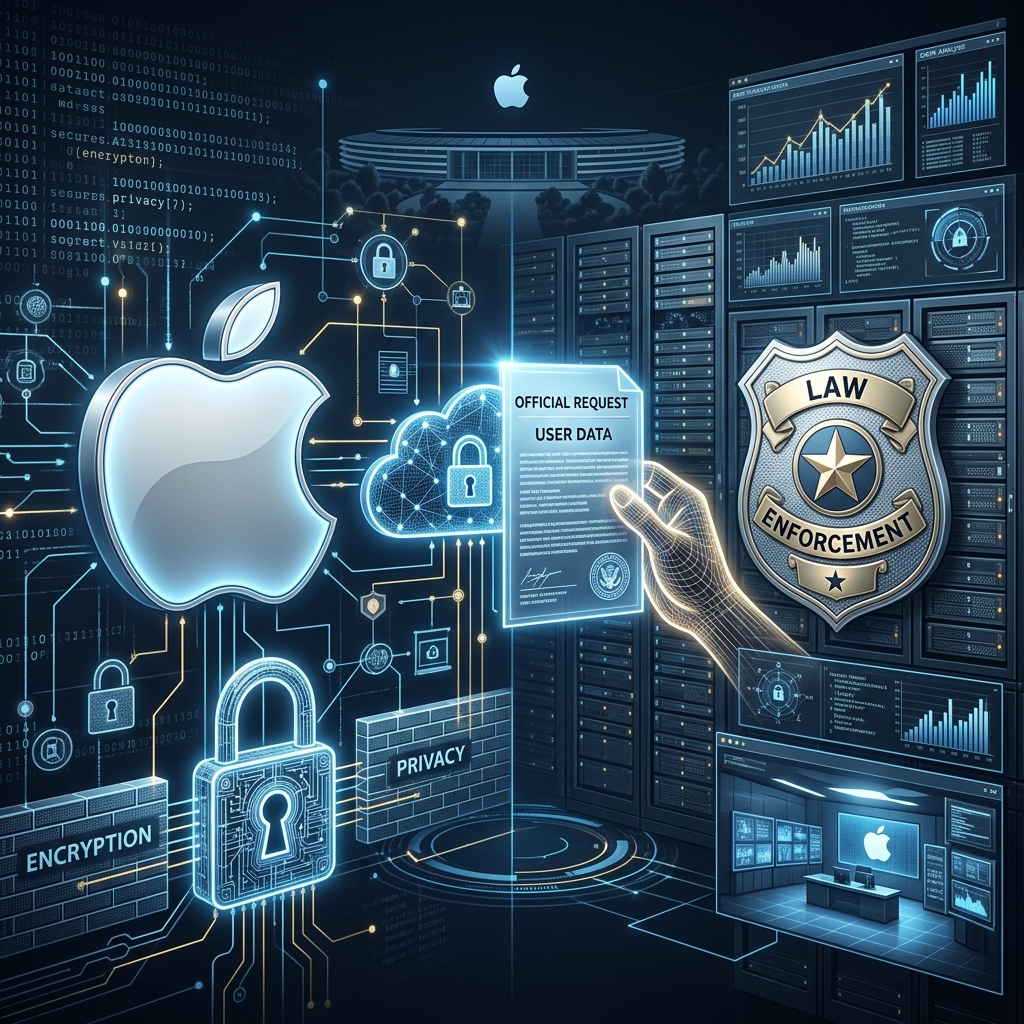
As a global technology company operating millions of devices and online services, Apple sits at the intersection of user privacy, law enforcement needs, and complex legal requirements. Apple routinely receives requests from government authorities seeking customer information for investigations, yet it also markets its products as privacy-focused and secure. Understanding how these requests are handled is essential for anyone concerned about digital rights, corporate responsibility, and public safety.
This article explains how Apple processes law enforcement requests, what legal standards apply, how emergency disclosures work, and what protections are in place for users. It draws on Apple’s own legal process guidelines, transparency reporting, and publicly available documentation.
Why Law Enforcement Seeks Data from Apple
Modern criminal and regulatory investigations often involve digital evidence. Phones, tablets, computers, and cloud services may contain data relevant to:
- Serious crimes such as terrorism, violent offenses, or organized crime
- Financial fraud and cybercrime investigations
- Missing persons or threats to individual safety
- Civil or regulatory enforcement requiring transactional records
Because Apple hosts data on services like iCloud and manages identifiers through Apple IDs and device numbers, law enforcement may seek information that is not accessible solely from a seized device. Apple’s internal guidelines recognize this reality and provide a structured process to respond to valid requests while limiting disclosure to what the law allows or requires.
Core Principles Guiding Apple’s Response
Apple’s published policies describe several principles that shape how it handles requests from government and law enforcement agencies.
- Legal compliance only: Apple states that it requires a legally valid process, such as a subpoena, court order, or search warrant, before disclosing customer data, except in defined emergency scenarios.
- Data minimization: Requests must be as narrow as possible. Apple encourages authorities to limit the scope of requested data to what is relevant to a specific case, and its forms explicitly call for focused information.
- Global consistency: Apple applies guidelines adapted to local laws in the United States and in other jurisdictions, but the underlying concepts of lawful process and basic privacy protections remain similar.
- Transparency and reporting: Apple publishes a regular transparency report summarizing the number and types of government information requests it receives worldwide.
- Security and safety exceptions: Apple allows limited emergency disclosures when imminent danger to life or serious injury is involved, under relevant statutes such as the U.S. Electronic Communications Privacy Act (ECPA).
Types of Requests Apple Receives
Apple categorizes incoming requests from authorities and private parties based on their origin and purpose.
| Request Type | Typical Source | Common Purpose |
|---|---|---|
| Government / Law Enforcement | Police, prosecutors, national security agencies | Criminal investigations, public safety, national security cases |
| National Security Requests (U.S.) | U.S. federal agencies | National security-related investigations, often classified in detail |
| Private Party Requests | Civil litigants, individuals, companies | Civil or criminal proceedings where non-government actors seek data via legal process |
Within these categories, requests can seek different kinds of information, such as subscriber details, device identifiers, transactional records, or—subject to stricter legal standards—customer content from iCloud backups or communications.
Legal Process Requirements in the United States
Apple’s U.S. legal process guidelines outline which types of legal documents are required for various forms of customer data, referencing the Electronic Communications Privacy Act and related statutes.
- Basic subscriber information: Often obtainable with a subpoena or court order under lower evidentiary standards, such as identifying account holders or confirming an Apple ID associated with a device.
- Non-content records: Certain transactional or metadata records may require a court order under provisions like 18 U.S.C. § 2703(d), which applies to specific types of electronic communications records.
- Customer content: With limited exceptions, Apple requires a search warrant issued upon a showing of probable cause before disclosing the content of communications or data stored in iCloud, such as backups, emails, or photos.
In its guidelines, Apple explicitly notes that a search warrant is generally needed for customer content, unless an emergency exception applies or the customer has consented to disclosure. This distinction between basic records and content is central to how privacy is protected under U.S. law.
Guidelines Outside the United States
For countries other than the United States, Apple publishes separate guidelines reflecting local legal frameworks while maintaining consistent expectations that law enforcement must rely on formal legal authority.
Key aspects of Apple’s non-U.S. guidelines include:
- Authorities must identify the legal basis in domestic law that authorizes collecting personal data from a data controller like Apple.
- Requests are submitted through designated channels, typically via official government or law enforcement email addresses using Apple’s templates.
- Apple may decline or seek clarification if requests are overly broad, inconsistent with local law, or lack sufficient detail about the case context.
By requiring a specific statutory basis and limiting processing to verified official contacts, Apple aims to reduce the risk of unauthorized or informal requests that could compromise user rights.
How Law Enforcement Submits Requests to Apple
Apple has established structured channels for processing incoming legal demands, including standardized forms and dedicated email addresses.
- Government & Law Enforcement Information Request template: Apple provides a template that requires details about the requesting agency, officer, case context, information sought, and legal basis.
- Verified contact information: Requests must be transmitted from the official government or law enforcement email address of the requesting officer, and Apple will not process requests received from non-official accounts.
- Special addresses: For non-U.S. requests, Apple directs authorities to send materials to designated law enforcement addresses; for emergency situations, a separate address and phone contact to the Global Security Operations Center are used.
- Authorized investigators only: Apple’s law enforcement portal clarifies that only agents or emergency responders authorized to gather evidence in connection with an official investigation may submit requests.
These procedural requirements serve both efficiency and security: they help Apple route requests quickly while ensuring they originate from legitimate agencies and meet baseline legal standards.
Emergency Requests and Imminent Danger Scenarios
Despite requiring formal legal process in most circumstances, Apple’s U.S. guidelines recognize that some situations involve imminent threats where waiting for a warrant or court order could endanger lives.
Under the Electronic Communications Privacy Act, Apple is permitted—but not obligated—to disclose information in emergencies where it believes in good faith that there is imminent danger of death or serious physical injury. Specific statutory provisions such as 18 U.S.C. §§ 2702(b)(8) and 2702(c)(4) authorize voluntary disclosure to government entities when urgent circumstances exist.
Apple’s emergency process typically includes:
- Completion of an Emergency Government & Law Enforcement Information Request form by the officer.
- Transmission of the request from an official address to Apple’s designated emergency email, often with an “Emergency Request” subject line.
- Optionally, contact through Apple’s Global Security Operations Center phone line for time-sensitive inquiries, with multilingual support.
Even in emergencies, Apple’s policies emphasize that requests should be as narrow and specific as possible. This approach aims to address immediate risks while avoiding broad, long-term access that could erode privacy protections.
Transparency Reports and Public Accountability
One of the most visible ways Apple communicates its handling of government requests is through its transparency report, published on its website. The report provides aggregated information about:
- Numbers of government information requests by country
- Types of data requested (for example, device queries, account information, or financial identifiers)
- Categories such as national security, law enforcement, and private party requests
- Whether requests related to Apple services, device registrations, or other specific products
While the report does not identify individual customers or specific cases, it gives the public insight into how often governments seek Apple-held data and how Apple responds. This form of reporting has become a common practice among major technology companies to demonstrate accountability and inform debates on surveillance, privacy, and regulation.
Customer Notification and User Awareness
Although specific practices can vary by jurisdiction and legal constraint, Apple has publicly indicated that it seeks to notify customers when their data is requested by government agencies, except where prohibited by law or where notification would be counterproductive to an investigation. Such notification, when possible, allows individuals to:
- Consult legal counsel regarding the request
- Challenge or contest certain forms of data access, where allowed
- Be aware that their information may have been disclosed
This practice is part of a broader trend among technology companies to provide post-fact notice to users about government access to their information, creating an additional layer of transparency and user control beyond statutory requirements.
Privacy Safeguards and Limitations on Disclosure
Apple’s guidelines and public statements indicate several safeguards designed to reduce unnecessary exposure of user data:
- Scope limitation: Apple expects law enforcement to tailor requests narrowly. Its forms explicitly instruct officers to specify relevant identifiers and only the information needed for the case.
- Verification of legal authority: Requests must cite specific legal provisions or statutes that authorize access to data, particularly for non-U.S. jurisdictions.
- Distinction between content and non-content data: Apple applies stricter standards—such as warrant requirements—for customer content stored on its services.
- Internal compliance review: Requests are typically processed through Apple’s legal and security teams, which assess whether they meet guidelines and relevant laws before responding.
These safeguards are part of Apple’s effort to balance cooperation with authorities and the protection of personal information. They also complement technical measures such as encryption and security features that limit what data Apple can access in the first place, although those technical details are beyond the scope of Apple’s legal process guidelines.
Implications for Users and Law Enforcement Agencies
Apple’s structured approach to data requests has implications for both users and investigators.
For Users
- Users can expect that data will not be released to government agencies without some form of legal process, except in narrowly defined emergencies.
- Privacy protection is stronger for content data, such as messages, photos, and backups, due to warrant requirements.
- Transparency reports and potential user notifications provide partial visibility into how often and under what circumstances their information might be sought.
For Law Enforcement
- Agencies must prepare clear, legally grounded requests specifying case context, identifiers, and statutory authority.
- Broad or ambiguous demands may be delayed, challenged, or narrowed by Apple to align with legal standards.
- Emergency channels exist for situations where imminent harm necessitates rapid disclosure, but these channels are not meant for routine investigations.
This framework encourages more disciplined use of digital evidence while attempting to preserve fundamental privacy expectations.
Frequently Asked Questions (FAQs)
Does Apple automatically provide data to any government that asks?
No. Apple requires a legally valid process, such as a subpoena, court order, or search warrant, before providing data in most cases, and it applies emergency exceptions only under narrow conditions involving imminent danger.
What kind of data can law enforcement obtain from Apple?
Depending on the legal process and jurisdiction, authorities may obtain subscriber information, device identifiers, certain transactional records, and, with a search warrant or equivalent legal authority, content such as iCloud backups or stored communications.
Does Apple notify users when their data is requested?
Apple has indicated that it aims to notify users when permissible, but notice can be restricted if prohibited by law or if it would seriously interfere with an investigation. Notification practices can vary by case and jurisdiction.
How does Apple handle requests from outside the United States?
For non-U.S. requests, Apple relies on region-specific guidelines requiring authorities to identify the legal basis in domestic law, submit requests through official channels, and limit requests to the minimum necessary information.
Can Apple refuse a request?
Yes. Apple may decline or seek clarification of a request that is overly broad, lacks legal foundation, or does not comply with its published guidelines.
References
- Legal Process Guidelines for U.S. Law Enforcement — Apple Inc. 2024-01-01. https://www.apple.com/legal/privacy/law-enforcement-guidelines-us.pdf
- Legal Process Guidelines for Law Enforcement Outside the U.S. — Apple Inc. 2024-01-01. https://www.apple.com/legal/privacy/law-enforcement-guidelines-outside-us.pdf
- Government / Law Enforcement Information Request Form — Apple Inc. 2023-12-01. https://www.apple.com/legal/privacy/gle-inforequest.pdf
- Privacy – Government Information Requests — Apple Inc. 2023-10-01. https://www.apple.com/privacy/government-information-requests/
- Privacy – Transparency Report — Apple Inc. 2023-10-01. https://www.apple.com/legal/transparency/
- Electronic Communications Privacy Act (ECPA) — U.S. Congress. 1986-10-21. https://uscode.house.gov/view.xhtml?path=/prelim@title18/part1/chapter121
- Apple’s Approach to Government Requests for User Data — Iddrisu, LinkedIn. 2021-08-01. https://www.linkedin.com/pulse/apples-approach-government-requests-user-data-review-iddrisu
Similar Articles








Read full bio of Sneha Tete


