
Apartment Security Liability: What Tenants and Landlords Need to Know
Understand when landlords may be liable for crimes and break-ins in apartment buildings, and what tenants can do to protect their rights.
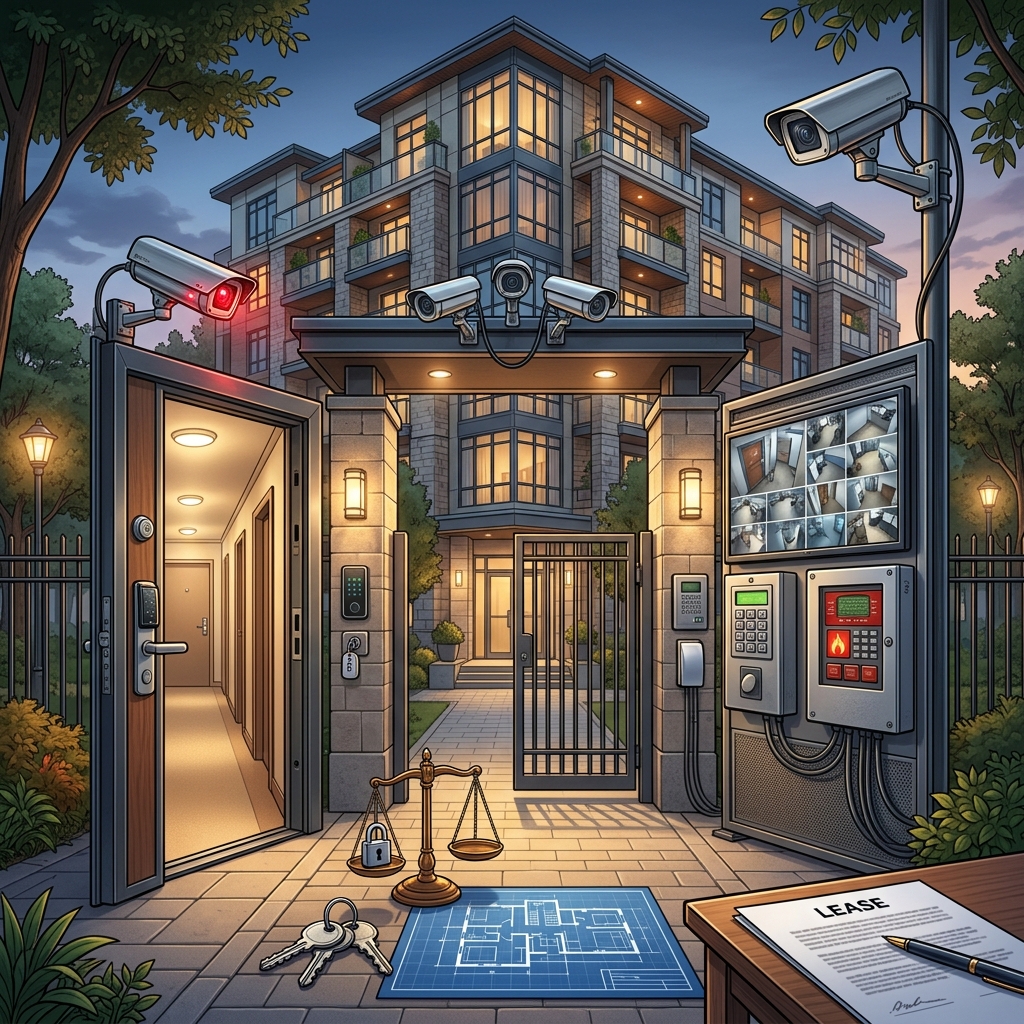
Crimes such as break-ins, assaults, and robberies sometimes occur in and around apartment complexes. When they do, tenants often ask a critical question: can the landlord be held legally responsible for failing to keep the property secure? This question falls under the broader legal concept of apartment security liability, a subset of premises liability law that governs when property owners must answer for crimes committed by third parties on their property.
This guide explains how apartment security liability works, when a landlord may be liable for criminal acts on the premises, and what both tenants and landlords should do to protect their rights and safety. Although laws vary by state, the core principles discussed here are widely recognized in U.S. premises liability doctrine.
Understanding Apartment Security Liability
Apartment security liability is rooted in premises liability, the area of law that governs the responsibility of property owners and managers to maintain reasonably safe conditions for people lawfully on their property. For landlords, this duty extends not only to the interior of individual units, but also to common areas such as parking lots, stairwells, hallways, laundry rooms, and building entrances.
In general, landlords are not automatically liable for every crime that occurs on their property. They are not insurers of tenant safety. Instead, they may be held liable when they fail to take reasonable security precautions in the face of foreseeable criminal risks, and that failure leads to tenant injuries or losses.
- Landlords owe tenants a duty to maintain reasonably safe and habitable premises.
- Liability usually arises only when the landlord is negligent in providing or maintaining security.
- Negligent security is a specific type of premises liability claim focused on inadequate protection from crime.
Key Legal Concepts: Duty, Negligence, and Foreseeability
Most negligent security cases in apartment settings revolve around four core elements. Although terminology can vary slightly among jurisdictions, courts generally look for the following components:
| Element | What It Means in Apartment Cases |
|---|---|
| Duty of Care | The landlord has a legal obligation to keep the property reasonably safe, including implementing basic security measures. |
| Breach of Duty | The landlord fails to act as a reasonably prudent property owner would, such as ignoring broken locks or known security problems. |
| Foreseeability | Criminal activity on the property could reasonably have been anticipated, for example due to prior incidents or obvious vulnerabilities. |
| Causation & Damages | The landlord’s negligence is a substantial factor in causing the crime, and the tenant suffers injury or measurable loss. |
Duty of Care in Apartment Complexes
Courts widely recognize that landlords owe tenants a heightened duty of care compared with obligations owed to casual visitors. This includes:
- Providing functioning locks on doors and windows, consistent with local building and housing codes.
- Maintaining adequate lighting in hallways, parking areas, stairwells, and entryways.
- Conducting reasonable inspections and promptly correcting known security defects, such as broken gates or access doors.
- Complying with state and local statutes and regulations that specifically address residential security.
Where statutes or housing codes specify particular security features—like deadbolt requirements or minimum lighting in common areas—failure to comply can be strong evidence of a breach of duty.
Negligent Security: When Security Measures Fall Short
Negligent security occurs when a landlord or property manager does not take reasonable steps to deter or reduce foreseeable criminal activity, rendering the property unreasonably dangerous. Examples can include:
- Ignoring repeated tenant complaints about suspicious activity or prior incidents.
- Failing to repair broken locks, gates, or cameras despite knowing they are nonfunctional.
- Lack of basic lighting in areas where crimes have previously occurred.
- Not restricting access to the building in high-crime areas, such as leaving exterior doors propped open.
Importantly, the law does not require landlords to create a fortress or eliminate all risk. The standard is generally reasonableness under the circumstances, taking into account the neighborhood, prior incidents, and the feasibility of security measures.
Foreseeability of Crime
Foreseeability often determines whether a landlord had a duty to implement additional security measures. Courts may look at factors such as:
- Prior similar crimes in the building or immediate area.
- Police reports and incident history known or reasonably knowable to the landlord.
- Tenant complaints describing threats, assaults, or vandalism.
- Obvious conditions that invite crime, such as unsecured access points or nonfunctioning entry systems.
If a landlord has reason to anticipate an increased risk of crime, many courts impose a duty to warn tenants and to take reasonable security steps, such as improving lighting, repairing access controls, or coordinating with law enforcement.
Common Security Measures and Landlord Responsibilities
Reasonable security measures in an apartment complex are highly context-dependent, but certain basic steps are widely recognized as part of prudent property management.
Physical Security Features
- Locks and Deadbolts: Exterior doors and individual unit doors should have sturdy locks and often deadbolts, consistent with local housing and building codes.
- Window Locks: Ground-floor and accessible windows should have functional locks to deter break-ins.
- Controlled Access: In multi-unit buildings, systems such as intercoms, key fobs, or coded entries can help limit access to residents and invited guests.
- Fencing and Gates: For garden-style or gated communities, perimeter security may be necessary depending on local conditions.
Lighting and Visibility
Adequate lighting is a basic and often legally required component of apartment security. Poorly lit parking lots, stairwells, and hallways are associated with higher crime risk, and many states or cities require minimum lighting levels in common areas. Landlords should:
- Install lighting in parking areas, entrances, and pathways.
- Replace burnt-out bulbs promptly.
- Ensure motion-sensor or timer-based lighting functions properly.
Policies and Monitoring
Beyond physical features, landlords can implement policies and monitoring practices that reduce crime and limit liability.
- Tenant Screening: Conduct lawful, nondiscriminatory screenings to identify past violent or criminal behavior, within the limits of fair housing laws.
- Lease Provisions: Include clauses expressly prohibiting illegal activity on the premises.
- Response to Complaints: Take tenant and neighbor reports of suspicious or criminal activity seriously and respond promptly.
- Cooperation with Law Enforcement: Contact police where appropriate and make reasonable efforts to address recurring problems.
When a Landlord May Be Liable for Break-Ins or Other Crimes
Liability for apartment crimes usually arises in scenarios where a tenant can demonstrate all four elements of negligent security: duty, breach, foreseeability, and causation, along with actual damages. Typical fact patterns include:
- Multiple earlier break-ins in the building, followed by another incident after the landlord fails to upgrade locks or lighting.
- Assaults occurring in a dark stairwell that management has known for months had nonfunctioning lights.
- Crimes committed by unauthorized individuals entering through a perpetually broken exterior door.
In such cases, tenants may be able to pursue claims for medical expenses, lost wages, property damage, emotional distress, and other legally recognized harms, depending on state law.
Steps Tenants Should Take After a Crime
If you experience a crime in or around your apartment, your immediate priority is safety and medical care. However, if you later consider a civil claim against your landlord, early documentation and reporting are crucial.
Immediate Actions
- Seek Medical Attention: Treat any injuries promptly. Medical records can provide important evidence of the nature and cause of harm.
- Call the Police: File a report describing what happened, where, and when. Police reports often play a significant role in premises liability claims.
Documenting Security Problems
To support a possible negligent security claim, tenants should systematically record conditions and events.
- Photograph broken locks, dark areas, or malfunctioning gates and cameras.
- Keep copies of emails, texts, or written notices sent to the landlord about security concerns.
- Collect contact information for witnesses willing to describe the incident or prior problems.
- Retain receipts or records of stolen or damaged property and any related expenses.
Consulting Legal Counsel
Premises liability and negligent security cases can be complex, particularly when multiple parties (such as property managers, security companies, or individual criminals) may share responsibility. Tenants considering legal action should speak with an attorney experienced in premises liability or negligent security to evaluate the facts under applicable state law.
Risk Management Strategies for Landlords
Landlords can reduce both crime and legal exposure through proactive security and risk management practices. Many steps that improve safety also align with best practices recommended by legal and insurance professionals.
- Regular Inspections: Periodically inspect locks, lighting, gates, and other security systems to identify and correct hazards.
- Prompt Repairs: Address reported security defects quickly and document the corrective actions taken.
- Compliance with Codes: Stay current on local building and housing code requirements related to security, and ensure properties meet or exceed these standards.
- Insurance Coverage: Maintain adequate liability and property insurance to protect against claims and losses arising from criminal events.
Frequently Asked Questions About Apartment Security Liability
Are landlords always responsible for crimes that happen on their property?
No. Landlords are not automatically responsible whenever a tenant experiences a crime. Liability usually arises only when the tenant can show that the landlord failed to take reasonable security measures in the face of foreseeable risks, and that this failure contributed to the harm.
Do landlords have to hire security guards?
In most jurisdictions, there is no blanket rule requiring every apartment complex to employ security guards. Instead, courts focus on whether the landlord had reason to anticipate significant criminal activity and whether failing to provide security personnel or other measures under those specific circumstances was unreasonable.
What types of damages can tenants recover in negligent security cases?
Depending on state law and the facts of the case, tenants may seek compensation for medical bills, lost wages, property loss, emotional distress, and other damages linked to the crime and the landlord’s negligence. An attorney can explain which categories are available in a particular jurisdiction.
Does a tenant need to give the landlord notice of security problems?
In many premises liability cases, tenants must show that the landlord knew or reasonably should have known about the dangerous condition before the incident occurred. Providing written notice of broken locks, poor lighting, or other hazards can help establish that knowledge and strengthen a later claim.
Can landlords protect themselves from liability?
Landlords cannot contract away their basic legal duties, but they can significantly reduce liability risk by maintaining safe conditions, complying with security-related statutes and codes, responding quickly to complaints, and carrying appropriate insurance coverage.
References
- Apartment Security Liability: Is a Landlord Responsible for Break-Ins? — Super Lawyers. 2024-01-10. https://www.superlawyers.com/resources/landlord-and-tenant/apartment-security-liability/
- Premises Liability in Apartment Buildings: Landlord Responsibilities and Tenant Rights — Bochetto & Lentz. 2023-05-16. https://www.bochettoandlentz.com/premises-liability-in-apartment-buildings-landlord-responsibilities-and-tenant-rights/
- Protecting Tenant Safety as a Landlord & Legal Obligations — Justia. 2022-11-03. https://www.justia.com/real-estate/landlord-tenant/information-for-landlords/landlords-liability-for-tenant-safety/
- Negligent Security | Your Rights in Premises Liability Cases — Smith Law Center. 2021-09-21. https://www.smithlawcenter.com/blog/when-can-a-property-owner-be-liable
- Are Landlords Liable for Negligent Security? — Fieger Law. 2023-07-14. https://www.fiegerlaw.com/blog/are-landlords-liable-for-negligent-security/
Similar Articles








Read full bio of Sneha Tete


