
Algorithmic Injustice: AI’s Impact on Minority Communities
How artificial intelligence deepens systemic racial and economic disparities.
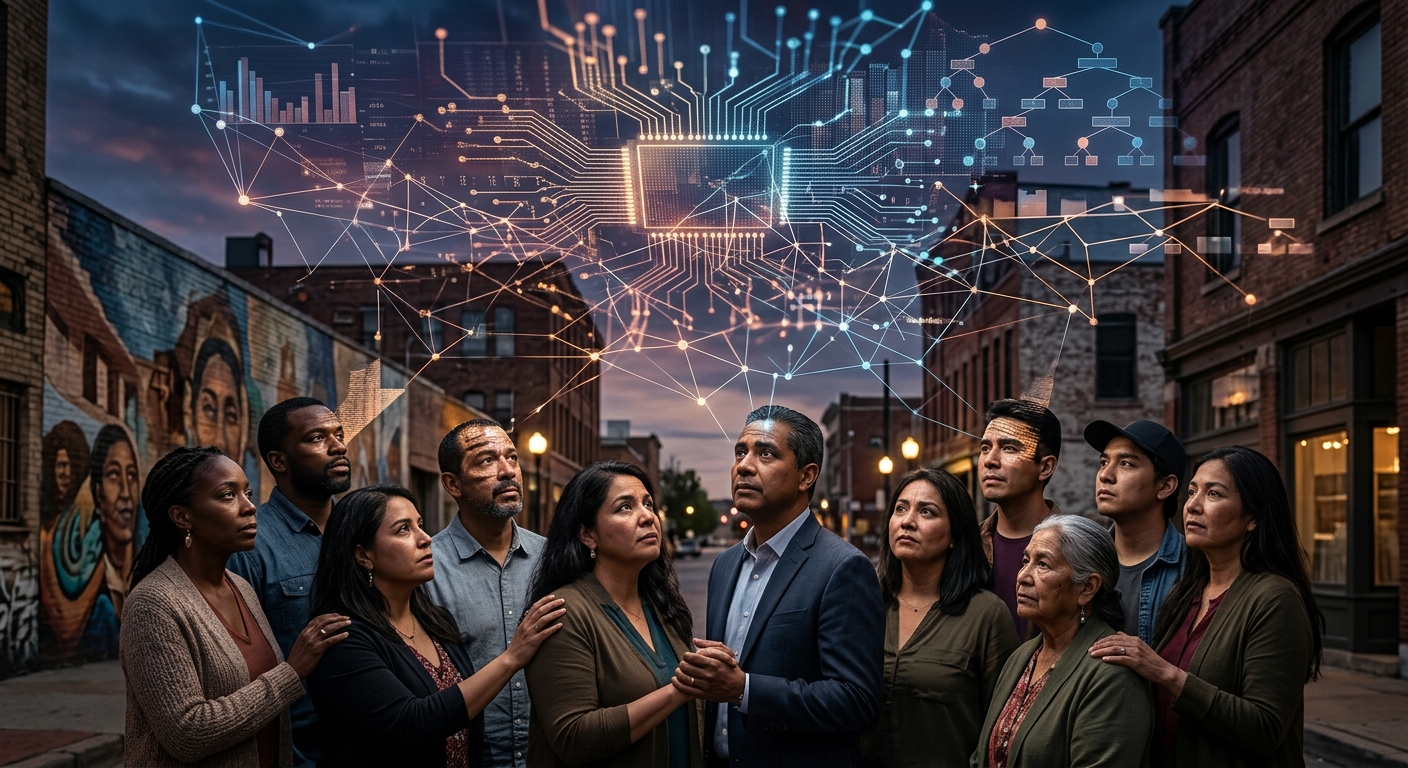
The integration of Artificial Intelligence (AI) into the foundational pillars of society has brought unprecedented efficiency to various industries. However, beneath the veneer of technological advancement lies a profound crisis: the automation of systemic inequality. While AI is frequently marketed as a neutral, objective arbiter capable of stripping human prejudice from decision-making processes, the reality is starkly different. Machine learning models do not exist in a vacuum; they are built upon immense datasets generated by a society fraught with historical biases. Consequently, these digital systems routinely absorb, replicate, and even amplify existing racial and economic disparities.
By delegating critical decisions—such as who receives a mortgage, who is selected for a job interview, or who is granted bail—to opaque algorithms, institutions risk solidifying structural discrimination behind an impenetrable wall of code. This phenomenon transcends simple technological errors; it represents a fundamental civil rights challenge of the twenty-first century. As automated systems become the invisible gatekeepers of opportunity, understanding how they disproportionately marginalize Black, Brown, and low-income communities is an urgent necessity for policymakers, developers, and citizens alike. Understanding how these models function is the first step toward demanding accountability from the corporations that deploy them.
The Myth of the Neutral Algorithm
A pervasive misconception surrounding artificial intelligence is the belief in algorithmic neutrality. Because computers rely on mathematics, statistics, and logic, there is an assumption that their outputs are inherently fair and devoid of the prejudices that cloud human judgment. This “math-washing” creates a dangerous illusion. Algorithms are essentially subjective constructs, engineered by humans who determine the rules, select the training data, and define the metrics for success. Machine learning operates by identifying patterns within historical data and using those patterns to predict future outcomes.
If the historical data reflects a society scarred by decades of segregation, unequal access to education, and biased policing, the algorithm will naturally learn to replicate those inequalities. In the field of computer science, this is known as the “garbage in, garbage out” principle. However, when applied to human lives, it translates to “bias in, bias out.” A model trained to prioritize characteristics associated with historically successful individuals will inadvertently penalize those who do not match that demographic profile, often heavily favoring wealthy, white males. Furthermore, because these algorithms operate at scale, they have the capacity to inflict harm at a velocity and magnitude that far exceeds individual human actors. The lack of diversity within the technology sector itself compounds this issue, as homogenous teams of developers often possess significant blind spots regarding how their creations might negatively impact marginalized groups.
Digital Gatekeeping in Employment
The modern employment landscape has been radically transformed by automated decision-making software. Before human eyes ever review a candidate’s application, resume-screening algorithms routinely filter out thousands of prospective employees. These digital gatekeepers analyze keywords, educational backgrounds, and employment gaps, often penalizing non-traditional career paths that are more common among low-income workers and marginalized demographics. This lack of transparency makes it incredibly difficult for job seekers to challenge unfair rejections.
Beyond resume parsing, employers increasingly rely on predictive hiring tools, including video interview software that utilizes facial analysis and voice recognition to assess a candidate’s “cultural fit” or emotional stability. These tools are notoriously flawed when evaluating individuals with darker skin tones, non-standard accents, or neurodivergent traits, leading to disproportionate exclusion. The U.S. Equal Employment Opportunity Commission (EEOC) recognized the severity of this issue by launching the Artificial Intelligence and Algorithmic Fairness Initiative. The initiative aims to ensure that software and automated tools used in hiring comply with federal anti-discrimination laws, warning that without proper oversight, these technologies could easily become a “high-tech pathway to discrimination”. When algorithms prioritize applicants who mirror the traits of an organization’s historically successful employees, they create an inescapable feedback loop that systematically locks minority candidates out of wealth-building employment opportunities.
Algorithmic Redlining and Financial Exclusion
Historically, financial institutions utilized overt maps to deny mortgages and loans to residents of predominantly Black and Hispanic neighborhoods—a practice known as redlining. While the Fair Housing Act and the Equal Credit Opportunity Act outlawed explicit redlining, the practice has morphed into a sophisticated, digitized format known as algorithmic redlining. Modern credit scoring models often look beyond traditional financial metrics, incorporating thousands of alternative data points such as a consumer’s zip code, internet browsing habits, and even the shopping behavior of their social network.
Because wealth in the United States is intrinsically tied to race due to historical disenfranchisement, these proxy variables often serve as stand-ins for racial identity. As a result, low-income and minority applicants are frequently denied credit or offered predatory interest rates based on the opaque calculations of a machine learning model. The Consumer Financial Protection Bureau (CFPB) has explicitly warned against this practice. In a 2022 consumer financial protection circular, the CFPB clarified that federal anti-discrimination laws mandate that companies must explain specific reasons for denying credit, and that relying on a complex, unexplainable “black-box” algorithm does not absolve a lender of their legal responsibilities. The automated denial of capital prevents marginalized communities from purchasing homes, starting businesses, or recovering from financial hardship, thereby widening the racial wealth gap at an alarming rate.
Predictive Injustice in the Criminal Legal System
Perhaps nowhere are the stakes of algorithmic bias higher than within the criminal legal system. Law enforcement agencies and judicial courts increasingly utilize automated systems for predictive policing, bail determinations, and sentencing guidelines. Predictive policing algorithms ingest historical crime data to forecast where future crimes are likely to occur, directing police patrols to specific neighborhoods. However, because marginalized communities have historically been over-policed, the baseline data reflects higher rates of minor arrests in these areas compared to affluent, predominantly white neighborhoods where similar infractions are largely ignored.
The algorithm processes this biased data and dispatches more officers to minority neighborhoods, which inevitably leads to more arrests, thereby feeding the algorithm’s prediction in a self-fulfilling cycle of surveillance and criminalization. Similarly, automated risk assessment tools used by judges to determine the likelihood of a defendant’s recidivism often rely on socioeconomic proxies—such as housing stability, employment status, and the criminal history of family members. Since racial minorities and low-income individuals are disproportionately impacted by these systemic disadvantages, the software systematically assigns them higher risk scores. This results in harsher sentencing and the denial of pre-trial release, automating the systemic racism that civil rights advocates have fought for decades to dismantle. When these models are left unchecked, they create a facade of scientific validation for systemic racism, shielding prejudiced outcomes behind proprietary corporate algorithms.
Healthcare Disparities Accelerated by Automation
The deployment of artificial intelligence in healthcare administration offers the promise of optimized patient care and streamlined resource allocation. However, deeply embedded biases in medical algorithms have resulted in severe inequities. Many hospital systems utilize predictive algorithms to identify patients who require complex care management programs. Because these systems often use historical healthcare spending as a proxy for healthcare need, they inadvertently discriminate against marginalized demographics.
Historically, systemic barriers have prevented Black and low-income patients from accessing equitable medical care, resulting in lower historical healthcare expenditures compared to white patients with similar medical conditions. When the algorithm equates past spending with current medical need, it wrongly concludes that minority patients are healthier than they actually are. Consequently, white patients are prioritized for critical interventions while sicker minority patients are bypassed. This systemic failure highlights how relying on proxy metrics derived from an unequal society inevitably perpetuates life-threatening disparities, transforming socioeconomic barriers into automated medical neglect.
Strategies for Mitigating AI-Driven Inequality
Addressing the profound inequities perpetuated by artificial intelligence requires a multifaceted approach involving rigorous regulation, comprehensive transparency, and structural shifts within the technology sector. First and foremost, developers must abandon the assumption that their tools are infallible and embrace mandatory algorithmic auditing. Independent, third-party audits should be conducted prior to deployment and continuously throughout an algorithm’s lifecycle to detect and rectify disparate impacts on protected classes.
To establish a standardized approach to this challenge, the National Institute of Standards and Technology (NIST) released the AI Risk Management Framework (AI RMF), a voluntary guideline that instructs organizations to proactively “govern, map, measure, and manage” the risks associated with automated systems, explicitly addressing the need to minimize harmful biases. Furthermore, legislative bodies must update civil rights frameworks to address the nuances of digital discrimination, ensuring that existing protections against redlining and employment bias apply to proxy variables and machine learning outputs. Finally, the technology industry must confront its homogenous workforce. Fostering diversity among data scientists, engineers, and product managers is critical, as multidisciplinary and diverse teams are significantly more capable of identifying potential cultural blind spots and advocating for equitable system designs before harmful software is unleashed upon the public.
Analyzing the Shift from Human to Automated Bias
The transition from explicit human bias to systemic automated bias can be difficult to track without looking closely at industry practices. The following table illustrates how historical forms of discrimination have been updated into modern algorithmic formats that often evade immediate scrutiny:
| Sector | Historical Method of Discrimination | Modern AI Equivalent (Algorithmic Bias) |
|---|---|---|
| Housing & Credit | Overt redlining maps drawn by financial institutions to deny mortgages. | Credit scoring models relying on zip-code and proxy-data metrics for loan denial. |
| Employment | Explicit exclusion policies or inherently biased human screening by recruiters. | Automated resume parsers and predictive behavioral hiring software. |
| Criminal Justice | Human prejudice in neighborhood patrols and obvious sentencing disparities. | Predictive policing applications and automated recidivism risk scores. |
Frequently Asked Questions (FAQs)
- What is algorithmic bias?
Algorithmic bias occurs when a machine learning system systematically produces unfair, prejudiced, or discriminatory outcomes for certain groups of people. This usually happens because the data used to train the software reflects preexisting societal inequalities, or because the developers embedded their own unconscious biases into the system’s design. - How does an AI model discriminate if it does not explicitly know a person’s race or gender?
Even if developers remove explicit demographic categories like race or gender from the training data, AI systems are incredibly adept at finding “proxy variables.” Proxy variables are data points that heavily correlate with a specific demographic. For example, a zip code can be a strong proxy for race due to historical housing segregation. If an algorithm penalizes a specific zip code, it effectively discriminates based on race without ever explicitly analyzing it. - What is digital redlining?
Digital redlining is the modern equivalent of historical redlining. It refers to the practice of using automated systems and algorithms to deny marginalized communities equal access to vital services, such as credit, housing, high-speed internet, or favorable insurance rates, often under the guise of objective data analysis. - Can artificial intelligence ever be completely unbiased?
Because artificial intelligence relies on human-generated data and human-engineered frameworks, achieving absolute neutrality is practically impossible. However, developers and regulators can significantly mitigate bias by rigorously auditing datasets, prioritizing equitable design principles, adhering to risk management frameworks like those from NIST, and implementing continuous monitoring to catch discriminatory outcomes before they cause widespread harm.
References
- EEOC Launches Initiative on Artificial Intelligence and Algorithmic Fairness — U.S. Equal Employment Opportunity Commission. 2021-10-28. https://www.eeoc.gov/newsroom/eeoc-launches-initiative-artificial-intelligence-and-algorithmic-fairness
- Consumer Financial Protection Circular 2022-03: Adverse action notification requirements in connection with credit decisions based on complex algorithms — Consumer Financial Protection Bureau. 2022-05-26. https://www.consumerfinance.gov/compliance/circulars/circular-2022-03-adverse-action-notification-requirements-in-connection-with-credit-decisions-based-on-complex-algorithms/
- AI Risk Management Framework — National Institute of Standards and Technology. 2023-01-26. https://www.nist.gov/itl/ai-risk-management-framework
Similar Articles








Read full bio of medha deb


