
Alabama Small Business Licensing: 3-Step Guide For Startups
Comprehensive guide to securing business licenses in Alabama: state, county, and city requirements explained step-by-step.
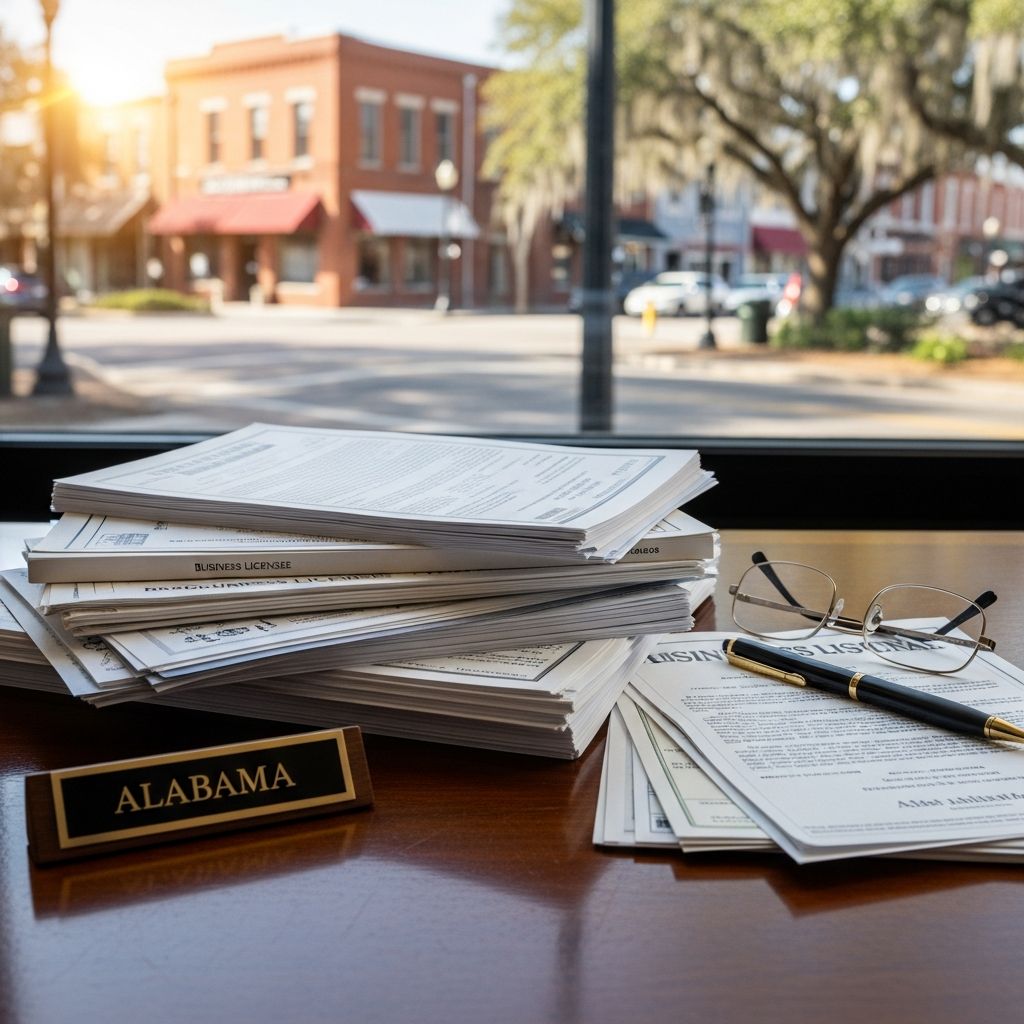
Launching a small business in Alabama requires navigating a multi-layered licensing system involving state, county, and municipal authorities. Every entrepreneur must secure appropriate permits to operate legally, avoid fines, and access local resources. This guide outlines the essential steps, from initial zoning verification to final inspections, tailored for startups across the state.
Understanding Alabama’s Three-Tier Licensing Framework
Alabama’s business licensing operates on three distinct levels: state, county, and city. The
state business privilege license
applies statewide under Title 40, Chapter 12 of the Code of Alabama 1975, mandatory for all businesses, professions, and occupations. County licenses are issued by the local Probate Judge or License Commissioner in each operating county, while city licenses are handled by municipal revenue departments and vary by location.Failure to obtain all required licenses can result in penalties, business closure, or legal action. Businesses operating in multiple jurisdictions must comply with each separately. For instance, a food truck crossing county lines needs licenses from every relevant authority.
Step 1: Verify Zoning and Location Eligibility
Before applying for any license, confirm your business location complies with local zoning laws. Contact the city’s Building or Planning Department to ensure the site permits your business type. In Phenix City, businesses must verify operations within city limits and obtain pre-lease zoning approval. Madison requires a Zoning Compliance Certification, reviewed by Planning, Building, Engineering, Fire, and utilities departments, typically approved in 3 days.
- Key Checks: Permitted use, signage rules, parking requirements, environmental impacts.
- Home Businesses: Review ordinances for home occupations; submit owner permission if renting.
- Tools: Use city address search tools, like Huntsville’s Quick Address Search.
This step prevents costly relocations and is prerequisite for license issuance in most cities.
Step 2: Secure State and County Business Privilege Licenses
The Alabama Department of Revenue oversees state business privilege licenses, required for any commercial activity. Apply through the county Probate Judge or License Commissioner where your business is located; multiple counties require multiple licenses. Jefferson County, for example, processes new applications online and determines future liabilities.
| License Level | Issuing Authority | Key Requirements | Examples |
|---|---|---|---|
| State | County Probate/License Commissioner (ALDOR oversight) | Business type, NAICS code, projected revenue | All professions, gross receipts tax basis |
| County | Local Commissioner | Location-specific, state permits for regulated industries | Jefferson County: Auto dealers, food |
| City | Municipal Revenue Dept. | Zoning cert, inspections, fees by schedule | Phenix City, Madison, Hoover |
Fees are often based on gross receipts, business code, or flat rates plus issuance costs (e.g., Hoover’s $5 fee). Renewals are annual, with online options in some counties starting October 2025.
Step 3: Apply for Municipal Business Licenses
City licenses are mandatory for operations within limits. Download applications from city websites: Phenix City requires a Business License Application with fees by code; Hoover mandates a two-page form referencing their License Schedule. Huntsville issues per location via Revenue Division (except contractors).
- Complete application with NAICS code (find via official directories).
- Submit zoning compliance and supplements.
- Pay fees; expect classification review for taxes.
Multiple businesses under one entity need separate licenses. Licenses expire December 31 annually in many cities.
Special Requirements for Regulated Industries
Certain sectors demand extra approvals:
- Food Service: Health department permits (e.g., Russell County).
- Alcohol Sales: State ABC Board approval, then city council vote.
- Contractors/Auto Dealers: State regulatory permits before county issuance.
- Construction: Building permits, site plans via Planning.
Consult the Alabama League of Municipalities for city contacts.
Home-Based Business Setup in Alabama
Operating from home simplifies some processes but has limits. Submit a Home Occupation Statement or application proving ownership/landlord consent. No inspections typically needed, but comply with zoning (no heavy traffic, signage restrictions). Madison’s process: Review ordinance, submit to Planning, then license.
Pro Tip: Home businesses still need full state/county licenses.
Inspections, Certificates, and Final Approval
Pre-opening inspections cover fire safety, exits, extinguishers. Obtain a Certificate of Occupancy (CO) from Building Department before license issuance. Huntsville separates contractor licenses through Inspections.
Timeline: Zoning (3-5 days), applications (1-2 weeks), inspections (upon request).
License Renewal and Compliance Tips
Track annual renewals (Oct 1 online in some areas). Update for ownership changes, new locations, or business expansions. Maintain records for audits; late fees apply.
- Incentives: Inquire about tax breaks post-licensing.
- Resources: ALDOR videos, city welcome packets.
Common Pitfalls and How to Avoid Them
| Pitfall | Consequence | Solution |
|---|---|---|
| Skipping Zoning Check | Application denial | Pre-lease verification |
| Missing State License | State fines | Apply via county first |
| Multi-Location Oversight | Multiple penalties | License per jurisdiction |
| Ignoring Regulated Permits | Shutdown | Secure health/ABC first |
Frequently Asked Questions (FAQs)
Do all Alabama businesses need a state privilege license?
Yes, every business, vocation, or profession requires one under state law, issued via counties.
How do I find my business’s NAICS code?
Use official U.S. Census Bureau NAICS search tools; cities like Madison provide links.
Can I run a business from home without inspections?
Typically yes, with zoning approval and landlord consent, but full licenses still apply.
What if my business spans multiple cities?
Obtain separate licenses from each municipality, plus state/county.
When do city licenses expire?
Most expire December 31 annually, regardless of issue date.
Are there online renewal options?
Yes, in counties like Jefferson starting Oct 1, 2025, with fees.
This guide equips you to launch legally. Consult local departments for specifics, as rules evolve.
References
- Business Licenses | Phenix City, Alabama — City of Phenix City. 2023. https://phenixcityal.gov/finance/license-revenue/business-licenses/
- Business Privilege License – Alabama Department of Revenue — Alabama Department of Revenue. 2025-01-17. https://www.revenue.alabama.gov/business-license/business-privilege-tax/
- Business Licenses – Jefferson County — Jefferson County, AL. 2025. https://licenses.jccal.org
- Starting a Business | Madison, AL – Official Website — City of Madison. 2025. https://www.madisonal.gov/1094/Starting-a-Business
- Business and License – Alabama Department of Revenue — Alabama Department of Revenue. 2025-01-17. https://www.revenue.alabama.gov/division/business-license/
- Alabama Small Business Checklist – Opelika, AL — City of Opelika. 2023. https://www.opelika-al.gov/342/Alabama-Small-Business-Checklist
- Business Licenses | Hoover, AL – Official Website — City of Hoover. 2025. https://hooveralabama.gov/151/Business-Licenses
- Business Licenses – City of Huntsville — City of Huntsville. 2025. https://www.huntsvilleal.gov/business/licensing-permits/business-licenses/
Similar Articles








Read full bio of medha deb


