
7 Major Scams Threatening Small Businesses
Protect your small business from the top 7 prevalent scams with essential recognition tips and prevention strategies.
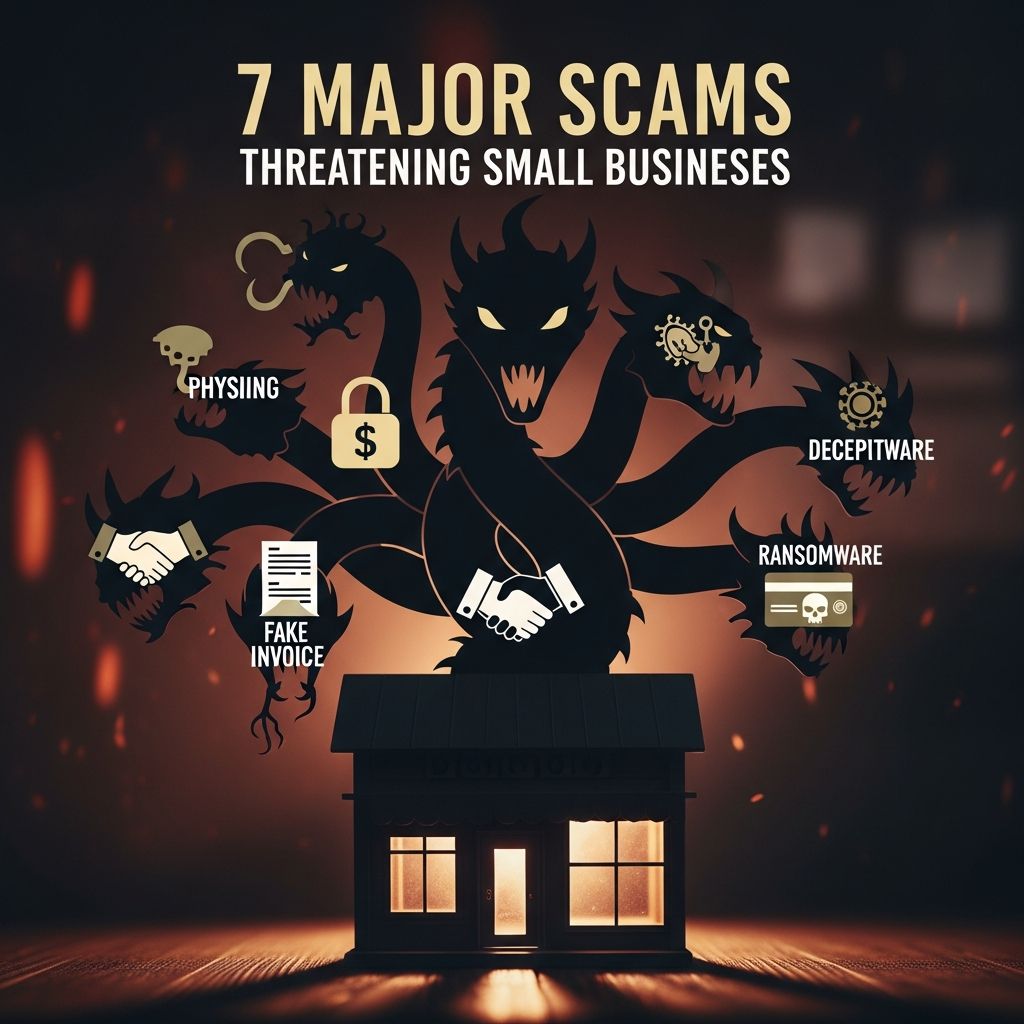
Small businesses form the backbone of local economies, yet they remain prime targets for fraudsters due to limited resources and heightened vulnerability. Scammers exploit trust, urgency, and operational oversights to drain funds, steal data, and damage reputations. This comprehensive guide details seven of the most rampant scams, drawing from reports by trusted authorities like the Federal Trade Commission (FTC) and the Better Business Bureau (BBB). By understanding these threats, implementing safeguards, and educating teams, owners can fortify their defenses and minimize risks.
Recognizing the Growing Threat Landscape
Fraud against small enterprises has surged, with the BBB documenting thousands of complaints annually. Cyber-enabled schemes now blend traditional cons with digital tactics, amplifying their reach. According to FTC data, fake invoices and phishing alone siphon millions yearly from unsuspecting firms. Prevention hinges on vigilance: verify all unsolicited contacts, train staff rigorously, and leverage technology like multi-factor authentication and invoice verification software.
1. Phishing and Impersonation Attacks
Phishing emails masquerade as legitimate entities—banks, IRS, or suppliers—to trick recipients into revealing sensitive data. Messages often urge immediate action, like updating account details via a malicious link that installs malware or keystroke loggers. Small businesses suffer disproportionately, as noted by FDIC experts, due to weaker cybersecurity postures.
- Red Flags: Urgent language, mismatched sender domains, unexpected attachments.
- Real Example: A fake IRS audit notice demanding login credentials.
To counter this, hover over links before clicking, use email filters, and contact purported senders via official channels. Daily account monitoring and bank alerts catch breaches early.
2. Deceptive Office Supplies and Unsolicited Goods
Fraudsters pose as vendors, sending inflated bills for toner, paper, or gadgets never ordered. Alternatively, they ship unordered items and demand payment, ignoring FTC rules that deem such merchandise free gifts. BBB logs thousands of cases yearly, targeting busy owners who overlook fine print.
| Scam Variant | How It Works | Prevention Step |
|---|---|---|
| Phone Confirmation | Caller verifies ‘standing order’ details | Require POs for all purchases |
| Unordered Merchandise | Items arrive with invoice | Do not pay; retain as gift per FTC |
| Fake Renewal | Email claims expiring contract | Check records independently |
Standardize procurement: mandate purchase orders, signatures, and vendor whitelisting to block these ploys.
3. Bogus Directory and Listing Services
Scammers call offering to ‘update’ or ‘confirm’ business info in prestigious directories, securing verbal approval before invoicing for non-existent listings. Victims later discover sham publications or fine-print authorizations. This perennial scam persists via phone and email, preying on visibility desires.
- Warning Signs: Unsolicited updates, high-pressure closes, vague directory details.
- Impact: Hundreds in fees for worthless exposure.
Train receptionists to log calls without committing, research directories independently, and dispute charges promptly via credit card issuers.
4. Fake Invoicing for Phantom Services
Phony bills mimic real suppliers, charging for ads, memberships, or hosting never authorized. Criminals research vendor names for authenticity, slipping into high-volume AP processes. FTC warns these blend with unordered goods for compounded losses.
Implement three-way matching: cross-check invoice, purchase order, and delivery receipt. Accounting tools flagging new vendors provide an extra layer.
5. Overpayment and Refund Traps
A ‘customer’ overpays via check or wire, then requests a refund of the excess to a third party. The original payment bounces, leaving your business liable for the wired funds. This hits e-commerce, caterers, and manufacturers hard.
- Execution: Forged check deposited; quick refund demanded.
- Defense: Wait 10-14 days for clearance before refunding.
Policy: no refunds until funds clear fully. Verify payer identities upfront.
6. Bogus Awards and Recognition Fees
Emails hail your firm as a ‘top leader,’ inviting acceptance for a fee covering plaques, galas, or listings. These vanity scams confer no prestige, targeting ego amid vague criteria.
Scrutinize unsolicited honors: demand proof of selection process, avoid upfront payments, and search BBB for complaints. True awards never charge recipients.
7. Utility Delinquency and Service Threats
Callers impersonate utilities, alleging overdue bills and imminent shutoffs, pushing prepaid card payments. Legitimate providers send written notices and allow grace periods.
- Tactics: Panic induction, untraceable payment demands.
- Counter: Call official numbers from bills to verify.
Bookmark provider contacts; never pay over phone without confirmation.
Building a Robust Defense Strategy
Proactive measures trump reaction. Conduct quarterly fraud training, simulate phishing tests, and audit financials monthly. Partner with banks for fraud alerts and use software like QuickBooks for anomaly detection. For high-risk ops, cybersecurity insurance covers gaps.
| Tool/Practice | Targets Scams | Cost Level |
|---|---|---|
| Employee Training | All | Low |
| Two-Factor Auth | Phishing, Takeover | Low |
| AP Automation | Invoices, Supplies | Medium |
| Security Cameras | Insurance Fraud | Medium |
Legal recourse exists: report to FTC at ReportFraud.ftc.gov, local BBB, and law enforcement. Dispute fraudulent charges immediately.
Frequently Asked Questions (FAQs)
What should I do if I receive an unordered package?
Keep it as a free gift per FTC guidelines—do not return or pay.
How can I verify a directory listing request?
Hang up and research the directory independently; never approve verbally.
Is training enough to stop phishing?
Combine with tech like spam filters and MFA for layered protection.
What if I paid a scam invoice by mistake?
Contact your bank for chargeback; file FTC complaint.
Do small businesses need cyber insurance?
Yes, especially post-data breach risks from phishing.
Staying One Step Ahead
Fraud evolves, but informed owners prevail. Monitor BBB scam trackers, FTC alerts, and industry forums. Foster a report-anything culture—early detection saves fortunes. With these tools, your business can thrive securely.
References
- 10 Common Scams Targeting Small Businesses — InCorp. 2023. https://www.incorp.com/help-center/business-articles/top-scams-targeting-small-business
- 7 Scams That Target Small Business from the BBB — Contractor Magazine. 2023-05-01. https://www.contractormag.com/management/article/20879787/7-scams-that-target-small-business-from-the-bbb
- Top 10 Scams Targeting Small Businesses — ANB Bank. 2024. https://www.anbbank.com/online-security/business-security-news/top-10-scams-targeting-small-businesses
- BBB warns of seven scams that target small businesses — PA Realtors. 2023. https://www.parealtors.org/blog/bbb-warns-of-seven-scams-that-target-small-businesses/
- Scams and Your Small Business: A Guide for Business — Federal Trade Commission (FTC). 2024-01-15. https://www.ftc.gov/business-guidance/resources/scams-your-small-business-guide-business
- Seven Common Scams Targeting Your Small Business — Central Bank. 2023. https://www.centralbank.net/learning-center/seven-common-scams-targeting-your-small-business/
Similar Articles








Read full bio of medha deb




