
Workplace Slip and Fall Prevention Strategies
Practical steps employers can take to control slip, trip and fall hazards and comply with OSHA safety expectations.
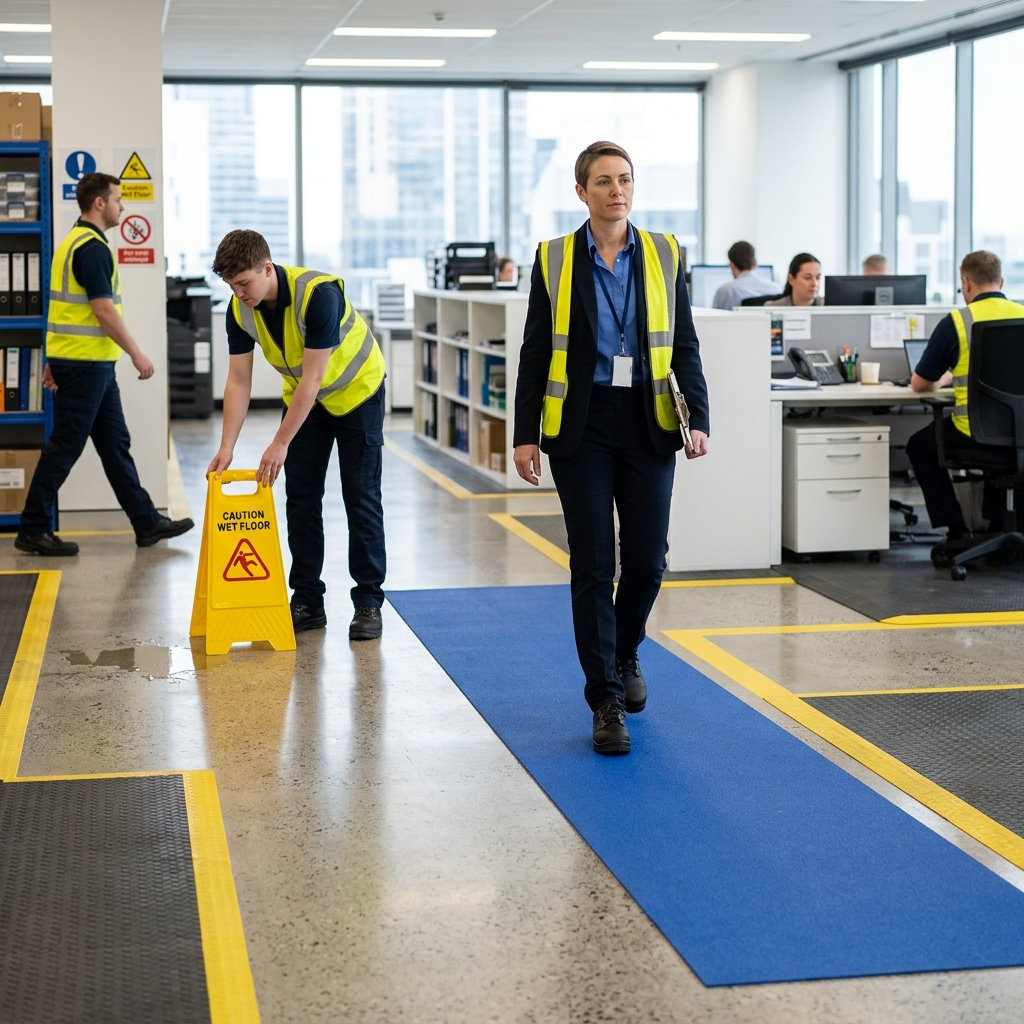
Slips, trips and falls are among the most common causes of workplace injuries and can lead to serious workers’ compensation claims, lost productivity and regulatory scrutiny. Employers who proactively control these hazards not only protect their workforce but also reduce costs and demonstrate compliance with Occupational Safety and Health Administration (OSHA) expectations.
This article explains how slips, trips and falls occur, outlines key OSHA requirements related to walking-working surfaces and fall protection, and provides practical strategies for building an effective prevention program grounded in sound safety management principles.
Why Slip, Trip and Fall Prevention Matters
Falls are a leading cause of occupational injuries across industries, including general industry, construction, healthcare and service sectors. According to OSHA, employers must provide working conditions that are free of known dangers, which explicitly includes keeping floors clean and as dry as possible and protecting workers from fall hazards at elevated locations.
Effective control of slip and fall risks benefits employers in several ways:
- Reduced injury rates: Fewer incidents mean less time lost, lower workers’ compensation premiums and fewer disruptions to operations.
- Regulatory compliance: Meeting OSHA requirements for walking-working surfaces and fall protection helps avoid citations and penalties.
- Improved morale: Employees are more engaged and productive in workplaces where safety is visibly prioritized.
- Better claims outcomes: Demonstrating strong hazard control and training can positively influence workers’ compensation claim management.
Understanding Slip, Trip and Fall Hazards
Slips, trips and falls result from a combination of environmental conditions, human factors and organizational practices. Recognizing how these events happen is the first step toward effective prevention.
Common Causes of Slips
Slips occur when there is insufficient friction or traction between footwear and the walking surface. Typical contributors include:
- Wet or oily surfaces from spills, cleaning, condensation or weather
- Contamination such as dust, granules, paper scraps or production debris
- Highly smooth finishes, untreated tiles or glossy coatings
- Inadequate drainage leading to puddling or standing liquids
- Inappropriate or worn footwear with poor tread
Common Causes of Trips
Trips typically happen when a worker’s foot strikes an object or uneven surface, causing loss of balance. Frequent causes include:
- Cords, hoses, tools or boxes left in walkways
- Unmarked changes in elevation, such as low steps or thresholds
- Loose rugs, curled mats or shifted floor coverings
- Damaged flooring, holes or cracks
- Poor lighting that makes it difficult to see obstacles
Factors Influencing Falls From Height
Falls from elevated surfaces are more likely to result in severe injuries. OSHA specifies minimum elevations where fall protection must be provided, such as four feet in general industry and six feet in construction settings. Risk factors include:
- Unprotected edges on platforms, mezzanines or runways
- Unsecured or improperly positioned ladders
- Missing or damaged guardrails and handrails
- Working at height without personal fall-arrest systems where required
- Inadequate training in ladder and scaffold use
OSHA Expectations for Slip and Fall Control
While OSHA does not have a single comprehensive standard exclusively for slip, trip and fall hazards, multiple provisions apply. Understanding these requirements helps employers align prevention efforts with regulatory obligations.
Walking-Working Surfaces Requirements
OSHA’s General Industry Walking-Working Surfaces standard (29 CFR 1910 Subpart D) addresses conditions such as floors, stairways, ladders and other surfaces on which employees walk or work. Key expectations include:
- Maintaining surfaces in a clean, orderly and sanitary condition.
- Keeping floors as dry as possible, with drainage and drying methods where necessary.
- Providing appropriate slip-resistant surfaces or coverings in high-risk areas.
- Ensuring changes in elevation do not create unreasonable trip hazards and are appropriately marked.
Fall Protection Obligations
OSHA requires employers to provide fall protection at specified elevations and around particular hazards. Examples include:
- Guarding floor holes with covers, railings and toe-boards.
- Installing guardrails and toe-boards around elevated open-sided platforms, floors and runways.
- Providing guardrails or equivalent protection wherever a worker could fall into dangerous equipment, regardless of height.
- Providing and ensuring proper use of fall-arrest systems, safety nets and stair railings as appropriate to the task.
Training and Personal Protective Equipment
In addition to physical safeguards, OSHA emphasizes the importance of training and personal protective equipment (PPE):
- Workers must receive training on job hazards in a language they can understand.
- Employers must provide required PPE, such as slip-resistant footwear or fall-arrest gear, at no cost to employees.
- Training should cover safe ladder use, proper walking techniques on slippery surfaces and recognition of common hazards.
Engineering Controls: Designing Safer Walking Surfaces
Engineering controls focus on physically modifying the workplace to remove or reduce hazards. These changes are often the most reliable because they do not depend solely on individual behavior.
Flooring and Surface Treatments
Choosing the right flooring and treatments significantly influences traction and stability.
- Install non-slip mats or treads in inherently slick locations such as entrances, food preparation areas or production zones.
- Use abrasive coatings, grit-infused paints or pressure-sensitive strips on ramps, loading docks and stair edges.
- Replace or repair worn flooring that has lost its original friction characteristics.
- Maintain consistent traction across walking surfaces to avoid unexpected transitions.
Lighting and Visibility
Adequate lighting makes hazards easier to detect and helps workers navigate safely.
- Ensure all walkways, stairways and exterior access points are well-lit.
- Promptly replace burned-out bulbs and inspect lighting performance during routine safety inspections.
- Use contrast markings to highlight steps, ramps, curbs and other changes in elevation.
Guardrails, Handrails and Edge Protection
Physical barriers are critical for controlling falls from height and providing stability on stairs and ramps.
- Install guardrails along open-sided platforms, mezzanines and elevated walkways.
- Provide handrails on stairways and ramps, ensuring they are continuous and graspable.
- Mark edges of steps and platforms to help workers perceive changes in level.
Administrative Controls and Work Practices
Administrative controls address how work is organized and how employees are expected to behave. These measures complement engineering controls and often determine whether physical safeguards are consistently effective.
Housekeeping and Spill Management
Good housekeeping is one of the most powerful tools for preventing slips and trips.
- Establish clear procedures for immediate cleanup of spills, including accessible spill kits and absorbent materials.
- Schedule regular sweeping or vacuuming to remove dust, debris and other contaminants.
- Keep walkways free of clutter, including boxes, tools, equipment and cables.
- Secure loose rugs and mats with tape or fasteners to prevent corners from lifting.
Safe Walking and Carrying Practices
Workers’ behavior plays a significant role in slip and trip risk. Training and supervision should reinforce safe practices, such as:
- Adjusting stride based on surface conditions and avoiding running on slick floors.
- Looking ahead rather than solely at the feet to spot upcoming hazards.
- Keeping hands free where possible to maintain balance and avoid obstructed views while carrying loads.
- Using ladders and other access equipment in accordance with safety guidelines and manufacturer instructions.
Footwear Policies
Even the best flooring and housekeeping can be undermined if footwear is inappropriate for the environment.
- Define clear footwear expectations in employee handbooks and onboarding materials, such as slip-resistant soles and closed toes.
- Periodically remind employees to inspect their shoes for wear, damaged tread or smooth soles.
- Consider providing specialized footwear or subsidies where conditions are particularly demanding.
Building a Slip, Trip and Fall Prevention Program
Effective control of slip and fall hazards requires an organized program rather than isolated corrective actions. A structured approach should integrate hazard identification, corrective measures, training and ongoing monitoring.
Hazard Assessment and Prioritization
Routine inspections help identify high-risk areas before incidents occur.
- Conduct regular walkthroughs of production, storage, office and external areas to identify wet floors, poor lighting, cluttered aisles and damaged surfaces.
- Document observations, assign corrective actions and track completion.
- Engage employees to report hazards promptly and encourage open communication about near misses.
Training and Safety Culture
Training ensures that employees understand risks and know how to use safeguards correctly. Culture determines whether those lessons are consistently applied.
- Provide onboarding training that explains slip and fall hazards, housekeeping expectations, footwear requirements and spill response.
- Offer refresher sessions regularly, integrating fall prevention with other safety topics.
- Include ladder safety and fall-protection instruction where work at height is involved.
- Reinforce safety messages in shift meetings, posters and digital communications to keep risk awareness high.
Leadership and Documentation
Management commitment is critical for successful prevention initiatives.
- Leaders should visibly follow safe practices, such as using handrails and avoiding shortcuts.
- Maintain records of training, inspections, corrective actions and equipment maintenance to demonstrate due diligence.
- Integrate slip and fall metrics into broader safety performance indicators, such as incident rates and near-miss reports.
Illustrative Hazard and Control Comparison
The table below summarizes typical slip and trip hazards alongside practical control measures and relevant OSHA expectations.
| Hazard Type | Example | Control Strategy | OSHA Alignment |
|---|---|---|---|
| Slip hazard | Wet entryway after rain | Non-slip mats, quick spill cleanup, warning signage | Keep floors dry; maintain safe walking-working surfaces. |
| Trip hazard | Cords across aisle | Reroute or cover cables, housekeeping rules, inspections | Maintain clear pathways; prevent obstructions. |
| Fall from height | Unprotected edge on mezzanine | Install guardrails and toe-boards, restrict access until fixed | Provide fall protection at required elevations. |
| Stairway hazard | Poorly lit stairs | Improve lighting, add handrails, mark step edges | Safe stair design and walking-working surfaces. |
Frequently Asked Questions
Do employers have to provide fall protection even at low heights?
Yes. OSHA requires fall protection at specified minimum heights, such as four feet in general industry workplaces. In addition, if a worker could fall into or onto dangerous machinery or equipment, guardrails and similar protections are required regardless of elevation.
Is slip-resistant footwear mandatory under OSHA rules?
OSHA does not mandate a specific type of shoe for every workplace, but it does require employers to select and provide necessary personal protective equipment at no cost to workers. Where slip hazards are significant, providing or prescribing slip-resistant footwear can be an appropriate control and supports compliance with the duty to maintain safe walking-working surfaces.
What role does housekeeping play in regulatory compliance?
Housekeeping is central to OSHA’s expectation that floors be kept clean and, as far as possible, dry. Regular cleanup of spills, removal of clutter and maintenance of surfaces are essential for meeting these obligations and preventing slip and trip incidents.
How often should slip and fall hazards be assessed?
Hazard assessments should be performed regularly and whenever conditions change, such as after process modifications, seasonal weather shifts or construction activities. Many organizations conduct formal inspections monthly or quarterly and encourage employees to report hazards immediately between scheduled reviews.
Can training alone prevent slip and fall incidents?
Training is crucial but not sufficient by itself. A robust program combines education with engineering controls, housekeeping, PPE and strong leadership. OSHA views training as one component of a comprehensive fall prevention strategy, alongside physical safeguards and organizational policies.
References
- Fall Protection — Occupational Safety and Health Administration. 2023-05-10. https://www.osha.gov/fall-protection
- Slips, Trips, and Falls: Preventing Workplace Trip Hazards — OSHA.com. 2022-11-15. https://www.osha.com/blog/slips-trips-falls-prevention
- OSHA Slips, Trips & Falls Training: How to Prevent Workplace Injuries — OSHA Safety Training. 2022-09-20. https://osha-safety-training.net/blogs/news/osha-slips-trips-falls-protect-employees
- Workplace Fall Prevention Tips — OSHA Education Center. 2023-03-08. https://www.oshaeducationcenter.com/workplace-fall-prevention/
- Preventing Slips, Trips, and Falls in the Workplace — Hackensack Meridian Health. 2023-01-12. https://hackensackmeridianhealth.org/en/services/hackensack-meridian-works/preventing-slips-trips-and-falls-in-the-workplace
- eTool: Hospitals – Hospital-wide Hazards – Slips/Trips/Falls — Occupational Safety and Health Administration. 2021-06-01. https://www.osha.gov/etools/hospitals/hospital-wide-hazards/slips-trips-falls
- Slips, Trips and Falls Safety Topics — National Safety Council. 2022-09-01. https://www.nsc.org/workplace/safety-topics/slips-trips-and-falls/slips-trips-and-falls-home
Similar Articles








Read full bio of medha deb




