
Who Pays When an Employee Causes a Car Accident?
Understanding employer and employee liability when work-related driving leads to a car accident, including key rules, exceptions, and risk management.
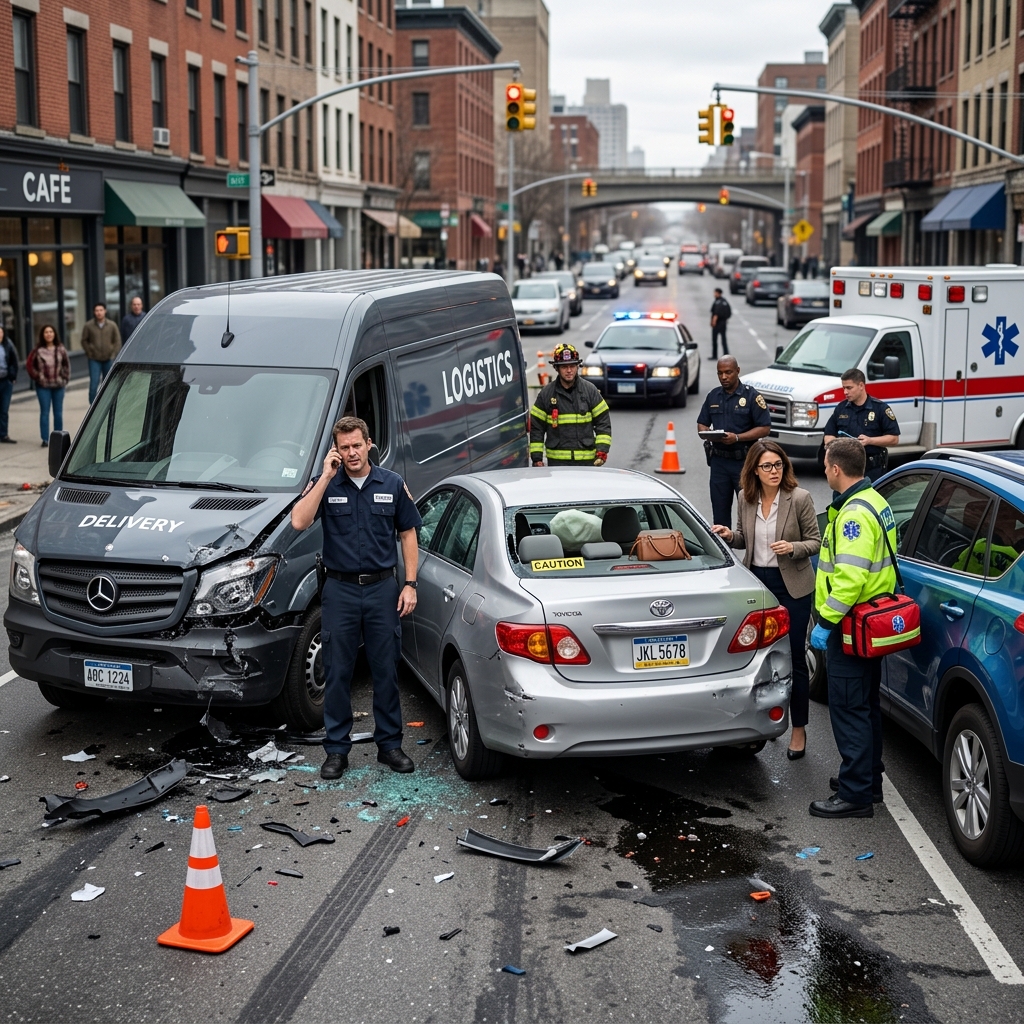
When an employee causes a car accident while driving for work, the central question is often simple: who is legally and financially responsible—the employee, the employer, or both?
For small business owners and managers, the answer has major implications. It affects how you handle claims, structure insurance coverage, and draft company policies for employees who drive on the job. This guide explains how liability works, the legal concepts involved, and practical steps to reduce risk.
Core Legal Concepts: How Employer Liability Works
Most work-related car accident cases involving employees and employers are built around a few legal concepts: negligence, vicarious liability, and scope of employment.
Negligence: The Starting Point
Car accident liability usually begins with negligence. An injured person must show that the driver failed to use reasonable care and caused harm as a result.
- The driver had a duty to operate the vehicle safely.
- The driver breached that duty (for example, by speeding, texting, or ignoring traffic signals).
- The breach directly caused the collision and resulting injuries or property damage.
- The injured party suffered measurable losses, such as medical bills, lost wages, or repair costs.
Once negligence is established, the next question becomes whether the employer can be held responsible for the employee’s actions.
Vicarious Liability and Respondeat Superior
Under the doctrine of vicarious liability, sometimes called respondeat superior (Latin for “let the superior answer”), an employer can be held legally responsible for harm caused by an employee’s negligent driving, even if the employer did nothing wrong directly.
- Vicarious liability exists because the employer benefits from the employee’s work and is expected to share in the associated risks.
- The key requirement is that the accident occurred while the employee was acting within the scope of employment.
This doctrine does not usually apply to independent contractors. As a general rule, employers are vicariously liable for employees, but not for independent contractors, unless special circumstances exist.
Scope of Employment: The Line Between Work and Personal Time
Courts use the concept of scope of employment to decide whether an employer should be responsible for an employee’s actions, including driving.
In many jurisdictions, courts look at factors such as:
- Whether the employee’s driving was part of the kind of work they were hired to perform.
- Whether the accident occurred during work hours or within authorized time and location limits.
- Whether the employee was acting with the intention of serving the employer’s interests.
If driving fits within these criteria—for example, a salesperson visiting clients—the employer is more likely to be held liable under vicarious liability.
When Employers Are Usually Liable for Employee Car Accidents
Although every case is fact-specific, there are several common scenarios where employers are often held responsible for employee-caused car accidents.
Driving Is Part of the Job
Employers are more likely to be liable when driving is an integral part of an employee’s job.
- Delivery drivers transporting goods or food.
- Sales representatives traveling to meet clients or prospects.
- Technicians or contractors moving between job sites.
- Employees using a company vehicle for assigned routes or service calls.
In these situations, driving is part of the employee’s regular duties. Courts often view the employer as responsible when a negligent act occurs during such work-related driving.
Business Errands and Employer Benefit
Even if driving is not the employee’s primary job duty, employers may be liable when employees drive for tasks that clearly benefit the business.
- Running to the bank or post office for the company.
- Picking up supplies or equipment for business use.
- Driving to a business meeting, training session, or conference.
- Transporting co-workers or clients for company purposes.
The critical issue is whether the trip advances the employer’s interests. If it does, the trip may fall within the scope of employment and trigger vicarious liability.
Personal Vehicles Used for Work
Many employers assume that when employees use their own cars, only the employee is responsible. In reality, that is frequently incorrect.[10]
Through vicarious liability, an employer can still be responsible for accidents caused by employees driving personal vehicles for work-related tasks.[10] In these cases:
- The employee’s auto insurance often pays first.
- The employer may still face claims if damages exceed personal policy limits or if the employer is independently negligent (for example, in supervision or policy).[10]
- Courts focus more on whether the trip was work-related than on who owns the car.[10]
Ownership of the vehicle affects insurance coverage priority, but it does not shield the employer from potential liability when the trip is connected to work.[10]
Situations Where Employers Are Often Not Liable
There are also common scenarios where employers are typically not responsible for employee car accidents. Understanding these boundaries helps manage expectations and risk.
The Coming-and-Going Rule: Regular Commutes
Many jurisdictions use a principle known as the coming-and-going rule. This rule generally states that employers are not liable for accidents that occur when employees are commuting to or from work on their ordinary route.
The logic is that commuting is considered personal time, even if the employer benefits from the employee eventually arriving at work. However, several important exceptions may apply:
- The employee runs a specific errand for the employer during the commute.
- The employee travels outside normal working hours on a special assignment for the employer.
- The employee’s job is primarily travel-based, and the commute is part of their work duties.
When one of these exceptions applies, the commute can be transformed into a work-related trip, potentially making the employer responsible.
Purely Personal Detours
Employers are generally not liable when employees significantly deviate from work tasks for purely personal reasons. For example:
- Taking a long, unauthorized detour to visit a friend.
- Stopping for personal shopping far off the intended route.
- Engaging in activities unrelated to work during a trip that are so substantial they are considered outside the scope of employment.
Minor personal stops—such as briefly stopping for coffee—might still be treated as part of the broader work trip. Significant detours may break the connection between the employer’s business and the accident.
Independent Contractor Drivers
As mentioned earlier, employers are generally not vicariously liable for the negligence of independent contractors, including drivers engaged as contractors rather than employees.
However, businesses may still face claims for their own negligence—for example, in hiring or supervising a contractor—if they fail to exercise reasonable care.
Employer’s Own Negligence: Direct Liability
Beyond vicarious liability, an employer can also be directly liable for its own negligence. This is separate from being responsible for the employee’s actions.
Negligent Hiring, Training, or Supervision
Employers may face direct claims when they fail to reasonably screen, train, or supervise employees who drive for work. Examples include:
- Hiring a driver with a known record of serious traffic violations without appropriate safeguards.
- Failing to verify that employees who drive for work have valid licenses and adequate insurance.[10]
- Ignoring repeated complaints or incidents involving unsafe driving by an employee.
In such cases, the injured party argues the employer itself acted negligently in allowing an unsafe driver to operate a vehicle for work purposes.
Unsafe Policies or Pressure to Drive
Employers may also be directly liable if company policies or expectations contribute to unsafe driving, such as:
- Unreasonable delivery schedules that effectively encourage speeding or fatigued driving.
- Policies that require phone use while driving without hands-free systems.
- Failure to enforce basic safety rules for employees who regularly drive for work.
When an employer’s own practices lead to foreseeable risk, courts may consider that direct negligence in addition to any vicarious liability.
Insurance Considerations: Who Actually Pays?
Determining legal liability is only part of the picture. Insurance coverage plays a major role in who ultimately pays for damages after an employee-caused car accident.
Company Vehicles and Commercial Auto Insurance
When an employee crashes a company-owned vehicle, the employer’s commercial auto insurance usually responds first.
- Commercial policies are designed to cover company-owned vehicles used for business purposes.
- If the accident occurs while the employee acts within the scope of employment, the insurer typically handles valid claims up to policy limits.
- Policy terms may exclude coverage if the employee uses the vehicle for unauthorized personal purposes.
In some arrangements, if an employee is found personally liable, the employer may seek reimbursement from the employee for certain costs. However, the specifics depend on employment contracts and local law.
Employee-Owned Vehicles and Personal Auto Insurance
When employees use their own vehicles for work, their personal auto insurance usually responds first to accident claims.[10]
Important points for employers include:
- Personal policies may have limits that are inadequate for serious injuries or multiple claimants.
- If damages exceed personal policy limits, claimants may look to the employer, especially where work-related driving is involved.[10]
- Some personal policies restrict coverage for certain business uses, which can complicate claims.
Because of these issues, many organizations implement policies requiring minimum insurance levels and verification procedures for employees who drive their own cars for work.[10]
Employees’ Rights: Workers’ Compensation and Injury Claims
Liability issues are not limited to third parties injured in a crash. Employees themselves may be hurt while driving for work, raising questions about workers’ compensation and other remedies.
Work-Related Injuries and Workers’ Compensation
In most states, employees injured in work-related car accidents may be eligible for workers’ compensation benefits, regardless of fault.
- The accident must occur while the employee is performing job-related duties or tasks that further the employer’s business.
- Employers are typically required by law to maintain workers’ compensation coverage for eligible employees.
- Coverage may include medical expenses and partial wage replacement, subject to state rules.
Commute-related accidents are often excluded under the coming-and-going rule, unless an exception applies—such as a special trip primarily for the employer’s benefit.
Third-Party Claims Alongside Workers’ Compensation
If an employee is injured in a crash caused by another driver, they may have both a workers’ compensation claim (if the trip was work-related) and a separate claim against the at-fault driver.
In more complex situations, multiple insurance policies—personal, commercial auto, and workers’ compensation—may all be involved.
Risk Management: How Employers Can Reduce Liability
Employers cannot eliminate all risk when employees drive for work, but they can significantly reduce exposure through proactive planning and clear policies.[10]
Develop a Clear Driving Policy
A written, well-communicated driving policy is one of the strongest tools for managing risk.[10]
- Define when employees are authorized to drive for work and which trips are covered.
- Set minimum personal insurance requirements for employees who use their own vehicles.[10]
- Explain procedures for reporting accidents promptly and accurately.
- Include safety expectations, such as compliance with traffic laws and bans on texting while driving.
Verify Licenses, Insurance, and Driving Records
Regular checks can prevent avoidable problems.[10]
- Confirm that employees who drive for work have valid licenses.
- Verify that required insurance coverage is in place and up to date.[10]
- Review driving records periodically to identify high-risk drivers.
Train and Supervise Drivers
Even when driving is incidental to an employee’s job, basic training helps reduce accidents.
- Provide guidance on safe driving practices and company expectations.
- Address fatigue, distraction, and adverse weather conditions.
- Respond promptly to complaints or incident reports involving unsafe driving.
Coordinate Insurance Coverage
Work closely with insurance professionals to structure coverage appropriately.
- Ensure commercial auto policies reflect actual vehicle use and employee driving patterns.
- Evaluate whether additional coverage is needed for employees using personal vehicles for work.[10]
- Periodically review policy limits in light of potential exposure from serious accidents.
Illustrative Comparison: Employer vs. Employee Liability
The table below compares typical outcomes in common scenarios. Actual results vary by jurisdiction and specific facts, but the patterns help illustrate how liability is often allocated.
| Scenario | Vehicle Owner | Trip Type | Likely Primary Liability |
|---|---|---|---|
| Salesperson driving to client meeting | Employee | Work-related | Employee and employer (vicarious liability; personal insurance pays first)[10] |
| Delivery driver using company van | Employer | Work-related | Employer (via commercial auto policy and vicarious liability) |
| Employee commuting directly home from office | Employee | Personal commute | Employee only, under coming-and-going rule (subject to exceptions) |
| Employee running personal errands at lunch, without employer benefit | Employee | Personal detour | Employee only, likely outside scope of employment |
| Employee asked to drop off documents at client on way home | Employee | Mixed commute and business errand | Potential liability for employer due to work-related errand during commute |
Frequently Asked Questions
Can an injured person sue the employer if the employee was driving a personal car?
Yes, in many situations. If the employee was driving their own car for a work-related purpose and caused the accident through negligence, the employer may be vicariously liable, even though the vehicle is personally owned.[10]
Is an employer always responsible when an employee uses a company vehicle?
Not always. Employers are commonly liable when employees use company vehicles within the scope of employment, but if the employee uses the vehicle for unauthorized, purely personal reasons, the accident may fall outside the employer’s responsibility.
Does the coming-and-going rule mean the employer is never liable for commute accidents?
No. The coming-and-going rule generally protects employers from liability during ordinary commutes, but exceptions exist. Special assignments, employer-directed errands during a commute, or jobs where travel is central may lead to employer liability.
What should a small business do immediately after an employee is involved in a crash?
Businesses should ensure safety first, then:
- Gather facts about the accident and confirm whether it was work-related.
- Notify appropriate insurers (commercial auto and, where applicable, workers’ compensation).
- Preserve records and consider seeking legal advice to understand exposure and obligations.
Can employers protect themselves completely from liability for employee driving?
No policy can eliminate all risk, but employers can substantially reduce exposure through sound hiring practices, clear driving policies, verification of insurance, proper training, and appropriate insurance coverage.[10]
References
- When Is an Employer Liable for an Employee’s Car Accident? — Nolo. 2024-01-10. https://www.nolo.com/legal-encyclopedia/employer-liability-for-employee-car-accidents.html
- When Employers Are Legally Liable for Car Accidents — Justia. 2023-06-15. https://car-accidents.justia.com/types-of-car-accidents/employer-liability-for-car-accidents/
- Employer Liability for Employee Car Accidents in California — Greenberg Ruby, LLP. 2023-09-18. https://www.greenbergrubylaw.com/employer-liability-for-car-accidents
- Company Car Accident Liability in Pennsylvania — Wilk Law. 2022-11-02. https://wilklawfirm.com/blog/company-car-accident-liability-pennsylvania/
- Can Your Employer Be Held Responsible for Your Work-Related Car Accident? — Louisiana Workers’ Compensation Law Firm. 2023-03-21. https://louisianaworkerscomp.lawyer/can-your-employer-be-held-responsible-for-your-work-related-car-accident/
- Employer Liability for Personal Vehicle Use for Work — Axcet HR Solutions. 2022-08-05. https://blog.axcethr.com/employer-liability-when-employees-use-personal-cars-for-work-purposes
- Who’s Liable When an Employee Has an Accident in Their Own Car for Work? — Motus. 2023-04-12. https://www.motus.com/blog/whos-liable-when-an-employee-has-an-accident-in-their-own-car-for-work/
Similar Articles








Read full bio of Sneha Tete




