
Safe Workplace Rights: Report Hazards, Protect Yourself In 2025
A practical, employee-focused guide to recognizing unsafe conditions, asserting your legal rights, and taking action when workplace safety standards are ignored.
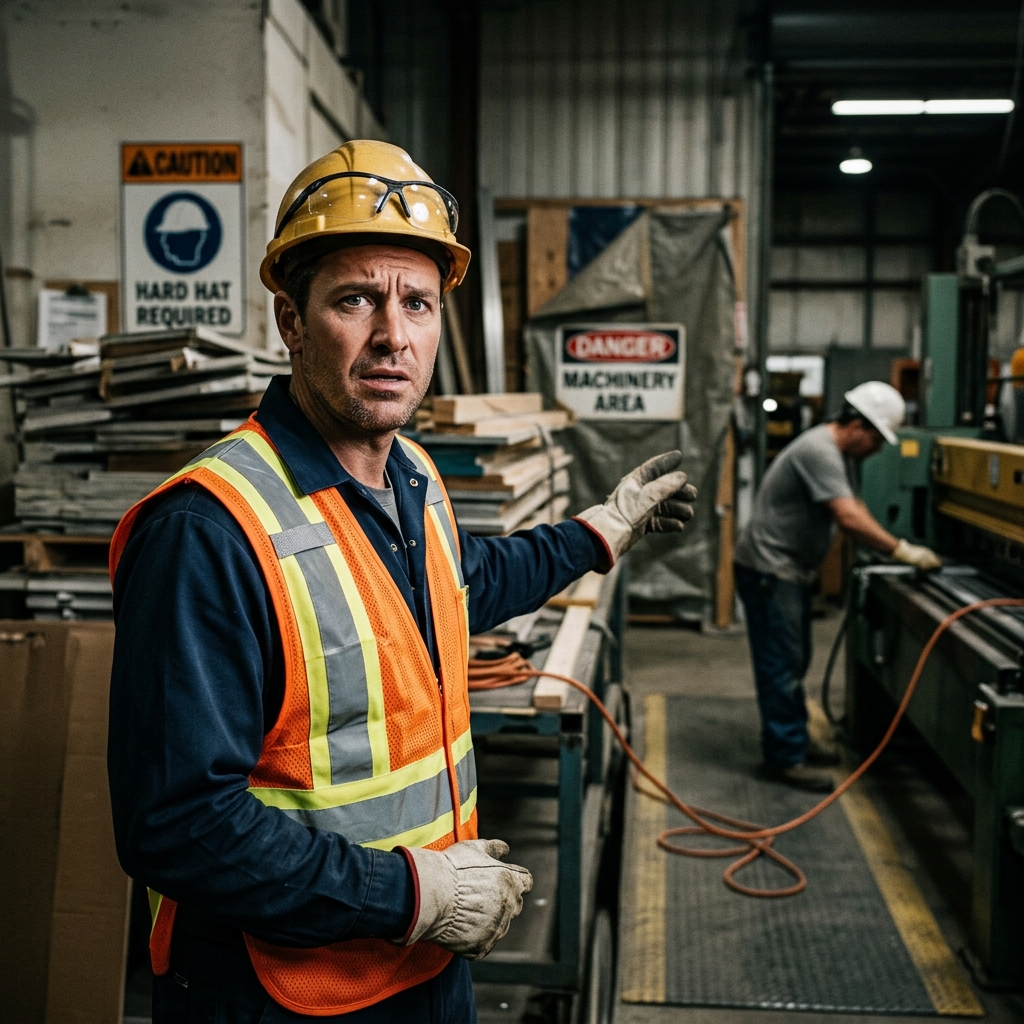
Every worker is entitled to a safe and healthy workplace. Under federal law, employers must keep the workplace free from recognized hazards that can cause serious injury or death, and they must follow safety and health standards issued by the Occupational Safety and Health Administration (OSHA). When an employer cuts corners or ignores safety rules, employees do not have to choose between their paycheck and their well-being. This guide explains how to recognize unsafe conditions, how to raise concerns effectively, and what to do if your employer refuses to act.
1. Your Legal Right to a Safe Workplace
Federal law, primarily through the Occupational Safety and Health Act (OSH Act), gives workers specific rights related to health and safety on the job. These rights apply to most private-sector workers and many public employees, depending on the state. Although details can vary under state plans, the core protections are similar nationwide.
1.1 Core safety rights under federal law
- The right to a workplace free from recognized hazards likely to cause death or serious physical harm (the “General Duty” requirement).
- The right to receive safety and health training in a language and vocabulary you can understand.
- The right to use safe tools, equipment, and machines that are properly maintained.
- The right to receive required protective gear, such as gloves, eye protection, respiratory equipment, and fall protection when needed.
- The right to be informed about and protected from hazardous chemicals and other dangerous substances in the workplace.
- The right to report injuries and illnesses and obtain your own medical and exposure records.
- The right to request an OSHA inspection and speak confidentially with an inspector.
- The right to report safety concerns without retaliation, including whistleblower protections if you are punished for speaking up.
These rights exist regardless of your job title, immigration status, or whether you are paid in cash or on the books.
1.2 When does a safety issue become a legal problem?
A safety concern can rise to the level of a legal violation when, for example:
- There is a serious hazard that could cause significant injury or death (for example, unguarded machinery, unprotected heights, or exposure to toxic chemicals).
- Required safety equipment is missing, damaged, or not provided by the employer.
- Employees are not trained on how to perform hazardous tasks or use specialized equipment safely.
- Work areas are obviously unsafe (blocked exits, no fire protection, no ventilation around fumes, etc.).
- The employer ignores or refuses to correct safety issues after being notified by workers.
If any of these situations exist, you may be dealing with more than just a workplace disagreement; you may be facing a violation of federal or state safety law.
2. Recognizing Unsafe Working Conditions
Employees are often the first to notice when something is not right. Being able to identify unsafe conditions quickly can prevent injuries and strengthen your position if you later need to report a violation.
2.1 Common examples of unsafe conditions
Workplace hazards vary by industry, but some issues regularly lead to injuries or OSHA complaints.
- Physical hazards: unguarded machinery, wet or cluttered floors, unstable ladders, inadequate fall protection, unsecured loads.
- Chemical hazards: exposure to solvents, cleaning products, fumes, dusts, or gases without proper ventilation or protective equipment.
- Biological hazards: exposure to blood, bodily fluids, or infectious materials without appropriate safeguards (common in health care and cleaning work).
- Ergonomic risks: repetitive motions, heavy lifting without assistance, awkward postures that can cause musculoskeletal injuries over time.
- Environmental hazards: excessive noise, extreme temperatures, poor lighting, or confined spaces.
- Emergency hazards: blocked exits, disabled fire alarms, broken fire extinguishers, no emergency action plan.
2.2 Warning signs your employer may be neglecting safety
Red flags that your employer is not taking safety obligations seriously include:
- Repeated accidents or near-misses that are not investigated or addressed.
- Pressure to “work through” obviously dangerous conditions to meet deadlines or quotas.
- No safety orientation for new hires or no training when new equipment or chemicals are introduced.
- Lack of clear safety policies, or policies that exist only on paper but are not followed.
- Supervisors brushing off concerns or telling workers to stop complaining.
If you are seeing these patterns, it is important to document them and consider taking further steps.
3. Documenting Hazards Before You Take Action
Careful documentation can make the difference between an ignored complaint and an effective one. A clear record strengthens your credibility and can be valuable evidence if the issue escalates to OSHA or a legal claim.
3.1 What to record
Whenever you notice a safety problem, record as many details as possible, including:
- Date and time of the hazard or incident.
- Location (building, floor, specific area or machine).
- Description of the condition (what is unsafe, how it could cause harm).
- People involved (who was present, who was exposed, names of supervisors told about the issue).
- Photos or videos of visible hazards, if allowed by workplace policy and without compromising safety or confidentiality.
- Any injuries or symptoms that occurred, along with medical treatment sought.
- Responses from management after you reported the hazard (or lack of response).
Store your notes and copies of any written reports at home or in a secure personal account, not only on your work computer.
3.2 Sample hazard log
| Date | Location | Hazard Description | Reported To | Employer Response |
|---|---|---|---|---|
| 2026-03-15 | Warehouse loading dock | Pallets stacked above safe height, leaning, risk of collapse | Shift supervisor | Told to “be careful”; no change made |
| 2026-03-22 | Machine room | Guard missing on conveyor belt; moving parts exposed | Maintenance manager (email) | No response after one week |
This type of log can help you explain the situation clearly to OSHA or a union representative later.
4. Raising Safety Concerns Internally
In many cases, hazards can be resolved by notifying your employer directly. OSHA itself suggests trying internal channels first when it is safe to do so. Employers are sometimes unaware of specific problems, especially in large or complex workplaces.
4.1 Who to talk to
Depending on your workplace structure, you might be able to raise concerns with:
- Your immediate supervisor or manager.
- A designated safety officer or Environmental Health and Safety (EHS) representative.
- Your human resources department.
- Your union steward or business representative, if you are unionized.
- A joint labor–management safety committee, where one exists.
4.2 How to structure your internal report
For serious issues, put your concerns in writing. A clear written report might include:
- A brief description of your job and the area where the hazard exists.
- A factual summary of the hazard (avoid emotional language; focus on safety and legal risks).
- Any prior incidents or near-misses related to the hazard.
- A reference, if possible, to relevant safety standards or best practices.
- Specific steps you believe could reduce the risk (for example, installing guards, providing PPE, modifying procedures).
When you submit the report, keep a copy for your records. If you send an email, save or print the full message including date and time sent.
5. When Your Employer Does Nothing: Refusing Dangerous Work
If a serious hazard is not corrected, you may wonder whether you must continue working in the dangerous condition. Under federal law, workers cannot be forced to place themselves in imminent danger simply to keep their job.
5.1 What is an “imminent danger” situation?
An imminent danger generally exists when:
- A condition or practice presents a real and immediate risk of death or serious physical harm.
- There is not enough time to have the hazard corrected through regular enforcement channels.
- A reasonable person would conclude that serious harm is likely if work continues.
Examples might include being ordered to work on a roof with no fall protection, entering a confined space without proper testing or ventilation, or handling highly toxic chemicals without appropriate protective gear.
5.2 How to refuse unsafe work correctly
Workers generally should follow specific steps if they refuse work due to an imminent danger:
- Inform your employer that you believe the work is unsafe and why, citing the specific risk.
- Ask for the hazard to be corrected or for alternative work that is safe.
- Stay at the worksite if possible, rather than leaving the job entirely, and be available for other assignments.
- If the employer does not correct the hazard, contact OSHA or your state safety agency to report the imminent danger.
Document each step you take and any response or instructions from your supervisor. Refusing unsafe work is a serious decision, and having a detailed record can help protect you if there is a dispute.
6. Filing a Safety Complaint with OSHA or a State Agency
If internal efforts fail or if you believe the hazard is severe, you have the right to file a complaint with OSHA or, in states with their own safety agency, the appropriate state office. Workers, unions, and other representatives can all submit complaints.
6.1 Ways to file a complaint
According to OSHA and related guidance, employees and others aware of serious health or safety violations typically have several options for submitting complaints.
- Online: Submitting a safety and health complaint through OSHA’s electronic form.
- By mail or fax: Downloading a complaint form, filling it out, and sending it to the nearest OSHA Area Office.
- By phone: Calling your local OSHA office or OSHA’s national hotline to report serious hazards, especially in emergencies.
In many cases, written complaints that are signed by a worker are more likely to result in an on-site inspection than anonymous complaints, but anonymous reporting is also available.
6.2 Information to include in your complaint
Your complaint is more effective if it is specific. You should include:
- Your name and contact information (unless filing anonymously).
- Your employer’s name, address, and phone number.
- A clear description of the hazards and where they occur.
- How long the hazard has existed and how many workers are exposed.
- Any injuries or illnesses that have already happened.
- Steps, if any, that the employer has taken after you raised concerns.
OSHA or the state agency will decide whether to open an inspection, conduct an off-site investigation, or close the complaint. If an inspection is conducted, OSHA will typically share its findings and may require the employer to correct violations.
7. Protection Against Retaliation for Speaking Up
Many workers fear that complaining about safety will cost them their jobs. Federal law includes whistleblower protections to address exactly this situation.
7.1 What counts as retaliation?
Retaliation occurs when an employer punishes a worker for exercising legal rights, such as reporting a safety hazard or filing an OSHA complaint. According to the U.S. Department of Labor, many labor and public safety laws specifically prohibit retaliation for protected activities. Retaliation can include:
- Firing or laying off a worker.
- Demoting, reassigning, or denying promotions.
- Reducing hours or pay.
- Harassment, threats, or creating a hostile environment for the worker who complained.
- Blacklisting or spreading negative information that harms future job prospects.
7.2 How to respond if you experience retaliation
If you believe you are being punished for raising safety concerns, you should act promptly:
- Document the retaliation: record dates, actions taken, and any statements suggesting the punishment was linked to your complaint.
- Contact OSHA about a whistleblower claim, as many of its statutes have strict deadlines (some as short as 30 days).
- Consider consulting an employment or workers’ rights attorney for legal advice.
- If you are unionized, notify your union representative; unions often assist members facing retaliation for safety complaints.
Whistleblower protections can include remedies such as reinstatement, back pay, and compensation for other losses.
8. Seeking Medical Care and Workers’ Compensation
If you have already been injured or made ill by unsafe conditions, you have two parallel priorities: protecting your health and preserving your right to workers’ compensation benefits.
8.1 Getting prompt medical attention
Workplace safety and workers’ compensation programs consistently emphasize the importance of seeking immediate medical care when you are hurt. Even injuries that seem minor at first can become serious if not evaluated quickly.
- Seek emergency care if needed, or see a doctor as soon as possible.
- Tell the medical provider that your condition is work-related and describe the incident in detail.
- Ask the provider to document all injuries, symptoms, and work restrictions.
8.2 Reporting injuries and filing a claim
After obtaining medical care:
- Notify your employer about the injury or illness as soon as you can; many states require timely notice.
- Follow your state’s procedures for filing a workers’ compensation claim, which may involve forms completed by both you and your doctor.
- Keep copies of all forms, medical records, and correspondence.
Workers’ compensation is generally a no-fault system, meaning you can often receive benefits regardless of who caused the accident, as long as it arose out of your employment. However, deadlines and rules vary by state, so checking with your state workers’ compensation agency or a lawyer is wise.
9. Frequently Asked Questions
9.1 Can I be fired for filing an OSHA complaint?
No. Federal law prohibits employers from firing or otherwise retaliating against workers for filing OSHA complaints, reporting injuries, or exercising other safety rights. If you believe you have been punished for complaining, you may have a whistleblower claim, but you must typically act quickly due to short filing deadlines.
9.2 Do I have to give my name when I report a hazard?
No. You may file an OSHA complaint anonymously if you fear retaliation. However, signed written complaints often receive higher priority for on-site inspections. Some workers choose to include their name but request confidentiality; OSHA will usually honor these requests when possible.
9.3 What if my state has its own safety agency instead of federal OSHA?
States with their own OSHA-approved plans must offer protections at least as effective as federal OSHA’s. You still have rights to a safe workplace, to file complaints, and to be free from retaliation. The main difference is that you will deal with your state agency rather than federal OSHA. You can find contact information on OSHA’s official website or through your state labor department.
9.4 Can undocumented workers report safety violations?
Yes. Workplace safety laws and many labor protections apply regardless of immigration status. OSHA and state safety agencies focus on hazards and legal compliance, not immigration enforcement. However, workers in this situation may wish to consult with a trusted legal or community organization before filing a complaint.
9.5 Should I talk to a lawyer?
Legal advice can be helpful if you suffer a serious injury, face retaliation, or believe your employer is engaged in widespread safety violations. An employment or workers’ compensation attorney can explain your options, evaluate potential claims, and help you navigate interactions with government agencies.
10. Key Takeaways for Protecting Yourself
When an employer ignores workplace safety standards, you are not powerless. By understanding your rights, keeping thorough records, and using available complaint and whistleblower systems, you can protect not only yourself but also your coworkers.
- You have a legal right to a safe workplace and to speak up about hazards without retaliation.
- Document unsafe conditions with dates, descriptions, photos, and records of any injuries or employer responses.
- Raise concerns internally when possible, but do not hesitate to contact OSHA or a state agency if hazards persist or are serious.
- In imminent danger situations, you may refuse dangerous work, following recommended steps and staying available for safe assignments.
- If injured, seek medical care promptly and follow your state’s workers’ compensation procedures.
Taking action can feel risky, but the law is designed to support workers who speak up about serious safety issues. Your voice is often the first line of defense against preventable injuries and illnesses in the workplace.
References
- Worker Rights and Protections — Occupational Safety and Health Administration (OSHA). 2023-05-01. https://www.osha.gov/workers
- How To Report Labor Violations — OSHA Education Center. 2022-07-15. https://www.oshaeducationcenter.com/articles/reporting-labor-violations/
- Your Right to Be Safe and Secure at Work — Fair Work Center / Working Washington. 2021-06-10. https://rightsatworkwa.org/know-your-rights/your-right-to-be-safe-at-work/
- Worker’s Rights — Maryland Occupational Safety and Health (MOSH). 2022-03-18. https://labor.maryland.gov/labor/mosh/moshworkersrights.shtml
- Safety in the Workplace — Law Offices of Jeffrey S. Glassman. 2020-11-02. https://www.jeffreysglassman.com/safety-in-the-workplace.html
- A Safe Workplace & Fair Working Conditions — Legal Momentum. 2019-09-01. https://www.legalmomentum.org/sites/default/files/wwbor/wv-toolkit-nys-34-38.pdf
- Summary of the Major Laws of the Department of Labor — U.S. Department of Labor. 2023-04-10. https://www.dol.gov/general/aboutdol/majorlaws
Similar Articles








Read full bio of Sneha Tete




