
When Your Card Is Declined: What It Means and What To Do
Understand why companies decline credit or debit cards and learn practical steps to fix problems, avoid blocks, and protect your accounts.
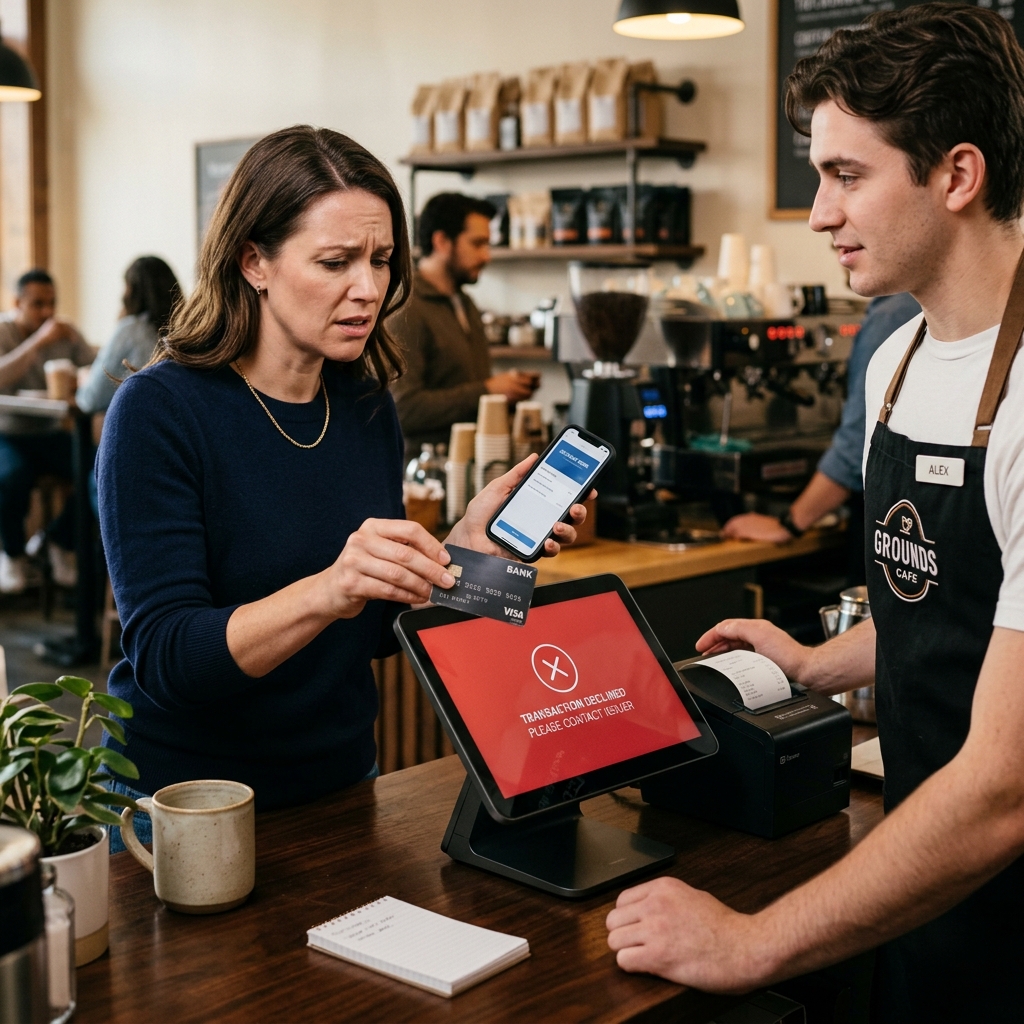
Having a credit or debit card declined can be stressful and embarrassing, especially when you know you have money or available credit. In most cases, a declined transaction is the result of automated systems designed to protect you and the financial institution from risk, fraud, and mistakes. Understanding why declines happen, how blocks and holds work, and what to do next can help you resolve the issue quickly and avoid similar problems in the future.
Understanding Card Declines: The Basics
Whenever you use a credit or debit card, your bank or credit union reviews the transaction in real time before approving it. The institution checks factors such as the card’s status, available funds or credit, fraud risk, and whether the merchant and type of transaction are allowed. If something doesn’t meet their internal rules, the system may decline the transaction automatically.
Common reasons for declines include:
- Expired cards or cards that were never activated
- Insufficient funds or credit limits that have been exceeded
- Suspicious or unusual activity that triggers fraud protections
- Incorrect card information or mismatched billing details
- Blocks or holds placed by merchants (like hotels or rental car companies)
Because many of these checks are automated, the decline message you see at the checkout terminal or online may be brief. To fully understand what happened, you typically need to review your account or contact the card issuer.
Typical Reasons Your Card Might Be Declined
Although every bank or credit union has its own policies, several recurring patterns explain most declines.
1. Insufficient Funds or Credit Limit Reached
For debit cards, the bank will usually decline transactions when your available balance is too low to cover the purchase. For credit cards, a decline can occur when your balance is at or over the credit limit set by the issuer. These controls are meant to keep you from exceeding agreed limits and to reduce the risk of missed payments.
Situations that often lead to this type of decline include:
- Multiple recent purchases that quickly reduced your available balance
- Large transactions, such as travel bookings or electronics, that rapidly use up credit
- Pending holds that temporarily tie up funds or available credit (for example, hotel or rental car deposits)
2. Card Expiration, Activation, or Closure Issues
Cards have expiration dates for security and technology reasons. If you try to use a card after that date, the system will almost always decline the transaction. Typically, your bank or credit union sends a replacement card before the old one expires, but you need to activate it before use.
Problems also occur when:
- You haven’t activated a new or replacement card yet
- The issuer closed the account due to inactivity, risk concerns, or missed payments
- A reported lost or stolen card is still being used, prompting a security decline
3. Fraud Prevention and Unusual Activity
Financial institutions use fraud monitoring tools to look for transactions that don’t fit your usual spending patterns. They may scrutinize large purchases, international transactions, or multiple rapid charges in a short time. When a transaction appears risky, the system may decline it to prevent potential losses.
Examples of activity that can trigger fraud checks include:
- Using your card in a new country or distant location without prior travel notice
- Online purchases at merchants you’ve never used before
- Unusually large transactions compared with your typical spending
- Repeated small charges from the same merchant in quick succession
Many issuers will send alerts asking you to confirm whether the activity is legitimate. Once you respond and verify your identity, they may remove any temporary blocks.
4. Incorrect Card Details or Billing Information
Online and mobile payments rely on accurate card details. If the card number, expiration date, security code (CVV), or billing address do not match what the issuer has on file, the transaction can be declined. This safeguard helps prevent unauthorized use of your card.
Typical issues include:
- Typographical errors when entering card numbers or security codes
- Outdated billing addresses after a move
- Mismatched cardholder names on joint accounts or business cards
5. Merchant Blocks, Holds, and Processing Rules
Certain merchants, such as hotels, gas stations, and car rental companies, often place temporary blocks or holds on your card. These are pre-authorizations that reserve a specific amount to ensure you can pay the final bill. While the block is in place, that amount is not available for other purchases, which can lead to a decline if you attempt additional transactions.
In addition, the merchant’s bank (the acquirer) may decline a transaction if:
- The merchant is not set up to accept your card type
- The transaction exceeds agreed processing limits
- The merchant account has been flagged for risk or suspended
Immediate Steps to Take When Your Card Is Declined
If your card is declined, focusing on a few direct actions can help you resolve the situation quickly and safely.
Step 1: Check for Simple Errors
- Confirm the card number, expiration date, and security code if paying online
- Make sure you used the correct billing address and cardholder name
- Try the card again if the terminal or chip reader appears to malfunction
Correcting basic input errors or using a different terminal often resolves one-time issues without further steps.
Step 2: Review Your Balance and Available Credit
Use your bank’s app, website, or automated phone system to check:
- Your current balance and available credit
- Any large pending transactions or merchant holds
- Recent purchases that may have used more credit than expected
If you identify insufficient funds or a maxed-out credit line, you may need to make a payment, transfer money, or use a different payment method for the immediate purchase.
Step 3: Contact Your Bank or Credit Union
If the reason for the decline is not obvious, contact the customer service number associated with your card. Representatives can see the specific decline code and explain what happened. They may also be able to lift certain holds, remove temporary blocks, or guide you through verifying suspicious activity.
When you call, be prepared to:
- Verify your identity with security questions
- Confirm whether recent transactions are legitimate
- Ask about any blocks, fraud alerts, or account restrictions
Step 4: Use a Backup Payment Method if Necessary
For time-sensitive purchases—such as hotel check-ins or travel expenses—having an alternative payment option can be crucial. Consider carrying:
- A second credit or debit card, ideally from a different issuer
- Cash for smaller in-person transactions
- Access to a peer-to-peer payment app linked to another account
How Card Blocks and Holds Affect Your Account
Blocks and holds are a specific type of authorization where a business temporarily reserves a portion of your funds or credit. They are common in industries where the final amount is not known in advance, such as hospitality and transportation.
Why Businesses Use Blocks
Businesses place blocks or holds primarily to ensure payment and manage risk. When you check in to a hotel or pick up a rental car, the company does not yet know the final bill, which may include taxes, fees, or damages. The block acts as a guarantee.
Key features of blocks include:
- A fixed amount chosen by the business, often larger than the expected bill
- A timeframe during which the funds or credit are unavailable for other purchases
- Automatic release once the merchant finalizes the transaction or cancels the hold
Impact on Your Spending Power
While a block is active, the blocked amount is treated as if it were already spent. This can reduce your available balance or credit significantly and may cause other transactions to be declined, even if your actual spending is relatively low.
| Scenario | Available Credit Before | Block Amount | Available Credit After | Outcome |
|---|---|---|---|---|
| Hotel places hold at check-in | $800 | $300 | $500 | Subsequent $600 purchase may be declined |
| Rental car deposit on debit card | $900 | $400 | $500 | ATM withdrawal of $600 declined |
Questions to Ask Businesses About Blocks
Because blocks can affect your ability to pay for other expenses, it is helpful to ask businesses about their practices before you present your card.
- Will you place a block or hold on my card?
- What amount will you block, and how did you decide that amount?
- How long will the block last after I check out or return the vehicle?
- Can you release the block promptly if I pay with a different card or with cash?
Protecting Yourself: Ongoing Habits to Reduce Declines
You can’t prevent every decline—fraud systems and technical issues sometimes act unexpectedly. However, a few ongoing practices can significantly reduce the likelihood of problems and improve your ability to respond quickly.
Track Your Accounts and Card Expiration Dates
Regular account monitoring helps you stay aware of your balance, recent transactions, and upcoming card expiration dates. Many banks and credit unions offer digital tools to check real-time balances, view pending transactions, and see when replacement cards are scheduled.
- Review your accounts at least weekly using online banking or apps
- Note card expiration dates and confirm you receive and activate replacement cards early
- Check for unexpected fees or charges that reduce your available balance
Enroll in Alerts for Fraud and Account Changes
Financial institutions often provide alerts by text, email, or app notification for suspicious activity, large transactions, and low balances. Enrolling in these alerts allows you to respond quickly when something looks unusual.
- Enable fraud alerts that notify you of potentially unauthorized transactions
- Set low balance or high utilization alerts for your checking and credit accounts
- Review notifications promptly and contact your bank when you see activity you don’t recognize
Choose Cards and Institutions With Clear Block Policies
If you frequently travel or use services that rely on blocks, the card and institution you choose can make a difference. Some banks have shorter block durations or more transparent policies about how holds work. When comparing cards, ask specifically about:
- Whether the institution allows merchants to place blocks and for which types of businesses
- Typical durations for holds on credit and debit cards
- How quickly blocks are removed when the merchant finalizes payment or cancels the reservation
Debit Card vs. Credit Card Declines: Key Differences
Though debit and credit cards often look similar, the way declines affect you can differ because they draw from different sources of funds.
| Feature | Debit Card | Credit Card |
|---|---|---|
| Source of funds | Linked checking/savings account | Borrowed credit line from issuer |
| Common decline reason | Insufficient balance or overdraft limits | Credit limit reached or account restriction |
| Effect of merchant blocks | Reduces cash available for other purchases | Reduces available credit; may limit large purchases |
| Fraud response | Account may be frozen; card replaced | Account may be frozen; card replaced; potential impact on credit utilization |
Frequently Asked Questions (FAQs)
Why was my card declined if I have money in my account?
Even with enough money, a card can be declined if a merchant block or hold is tying up part of your balance, if the transaction triggers fraud checks, or if your card information is incorrect. Checking for pending holds and contacting your bank can clarify the situation.
How long do hotel or rental car blocks usually last?
The duration varies by merchant and financial institution. Some blocks are released within a few days; others may last a week or more. You can ask both the business and your bank how long the hold is expected to remain and whether it can be released sooner once the final bill is paid.
Does a declined transaction hurt my credit score?
A single declined transaction usually does not appear on your credit report and does not directly affect your score. However, chronic declines due to missed payments or maxed-out limits can signal broader financial stress, which may eventually influence your credit if payments are late or balances stay very high.
What should I do if my card is declined while traveling?
First, verify your transaction details and try again. Then check your card app for fraud alerts, and respond to any messages asking you to confirm activity. If necessary, call your issuer using the phone number on the back of the card and be ready to verify your identity and travel plans.
Can I prevent my card from being declined in the future?
You cannot eliminate all risk, but you can reduce it by monitoring your accounts regularly, enrolling in alerts, keeping your information up to date, understanding how blocks work, and maintaining a cushion of available funds or credit. Choosing a card with clear policies and communicating with your bank when your plans change also helps.
References
- When a Company Declines Your Credit or Debit Card — Federal Trade Commission. 2024-02-16. https://consumer.ftc.gov/articles/when-company-declines-your-credit-or-debit-card
- Card Decline Codes: A Complete List And What They Mean — Stripe. 2023-08-10. https://stripe.com/resources/more/a-complete-list-of-decline-codes
- Why Is My Credit Card Being Declined? — Experian. 2023-07-07. https://www.experian.com/blogs/ask-experian/why-is-my-credit-card-being-declined/
- Troubleshooting Declined Transactions — Capital One Help Center. 2024-03-20. https://www.capitalone.com/help-center/credit-cards/credit-card-declined/
- 7 Reasons Credit Cards Are Declined — Bankrate. 2023-11-15. https://www.bankrate.com/credit-cards/advice/reasons-credit-card-declined/
Similar Articles








Read full bio of Sneha Tete




