
Debt Collection Rules for Sole Proprietors
Understand how debt collection laws treat sole proprietorships, what protections exist, and how owners can safeguard personal assets.
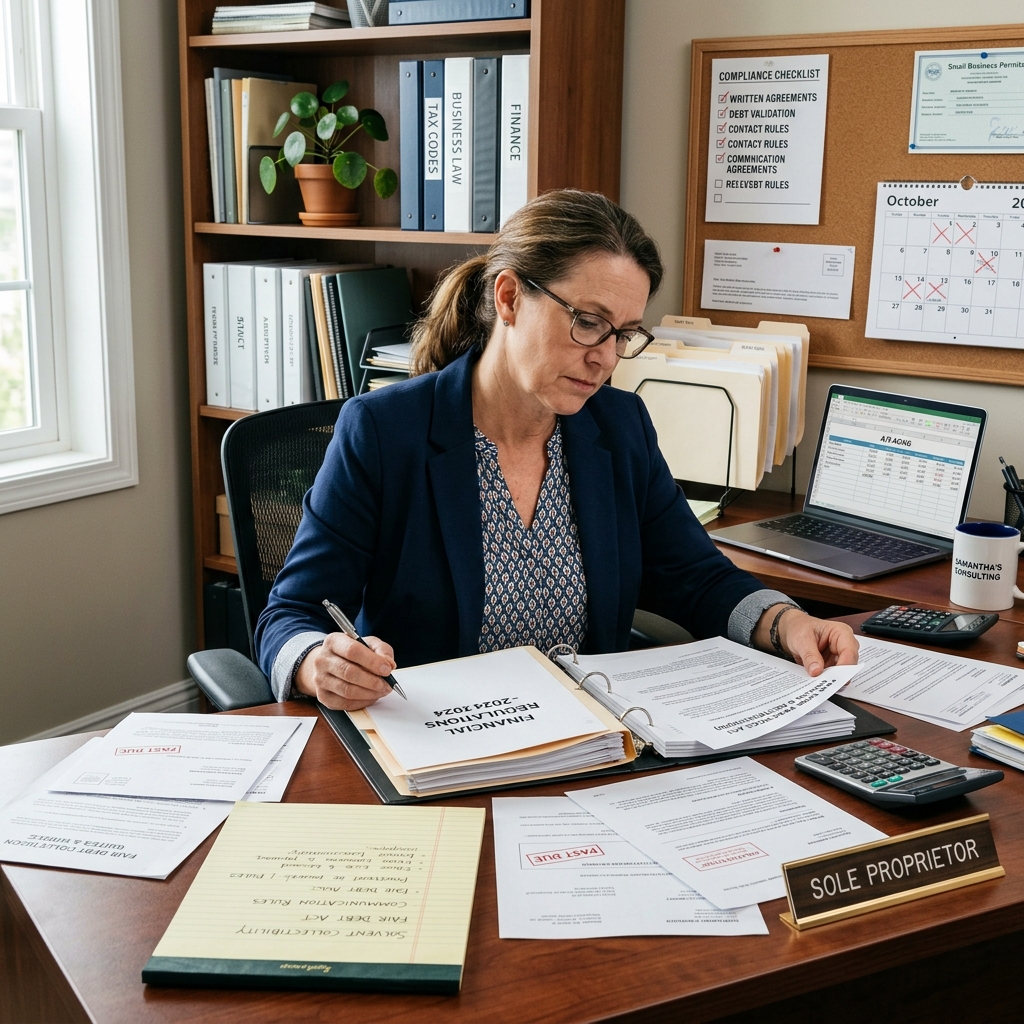
Running a business as a sole proprietor can be simple and flexible, but it also exposes the owner to unique risks when debts go unpaid. One of the most important issues is how debt collection laws apply to business obligations and what protections exist for the individual behind the business name.
This guide explains how debt collection protections work for sole proprietorships, how they differ from consumer protections, and what practical steps owners can take to reduce the risk of aggressive collection and personal financial loss.
Understanding Sole Proprietorships and Personal Liability
A sole proprietorship is the most basic form of business structure. It has no separate legal existence apart from its owner. In legal terms, the business and the individual are effectively treated as the same person for liability and debt purposes.
- No separate entity: The business does not file its own entity formation documents like a corporation or LLC would.
- Direct ownership: The owner directly owns all business assets and is responsible for all business obligations.
- Unlimited liability: Creditors of the business may pursue the owner’s personal assets to satisfy business debts, subject to state exemption laws.
This unlimited liability is the core reason debt collection issues are so critical for sole proprietors. When a business account is in default, it is not just the business that is at stake—personal savings, vehicles, and even a home may be at risk, depending on state law.
Consumer vs. Business Debt: Why the Difference Matters
Debt collection law in the United States often distinguishes between consumer debts and business debts. This distinction is crucial because many federal protections only apply to debts incurred primarily for personal, family, or household purposes.
| Feature | Consumer Debt | Business Debt (including sole proprietors) |
|---|---|---|
| Primary purpose | Personal, family, or household | Commercial or business-related |
| Key federal law | Fair Debt Collection Practices Act (FDCPA) | Generally outside FDCPA; governed by contract and other laws |
| Typical examples | Credit cards for personal use, medical bills, personal auto loans | Vendor invoices, equipment leases, commercial lines of credit |
| Protections from harassment | Robust protections for collection practices under federal law | More limited; protections mainly arise from contract law, some state laws, and industry standards |
For a sole proprietor, most debts tied to the business—such as supplier invoices, merchant cash advances, or commercial leases—are typically treated as business debts, even though the owner is personally responsible.
What the FDCPA Does (and Does Not) Cover
The Fair Debt Collection Practices Act (FDCPA) is the main federal law that restricts abusive, deceptive, or unfair debt collection practices. It applies primarily to third-party debt collectors collecting consumer debts.
Key points about FDCPA coverage:
- The Act regulates the conduct of debt collectors, generally defined as those who collect debts owed to others, not creditors collecting their own debts.
- It applies only to consumer debts, not obligations arising from business purposes.
- It restricts practices such as harassment, false representations, and contacting consumers at unreasonable times.
Because the statute focuses on consumer obligations, debts incurred by a sole proprietorship for business purposes usually fall outside of FDCPA protections, even though the owner is personally liable.
When a Business Might Still Be Covered
Although business debts are generally excluded, there are situations where FDCPA can still come into play:
- If the debt is personal in nature (for example, a credit card used mainly for household expenses) even if the card is also used in the business.
- If the creditor or collector uses practices that bring them within the Act’s definition of a “debt collector,” such as using a different business name to suggest that a third party is collecting the debt.
However, these scenarios are the exception rather than the rule. Sole proprietors should not assume they have the same federal protections for business-related debts that individual consumers enjoy.
Primary Sources of Protection for Sole Proprietorship Debts
Without broad FDCPA coverage, what protections exist for the sole proprietor facing collection on business obligations?
In practice, protections arise from several overlapping areas of law and industry standards:
- Contract law: The written agreements between the business and its creditors determine obligations, remedies, interest rates, late fees, and default provisions.
- State and federal unfair practices laws: Many states have statutes that prohibit unfair or deceptive acts in commerce or collection activities, sometimes covering business debts.
- Industry guidelines: Professional collection agencies that handle commercial accounts often follow codes of ethics and fair practice guidelines, such as those promoted by industry associations.
- Bankruptcy law: When debts become unmanageable, federal bankruptcy protections can temporarily halt collection and may discharge certain obligations.
Understanding these sources of protection can help a sole proprietor evaluate options when creditors are demanding payment or threatening legal action.
How Creditors Can Collect Business Debts from Sole Proprietors
When a business debt goes unpaid, creditors have several tools available to collect from a sole proprietor, depending on state law and the terms of the agreement.
Common Collection Methods
- Demand letters and collection calls: Creditors typically start by sending letters, emails, and making phone calls demanding payment.
- Turning the account over to a collection agency: A third-party agency may be hired to pursue payment.
- Filing a lawsuit: If informal attempts fail, a creditor can sue the owner. If successful, the creditor obtains a judgment that can be enforced against non-exempt personal and business assets.
- Bank account levies and garnishment: With a judgment and subject to state law, a creditor may attempt to seize funds from bank accounts or garnish certain income streams.
- Liens against property: A judgment may be recorded as a lien against real estate or other property owned by the proprietor.
Because there is no liability shield between the business and the owner, creditors do not need to stop at business assets; they can pursue the individual’s personal property to the extent allowed by law.
Practical Strategies to Reduce Exposure to Aggressive Collection
While no strategy can fully eliminate risk, there are several concrete steps sole proprietors can take to reduce the likelihood and impact of debt collection problems.
1. Keep Clean, Written Agreements
Clear, written contracts help prevent misunderstandings and give both sides a roadmap when payment disputes arise.
- Spell out payment terms, interest, and late fees.
- Include provisions for dispute resolution and jurisdiction.
- Review any personal guarantee language carefully before signing.
Careful contract review can reduce surprises, such as aggressive default clauses or broad rights to accelerate the full balance upon a single missed payment.
2. Separate Business and Personal Finances
Even though the law may treat the owner and the business as one person, maintaining separate accounts and records is still beneficial.
- Use a dedicated business bank account for business revenues and expenses.
- Track business liabilities separately from personal obligations.
- Keep documentation of which debts are truly business-related and which are personal.
These practices make it easier to understand the scope of business risk and may help in negotiations, tax reporting, and potential restructuring or bankruptcy planning.
3. Consider Insurance and Other Risk-Management Tools
Business insurance can help absorb certain liabilities that might otherwise lead to collection actions.
- General liability insurance to cover third-party claims for bodily injury or property damage.
- Professional liability insurance for negligence or errors in services provided.
- Property coverage for business equipment, tools, and inventory.
While insurance will not cover voluntary borrowing or trade debt, it may prevent a lawsuit from turning into an unmanageable judgment that leads to aggressive collection efforts.
4. Explore Business Structures with Liability Protection
One of the most effective ways to limit exposure is to consider operating through a limited liability company (LLC) or corporation. An LLC is a separate legal entity that, in most cases, protects the owner’s personal assets from business debts, subject to certain exceptions such as personal guarantees or improper commingling of funds.
Key features of a single-member LLC compared to a sole proprietorship include:
- Separate entity status: The LLC, not the owner personally, is usually liable for business debts.
- Limited liability: The owner’s risk is typically limited to capital invested in the LLC, though personal guarantees can extend liability.
- Tax flexibility: In many cases, income still “passes through” to the owner’s individual tax return.
Converting to an LLC will not erase existing personal obligations, but it may help prevent future debts from reaching the owner’s personal assets.
5. Use Bankruptcy Strategically When Necessary
If debts become overwhelming and creditors are actively pursuing collection, bankruptcy may provide a structured way to address obligations. For a sole proprietor, a personal bankruptcy filing can address both business and personal debts because they are legally intertwined.
Key concepts include:
- Automatic stay: Filing a bankruptcy petition generally triggers an automatic stay that halts most collection efforts, including lawsuits, garnishments, and phone calls.
- Discharge: In a successful case, many unsecured debts may be discharged, eliminating the legal obligation to pay them, subject to exceptions.
- Chapters available: Depending on income, assets, and the nature of debts, a sole proprietor might consider Chapter 7 (liquidation), Chapter 13 (reorganization for individuals), or in some complex cases, Chapter 11 for reorganization.
Bankruptcy is a serious decision with lasting consequences. Consulting a qualified attorney is essential before choosing this path.
Responding Effectively to Collection Attempts
If you are a sole proprietor facing debt collection, how you respond can significantly affect the outcome. Ignoring calls or court papers often makes matters worse.
Recommended steps include:
- Stay organized: Gather contracts, invoices, correspondence, and any records showing payments already made.
- Communicate promptly: Respond to demand letters and calls in a businesslike tone. Sometimes a simple payment plan can avoid escalation.
- Review your rights: Even if the FDCPA does not directly apply, state law may restrict certain abusive practices, and the contract itself will define both sides’ obligations.
- Seek legal advice early: A lawyer familiar with commercial debt and small business law can help evaluate options before a lawsuit is filed.
Frequently Asked Questions
Does the FDCPA protect me as a sole proprietor?
In most cases, no. The FDCPA generally covers third-party collection of consumer debts, not business obligations. Because sole proprietorship debts are usually incurred for business purposes, they fall outside the Act, even though you are personally responsible.
Can creditors take my personal assets for business debts?
Yes, that is one of the main risks of operating as a sole proprietor. Because the business is not a separate legal entity, creditors can typically pursue both business and non-exempt personal assets to satisfy business debts, subject to state exemption laws.
Will forming an LLC stop collection on existing sole proprietorship debts?
No. Converting to an LLC may help protect you from future obligations, but it does not erase or shield you from debts you have already personally guaranteed or incurred as a sole proprietor. Creditors can still pursue you personally for those pre-existing obligations.
What happens to my business debts if I file personal bankruptcy?
Because there is no separation between you and your sole proprietorship, business debts are generally treated as your personal obligations. A personal bankruptcy case can therefore address many business-related debts, subject to discharge rules and exceptions.
Is there any way to stop collection calls and lawsuits quickly?
Bankruptcy is the primary legal mechanism that immediately stops most collection through the automatic stay. Outside of bankruptcy, you can attempt to negotiate payment plans, settlements, or other arrangements, but creditors are generally not required to accept them.
Key Takeaways for Sole Proprietors
- Sole proprietorships are legally indistinguishable from their owners, creating unlimited personal liability for business debts.
- The FDCPA typically does not apply to business debts, leaving sole proprietors with fewer specific federal protections against aggressive collection.
- Protections mainly arise from contracts, state unfair practices laws, industry guidelines, and, in extreme cases, bankruptcy.
- Proactive risk management—such as separating finances, maintaining clear contracts, obtaining insurance, and considering an LLC—can significantly reduce exposure.
- Early legal advice is often the most effective way to respond to escalating collection efforts.
References
- Debt Collection Protection for Sole Proprietorships — LegalMatch. 2023-01-05. https://www.legalmatch.com/law-library/article/debt-collection-protection-for-sole-proprietorships.html
- Think your company’s not covered by the FDCPA? You may want to think again — Federal Trade Commission (FTC). 2015-12-16. https://www.ftc.gov/business-guidance/blog/2015/12/think-your-companys-not-covered-fdcpa-you-may-want-think-again
- Single-Member LLC vs. Sole Proprietorship — Wolters Kluwer. 2022-09-01. https://www.wolterskluwer.com/en/expert-insights/singlemember-llc-vs-sole-proprietorship
- Sole proprietorships and bankruptcy — Miller & Miller Law, LLC. 2021-04-15. https://millermillerlaw.com/sole-proprietorships-and-bankruptcy/
- Protecting Yourself When Your Sole Proprietorship Closes — Levitt & Slafkes, P.C. 2020-07-10. https://www.levittslafkes.com/blog/protecting-yourself-when-your-sole-proprietorship-closes/
Similar Articles








Read full bio of medha deb




