
Can I Sue An HVAC Company: A Complete Guide For Homeowners Now
Learn when HVAC mistakes become legal problems, what claims you can bring, and how to build a strong case for repairs or compensation.
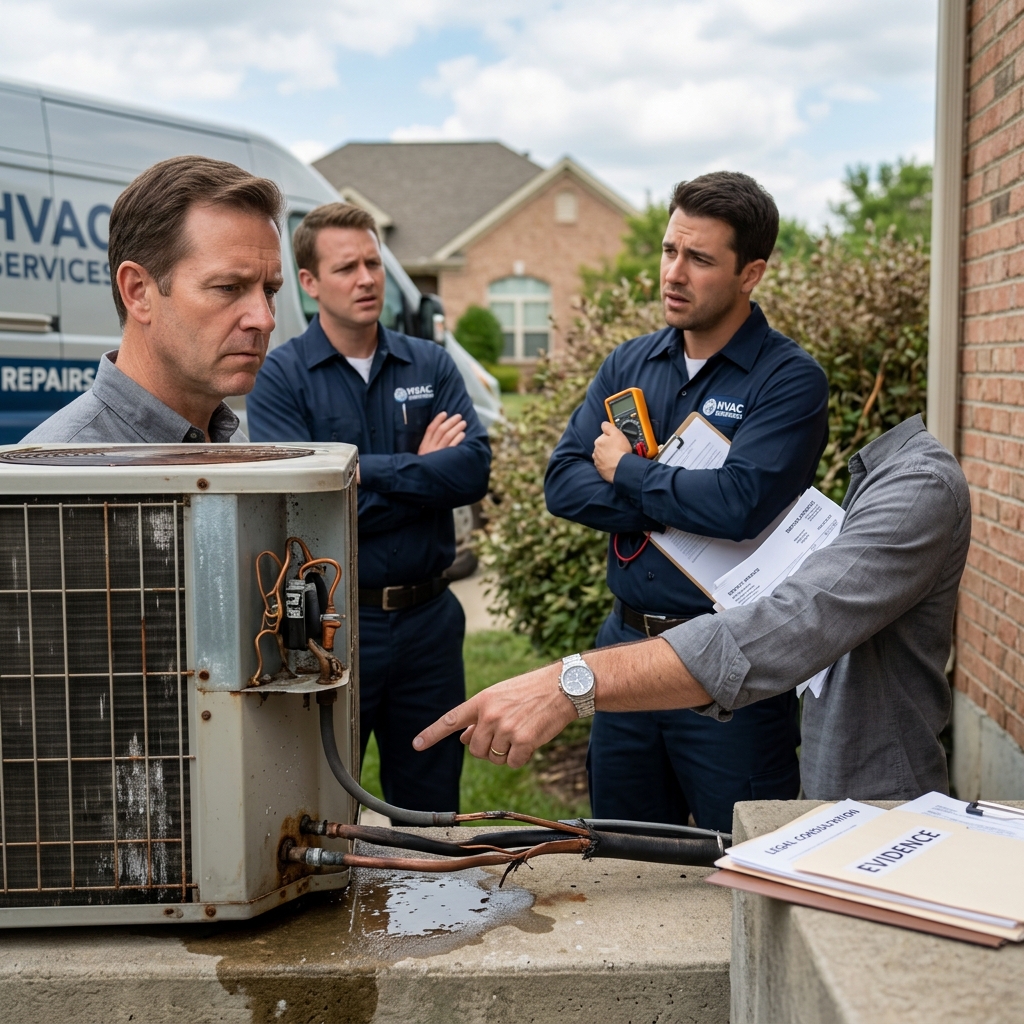
Heating, ventilation, and air conditioning systems are critical to making a home or building safe and comfortable. When HVAC work goes wrong, however, the consequences can include property damage, health problems, high utility bills, or even an unlivable home. In many situations, you can bring a lawsuit against an HVAC company or other responsible party, but you must understand who is liable, what legal claims apply, and how to prove your case.
This guide explains when legal action is possible, the most common types of claims, the difference between suing an HVAC company and other parties, and the steps to take if you think you have an HVAC-related construction defect or injury.
1. When HVAC Problems Become Legal Claims
Not every uncomfortable room or noisy air conditioner is grounds for a lawsuit. Legal liability generally arises when a company or individual fails to meet a legal duty and that failure causes real harm, such as personal injury, financial loss, or significant property damage.
1.1 Types of Harm That May Justify a Lawsuit
You are more likely to have a viable claim if one or more of these harms has occurred:
- Physical injuries caused by HVAC issues, such as carbon monoxide exposure, heat-related illnesses, mold-related respiratory problems, or accidents due to leaking condensation or electrical hazards.
- Substantial property damage, including warped floors, damaged drywall, mold growth, or ruined personal property from leaks or poor humidity control.
- Loss of use of the property, such as being forced to leave a home because it is too hot, too cold, or contaminated, which may support claims related to habitability or constructive eviction in rental situations.
- Major financial loss, including repeated repair expenses, replacement costs, or a measurable reduction in property value associated with defective work.
1.2 Common HVAC-Related Problems That Raise Legal Issues
Legal disputes tend to arise from HVAC conditions like:
- Improper sizing or design leading to uneven heating or cooling, short-cycling, or premature equipment failure.
- Poor installation that violates building codes or manufacturer instructions, such as improper venting, inadequate support, or unsafe electrical connections.
- Insufficient ventilation leading to moisture buildup, mold, or poor indoor air quality.
- Use of defective components or failure to follow industry standards and applicable mechanical codes.
2. Who You Can Sue for HVAC Defects or Injuries
Although homeowners often focus on the HVAC company, the legally responsible party might be someone else—or several parties together. Understanding the project structure helps you identify the proper defendants.
2.1 Potentially Responsible Parties
| Potential Defendant | Typical Role | When They May Be Liable |
|---|---|---|
| HVAC contractor/company | Designs, installs, inspects, or repairs the system | Improper design or installation, failure to meet professional standards, or violation of contract terms. |
| General contractor or builder | Manages entire construction project, hires subcontractors | Responsible for overall construction quality and coordination of trades, including HVAC subs. |
| Landlord or property manager | Controls rental property and maintenance decisions | Failure to maintain safe, habitable conditions or to fix known HVAC hazards. |
| Developer or owner-builder | Oversees design and construction of a project | Defective system design, cost-cutting that leads to substandard work, or code violations. |
| Equipment manufacturer | Makes furnaces, condensers, heat pumps, or controls | Defective products or inadequate warnings, in product liability cases. |
In many cases, a lawsuit for HVAC defects includes multiple defendants so that the court can sort out how responsibility should be allocated among them.
3. Legal Theories Commonly Used in HVAC Cases
HVAC disputes are usually built on one or more familiar legal theories. The choice of legal theory affects what you must prove and how long you have to sue.
3.1 Negligence and Professional Malpractice
Negligence is a failure to use reasonable care under the circumstances. To recover for negligence, an injured party generally must show:
- The defendant owed a duty of care, such as a contractor’s duty to follow codes and industry standards.
- The defendant breached that duty by doing something a reasonably careful professional would not do, or failing to do what they should have done.
- The breach caused a reasonably foreseeable injury, rather than a remote or speculative harm.
- The injured person suffered legally recognized damages, such as medical bills, repair costs, or lost use of property.
Where HVAC work involves specialized technical judgment, claims may be framed as professional malpractice, requiring proof that the contractor failed to meet accepted mechanical or engineering standards.
3.2 Breach of Contract
Most HVAC relationships are governed by a written or verbal contract. You may have a breach of contract claim if the company did not do what the contract promised, such as:
- Installing the wrong size or type of equipment.
- Failing to obtain required inspections or permits.
- Not completing the work on time or in the agreed manner.
- Ignoring specific written specifications or plans.
Many states impose separate time limits for breach of contract claims, often longer than for personal injury or negligence claims.
3.3 Breach of Warranty
HVAC disputes can also involve warranties:
- Express warranties – specific promises in contracts or marketing materials about performance, efficiency, or lifespan.
- Implied warranties – legal guarantees that a system is reasonably fit for ordinary use or that construction meets basic quality standards, which may be created by state law.
State statutes for construction defects often define minimum warranty periods for HVAC systems, such as a specified number of years for mechanical systems.
3.4 Fraud, Misrepresentation, and Consumer Protection
If an HVAC company or contractor intentionally or recklessly gives false information, you might have claims for:
- Fraud – knowingly misleading you about system capabilities, safety, or code compliance.
- Negligent misrepresentation – providing incorrect information without reasonable care.
- Unfair or deceptive practices under state consumer protection laws, which can sometimes allow additional penalties or attorney’s fees.
3.5 Habitability and Constructive Eviction (Rental Properties)
In rental situations, serious HVAC failures can lead to claims involving:
- Breach of the implied warranty of habitability, where landlords must provide basic heating and cooling adequate to make a unit livable under local standards.
- Constructive eviction, when conditions become so severe that a tenant effectively has no choice but to move out, which can serve as a defense if the landlord sues for unpaid rent.
3.6 Workplace Injuries and Workers’ Compensation
When HVAC defects injure workers rather than residents—for example, through unsafe rooftop units or electrical hazards—claims may fall under workers’ compensation laws or third-party liability rules. Workers typically must show:
- They were employed by the defendant at the time of injury.
- The injury arose out of and in the course of employment.
- The injury fits the statutory definition of a covered personal injury.
4. Legal Deadlines: Statutes of Limitation and Repose
Even strong cases can be lost if filed too late. Two types of time limits usually matter in construction-related HVAC claims:
- Statutes of limitation – deadlines for filing claims after a problem is discovered or reasonably should have been discovered.
- Statutes of repose – outer limits that begin when construction is substantially complete, regardless of when defects are discovered.
Key aspects to understand:
- Different claims (negligence, contract, warranty) may have different limitation periods.
- Some states give homeowners several years after discovery of a construction defect to sue, but no lawsuit may be allowed after the repose period ends, even if the defect was hidden.
- Special rules may apply for new homes, multifamily buildings, or cases involving fraud or intentional concealment.
Because these rules are highly state-specific and can be complex, it is critical to consult an attorney promptly if you suspect an HVAC defect.
5. Required Pre-Lawsuit Steps in Construction Defect Cases
Many states have specialized construction defect laws that require homeowners to follow pre-suit procedures before filing a lawsuit regarding defective HVAC or other construction work. These statutes often mandate written notice and an opportunity to repair or settle.
5.1 Written Notice and Right to Repair
Typical requirements under these laws include:
- Advance written notice to the contractor or builder describing the defects, often 60–90 days before filing suit.
- Sending the notice by certified mail or other traceable delivery to the last known address of each responsible contractor.
- Describing the defects in reasonable detail, including type of defect, its consequences, and necessary repairs, and attaching photos, videos, or expert reports if available.
5.2 Contractor’s Right to Inspect and Offer to Repair
Once notice is given, these laws often provide that the contractor may:
- Inspect the property within a set time frame, such as 30 days.
- Propose repairs, replacement, or a monetary settlement, sometimes within a specified deadline.
- Negotiate with the homeowner before any lawsuit can proceed.
If the homeowner rejects a reasonable offer, or if the contractor fails to respond or follow through, litigation or arbitration may then be allowed.
6. Proving Your Case: Evidence in HVAC Disputes
Winning an HVAC-related claim requires more than showing that the system is inconvenient or expensive to run. You must support your allegations with solid evidence.
6.1 Building a Documentation Record
Start gathering evidence as soon as you suspect a problem:
- Contracts and change orders – collect all proposals, signed agreements, invoices, and written change orders.
- Communication records – keep copies of emails, text messages, letters, and notes from phone calls with contractors and landlords.
- Photos and videos – document visible issues such as water stains, mold, poorly supported ductwork, disconnected vents, or corroded equipment.
- Maintenance and service records – retain documentation of all service calls, repair invoices, and inspection reports.
- Utility bills – gather bills showing unusual spikes in energy use that may reflect an inefficient or defective system.
6.2 Expert Evaluation
Most HVAC defect cases require expert testimony. An independent licensed HVAC professional or engineer can:
- Inspect the system and identify defective design or installation.
- Compare work against manufacturer instructions, codes, and industry standards.
- Estimate the cost of proper repair or replacement.
- Explain how defects caused your damages, such as moisture problems or inadequate climate control.
7. What You May Be Able to Recover
If you prevail against an HVAC company or other responsible party, potential damages depend on your claims and your state’s laws. In construction defect cases, homeowners may be able to recover for a variety of losses.
7.1 Typical Categories of Damages
- Cost of repair or replacement of defective HVAC work and any related building components.
- Damage to personal property, such as furniture, electronics, or clothing harmed by leaks, condensation, or mold.
- Engineering or consulting fees incurred to investigate and confirm the defect and necessary repairs.
- Diminished property value if the property is worth less even after repairs, where allowed by state law.
- Temporary housing costs if you must move out during repairs because the home is uninhabitable.
- Medical expenses and related costs for injuries or illnesses linked to HVAC failures.
- Attorney’s fees and court costs, when authorized by statute, contract, or consumer protection laws.
8. Practical Steps if You Suspect HVAC Defects
If you believe an HVAC company, builder, or landlord is responsible for serious problems, consider the following sequence of actions.
8.1 Immediate Health and Safety Concerns
- Address urgent hazards first: evacuate if you suspect carbon monoxide or electrical dangers.
- Seek medical care for any symptoms related to air quality, extreme temperatures, or exposure.
- Notify your landlord or HOA immediately if you are in a rental or common-interest community.
8.2 Communicate and Document
- Report the problem in writing to the HVAC company, builder, or landlord.
- Follow any notice requirements under your contract or state construction defect law.
- Continue gathering photographs, videos, and written records of all interactions.
8.3 Get an Independent Evaluation
- Hire a qualified HVAC professional or engineer not affiliated with the original contractor to inspect the system.
- Request a written report describing defects, code violations, and recommended solutions.
8.4 Consult a Lawyer Early
Because of strict notice requirements, complex statutes of limitation and repose, and the need to correctly identify defendants and claims, legal advice is especially important in HVAC-related construction disputes. A real estate or construction defect attorney can help you:
- Interpret contracts and warranties.
- Navigate pre-suit notice and right-to-repair procedures.
- Evaluate potential negligence, contract, warranty, or consumer protection claims.
- Estimate damages and decide whether litigation, arbitration, or settlement makes the most sense.
9. HVAC Lawsuit FAQs
Can I sue an HVAC company just because my system performs poorly?
Performance issues alone are not always enough. To bring a successful claim, you normally must show that the company breached a legal duty—such as failing to meet professional standards or violating the contract—and that this breach caused a specific injury or financial loss.
If I hired a builder, can I still sue the HVAC subcontractor directly?
It depends on how your project was structured and how state law treats subcontractor relationships. Sometimes the general contractor is the primary defendant, while in other situations homeowners may also bring claims directly against HVAC subcontractors for negligent work or violations of building codes.
What if my landlord refuses to fix a broken or unsafe HVAC system?
Tenants may have remedies under local housing and landlord-tenant laws, including habitability claims, rent withholding in some jurisdictions, or constructive eviction arguments if the unit is not livable. Procedures vary by state and city, so local legal advice is essential.
How long do I have to bring a lawsuit over HVAC defects?
Time limits vary significantly by state and by type of claim. Some states give several years to file negligence or contract claims after discovering a defect, but a separate statute of repose may bar suits after a certain number of years from completion, regardless of discovery. An attorney can interpret the deadlines for your specific situation.
Do I have to let the contractor try to fix the problem before I sue?
Many states require homeowners to send a detailed written notice and give the contractor a chance to inspect and propose repairs before filing a construction defect lawsuit. Failing to follow these procedures can delay your case or limit your recovery.
References
- Can I Sue an HVAC Company? — FindLaw. 2023-01-10. https://www.findlaw.com/realestate/construction-defects/can-i-sue-an-hvac-company.html
- Legal Recourse for Construction Defects: What Homeowners and Contractors Need to Know — Integrity Law. 2023-07-05. https://integritylawtx.com/legal-recourse-for-construction-defects-what-homeowners-and-contractors-need-to-know/
- Construction Defects — Texas State Law Library. 2024-02-01. https://guides.sll.texas.gov/consumer-protection/construction-defects
- Right to Repair Act — Georgia Attorney General’s Consumer Protection Division. 2022-09-15. https://consumer.georgia.gov/consumer-topics/right-repair-act
- HVAC Design & Installation Defects — Hollington Law Firm. 2023-06-20. https://hollingtonlawfirm.com/types-of-claims/hvac-design-and-installation-defects
- The Top 10 Construction Defects Due to a Faulty HVAC Installation — Naumann Legal. 2024-03-24. https://naumannlegal.com/2024/03/24/the-top-10-construction-defects-due-to-faulty-hvac-installation/
- Types of Construction Defects — McCarter | East PLLC. 2023-09-01. https://www.mcelaw.com/blog/types-of-construction-defects/
Similar Articles








Read full bio of Sneha Tete


