
When Police Need a Warrant for Blood Tests
A clear look at why breath tests and blood draws are treated differently under the Fourth Amendment.
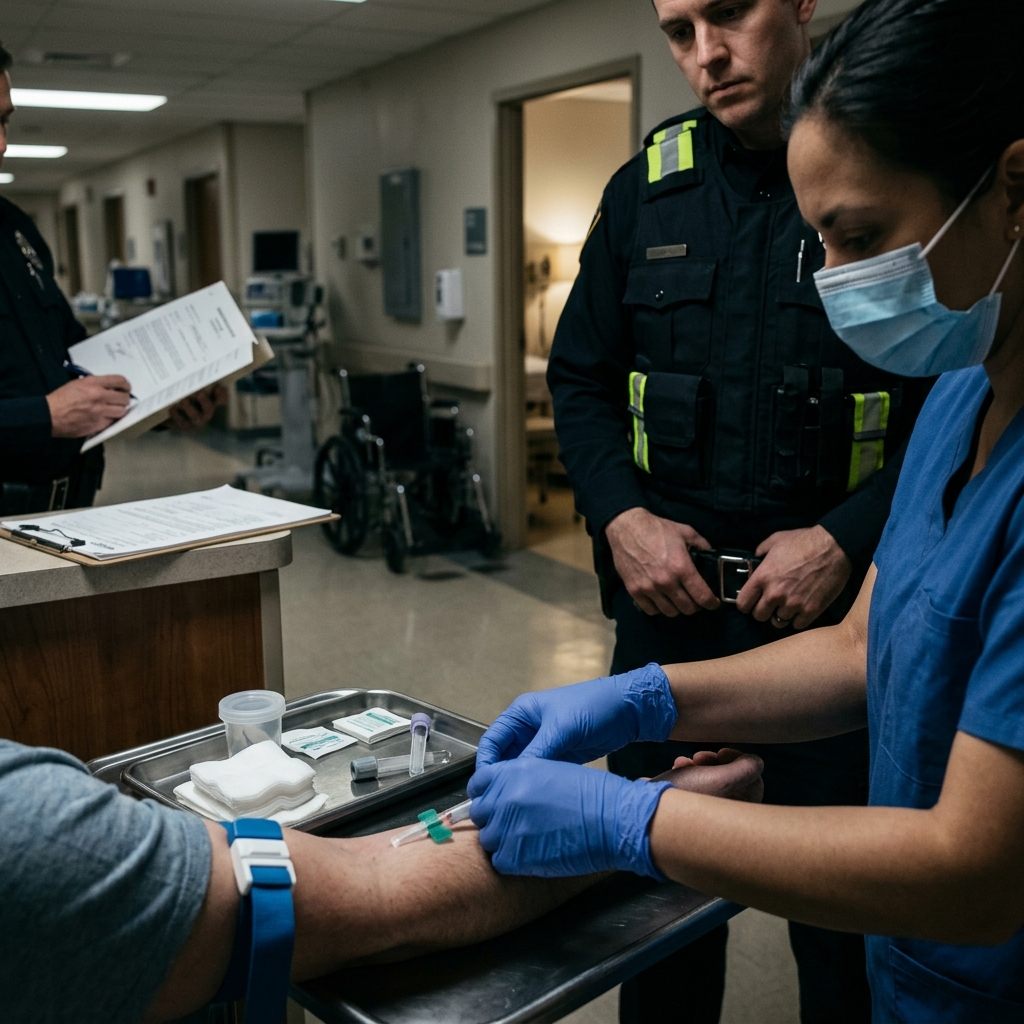
The Supreme Court has drawn a sharp line between two common DUI testing methods: breath tests and blood draws. In general, officers may require a breath test after a lawful arrest for drunk driving, but a forced blood draw usually needs a warrant unless a recognized exception applies.
That distinction matters because both tests are used to measure blood alcohol concentration, yet they differ greatly in intrusiveness. The Court has treated blood testing as a deeper physical invasion of the body, while breath testing is viewed as a less privacy-intensive search.
Why the Constitution Matters in DUI Testing
The Fourth Amendment protects people against unreasonable searches and seizures. Because DUI chemical tests involve collecting bodily evidence, courts have long treated them as searches subject to constitutional limits.
This means police cannot simply choose any test they want without considering the legal method for obtaining it. Even when officers have probable cause to believe a driver is impaired, the government still must respect the rules governing search warrants and exceptions to the warrant requirement.
Breath Tests and Blood Draws Are Not Treated the Same
The Supreme Court’s DUI cases explain that a breath test and a blood test may both reveal intoxication, but they are not equivalent in how they affect personal privacy. A breath test samples air from the lungs and does not pierce the skin. A blood draw, by contrast, requires a needle and exposes private medical information in a way the Court considers more invasive.
Because of that difference, the Court has allowed states to impose stronger consequences for refusing a breath test than for refusing a blood test. It has also held that criminal penalties for refusing a warrantless blood draw are unconstitutional in the ordinary DUI setting.
The Supreme Court’s Core Holding
In the leading ruling discussed by FindLaw and other legal sources, the Court held that officers generally may not force a blood draw without a warrant simply because a DUI arrest occurred. The Court also rejected state laws that criminally punish a person for refusing to submit to a blood test under those circumstances.
At the same time, the Court recognized that breath testing is different. Breath tests can ordinarily be required without a warrant as a condition incident to a lawful arrest, and a refusal may still carry legal consequences in many states.
How Implied Consent Laws Fit In
Many states use implied consent laws, which assume that drivers consent to chemical testing by choosing to use public roads. Those laws can support administrative penalties, such as license suspension, when a driver refuses testing.
But implied consent has limits. The Court made clear that a state cannot use implied consent to create a separate criminal offense for refusing a warrantless blood draw in the ordinary DUI context.
- Breath test refusal may still trigger penalties in many jurisdictions.
- Blood test refusal generally cannot be punished with a separate criminal charge when no warrant or valid exception exists.
- License suspension and similar civil consequences may still be available under state law.
When a Warrant May Not Be Required
The Supreme Court did not say that blood draws always require a warrant in every situation. Instead, it left room for traditional exceptions to apply when facts justify urgent action.
One important example is exigent circumstances. If officers face a true emergency that makes it impractical to obtain a warrant before blood alcohol evidence disappears, the Constitution may allow a warrantless draw. Courts examine those situations case by case rather than applying a blanket rule.
Another recurring issue involves unconscious or medically distressed drivers. In some situations, courts have had to decide whether special circumstances or separate statutory schemes justify a blood draw without a warrant. Those cases remain more fact-specific than the ordinary roadside DUI stop.
What Police Can Still Do During a DUI Arrest
The warrant rule for blood tests does not prevent police from investigating suspected drunk driving. Officers can still observe driving behavior, speak with the driver, conduct field sobriety tests, and in many circumstances request a breath sample.
They may also use other evidence to support an arrest, including slurred speech, the smell of alcohol, failed coordination tests, or witness statements. A person’s refusal to submit to testing can also become part of the overall picture, depending on the type of test and the state’s rules.
Why the Blood Test Rule Is Important
The Court’s treatment of blood testing reflects a broader constitutional principle: the government’s interest in enforcing drunk-driving laws does not eliminate bodily privacy. A blood draw physically enters the body, which is why the Court has placed it in a more protected category than breath testing.
That distinction is not just technical. It affects how officers train, how prosecutors build DUI cases, and how defense attorneys evaluate whether evidence was lawfully obtained. If a blood sample was taken without a warrant and without a valid exception, the defense may have grounds to challenge the evidence.
| Test Type | Warrant Usually Needed? | Typical Legal Treatment |
|---|---|---|
| Breath test | No, in ordinary DUI arrests | Considered less invasive; can usually be required incident to arrest |
| Blood test | Yes, unless an exception applies | More invasive; forced draw usually requires a warrant |
What This Means for Drivers
For drivers, the practical lesson is simple: do not assume every chemical test is governed by the same rule. A request for a breath test and a request for a blood test can have different legal consequences, even if both happen during the same DUI investigation.
If police request a blood draw, the legality of the demand may depend on whether they have a warrant, whether an exception applies, and what state law says about refusal. A driver may still face administrative penalties even if criminal punishment for refusal is barred.
Because DUI rules vary by state and can turn on small factual differences, the safest course after an arrest is to document what happened and speak with a qualified attorney as soon as possible.
Common Questions About DUI Blood and Breath Tests
Can police force a breath test without a warrant?
Yes, in the ordinary DUI arrest setting, the Supreme Court has allowed warrantless breath tests as searches incident to arrest.
Can police force a blood test without a warrant?
Usually no. A blood draw is treated as more intrusive, so officers normally need a warrant unless a recognized exception applies.
Can I be punished for refusing a blood test?
States may impose civil or administrative consequences, such as license suspension, but the Supreme Court rejected separate criminal punishment for refusing a warrantless blood test in the ordinary DUI context.
Does refusing a test make the DUI go away?
No. Officers can still make an arrest based on other signs of impairment, and prosecutors may still use other evidence in the case.
Are there any exceptions for emergencies?
Yes. Exigent circumstances can sometimes justify a warrantless blood draw, but the exception depends on the facts and must be evaluated carefully.
What Attorneys Look for After a Blood Draw
Defense lawyers reviewing a DUI blood test usually focus on whether officers had probable cause, whether a valid warrant existed, whether consent was truly voluntary, and whether any emergency made a warrant impossible to obtain in time.
They also examine how the sample was collected, stored, and analyzed. If law enforcement skipped a required step, the result may be challenged or excluded from evidence.
Why the Supreme Court’s Line Still Matters Today
The distinction between breath and blood testing continues to shape DUI enforcement nationwide. It gives police a clear path for routine breath testing while requiring closer judicial oversight before the state can physically invade the body for a blood sample.
That balance is central to Fourth Amendment law. The government may investigate suspected crime, but it must do so through procedures that remain proportionate to the privacy interests at stake.
FAQs
What is the main difference between breath and blood tests in DUI cases?
Breath tests are less invasive and usually can be required without a warrant, while blood draws are more intrusive and normally need a warrant.
Does implied consent mean I always agree to a blood test?
No. Implied consent laws can support civil penalties, but they do not generally authorize criminal punishment for refusing a warrantless blood draw.
Can officers still arrest me if I refuse testing?
Yes. Police may still rely on other evidence of impairment to make an arrest and pursue charges.
Is a warrant ever unnecessary for a blood draw?
Yes, if a recognized exception such as exigent circumstances applies, but the facts must support that exception.
References
- Supreme Court Limits Warrantless DUI Blood Tests — Koffel Law. 2016-06-26. https://www.koffellaw.com/blog/supreme-court-limits-warrantless-dui-blood-tests/
- Should I Take a Blood or Breathalyzer Test if I’m Asked? — FindLaw. 2024-??-??. https://www.findlaw.com/dui/arrests/should-i-take-a-blood-test-or-a-breathalyzer-test-if-i-am-asked.html
- How the Birchfield Ruling Affects Your Pennsylvania DUI — Pittsburgh Criminal Attorney. 2016-07-01. https://www.pittsburghcriminalattorney.com/pa-dui-law-supreme-court-limits-birchfield/
- Can refusal evidence of a blood test be evidence of guilt in a DUI case under the United States Constitution? — DelSignore Defense. 2019-11-14. https://www.delsignoredefense.com/blog/can-refusal-evidence-of-a-blood-test-be-evidence-of-guilt-in-a-dui-case-under-the-united-states-constitution/
- J-43-2024, In the Supreme Court of Pennsylvania — Supreme Court of Pennsylvania. 2025-??-??. https://www.pacourts.us/assets/opinions/Supreme/out/J-43-2024mo%20-%20106406333315219915.pdf
- US Supreme Court rules on warrantless blood alcohol tests — NBC Nightly News. 2019-06-27. https://www.facebook.com/nbcnightlynews/posts/police-do-not-need-a-search-warrant-to-test-the-blood-alcohol-level-of-an-uncons/10157726947343689/
Similar Articles








Read full bio of Sneha Tete




