
What Job Applicants Should Know About Drug Tests
Understand how pre-employment drug testing works, what it can include, and how state and federal rules shape the process.
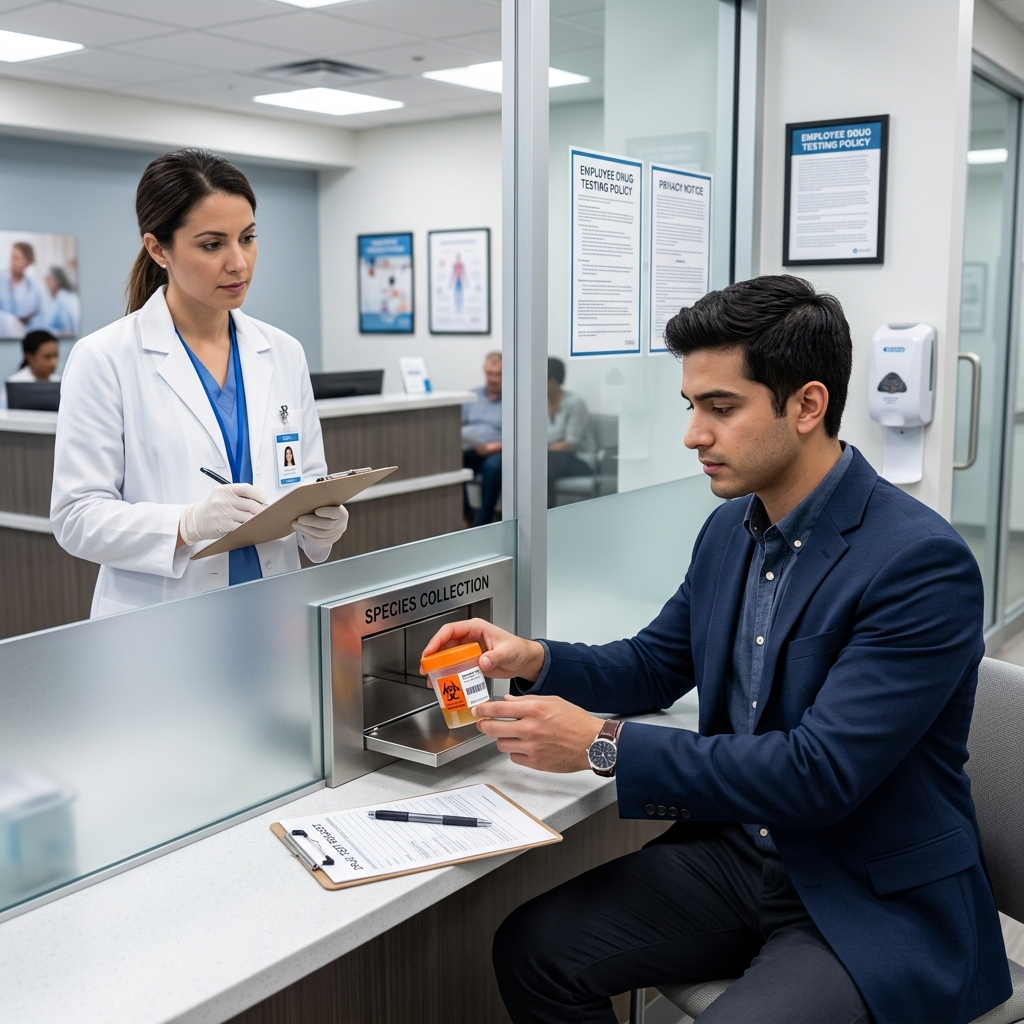
Pre-employment drug testing is a common part of hiring, especially in roles where safety, compliance, or regulated work is involved. For applicants, the process can feel uncertain because the rules vary by state, the type of job, and the employer’s own policy. Knowing what the test can check, when it usually happens, and how results are handled can make the experience much less stressful.
Most employers use drug screening as one piece of a broader hiring process, often alongside background checks, reference review, and skill evaluation. A failed test can lead to a withdrawn offer, while a passed test may be one condition for starting work. Federal guidance and state laws both affect how employers may test and what they must disclose to candidates.
Why Employers Use Drug Screening
Employers generally rely on drug testing to reduce workplace risk, protect coworkers and customers, and satisfy legal or contract requirements. In safety-sensitive industries, such as transportation and certain government-funded roles, testing may be required by law or by policy tied to federal rules.
For other employers, testing is often a business decision. They may view it as a way to lower accident risk, support productivity, and maintain a drug-free workplace. Even when testing is optional, companies usually apply it only after making a conditional offer so the applicant knows the process is part of final hiring steps.
- Testing may be required by law in regulated jobs.
- Testing may be part of a standard hiring policy.
- Testing may be used after a conditional offer.
- Testing may affect whether the offer remains open.
When the Test Usually Happens
In many workplaces, drug testing occurs after the employer decides it wants to hire the applicant but before the employee starts work. That timing matters because the company is often not making the test a screening barrier before it shows interest in the candidate.
The exact timing can differ. Some employers schedule testing immediately after a conditional offer. Others wait until the rest of the pre-hire paperwork is complete. In certain industries, the test may be one of several conditions the applicant must satisfy before a final start date is confirmed.
| Hiring stage | What usually happens |
|---|---|
| Before offer | Usually no drug test unless the role is governed by special rules. |
| Conditional offer | Drug test often scheduled as a requirement before final hiring. |
| After positive result | Employer may withdraw the offer depending on policy and law. |
| Before start date | Applicant may need a negative result before beginning work. |
What a Standard Test May Screen For
Many employers use a panel test that checks for several common substances. One widely used option is the 5-panel test, which typically looks for amphetamines, cannabinoids such as THC, cocaine, opiates, and phencyclidine, also known as PCP.
Some employers use broader screening. Depending on policy and job requirements, a test may also look for alcohol, benzodiazepines, barbiturates, methadone, or other substances. A test does not always detect every drug in every circumstance, and different panels have different limits and methods.
- 5-panel tests are among the most common.
- THC screening may be especially relevant where marijuana laws differ by state.
- Expanded panels can include prescription and non-prescription substances.
- Test design depends on the employer’s policy and the job’s legal requirements.
How Samples Are Collected
Drug tests can be performed using different types of specimens. Common methods include urine, oral fluid, blood, or hair samples. Each method has different strengths, detection windows, and practical considerations.
Urine testing is often used because it is relatively inexpensive and widely available. Oral fluid testing can be more convenient for on-site collection. Hair testing may provide a longer look-back period in some situations, while blood testing is generally more invasive and less common for routine hiring screens.
The collection method often depends on the employer’s policy, the lab, and the legal framework for the position. Applicants are usually told where to go, what identification to bring, and whether they must follow special instructions before the sample is collected.
What You May Be Asked to Sign or Approve
Employers commonly ask for written consent before testing proceeds. Clear communication is important because applicants should understand that the test is part of the hiring process and that refusal may affect the offer.
In many cases, the employer will provide paperwork explaining the testing process, the substances covered, and how the information will be used. If the company has a written policy, the applicant may also be asked to acknowledge it. That policy may describe when testing happens, who gets tested, and what happens after a positive result.
- Consent may be required before collection begins.
- Policy acknowledgment may be part of onboarding paperwork.
- Job-specific rules may require additional disclosures.
- Applicants should keep a copy of what they sign.
How Results Are Usually Handled
Testing results are often reviewed by the employer or a designated medical review process before a final employment decision is made. A positive screening result may be confirmed by a more precise method, especially in workplaces that want stronger documentation.
Some states and employers require confirmation testing for positive initial results. Texas guidance, for example, emphasizes the value of confirmation testing such as gas chromatography/mass spectrometry, chain-of-custody documentation, and clear written policies when test results are later challenged. While rules differ, the overall process is designed to reduce error and support defensible decisions.
Applicants should also know that an initial result is not always the end of the process. In some cases, the employer may review medical explanations, prescription information, or other documentation before making a final decision.
How Federal and State Law Can Change the Rules
Drug testing law is not uniform across the country. Federal rules may apply to certain industries, while state law may add extra protections or restrictions. That means two applicants with similar jobs can face different testing rules depending on location.
Federal guidance notes that employers cannot refuse to hire someone simply because of a history of substance use or enrollment in rehabilitation, although current illegal drug use can still matter in the hiring process. State law may also protect lawful off-duty conduct, especially with marijuana-related testing. California, for example, allows preemployment testing but limits certain cannabis-related practices and protects off-duty, off-site use in some situations.
| Legal source | Common effect on applicants |
|---|---|
| Federal rules | May apply to regulated jobs and protected conditions. |
| State law | May limit marijuana testing or affect how results are used. |
| Industry rules | May require testing before the applicant can start work. |
What Happens If You Test Positive
A positive result can have immediate consequences, but the outcome depends on the employer’s policy, the job type, and the law in that state. In many settings, a failed test can lead to withdrawal of the offer or disqualification from the hiring process.
Some employers may consider whether the applicant has a lawful prescription, whether the result needs confirmation, or whether the position is covered by a special rule. Others use a stricter policy and treat any confirmed positive result as a hiring stop. Applicants should not assume every result leads to the same outcome because policies vary widely.
If the job is safety-sensitive or federally regulated, the consequences may be more rigid. If the position is in a state with more limited cannabis-testing rules, the employer may be constrained from using certain off-duty conduct as a hiring factor.
How to Prepare Before Testing Day
Preparation is mostly about understanding the employer’s process and avoiding mistakes. Applicants should read all instructions carefully, arrive on time, and bring the required identification. If the candidate has a prescription that could affect the result, it may be wise to be ready to provide relevant documentation if asked.
It is also helpful to review the company’s policy, if available, so there are no surprises about timing, substances covered, or next steps. Candidates should not assume that a delay, rescheduling, or missing paperwork will be treated casually. A missing appointment can sometimes be treated similarly to a refusal, depending on the policy.
- Read the testing notice carefully.
- Bring the required identification and documents.
- Follow any instructions about food, water, or timing.
- Keep copies of all hiring and testing paperwork.
Questions Applicants Often Ask
Can an employer test me before hiring me? Yes. Many employers test after a conditional offer, and some positions require it as a condition of employment.
Can a positive result cost me the job? Yes. A failed test can lead to a withdrawn offer, depending on company policy and applicable law.
What substances are usually checked? Common screens often include THC, cocaine, opiates, amphetamines, and PCP, though broader panels are possible.
Is urine the only kind of test? No. Oral fluid, blood, and hair testing are also used in some settings.
Do state laws matter? Yes. State rules can change how marijuana, privacy, and applicant rights are handled.
Practical Takeaways for Job Seekers
For applicants, the most important thing is to treat drug testing as a formal part of hiring rather than a surprise exam. The employer’s policy, the role’s legal requirements, and state law all shape what the company can ask for and how it can use the results.
Reading the notice, understanding consent, and knowing whether your state offers extra protections can help you avoid confusion. If the test is part of a conditional offer, the safest approach is to respond promptly, keep records, and ask for clarification before the appointment if anything is unclear.
References
- Pre-Employment Drug Testing Laws by State — Paycor. 2026-01-01. https://www.paycor.com/resource-center/articles/pre-employment-drug-testing-laws-by-state/
- Employment Drug Testing — Checkr. 2026-01-01. https://checkr.com/background-check/employment-drug-testing
- The Best Practices for Pre-Employment Drug Testing — Mitratech. 2026-01-01. https://mitratech.com/resource-hub/blog/the-best-practices-for-pre-employment-drug-testing/
- Drug and Alcohol Testing Policy – California Drug Testing Laws — California Chamber of Commerce. 2026-01-01. https://www.calchamber.com/california-labor-law/drug-and-alcohol-testing
- Drug Testing in the Workplace — Texas Workforce Commission. 2026-01-01. https://efte.twc.texas.gov/drug_testing_in_the_workplace.html
- Employer Resources: Drug Testing Federal Laws and Regulations — Substance Abuse and Mental Health Services Administration. 2026-01-01. https://www.samhsa.gov/substance-use/drug-free-workplace/employer-resources/federal-laws
- Drug Testing Program — Missouri Department of Transportation. 2026-01-01. https://www.modot.org/media/36554
- RSMo Section 288.045 — Missouri Revisor of Statutes. 2026-01-01. https://revisor.mo.gov/main/OneSection.aspx?section=288.045
Similar Articles








Read full bio of medha deb




