
Letter Of Testamentary: 6-Step Guide For Executors, Checklist
A practical guide to the court document that empowers an executor to manage an estate.
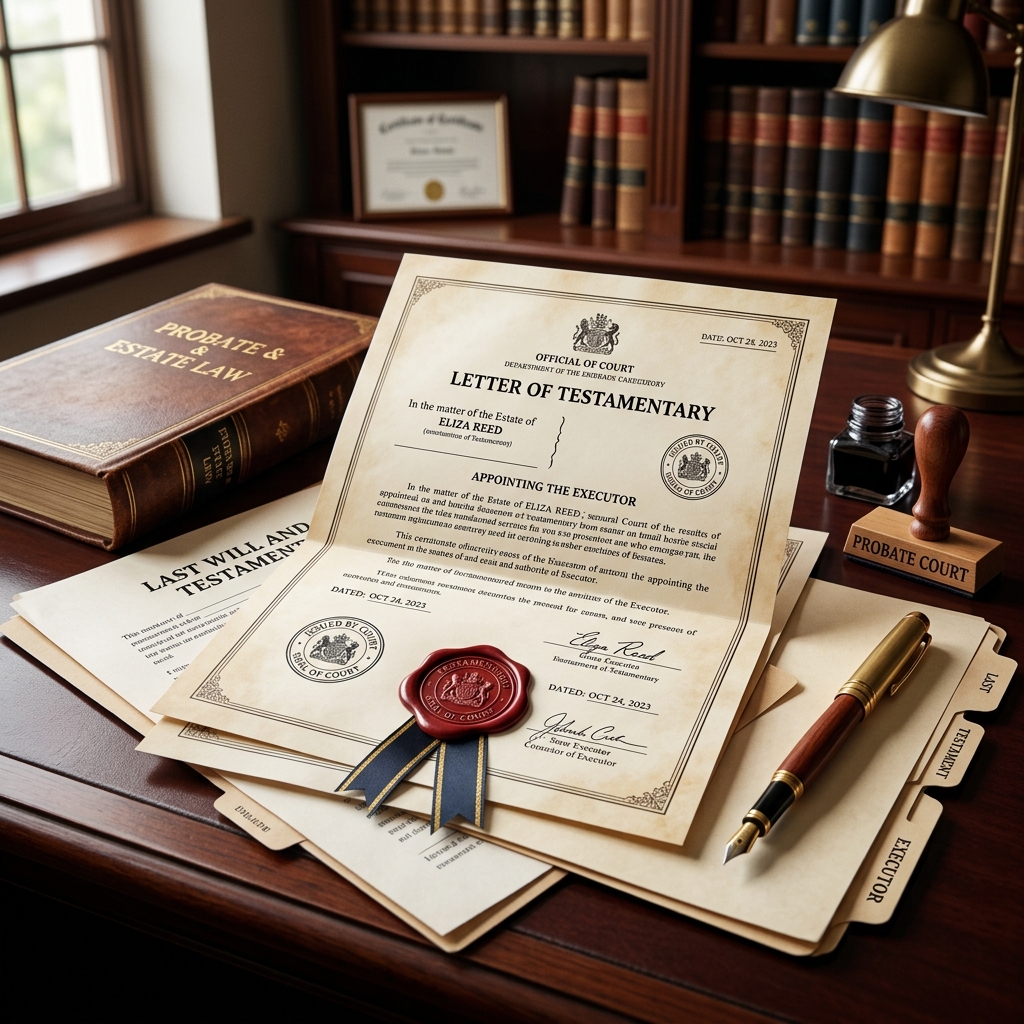
A letter of testamentary is a court-issued document that proves a named executor has legal authority to act on behalf of a deceased person’s estate. In practical terms, it is the paperwork that lets the executor step into the role the will assigned and begin managing the estate’s financial and legal affairs.
This document matters because banks, title companies, and other institutions often will not release assets or accept instructions from a family member unless there is formal proof of authority. The letter of testamentary provides that proof, helping the executor collect assets, pay debts, and distribute property according to the will.
Why this document matters
When someone dies with a valid will, the person named as executor usually cannot immediately take control of the estate. The court must first recognize that person’s authority. The letter of testamentary is the instrument that confirms the appointment and allows the executor to act in an official capacity.
Without it, the executor may face delays in accessing accounts, selling property, dealing with creditors, or handling tax-related tasks. In many cases, institutions require certified copies before they will disclose information or transfer control.
What an executor can do with it
Once the court issues the letter, the executor can typically begin the work of settling the estate. That often includes collecting money and property, safeguarding assets, reviewing bills, and making distributions to heirs or beneficiaries under the terms of the will.
- Access financial accounts: The executor can present the document to banks and other financial institutions to request information or manage estate funds.
- Handle real property: The executor may need authority to maintain, sell, or transfer real estate owned by the deceased.
- Pay obligations: The executor can use estate assets to satisfy valid debts, funeral costs, and taxes as required by law.
- Distribute assets: After claims and expenses are addressed, the executor can distribute remaining property in accordance with the will.
How a letter of testamentary differs from a will
A will expresses a person’s wishes. A letter of testamentary is the court’s formal recognition that the executor named in that will has authority to carry those wishes out. The will says who should manage the estate; the letter of testamentary proves the person has been authorized to do so.
| Document | Main purpose | Who issues it |
|---|---|---|
| Will | States how property should be handled after death | The person making the will |
| Letter of testamentary | Proves executor authority to administer the estate | The probate court |
When it may be required
A letter of testamentary is commonly needed when the deceased owned assets that cannot be transferred automatically. That often includes sole-owned bank accounts, investment accounts, and real estate that must pass through probate before they can be retitled or distributed.
It may not be required for every asset. Some property transfers outside probate through beneficiary designations, joint ownership arrangements, or trust ownership. But when probate is necessary, the executor usually needs formal court authority before institutions will cooperate.
The basic process for obtaining one
The exact procedure depends on state law, but the general path is similar in many jurisdictions. The executor usually must file paperwork with the probate court, provide the original will and death certificate, and ask the court to recognize the appointment.
- Locate the original will. The court needs the governing document that names the executor and sets out the estate plan.
- File a probate petition. The executor or attorney files the required petition in the appropriate court, usually where the deceased lived.
- Submit supporting documents. Courts typically require a death certificate and the original will, along with other forms required by local rules.
- Attend any hearing. Some courts hold a hearing to confirm that the will is valid and the nominated person is fit to serve.
- Take any required oath. In some places, the executor must swear to carry out the job faithfully before receiving formal authority.
- Request certified copies. After the court issues the document, the executor should obtain multiple certified copies for use with banks, insurers, and other institutions.
Common responsibilities that follow
Receiving the letter of testamentary is not the end of the process; it is usually the start of estate administration. The executor must gather information about assets and debts, keep records, and follow the probate court’s requirements throughout the case.
That work can involve opening an estate bank account, notifying beneficiaries, identifying creditors, filing final income tax returns, and preparing an inventory of estate property. Careful documentation is important because the executor may need to show how every dollar was handled.
Possible complications
Not every estate moves smoothly. Delays can happen if the will is missing, if family members challenge the document, or if the proposed executor is unable or unwilling to serve. A court may also require extra steps if the estate is complex or if there are questions about the deceased person’s debts or ownership records.
Even when there is no dispute, probate paperwork can be time-consuming. That is one reason many families seek legal help when a court document is needed to prove an executor’s authority.
How to make the process easier for your family
Good planning can reduce confusion later. A clearly drafted will, an up-to-date list of assets, and accessible records can all make probate administration less burdensome for the person you choose to serve as executor.
- Keep the original will in a secure but accessible location.
- Tell the executor where important documents are stored.
- Review beneficiary designations regularly.
- Update the will after major life events.
- Maintain a record of accounts, debts, and property titles.
Frequently asked questions
Is a letter of testamentary the same as being named executor?
No. Being named executor in a will does not by itself give you full legal authority. The probate court must usually issue a letter of testamentary before financial institutions and others will accept your authority.
Does every estate need one?
No. Some estates transfer through nonprobate methods, such as trusts or beneficiary designations. But when probate is required and the deceased left a will, the executor often needs this court document to act.
Can a bank refuse to honor it?
A bank may require a certified copy and may apply its own internal procedures, but the document is generally the formal proof of authority that institutions rely on to deal with the estate.
What happens if there is no will?
If there is no will, the estate usually follows intestacy rules, and the court appoints an administrator instead of issuing a letter of testamentary to an executor named in a will.
Should I get legal help?
Legal help is often useful, especially if the estate includes real estate, multiple accounts, business interests, family disputes, or out-of-state assets. Probate procedures vary by jurisdiction, and an attorney can help ensure the petition and supporting documents are filed correctly.
Key takeaways for executors and families
The letter of testamentary is the document that turns a named executor’s authority from a promise in a will into a recognized legal power. It helps the executor manage accounts, handle debts, and complete distributions under court supervision.
For families, understanding this document in advance can make estate administration less stressful. For executors, obtaining it early is often one of the most important steps in moving the probate process forward.
References
- ¿Qué es una Carta Testamentaria? | Siegel Law Group — Siegel Law Group. 2026. https://siegellawgroup.com/es/preguntas-frecuentes/que-es-una-carta-de-testamentaria/
- Carta Testamentaria | Washington, D.C. — Kevin Martin Law. 2026. https://www.kevinmartinlaw.com/es/carta-testamentaria/
- Qué saber antes de redactar un testamento por tu cuenta — AARP. 2023. https://www.aarp.org/espanol/dinero/presupuesto-y-ahorro/info-2023/como-escribir-testamento-tu-mismo.html
Similar Articles








Read full bio of Sneha Tete


