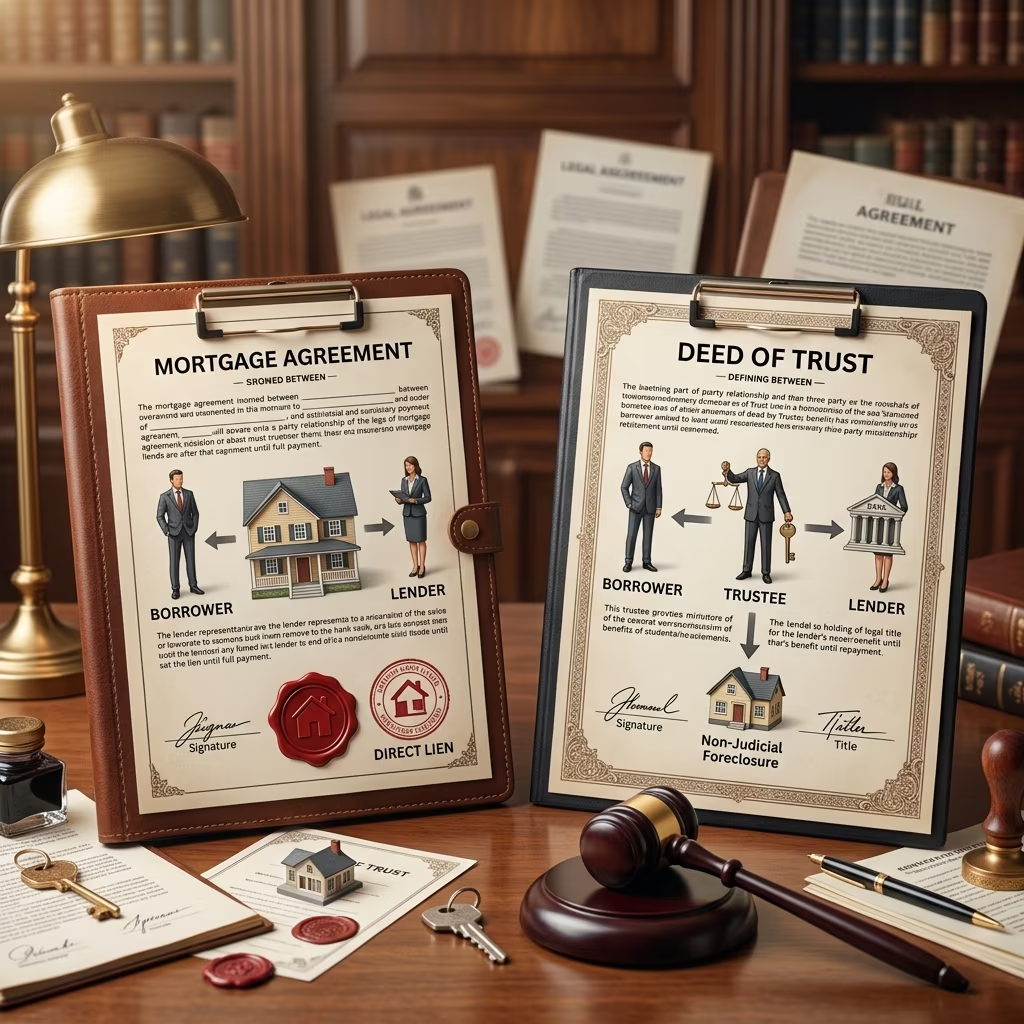
When you finance a home, you do more than sign a stack of papers and collect your keys. Behind every home loan sits a legal document that secures the debt with your property, giving the lender the right to take or sell the home if you stop paying. In most residential transactions, that document will be either a mortgage or a deed of trust.
Both instruments serve the same overall purpose—protecting the lender by turning the home into collateral—but they do it in different ways, with different parties, and often through different foreclosure procedures. Understanding those differences can help you evaluate risk, anticipate what might happen if you default, and make sense of the documents you sign at closing.
Why These Documents Matter in Home Financing
A home loan typically has two layers of obligation:
- Promissory note – your personal promise to repay the money according to specific terms (rate, payment schedule, maturity date).
– the mortgage or deed of trust that connects the debt to the property and allows foreclosure if you default.
Without a mortgage or deed of trust, a lender might be able to sue you for breach of contract under the note, but it would not automatically have rights in your home. The security instrument solves that problem by creating a lien on the property and spelling out what happens if the loan is not repaid.
In practical terms, this means:
- Your home functions as collateral for the loan.
- The lender (or note holder) gains specific legal remedies if you stop making payments.
Core Similarities Between Mortgages and Deeds of Trust
Although the terminology and parties differ, mortgages and deeds of trust share several foundational features.
- Both secure a loan with real estate. The property becomes collateral, and the document creates a lien against title.
. States determine which instrument is used and how foreclosures must be handled. - Both allow foreclosure if you default. If you fail to make payments or violate other terms, the secured party can move to sell the property to satisfy the debt.
- Both are recorded in land records. Recording puts the world on notice that the home is encumbered by a security interest.
From a borrower’s day-to-day perspective, these similarities often mean that life in the property looks the same: you occupy the home, pay the loan monthly, and as long as you perform, the security instrument is largely in the background.
Key Concept: Legal vs. Equitable Title
One subtle but important distinction comes from how each instrument treats title—who legally owns the property while the loan is outstanding.
- With a mortgage, you retain title to the property but grant the lender a lien and certain rights if you default.
- With a deed of trust, a neutral third party (the trustee) typically holds legal title, while you hold equitable title, meaning you enjoy the benefits of ownership subject to the loan.
This division of title in a deed of trust is part of what enables faster, nonjudicial foreclosure procedures in many states.
Parties Involved: Two vs. Three
One of the most straightforward differences lies in how many parties are involved in the security agreement.
| Feature | Mortgage | Deed of Trust |
|---|---|---|
| Number of parties | Two | Three |
| Borrower | Mortgagor | Trustor |
| Lender / Loan owner | Mortgagee | Beneficiary |
| Neutral third party | None | Trustee, holds legal title and may conduct foreclosure sale |
In a mortgage:
- The borrower (mortgagor) grants the mortgage lien to the lender.
- The lender or investor (mortgagee) holds the security interest and typically initiates foreclosure if the loan goes into default.
In a deed of trust:
- The trustor is the borrower.
- The beneficiary is the lender or note holder who benefits from the security.
- The trustee is a neutral third party—often a title company or similar entity—who holds legal title and has authority to sell the property if the borrower defaults, according to the terms of the deed of trust.
This three-party structure underpins many of the differences in foreclosure procedure and timing.
Foreclosure: Judicial vs. Nonjudicial
Foreclosure is the process by which the secured party enforces its rights and sells the property after a default. The type of foreclosure associated with each instrument is one of the most consequential distinctions for borrowers and lenders.
Foreclosure Under a Mortgage
Mortgages in many states are foreclosed judicially, meaning the lender files a lawsuit in court asking for permission to sell the property.
- The lender (or loan owner) initiates the case after a default.
- A judge oversees the process and ultimately authorizes the sale if the lender proves the default and complies with statutory requirements.
- The process tends to be slower and more costly, because it involves formal litigation and court supervision.
While judicial foreclosure can be burdensome for lenders and investors, it may afford borrowers additional procedural protections and opportunities to challenge errors.
Foreclosure Under a Deed of Trust
Deeds of trust commonly include a power of sale clause that authorizes the trustee to sell the property if the borrower defaults, following state law requirements but generally without going to court.
- The beneficiary (lender) notifies the trustee that the borrower is delinquent.
- The trustee proceeds with a nonjudicial foreclosure, using statutory notice and sale procedures rather than filing a lawsuit.
- This route is typically faster and less expensive than judicial foreclosure, which many lenders prefer because it reduces time and legal costs.
States that rely heavily on deeds of trust often design detailed nonjudicial foreclosure statutes that specify timelines, notice requirements, and sale processes, aiming to balance efficiency with fairness.
State-by-State Use: Why Some States Prefer One Over the Other
Whether you sign a mortgage or a deed of trust is usually not a personal choice; it is primarily determined by state practice and law. Some jurisdictions rely almost exclusively on one instrument, while others use a mix.
In broad terms:
- Many states with a tradition of judicial foreclosure rely on mortgages as the primary security instrument.
- States that have developed streamlined nonjudicial foreclosure systems frequently use deeds of trust.
Professional practice resources often publish charts indicating which states commonly use mortgages versus deeds of trust for securing real estate loans. Lenders, title companies, and closing agents follow these patterns so that transactions comply with local statutes and case law.
Practical Implications for Homeowners
From the borrower’s perspective, the type of security instrument can affect several aspects of the relationship with the lender and the risk profile of the loan.
Speed and Cost of Foreclosure
- Mortgage states – Foreclosure may take longer and involve more court-related expenses. This can delay the lender’s ability to resell the property, but may provide borrowers more time to pursue loss mitigation, sale, or legal defenses.
- Deed of trust states – Nonjudicial procedures can move more quickly, which lenders often view as an advantage. For borrowers, faster timelines may reduce the window to cure a default or negotiate alternatives.
Who Handles the Sale
- With a mortgage, the lender or its representative typically manages the foreclosure process under court supervision.
- With a deed of trust, the trustee plays a central role, executing the power of sale and conducting the auction within the framework of state law.
Despite these differences, both systems ultimately aim to provide a legally recognized mechanism for converting the property into cash to pay off the outstanding debt after a default.
Relationship to the Note and the Deed
It is easy to confuse the various documents that appear at closing. In most residential transactions, you are dealing with at least three distinct instruments:
- Promissory note – Establishes your personal obligation to repay the loan and sets out interest, term, and repayment schedule.
- Security instrument (mortgage or deed of trust) – Connects that debt to the property and provides foreclosure rights if you default.
- Deed (such as a warranty deed) – Transfers ownership of the property itself and is separate from the loan obligations.
The security instrument and deed are typically recorded in the county or local land records, while the note is retained by the lender or investor. This distinction matters for title examination: an attorney or title company reviewing your property’s history will look at recorded mortgages or deeds of trust to understand what liens affect the property.
Benefits and Drawbacks: Borrower and Lender Perspectives
| Perspective | Mortgage | Deed of Trust |
|---|---|---|
| Lender – Foreclosure speed | Often slower due to judicial process. | Often faster via nonjudicial procedures where allowed. |
| Lender – Legal costs | Typically higher because of court involvement. | Typically lower due to streamlined statutory process. |
| Borrower – Procedural protections | May have more formal opportunities to raise defenses in court. | Fewer court hearings; protections come mainly from statutes and contractual terms. |
| Borrower – Time to act | Usually more time before sale completes. | Shorter timelines can reduce options if default occurs. |
These trade-offs explain why many lenders prefer deeds of trust in jurisdictions where nonjudicial foreclosure is permitted, while borrowers may view judicial foreclosure as offering more procedural safeguards, even if it is stressful and drawn out.
How to Identify Which Instrument You Have
If you already own a home and want to know whether your loan is secured by a mortgage or a deed of trust, you can take several steps:
- Review your closing documents. The security instrument will be clearly labeled as a “Mortgage” or “Deed of Trust” and will identify the parties accordingly.
. Search under your name or property address to view the recorded documents associated with your loan. - Ask your servicer. The company that collects your payments can confirm which type of instrument secures your loan.
- Consult a local real estate attorney. They can explain how your state’s law treats your security instrument and what that means for foreclosure procedures.
Knowing whether your loan is secured by a mortgage or a deed of trust can help you anticipate potential consequences if you fall behind on payments.
Frequently Asked Questions
Do I choose between a mortgage and a deed of trust?
Typically, no. Whether you sign a mortgage or a deed of trust is mainly dictated by state law and local practice, not by borrower preference. Lenders and closing professionals use the instrument that aligns with the jurisdiction’s foreclosure framework.
Can a deed of trust change how I own my home?
A deed of trust allows a trustee to hold legal title while you hold equitable title, but it does not usually change your ability to live in, use, and enjoy the property as long as you comply with the loan terms. You still function as the owner in everyday life, subject to the lien.
Is a deed of trust the same thing as the property deed?
No. The deed transfers ownership of the property, while the deed of trust secures a loan by creating a lien and granting foreclosure rights if you default. They are separate documents with different purposes.
Why do lenders often prefer deeds of trust?
In states that permit nonjudicial foreclosure, deeds of trust can offer a faster, less expensive enforcement process through the trustee’s power of sale, without filing a lawsuit. This efficiency makes deeds of trust attractive to lenders and investors.
Does having a mortgage mean I am more protected?
Judicial foreclosure under a mortgage may provide more formal court oversight, but protection depends on many factors: state law, contract terms, and how courts interpret them. It is not automatically better or worse; it is simply a different process.
What happens to the mortgage or deed of trust when I pay off the loan?
Once the loan is fully repaid, the lender (for a mortgage) or trustee (for a deed of trust) must release the lien, often by recording a satisfaction, release, or reconveyance document. After that, the property is no longer encumbered by that security instrument.
References
- What’s the Difference Between a Mortgage and Deed of Trust? — Nolo. 2023-06-01. https://www.nolo.com/legal-encyclopedia/whats-the-difference-between-mortgage-deed-trust.html
- What Is a Deed of Trust? — Rocket Mortgage. 2023-08-15. https://www.rocketmortgage.com/learn/deed-of-trust
- Deed of Trust vs. Mortgage: Key Differences — SoFi. 2023-09-20. https://www.sofi.com/learn/content/deed-of-trust-vs-mortgage/
- Deed of Trust vs. Mortgage: Key Differences — SmartAsset. 2022-10-10. https://smartasset.com/mortgage/deed-of-trust-vs-mortgage
- The Differences Between the Deed, the Note, and the Deed of Trust — NFM Lending. 2020-05-12. https://nfmlending.com/financing-your-home/education/blog/the-differences-between-the-deed-the-note-and-the-deed-of-trust/
- Deed of Trust or Mortgage: State Comparison Chart — Practical Law, Thomson Reuters. 2022-01-01. https://content.next.westlaw.com/practical-law/document/I3a939f3ca4e511eabea3f0dc9fb69570/Deed-of-Trust-or-Mortgage-State-Comparison-Chart