
What Happens When Someone Dies Without a Will
Understand intestacy, who manages the estate, and how assets are divided when there is no will.
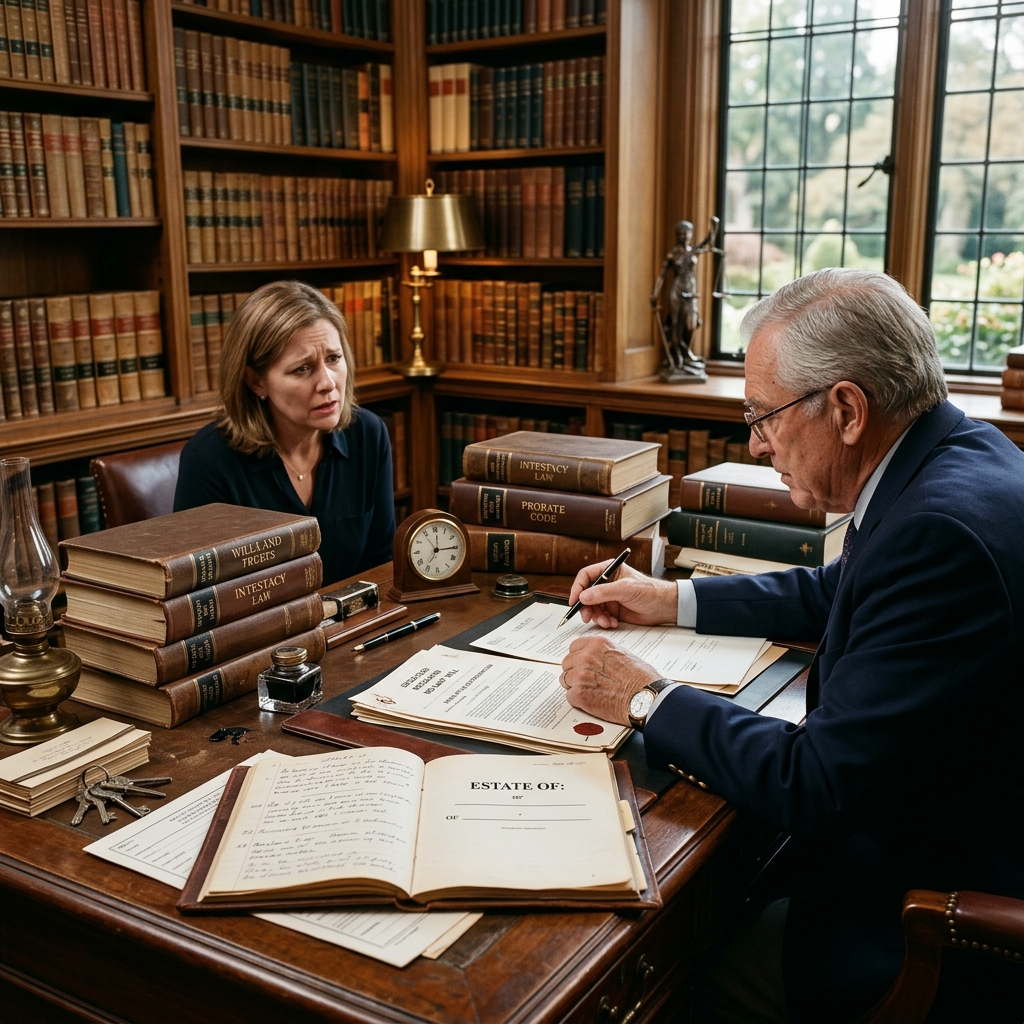
When there is no will: the legal starting point
When a person dies without a valid will, the law treats the situation as intestacy. That means the deceased did not leave binding instructions for how property should be managed, who should handle the estate, or who should receive the remaining assets. Instead of following personal wishes, the estate is dealt with under provincial or territorial succession laws.
Those laws do not work the same way everywhere in Canada. The general idea is consistent, but the exact order of inheritance, the rights of spouses or common-law partners, and the treatment of children can vary by province or territory.
In practical terms, dying without a will usually creates three immediate issues:
- someone must be authorized to deal with the estate;
- debts and final expenses must be paid first; and
- the remaining property must be divided according to the applicable statute, not family expectations.
Who takes charge of the estate
Without a will, there is no executor named by the deceased. A court will usually appoint an administrator or personal representative to manage the estate.
The administrator’s role is to collect assets, protect the estate, pay valid debts and expenses, and distribute what is left according to the law. Until that appointment is made, it can be difficult for family members to access accounts, sell property, or complete other estate tasks.
Courts generally prefer someone close to the deceased, often a surviving spouse or adult child, but the available candidates and local practice can differ. In some cases, if no suitable relative is available, another person may be appointed under the applicable estate rules.
What happens to debts, taxes, and funeral costs
An estate is not distributed right away. Before anyone receives an inheritance, the estate typically must pay funeral expenses, administration costs, taxes, and other debts owed by the deceased.
This order matters because beneficiaries inherit only what remains after liabilities are settled. If debts are substantial, there may be little left for relatives. In some situations, the estate may be insolvent, meaning the debts exceed the available assets. When that happens, distribution to family members may be reduced or eliminated after lawful claims are paid.
It is also important to distinguish between assets that belong to the estate and assets that pass outside the estate. For example, jointly owned property may transfer automatically to the surviving joint owner, while assets held in the deceased person’s sole name are usually part of the estate and subject to intestacy rules.
How the law decides who inherits
Intestacy statutes use a fixed order of relatives. The underlying idea is simple: the law looks first to the closest family members and then moves outward if no one in that category survives.
The details vary, but the usual sequence includes:
- a surviving spouse or married partner;
- children and, in some cases, grandchildren;
- parents;
- siblings and their descendants;
- more distant relatives; and
- the provincial or territorial government if no qualifying heirs can be found.
This structure can produce results that surprise families. A person may have been emotionally close to a friend, stepchild, or long-time partner, but if that person is not recognized by the province’s intestacy law, they may receive nothing from the estate.
Spouses and common-law partners are not always treated the same
One of the most important differences in intestacy law is the status of a surviving partner. In many jurisdictions, a legally married spouse has a clearer inheritance right than a common-law partner.
For example, some rules give a married spouse the whole estate if there are no children, or a preferential share before the remaining estate is divided with children. By contrast, common-law partners may have limited or no automatic inheritance rights in certain provinces unless they are specifically recognized by the local statute.
That distinction can create hardship where a couple lived together for many years but never married. It can also create conflict where a person separated from a spouse but never formally divorced, because the legal status of the relationship may still affect who inherits.
Children, grandchildren, and family branches
If the deceased leaves children, they are often next in line after the spouse’s preferential share, or they may inherit the whole estate if there is no surviving spouse.
Where there are multiple children, the estate is commonly divided in equal shares among them, although the exact formula depends on the province. If a child has already died, that child’s share may pass to that child’s own descendants, such as grandchildren.
This branch-based approach is meant to keep the inheritance within the family line. However, it can become complicated when there are blended families, adopted children, children from different relationships, or relatives who are estranged but still legally connected.
Parents, siblings, and more distant relatives
If there is no spouse and no descendants, the law generally moves to parents. If one parent is alive, that parent may receive the estate, while if both are alive the estate may be divided between them depending on the local law.
If no parent survives, siblings are often next. A deceased sibling’s share may pass to that sibling’s children. If there are no siblings, the law may continue outward to nieces, nephews, and eventually other next of kin.
The key point is that intestacy law does not ask who was closest emotionally. It asks who fits the statutory category. A family member who had little contact with the deceased may still inherit if they are legally in the right class.
What if there are no heirs at all
When no eligible relatives can be identified, the estate does not remain ownerless. In that case, it may pass to the provincial or territorial government through a process often referred to as escheat.
This result is uncommon, but it highlights why estate planning matters. A person who assumes “the family will sort it out” may actually leave the estate to a legal formula that ends with the government if no qualifying heirs are found.
Joint ownership and beneficiary designations can change the result
Not every asset follows intestacy rules. Some property transfers outside the estate by operation of law or by contract.
Common examples include:
- jointly owned bank accounts or real estate held as joint tenants, which may pass to the surviving joint owner;
- life insurance proceeds paid to a named beneficiary; and
- registered accounts with a designated beneficiary, where the designation is valid and effective under the governing rules.
Because these transfers happen outside the estate, they can significantly reduce the property governed by intestacy. That is one reason a full estate review must look at ownership structure, not just the absence of a will.
Why intestacy can create practical problems
Even when the law provides a clear formula, dying without a will often causes delay and expense. Family members may disagree about who should act as administrator, how assets are valued, or whether certain property belongs to the estate at all.
Additional problems can include:
- difficulty accessing bank accounts or selling property;
- uncertainty about guardianship arrangements for minor children;
- family disputes over the meaning of close relationships;
- extra legal and court costs; and
- distribution outcomes that do not match the deceased person’s actual wishes.
These issues are especially common in blended families, second relationships, and situations involving estrangement or informal caregiving. The law may be orderly, but it is not personal.
Common misunderstandings about dying without a will
Several assumptions about intestacy are widespread but often wrong. A few of the most common are worth correcting.
| Common belief | What the law usually does |
|---|---|
| The closest friend can step in automatically. | A court usually appoints a legal administrator rather than letting informal control begin immediately. |
| A common-law partner always inherits everything. | That is not true in every province, and in some places common-law partners may have limited rights. |
| Stepchildren inherit like biological children. | That depends on whether they were legally adopted or otherwise recognized under the statute. |
| If a relative was estranged, they are excluded. | Estrangement usually does not matter unless the law specifically removes the person from the inheritance class. |
How to reduce the risk of intestacy problems
The most direct solution is to prepare a valid will and keep it up to date. A will lets you decide who manages the estate, who inherits, and how to account for unusual family or property situations.
Other useful steps include:
- reviewing how real estate and bank accounts are owned;
- checking beneficiary designations on insurance and registered plans;
- documenting guardianship preferences for minor children where permitted by law; and
- updating estate documents after marriage, separation, divorce, birth, adoption, or death in the family.
Even a simple will can prevent confusion. A carefully organized estate plan can also reduce the chance that the wrong person is appointed, the wrong asset is frozen, or the wrong relative receives a share.
Frequently asked questions
Does dying without a will mean the government keeps everything?
No. The government only receives the estate if there are no qualifying heirs under the applicable law.
Can a court choose who manages the estate?
Yes. In intestacy, the court normally appoints an administrator to handle the estate’s legal and financial tasks.
Do debts disappear when someone dies?
No. Valid debts and estate expenses are normally paid from the estate before any inheritance is distributed.
Will a common-law partner always inherit?
No. That depends on the province or territory. In some places common-law partners have inheritance rights, but in others they do not automatically qualify.
What happens to children if there is no will?
Children are usually part of the main inheritance group under intestacy rules, either sharing with a spouse or inheriting the estate if no spouse survives.
Can a will fix a bad intestacy outcome after death?
No. Once the person has died, the estate is governed by the law in force at that time. A will must be created while the person still has legal capacity.
References
- What happens if you die without a will in Canada? — IG Wealth Management. 2024-01-01. https://www.ig.ca/en/insights/what-happens-if-you-die-without-a-will-canada
- What Happens When Someone Dies Without a Will in Canada? — Crossroads Law. 2024-01-01. https://www.crossroadslaw.ca/blog/what-happens-when-someone-dies-without-a-will/
- What happens if you don’t have a will – by province — Farm Credit Canada. 2024-01-01. https://www.fcc-fac.ca/en/knowledge/dont-have-a-will-by-province
- Dying Without a Will — Public Legal Education and Information Service of New Brunswick. 2024-01-01. https://legalinfonb.ca/legal-info/wills-estates/dying-without-a-will/
- Estates and wills – What to do when someone dies — Government of Canada. 2024-01-01. https://www.canada.ca/en/services/life-events/death/estates-wills.html
Similar Articles








Read full bio of Sneha Tete


