
Formal Child Custody and Visitation Orders Explained
Understand how formal court orders for custody and visitation protect children, define parent rights, and prevent future disputes.
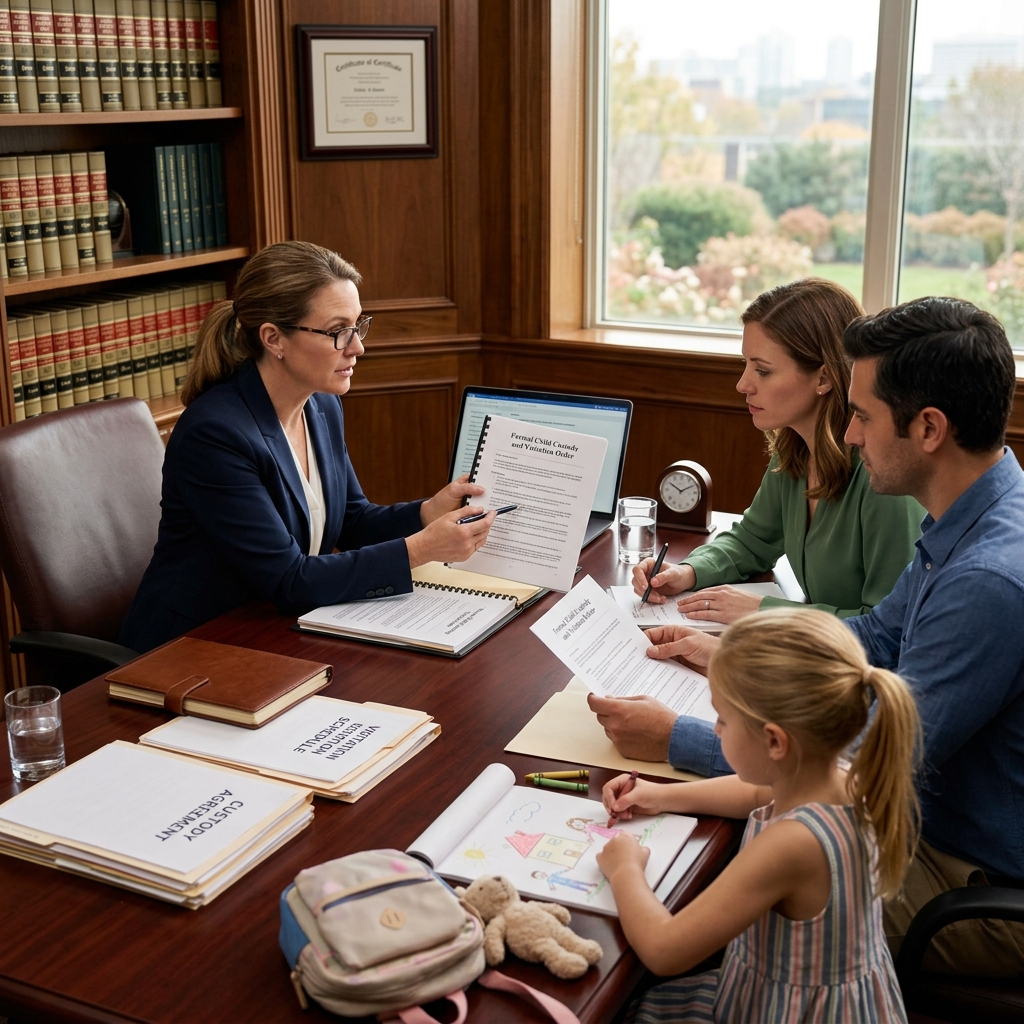
When parents separate or were never together to begin with, informal arrangements about where a child lives and how often each parent sees them may work for a time. However, without a formal court order, those arrangements are fragile and can be difficult to enforce if conflict arises. This article explains why formal custody and visitation orders matter, what they contain, and how the process to obtain, follow, and change them typically works.
Why Formal Custody and Visitation Orders Matter
In many jurisdictions, when there is no existing court order, both legal parents generally have equal rights to make decisions about their child and to spend time with them, regardless of who the child lives with day to day. This can lead to uncertainty and disputes if the parents no longer agree on arrangements.
A formal order issued by a judge creates a clear legal framework. It defines each parent’s rights and responsibilities, provides a schedule or structure for parenting time, and allows courts to intervene if one parent does not comply. The order is centered on the child’s best interests, a guiding standard used across U.S. states and other legal systems to decide custody and visitation outcomes.
Key Benefits of Having a Court Order
- Clarity and predictability about where the child lives, school schedules, holidays, and decision-making authority.
- Enforcement mechanisms if a parent refuses to follow the agreed schedule or interferes with the other parent’s time.
- Protection for the child when safety concerns, abuse, or neglect are alleged, including the possibility of supervised or restricted visitation.
- Stability over time, reducing the child’s exposure to parental conflict and sudden changes.
- Documentation for agencies such as schools, medical providers, and law enforcement about who is authorized to act for the child.
Core Concepts: Custody, Visitation, and Parenting Time
Different states use different terminology, but most systems distinguish between legal authority over a child and the physical residence of the child. California, for example, clearly separates legal custody from physical custody.
| Concept | Typical Meaning |
|---|---|
| Legal custody | Who has the right and responsibility to make major decisions for the child, such as education, health care, and religious upbringing. |
| Physical custody | Where the child lives most of the time and which parent provides day-to-day care. |
| Visitation / parenting time | The schedule or conditions under which the non-residential parent (or both parents) spends time with the child. |
Orders may award joint or sole legal custody, joint or sole physical custody, and a variety of visitation plans. In many states, child support orders also address custody and visitation, so all three issues can be decided together.
Common Types of Visitation Arrangements
Courts and parents can design many different schedules. California’s self-help materials identify several broad types of visitation orders that illustrate the range of possibilities.
- Open or reasonable visitation: Parents have flexibility to arrange visits as they choose, without a detailed fixed schedule.
- Scheduled visitation: The order sets specific days, times, and holiday rotations, providing more structure and predictability.
- Supervised visitation: A third party or professional supervisor must be present during visits, usually due to safety or risk concerns.
- No visitation: In rare situations involving severe risk, a court may temporarily or permanently suspend contact.
When Parents Have No Custody Order
Some parents manage for years without any court involvement. They may develop a routine informally and adjust it as circumstances change. While this can work in low-conflict situations, the absence of an order has important consequences.
Equal Rights, But Few Remedies
When there is no order, the law generally expects parents to cooperate and make arrangements based on their child’s best interests. However:
- Each legal parent typically has equal authority and access rights, even if one parent has been the primary caregiver.
- If one parent suddenly withholds the child from the other, the excluded parent often cannot use enforcement actions like contempt, because there is no order to enforce.
- Informal agreements, even if in writing, may not be enforceable in the same way as a court order.
For many families, the turning point comes when disagreements escalate, major life changes occur (such as relocation), or safety concerns arise. At that stage, filing a court case to obtain formal custody and visitation orders becomes the practical way to protect the child and stabilize the situation.
Starting the Court Process for Custody and Visitation
The procedure to obtain a court order varies by jurisdiction, but several common steps appear across state court self-help resources in places like North Carolina, California, Arizona, and Texas.
1. Determine the Proper Court and Case Type
- Home state requirement: Many states follow rules similar to North Carolina, where custody cases must usually be filed in the child’s “home state” — commonly defined as the state where the child has lived for at least six months before filing.
- County or local court: Within that state, the case is generally filed where the child resides or where one of the parents lives.
- Type of case: Custody and visitation can be addressed in divorce proceedings, separate custody actions, or specialized parent-child relationship suits. For instance, Texas uses a Suit Affecting the Parent-Child Relationship (SAPCR) to establish custody, visitation, and support in various circumstances.
2. Prepare and File Required Forms
Courts typically provide standardized forms and detailed instructions to help people start a custody and visitation case. Examples from Arizona, California, and Texas emphasize the importance of correctly completing and filing these documents.
- Forms often include a petition or complaint explaining what orders the parent is requesting, a summons, and cover sheets required by the local court.
- Parents must sign the forms, pay filing fees, or request a fee waiver if they cannot afford the costs.
- Copies are made for the court, the other parent, and sometimes the state attorney general if support issues are involved.
3. Serving the Other Parent
Due process requires that the other parent receive official notice of the case. Courts provide structured methods for serving papers.
- Service by sheriff, process server, or, in some cases, certified mail is common.
- The serving party typically cannot be the parent who filed the case.
- After service, the court can proceed only once proof of service is filed, confirming that the other parent has been properly notified.
4. Response, Hearings, and Temporary Orders
After service, the other parent usually has a specific period (for example, 20–30 days) to file a response. During this phase, several things can happen:
- Response filed: The other parent states whether they agree or disagree and may propose alternative terms.
- Temporary orders: Courts can issue short-term custody and visitation orders pending a full hearing, especially when immediate stability is needed.
- Mediation or parenting conferences: Some courts require parents to attempt alternative dispute resolution before a full trial, focusing on settlement and parenting plans.
If the parents reach agreement on a parenting plan that the judge finds to be in the child’s best interests, the plan can be incorporated into a court order. If they cannot agree, a judge will hold a hearing and make decisions after considering the evidence.
What Judges Consider: The Best Interests of the Child
Across state guidance, the best interests of the child standard governs custody and visitation decisions. While specific factors differ by jurisdiction, several themes appear consistently.
- Child’s age and health: Very young children and those with special medical or developmental needs may require particular arrangements.
- Emotional ties: Courts look at the quality of the child’s relationships with each parent and sometimes with siblings or other caregivers.
- History of caregiving: Who has been responsible for daily care — such as feeding, schooling, medical appointments, and extracurricular activities — can influence custody decisions.
- Home environment and stability: Judges evaluate the stability, safety, and appropriateness of each parent’s home.
- Safety concerns: Allegations of abuse, neglect, substance misuse, or domestic violence are taken very seriously and may lead to supervised or limited contact.
- Willingness to support the child’s relationship with the other parent: Some jurisdictions consider whether a parent promotes ongoing contact between the child and the other parent, rather than obstructing it.
In certain cases, especially involving older children, courts may take the child’s preferences into account, though the weight given to a child’s wishes varies by age and jurisdiction.
Enforcing Custody and Visitation Orders
Once an order is in place, both parents must follow it. If one parent fails to comply — for example, by denying scheduled visitation or ignoring the child’s return time — the other parent can use legal enforcement tools, which differ by state.
Common Enforcement Tools
- Contempt or order to show cause: A parent can ask the court to hold the other parent in contempt for violating the order, potentially leading to fines, make-up parenting time, or other sanctions.
- Registration of out-of-state orders: If a custody or visitation order was issued in another state, some courts (such as in New Jersey) allow registration and enforcement of that order locally.
- Coordination with child support agencies: In states like Texas, support agencies help enforce support orders and may also facilitate enforcement of visitation provisions tied to those orders.
Importantly, child support and visitation are usually treated as separate obligations. For example, guidance in Texas emphasizes that the custodial parent must follow the visitation schedule even if the other parent is unable to pay support. Conversely, a parent may not lawfully withhold support simply because visits are being blocked; both parts of the order remain in force until changed.
Changing Existing Custody or Visitation Orders
Custody and visitation orders reflect the situation at the time they are issued. Over years, circumstances may change significantly: parents move, children grow older, schedules shift, or new risks appear. Most systems allow modification of existing orders when substantial changes arise, but they require a formal process.
Grounds for Modification
Guidance from courts like the North Carolina Judicial Branch illustrates common criteria for changing permanent custody orders.
- Substantial change in circumstances since the original order, such as relocation, persistent conflict, or changes in the child’s needs.
- Impact on the child demonstrating that the old arrangements no longer serve the child’s best interests.
- Evidence of noncompliance or harm, like repeated refusal to follow the schedule or credible allegations of abuse or neglect.
Procedurally, parents usually file a motion to modify, serve the other parent, and attend another hearing. Temporary orders can sometimes be adjusted more easily than permanent ones, but the best-interests standard continues to guide the judge’s decisions.
Special Situations: Safety and Emergency Protection
When there is an immediate risk to a child’s safety, courts and child protection agencies offer additional tools beyond standard custody and visitation cases. Resources like Texas Law Help outline several emergency measures.
- Temporary Restraining Orders (TROs): In urgent situations, a TRO can temporarily restrict a parent’s contact with the child or require specific protective steps until a full hearing occurs.
- Protective orders: In cases involving domestic violence, physical abuse, or sexual abuse, protective orders can impose stricter limitations and safeguards.
- Reports to child protection agencies: Anyone who suspects abuse or neglect can make a report to the appropriate child protection service, which then investigates and may initiate court cases as needed.
These tools may be used together with custody and visitation proceedings to ensure the child remains safe while long-term arrangements are developed.
Practical Tips for Parents Navigating Custody and Visitation
Although the legal framework can feel complex, parents can take practical steps to handle custody and visitation issues more effectively:
- Document agreements and schedules clearly, even before a court case, to reduce misunderstandings.
- Use parenting plans that spell out daily routines, communication methods, and holiday schedules; courts like California’s recommend detailed plans in the child’s best interests.
- Keep records of significant events, missed visits, or safety concerns to provide accurate information if a dispute reaches court.
- Seek legal information or advice from reliable sources, including official court self-help guides, legal aid organizations, or licensed attorneys.
- Focus discussions on the child’s needs, not on parental grievances, to increase the chance of reaching workable agreements.
Frequently Asked Questions (FAQs)
Do I need a custody order if we already agree on everything?
No law generally forces separated parents to get a custody order if they agree on arrangements. However, without an order, your agreement may be hard to enforce if circumstances change or a dispute arises. Many legal guides recommend obtaining a formal order to protect the child and both parents in the long term.
Can non-parents, such as grandparents, get custody or visitation?
In some states, non-parents can seek custody or visitation, but the legal threshold is higher. For example, North Carolina guidance explains that non-parents must show that the parents are unfit or have acted inconsistently with their parental rights, such as abandoning the child. These rules vary, so local law or legal advice is important.
What if the other parent violates the visitation schedule?
If a parent repeatedly ignores the order, the other parent can ask the court to enforce it, often through contempt proceedings or similar motions. Courts may order make-up time, fines, or other remedies. When no order exists, these enforcement options are usually unavailable.
Is child support tied to custody and visitation?
Child support, custody, and visitation are often addressed in the same court process or order. However, they remain legally distinct: a parent generally may not refuse visitation because support is unpaid, nor stop paying support due to visitation problems. Both obligations must be followed until formally modified.
How do I change an existing custody order?
To change a permanent custody order, you usually must file a motion to modify in the court that issued the order and show that circumstances have substantially changed and that modifying the order would serve the child’s best interests. Temporary orders may be adjusted more easily, but a formal process is still required.
References
- Child custody and parenting time — Judicial Council of California. 2023-08-01. https://selfhelp.courts.ca.gov/child-custody
- Child Custody — North Carolina Judicial Branch. 2023-06-15. https://www.nccourts.gov/help-topics/family-and-children/child-custody
- Parents’ Rights When No Custody Orders Exist — TexasLawHelp.org. 2022-11-10. https://texaslawhelp.org/article/parents-rights-when-no-custody-orders-exist
- Guides: Child Custody & Support — Texas State Law Library / TexasLawHelp.org. 2022-10-05. https://guides.sll.texas.gov/child-custody-and-support
- Filing for Legal Decision-Making and Parenting Time (Child Custody) — Arizona Courts Help. 2023-02-20. https://azcourthelp.org/browse-by-topic/custody-information/process-ldmpt
- How Child Support Works — Office of the Attorney General of Texas. 2023-04-30. https://www.texasattorneygeneral.gov/child-support/get-started/how-child-support-works
- Frequently Asked Questions (Access and Visitation) — Texas Access. 2022-09-01. https://txaccess.org/faq
Similar Articles








Read full bio of medha deb


