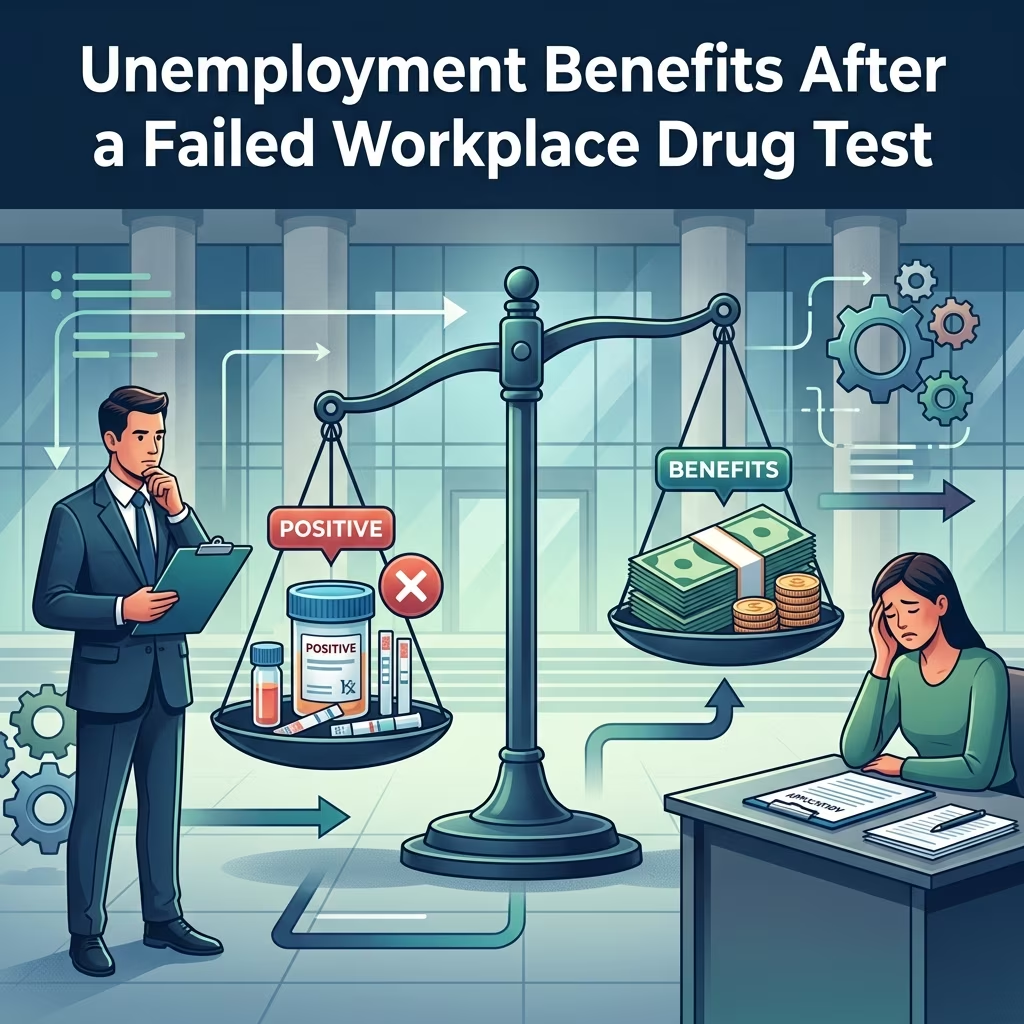
Being dismissed from a job after failing a workplace drug test raises urgent questions about income, reputation, and future employment. One of the first concerns many workers have is whether they can still receive unemployment insurance benefits after such a termination. The answer is not simple: it depends heavily on state law, how the test was administered, and whether the situation is legally classified as misconduct.
This article explains how unemployment insurance works, why failed drug tests often lead to benefit denials, and what options a worker may have for challenging a decision. It draws on general principles of U.S. unemployment law and examples from specific states to help you understand the framework that may apply to your case.
Unemployment Insurance Basics: Loss of Work “Through No Fault of Your Own”
Unemployment insurance is a joint federal–state program intended to provide temporary cash support to workers who lose their jobs through no fault of their own. States administer their own systems, but most follow the same core rule: if the worker was fired for misconduct connected with the job, benefits can be denied or reduced.
Key features of unemployment insurance include:
- It pays partial wage replacement for a limited period after job loss.
- Eligibility depends on prior earnings, separation reason, and continued availability for work.
- Workers fired for serious rule violations or intentional misconduct generally do not qualify.
Whether a failed drug test counts as misconduct is typically defined in state statutes, regulations, or case law. In many jurisdictions, a confirmed positive test or a refusal to test, when done under a valid workplace program, is treated as misconduct and can disqualify the worker from benefits.
How Failed Drug Tests Are Linked to Misconduct
Employers use drug and alcohol testing for a range of reasons: safety, productivity, compliance with federal requirements, or participation in state “drug-free workplace” programs. When an employee fails a test and is terminated, the employer may argue that the employee violated a clear rule and therefore engaged in misconduct.
Common features of workplace drug policies include:
- Written policies explaining prohibited conduct and the consequences of violations.
- Notice to employees via handbooks, onboarding documents, or posted rules.
- Testing procedures that follow state and federal guidelines, including confirmation testing by certified laboratories.
- Access to an employee assistance program or counseling where required by law.
Some state laws explicitly state that refusal to undergo a test or a confirmed positive result obtained under compliant procedures is misconduct that disqualifies a worker from unemployment benefits. In these states, employers attempting to block benefits must typically prove that they complied with all statutory testing requirements.
State-by-State Differences: Why Location Matters
Because unemployment insurance is primarily governed by state law, the impact of a failed drug test on benefits eligibility differs significantly based on where you worked. The federal oversight sets broad standards, but each state defines misconduct and testing compliance in its own way.
Important state-level differences include:
- Whether a failed drug test is automatically considered misconduct.
- Whether a written drug policy and proof of notice to employees are required.
- What documentation employers must provide (lab reports, chain of custody, medical review officer certification).
- Additional penalties, such as needing to earn a certain amount at a new job before regaining eligibility.
For example:
- Some states treat a positive test obtained through fully compliant procedures as misconduct per statute, making denial of benefits more likely.
- In other states, workers may still qualify if the employer did not follow every legal step in the testing process or failed to give proper notice of its drug policy.
Because of these variations, workers should not assume that a failed test automatically ends their rights to unemployment. Instead, they should carefully evaluate how their state defines misconduct and what procedural protections exist.
Typical Reasons Benefits Are Denied After a Failed Test
When a worker applies for unemployment after being terminated, the state agency investigates the reason for separation. If the employer contests the claim and points to a failed drug test, the agency may review evidence and decide whether the discharge constitutes misconduct.
Benefits are commonly denied when:
- The employer has a clear written drug policy, the worker received it, and the policy states that violation can result in termination.
- A confirmed positive test is documented by a certified laboratory.
- The employer followed required procedures for collection, chain of custody, and review by a medical professional.
- The worker’s position was safety-sensitive, making drug use particularly serious.
Under these circumstances, many states consider the worker to have been discharged for misconduct. As a result, benefits may be completely denied or delayed for a specified period.
Situations Where You May Still Qualify for Benefits
Even if you failed a drug test, you might still be eligible for unemployment benefits in some situations. Eligibility depends on the specific facts of your case and how state law treats those facts.
Potential circumstances where benefits may still be available include:
- Procedural errors in testing: The employer did not follow required chain-of-custody, confirmation, or notice procedures.
- Lack of a valid policy: The employer does not have a written drug policy, or never provided you with a copy.
- Use of prescribed medication: The positive result was caused by a lawful prescription taken under medical supervision, and this was not properly considered.
- Unreliable test results: There are questions about the lab’s methods, contamination, or other issues that cast doubt on accuracy.
- No clear link to misconduct: The circumstances do not meet the legal definition of misconduct under your state’s law.
In these cases, the unemployment agency or a hearing officer may find that the termination, while related to a drug test, does not legally amount to disqualifying misconduct. The worker may then be allowed to receive benefits.
Employer Evidence Requirements
When employers contest unemployment claims based on failed drug tests, they must typically meet certain evidentiary standards. State rules usually require employers to provide documentation proving that the test was properly administered and that the employee knowingly violated an established rule.
Examples of documentation that may be required include:
- Lab reports showing a confirmed positive result.
- Chain-of-custody forms documenting each step from collection to testing.
- Certification from a medical review officer that testing procedures met required standards.
- The written workplace drug policy and evidence it was distributed to employees.
- Records demonstrating an employee assistance program, when mandated by law.
If employers fail to produce adequate documentation or cannot show compliance with legal testing standards, the unemployment agency may decide that the worker has not been proven to have engaged in misconduct, opening the door to benefits.
Appealing a Denial of Unemployment Benefits
Workers who are denied unemployment benefits after a failed drug test generally have the right to file an appeal and request a hearing. State rules set strict deadlines for lodging appeals, so timing is critical.
Typical steps in the appeals process include:
- Reviewing the denial notice and identifying the stated reason (e.g., misconduct due to failed drug test).
- Submitting a written appeal within the timeframe specified by state law.
- Preparing for a hearing where both worker and employer can present evidence and testimony.
At the hearing, the employer must usually prove that the test was valid, properly conducted, and that the worker knowingly violated the policy. The worker may respond by:
- Requesting copies of the lab report and confirmation test results.
- Challenging reliability or procedural compliance.
- Explaining prescription drug use or other medical factors.
- Arguing that the facts do not meet the legal standard of misconduct.
It is often helpful for workers to consult an employment attorney or legal aid clinic familiar with local unemployment procedures, especially when complex testing issues or medical explanations are involved.
Practical Strategies for Workers After a Failed Drug Test
If you have lost your job because of a failed drug test and are concerned about unemployment benefits, several practical steps can help you protect your interests.
- Request copies of documents: Ask for the company’s drug policy, test results, and any notices you received.
- Verify prescription information: Obtain written confirmation from your healthcare provider if lawful medication may have affected the test.
- File your unemployment claim promptly: Do not delay in applying, even if you suspect the employer will contest the claim.
- Respond quickly to denial notices: Use your state’s appeal process within the deadlines provided.
- Seek legal advice: Consult an attorney or legal aid office experienced in employment and unemployment law.
Drug Testing and Unemployment: Policy and Debate
The intersection of drug testing and unemployment benefits has been the subject of policy debates and legislative proposals in several states. Some measures aim to incorporate drug testing into unemployment compensation systems or limit benefits when applicants fail tests related to job training or offers.
Critics raise concerns about privacy, due process, and whether these policies unfairly penalize workers already facing economic hardship. Supporters argue that linking benefits to drug-free status promotes workplace safety and responsible use of public funds.
Regardless of the policy debate, current law in most states focuses on whether the worker lost their job because of misconduct. The central question is still whether the failed drug test, under the facts of the case, qualifies as misconduct connected to the work and whether testing rules were properly followed.
Illustrative Comparison: When a Failed Test May or May Not Disqualify
| Scenario | Key Factors | Likely Impact on Unemployment |
|---|---|---|
| Employee fails a drug test under a clear, written policy and is terminated from a safety-sensitive job. | Confirmed lab result; chain-of-custody documented; policy acknowledged by employee. | Often treated as misconduct; benefits frequently denied, subject to state law. |
| Employee fails a test, but the employer has no written policy or never provided it to the employee. | Policy notice unclear; testing procedures may not meet statutory standards. | Worker may still qualify; denial can be overturned if compliance is lacking. |
| Positive result caused by properly prescribed medication taken according to medical directions. | Documented prescription; medical explanation; lab confirmation supports this interpretation. | Depending on state law, may not be misconduct; potential eligibility for benefits. |
| Worker refuses to undergo a required test after a workplace incident. | Refusal violates a clear policy tied to safety or federal regulations. | Many statutes treat refusal as misconduct; benefits likely denied if procedures were lawful. |
Frequently Asked Questions (FAQs)
1. Does a failed drug test always mean I cannot get unemployment?
No. In many states, a failed test can be considered misconduct, which may disqualify you, but eligibility depends on whether the employer followed required procedures and how your state defines misconduct.
2. What if I was taking a legally prescribed medication?
If a positive result was caused by prescribed medication, this may affect whether your discharge qualifies as misconduct. You may be able to present medical records and explanations during an unemployment appeals hearing.
3. Can I appeal if my benefits are denied due to a failed drug test?
Yes. Most states provide a right to appeal and request a hearing. You must file the appeal within set deadlines and can use the hearing to challenge the test’s validity, the employer’s procedures, and the characterization of misconduct.
4. What documentation should I obtain from my employer?
Seek copies of the workplace drug policy, proof you received it, test results, confirmation reports, and any communications regarding the testing process. These documents may be important in proving whether the employer complied with legal standards.
5. Do unemployment offices themselves require drug testing?
Generally, unemployment agencies do not routinely drug test benefit recipients. Instead, the focus is on whether a worker lost their job due to misconduct, which may include failed tests under workplace policies.
References
- Unemployment Insurance: A Guide to Collecting Benefits — U.S. Department of Labor. 2023-05-01. https://www.dol.gov/general/topic/unemployment-insurance
- Can I Collect Unemployment if I Get Fired After a Positive Drug Test? — Chron / Houston Chronicle. 2019-08-12. https://work.chron.com/can-collect-unemployment-fired-after-positive-drug-test-6253.html
- Unemployment Benefits? But He Failed a Drug Test! — McAfee & Taft (Employment Law Article). 2016-03-30. https://www.mcafeetaft.com/unemployment-benefits-but-he-failed-a-drug-test/
- Failed a Drug Test and Denied Unemployment Benefits in North Carolina? Here’s What You Need to Know — AppealTheDecision.com. 2022-04-14. https://www.appealthedecision.com/failed-a-drug-test-and-denied-unemployment-benefits-in-north-carolina-heres-what-you-need-to-know/
- HB 394 – Drug Testing for Unemployment Compensation (2015–2016) — ACLU of Ohio. 2016-02-10. https://www.acluohio.org/legislation/hb-394-drug-testing-unemployment-compensation-2015-2016
- Failed Drug Test Could Mean End to Unemployment Benefits — WIS News 10. 2012-03-29. https://www.wistv.com/story/17313238/failed-drug-test-could-mean-end-to-unemployment-benefits/