
Toxic Workplace: 7 Clear Signs And Fixes Employers Need Today
A practical guide to the conditions that quietly turn healthy teams into high-stress workplaces.
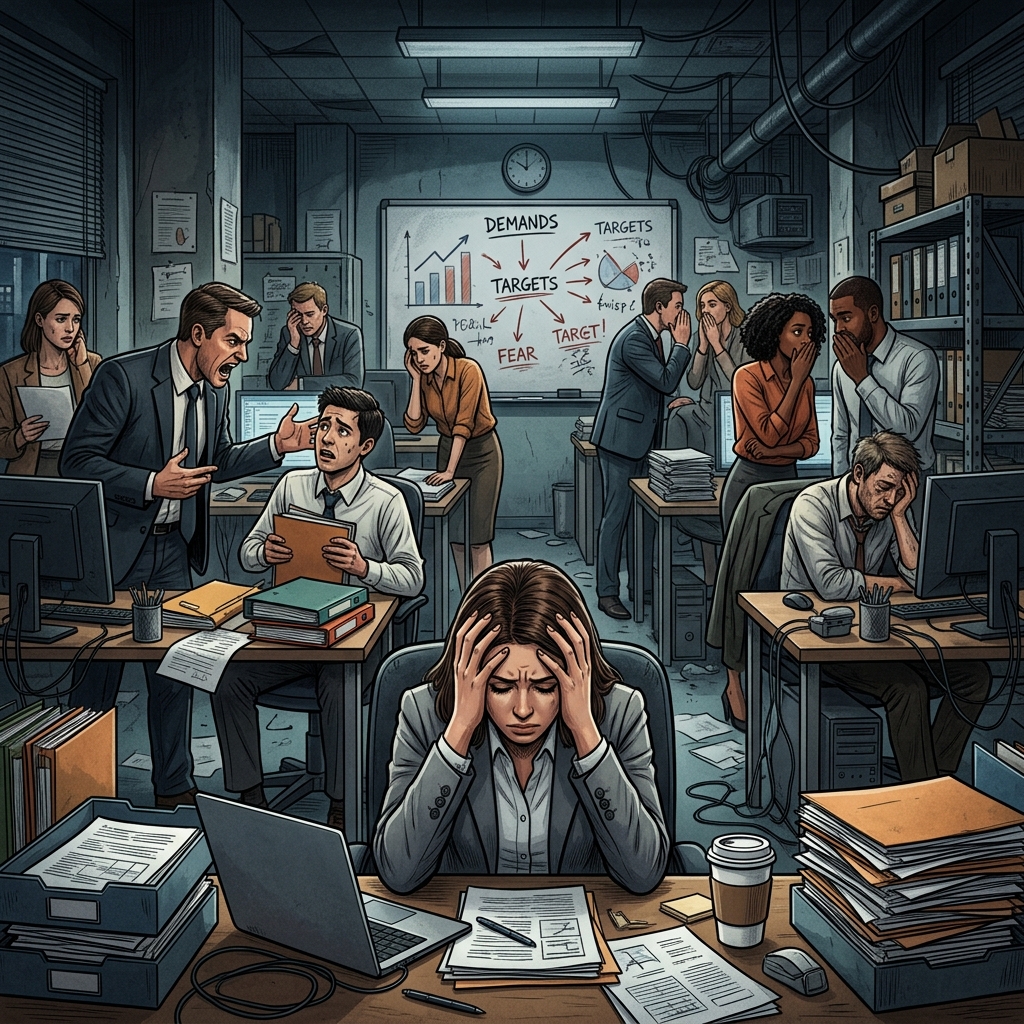
Understanding What Makes a Workplace Toxic
A toxic workplace is not defined by a single argument, difficult employee, or stressful week. It is a pattern of behaviors and management choices that repeatedly make work feel unsafe, unfair, or demoralizing. When these conditions become routine, employees may disengage, trust breaks down, and turnover often rises.
Many organizations assume toxicity begins with a few bad personalities. In reality, the problem often develops when communication, accountability, workload, leadership, and culture all fail at the same time. That combination can make even ordinary business pressure feel unbearable.
- Toxicity is usually systemic. It grows when harmful behavior is tolerated or rewarded.
- Culture matters. The daily norms of a workplace often shape employee experience more than written policies do.
- Leadership sets the tone. Managers influence whether people feel respected, informed, and supported.
The sections below explain the most common conditions that create a toxic work environment and why each one matters.
1. Communication Breakdowns That Leave People in the Dark
Poor communication is one of the fastest ways to damage trust. When employees do not know what is expected of them, why decisions are being made, or how performance is being judged, uncertainty fills the gap. That uncertainty often turns into rumors, frustration, and blame.
Communication problems are not limited to missing announcements. They also include inconsistent instructions, contradictory messages from leaders, and a lack of meaningful feedback. Employees may spend more time guessing what management wants than actually doing their jobs.
Common warning signs include:
- Unclear priorities or shifting deadlines
- Feedback that is rare, vague, or purely negative
- Important decisions made without explanation
- Different managers giving conflicting directions
Over time, weak communication creates an atmosphere where employees feel excluded rather than informed. That feeling of exclusion can make even a capable team appear disorganized and distrustful.
2. Leadership That Uses Fear Instead of Support
Leadership style has a direct effect on workplace health. A manager who leads through intimidation, public criticism, or constant suspicion can turn ordinary pressure into chronic stress. Employees in that environment may stop asking questions, stop offering ideas, and stop admitting mistakes.
Fear-based leadership often looks efficient on the surface because people stay quiet and comply quickly. But that silence usually signals caution, not commitment. When employees believe every error will be punished, they hide problems until they become larger and more expensive.
A healthier leadership approach includes accountability without humiliation. Managers do not need to avoid hard conversations, but they do need to handle them with consistency and respect.
| Fear-Based Leadership | Healthy Leadership |
|---|---|
| Uses blame to control behavior | Uses coaching and clear expectations |
| Discourages honest mistakes | Treats mistakes as opportunities to improve |
| Creates anxiety and silence | Encourages questions and communication |
| Focuses on punishment | Focuses on performance and growth |
3. Unfair Treatment and Favoritism
Few things damage morale faster than the perception that rules do not apply equally. When promotions, schedules, rewards, or discipline appear to depend on personal loyalty rather than performance, employees begin to view the workplace as rigged. That belief can be just as harmful as actual unfairness because it shapes how people interpret every decision.
Favoritism often appears in subtle forms. One employee may receive better assignments, more flexibility, or more forgiveness for mistakes simply because of a personal relationship with a supervisor. Others may notice that certain people are always protected, while the rest of the team is held to a stricter standard.
Signs of unequal treatment can include:
- Inconsistent discipline for similar conduct
- Opportunities given repeatedly to the same inner circle
- Performance reviews that seem disconnected from actual results
- Different expectations for different employees without a valid reason
Fairness does not mean every employee is treated identically. It means decisions are based on legitimate business reasons and explained clearly enough that people can understand them.
4. Workloads That Never Stop Growing
Excessive workload is another major source of toxicity. A demanding period can be manageable when it is temporary and well supported. It becomes harmful when overwork is normalized and people are expected to absorb more responsibilities without additional time, training, or staffing.
In overloaded workplaces, employees may feel they are always behind before the day even starts. They may skip breaks, work through illness, or stay late just to keep up. Eventually, exhaustion begins to affect quality, focus, and morale.
Workload toxicity is often reinforced by unrealistic messages such as “this is just how we work” or “everyone is expected to do more with less.” Those phrases can disguise a structural staffing problem as a character test.
- Constant urgency becomes the default setting
- Employees are praised for burnout-level effort
- Quality declines because speed is valued above all else
- People feel guilty for taking time off
Healthy organizations monitor workload before burnout becomes widespread. They adjust expectations when demands exceed capacity instead of treating exhaustion as proof of commitment.
5. A Culture That Tolerates Disrespect
A workplace becomes toxic when disrespect is excused, minimized, or ignored. This can include yelling, sarcasm, public humiliation, gossip, exclusion, or any behavior that routinely makes people feel small or unsafe. Even if the conduct is not severe enough to trigger formal discipline every time, repeated disrespect still erodes trust.
Culture is shaped by what a workplace permits. If leaders ignore rude behavior from strong performers, others learn that productivity matters more than decency. If gossip spreads without correction, employees may stop speaking openly. If cliques control access to information or influence, the environment can become hostile even without obvious confrontation.
Disrespect can take many forms:
- Interrupting or dismissing coworkers during meetings
- Mocking mistakes instead of addressing them constructively
- Spreading rumors or private information
- Excluding employees from discussions that affect their work
A respectful culture does not eliminate conflict. It creates standards for handling conflict without humiliation or personal attacks.
6. No Path for Growth or Recognition
Employees are more likely to disengage when they see no future in the organization. A workplace can become toxic when people feel stuck, overlooked, or invisible. This often happens when promotion opportunities are unclear, development is unsupported, or good work goes unnoticed for too long.
Lack of growth does not only affect ambitious employees. Most people want to know that their effort matters and that the organization is willing to invest in them. When that expectation is repeatedly unmet, motivation declines.
Common signs include:
- Training is available only after problems arise
- Managers rarely discuss career development
- High performers receive more work but not more opportunity
- Recognition is inconsistent or absent
Recognition does not need to be elaborate. Clear feedback, fair advancement criteria, and regular development conversations can make a substantial difference in how employees experience their jobs.
7. Weak Accountability at the Top
A toxic workplace often develops when leadership is held to a different standard than everyone else. If executives or managers ignore the rules they impose on staff, employees quickly notice. That double standard can create cynicism and encourage others to follow the same pattern.
Accountability problems may show up when leaders take credit for team success but blame employees for setbacks. They may also appear when complaints about leadership behavior are never investigated or when consequences are applied selectively.
When accountability is weak, employees may conclude that performance standards are negotiable. That belief can damage discipline, teamwork, and confidence in the organization’s fairness.
| Accountability Failure | Result |
|---|---|
| Leaders ignore policy violations by favored staff | Employees lose trust in rules |
| Managers blame teams for structural problems | Morale and honesty decline |
| No consequences for repeated misconduct | Bad behavior becomes normalized |
| Complaints are never resolved | People stop reporting issues |
How Employers Can Reduce Toxicity
Fixing a toxic environment requires more than a one-time speech or a new handbook page. Employers need to examine how policies operate in practice and whether managers are enforcing them consistently.
- Clarify expectations so employees know what good performance looks like
- Train managers to give feedback without hostility or favoritism
- Review workload patterns to identify chronic overload
- Respond to complaints promptly and document the response process
- Reward respectful behavior, not only high output
- Create real opportunities for development and internal mobility
Organizations should also listen for patterns in employee feedback. One complaint may point to a single interpersonal issue, but repeated complaints about the same manager, team, or process often reveal a deeper structural problem.
FAQ: Toxic Workplace Conditions
What is the most common cause of a toxic workplace? The most common cause is a combination of poor communication, weak leadership, and inconsistent accountability rather than one isolated bad actor.
Can a toxic workplace exist even if no one is openly abusive? Yes. Chronic confusion, favoritism, overwork, and exclusion can create a harmful environment even without obvious shouting or harassment.
Is high turnover always a sign of toxicity? Not always, but if employees frequently leave and give similar reasons related to stress, disrespect, or unfair treatment, the workplace may have deeper problems.
What should employers prioritize first? Employers should start with leadership behavior, communication standards, and fairness in decision-making because those factors shape daily employee experience most directly.
Can a toxic workplace be fixed? Yes, but only if leaders acknowledge the problem, accept accountability, and make consistent changes over time.
Final Thoughts for Employers
A toxic workplace rarely appears overnight. It usually develops through repeated small failures that become normal: unclear messages, unfair treatment, relentless pressure, and disrespect that goes unchallenged. Once those habits are embedded in the culture, employees may stop trusting the organization to protect their time, dignity, or growth.
Employers that want a healthier environment should focus on the conditions that shape everyday work. That means creating clarity, enforcing fairness, supporting managers, and addressing harmful behavior before it spreads. A workplace built on consistency and respect is not only better for employees; it is also more stable, productive, and resilient.
References
- Toxic work environments: 15 factors that create a toxic workplace — The Predictive Index. 2024-01-01. https://www.predictiveindex.com/blog/toxic-work-environments-15-signs-of-workplace-toxicity/
- Toxic workplaces leave employees sick, scared, and looking for an exit — American Psychological Association. 2023-01-01. https://www.apa.org/topics/healthy-workplaces/toxic-workplace
- How Toxic Workplace Environment Effects the Employee Engagement — PubMed Central. 2021-03-03. https://pmc.ncbi.nlm.nih.gov/articles/PMC7956351/
- How to Spot a Toxic Work Environment — UC Berkeley Executive Education. 2024-01-01. https://executive.berkeley.edu/thought-leadership/blog/how-spot-toxic-work-environment
- Characteristics of Toxic Work Environment and How to Deal with It — Sun Life Indonesia. 2024-01-01. https://www.sunlife.co.id/en/life-moments/starting-my-career/ciri-ciri-lingkungan-kerja-toxic/
Similar Articles








Read full bio of Sneha Tete




