
Voting After a Criminal Conviction in the United States
Understand when a criminal conviction affects your right to vote, how rules differ by state, and practical steps to restore your voting eligibility.
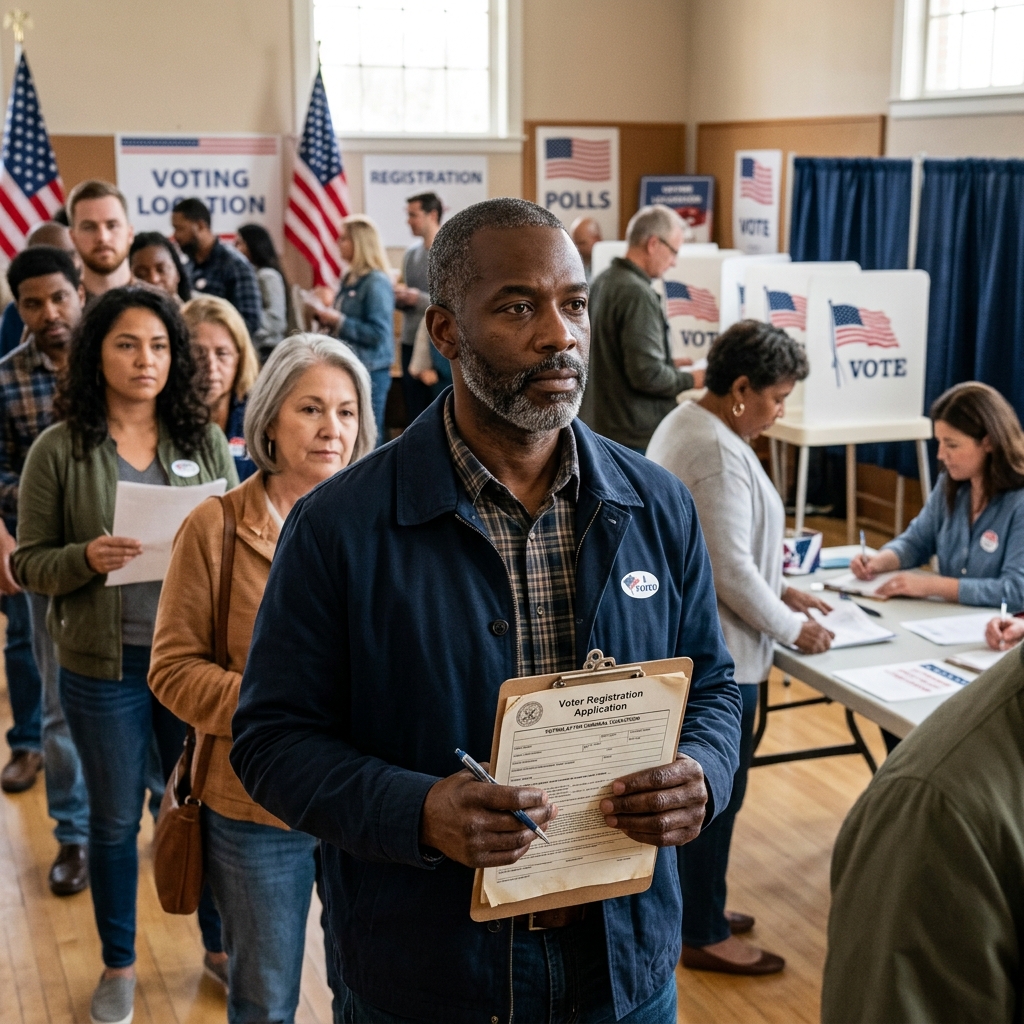
In the United States, a criminal conviction can affect a person’s right to vote, but the impact varies dramatically depending on the state where the conviction occurred and where the person now lives.[10] Many people with past convictions assume they are permanently barred from voting when, in fact, they may already be eligible to register and cast a ballot. This article explains the basic concepts, highlights major differences among states, and outlines practical steps to check and restore voting rights.
1. Key Concepts: How Criminal Convictions Affect Voting
Most voting restrictions for people with criminal records involve felony disenfranchisement, meaning the loss or suspension of voting rights because of a felony conviction. Misdemeanor convictions, by contrast, rarely lead to a loss of voting rights. Understanding the distinction between felony and misdemeanor is the starting point for figuring out whether a person can vote.
- Felony convictions can lead to temporary or permanent loss of voting rights, depending on the state.[10]
- Misdemeanor convictions almost never result in disenfranchisement; most states allow people with only misdemeanors to vote as long as they meet general eligibility requirements.
- Completion of sentence usually includes incarceration, probation, parole, and may include payment of fines, fees, and restitution.
- Restoration of rights can be automatic, application-based, or require a pardon or clemency in some states.
Because state laws define who can vote in state and federal elections, people with criminal convictions must look at the rules of the state where they plan to register.[10]
2. The Spectrum of State Approaches
There is no single national policy on voting after a conviction. Instead, every state sets its own rules, creating a patchwork system across the country.[10] The approaches generally fall into several broad categories.
2.1 States with No Disenfranchisement for Felonies
A few jurisdictions allow people to vote even while incarcerated and do not restrict voting after completion of a sentence. These places treat voting as a right that remains intact regardless of criminal conviction.
- People in prison may vote using absentee ballots.
- No special restoration process is required after release.
2.2 States That Restore Voting Rights After Sentence Completion
Most states restore voting rights once the felony sentence has been fully completed.[10] However, states may define “completion” differently. Some include financial obligations as part of the sentence, while others focus only on incarceration and supervision.
| State Example | Basic Rule for Felony Convictions |
|---|---|
| Florida | Voting rights restored for most felonies after completion of all terms of sentence, including incarceration, supervision, and full payment of fines, fees, and restitution. Certain offenses (murder, sexual crimes) require clemency. |
| Iowa | Executive Order restores rights automatically for most felonies upon discharge of sentence; homicide-related crimes remain excluded and require application. |
| Georgia | Right to vote is automatically restored once the felony sentence is completed and the person is “off paper” (no longer on probation or parole). Re-registration is required. |
| California | Once a person has finished serving their term in state or federal prison, their right to vote is restored; they must register again to vote. |
In these states, people who have completed their sentences but never re-registered may be able to vote simply by updating their registration.
2.3 States Requiring Individual Applications or Clemency
Some states do not automatically restore voting rights. Instead, people must go through a formal application or clemency process to regain the ability to vote. These processes can involve paperwork, eligibility checks, and sometimes hearings.
- Clemency board or governor petition: A person applies for restoration of rights or a pardon to regain voting eligibility.
- Certificates of restoration: The state issues a formal document verifying that rights have been restored.
- Special exclusions: Some serious offenses, such as murder or treason, may be excluded from automatic restorations and always require individual review.
2.4 Permanent Disenfranchisement in Some Cases
A small number of states permanently bar some individuals with specific felony convictions from voting unless they obtain clemency or a similar extraordinary remedy. These rules often target serious or violent offenses.
Importantly, even in states with permanent bans, individual restoration may still be possible through application processes.
3. General Eligibility: Who Can Vote Despite a Criminal Record?
While details vary, people can often vote if they meet the general voting eligibility requirements and are not currently disqualified by state law.[10] Typical requirements include being a U.S. citizen, of voting age, and a resident of the state where they register.
- Having only misdemeanor convictions usually does not prevent voting.
- Being off paper—meaning no longer incarcerated, on probation, or on parole—often triggers restoration of rights.
- Even individuals on felony first offender or similar alternative sentences may be eligible in some states if the status has not been revoked.
Because misconceptions are common, advocacy organizations estimate that millions of people with past convictions nationwide are eligible to vote but do not realize it. Checking eligibility directly with state authorities or trusted legal resources is therefore crucial.
4. Financial Obligations: Fines, Fees, and Restitution
In some states, voting rights are tied not only to incarceration or supervision, but also to whether a person has satisfied court-imposed financial obligations. These can include fines, court costs, fees, and restitution to victims.
4.1 When Payments Matter
States such as Florida and Iowa explicitly include financial obligations as part of “completion of sentence” in many circumstances.
- A person may need to pay all fines, fees, and restitution before being considered to have completed their sentence.
- Some states allow restoration if the person is current on a payment plan, even if the entire amount has not yet been paid.
- Failure to resolve financial obligations can delay or block voting rights restoration.
4.2 How to Verify Financial Status
People trying to determine whether they have fulfilled their financial obligations can typically take these steps:
- Review sentencing orders and court judgments to identify the total amount owed.
- Ask court clerks, probation offices, or collections agencies for payment records.
- Confirm whether any outstanding balances remain or whether a payment plan has been approved.
Because rules differ and may change over time, contacting the relevant state agency (such as the department of corrections or elections) is often the safest way to confirm status.
5. Special Categories and Exceptions
Some states distinguish between types of offenses when deciding whether and how voting rights may be restored. These distinctions usually focus on the perceived severity or nature of the crime.
- Violent crimes: Homicide-related offenses, certain violent felonies, or crimes involving serious physical harm may be excluded from automatic restoration policies.
- Election-related or public corruption crimes: Offenses like voter fraud, bribery, or misconduct involving public officials may require special processes, reflecting concern about the integrity of elections.
- Sex offenses or murder: Some states keep these categories under permanent or discretionary bans, allowing restoration only through clemency or similar processes.
Because these exceptions can be highly specific, individuals with convictions in these categories often need personalized legal advice or direct guidance from state agencies.
6. Practical Steps to Check and Restore Your Voting Rights
Anyone with a criminal conviction who wants to vote should follow a structured process to avoid incorrect assumptions and missed opportunities. The general steps below apply in many states, even though the details differ.[10]
6.1 Clarify Your Record
- Identify whether your conviction(s) are felonies, misdemeanors, or both.
- List the states where you were convicted and where you currently live.
- Confirm whether you are still incarcerated, on probation, on parole, or fully discharged.
6.2 Check Your State’s Rules
- Visit your state election authority’s website (often the Secretary of State or Division of Elections) for official guidance on voting with criminal convictions.
- Use state or nonprofit tools that help residents determine eligibility with a series of questions about their record.[10]
- Look for information specific to your type of offense if you have convictions for violent crimes or election-related offenses.
6.3 Confirm Completion of Sentence
- Verify that all incarceration, probation, and parole terms are complete.
- Determine whether your state requires payment of fines, fees, and restitution, and if so, whether these financial obligations are fully paid or in a court-approved payment plan.
6.4 Follow the Restoration Process
- In states with automatic restoration, simply re-register to vote once you are eligible and ensure you meet general voter registration deadlines.
- In states with applications or clemency, complete the required forms (such as certificates of restoration or clemency petitions) and submit any documentation the state requests.
- Monitor communications from election officials or clemency boards to confirm that your rights have been restored before voting.
6.5 Register and Vote
- Once eligible, register to vote by the deadline set in your state, either online, by mail, or in person.
- Consider options like early voting or vote-by-mail if they are available and convenient.
- Contact election protection hotlines or legal aid if you encounter barriers when registering or voting.
7. Common Misconceptions About Voting After Conviction
Misunderstandings about disenfranchisement laws are widespread, and they can discourage eligible citizens from participating in elections. Clarifying these misconceptions helps ensure that people with criminal records can exercise their rights when permitted by law.
- “I have a felony, so I can never vote.” In many states, this is incorrect. Most states restore voting rights at some point, often after completion of a sentence.[10]
- “Any criminal conviction means I lose my right to vote.” Misdemeanor convictions usually do not affect voting rights, and even some people with felony convictions remain eligible.[10]
- “I moved states, so I’m automatically barred.” Voting eligibility is determined by the law of the state where you register. Past convictions in other states matter only to the extent your new state’s laws incorporate them.[10]
- “I finished parole years ago and assumed my rights came back.” Some states require explicit restoration or re-registration, so it is important to verify your status rather than assume it.
8. Frequently Asked Questions (FAQs)
Can I vote if I am currently in jail?
Eligibility for people in jail depends on the state and the reason for confinement. Many states allow people held on misdemeanor charges or awaiting trial for a felony (without a conviction) to vote, often using absentee ballots, while restricting voting for those serving felony sentences.[10] Because rules differ, jail staff or local election officials can often explain whether and how voting is possible.
Do I have to pay all my fines before I can vote?
Some states link voting rights restoration to payment of fines, fees, and restitution; others do not. Where payments matter, a person may need to complete all financial obligations or be current on a court-approved payment plan. Official state guidance or legal aid can help clarify requirements for a particular case.
What if I have convictions in more than one state?
A person’s voting eligibility is determined by the law of the state where they are registering, but past convictions from other states may still be relevant.[10] For example, a state may consider whether a conviction elsewhere would have led to disenfranchisement if it had occurred locally. Consulting the election authority in the new state is the best way to understand how multiple convictions are treated.
Is there a national rule that restores voting rights for everyone after a conviction?
No. There is no single national rule that automatically restores voting rights for all people with criminal convictions.[10] Federal elections are administered under state voting laws, so rights are governed by the policies of each state. Advocates sometimes seek national standards, but as of now, the system remains state-based.
Where can I get reliable information about my situation?
Reliable information typically comes from official state election websites, departments of corrections, civil rights restoration programs, and reputable legal organizations.[10] People who are unsure about their rights can contact these agencies directly, use state-created eligibility tools, or seek assistance from legal aid groups familiar with voting rights and criminal law.
References
- Felon Voting Rights — Florida Department of State, Division of Elections. 2023-05-01. https://dos.fl.gov/elections/for-voters/voter-registration/felon-voting-rights/
- Restore Your Vote: I have a felony conviction. Can I vote? — Campaign Legal Center. 2022-09-15. https://campaignlegal.org/restoreyourvote
- Voting Rights Restored — Office of the Governor of Iowa / Iowa.gov. 2020-08-05. https://restoreyourvote.iowa.gov/
- Can People Convicted of a Felony Vote? — Brennan Center for Justice. 2022-01-27. https://www.brennancenter.org/our-work/research-reports/can-people-convicted-felony-vote
- Voting Rights: Persons with a Prior Felony Conviction — California Secretary of State. 2023-03-10. https://www.sos.ca.gov/elections/voting-resources/voting-california/who-can-vote-california/voting-rights-californians
- Can You Vote? — Kentucky Civil Rights Restoration, Kentucky.gov. 2021-06-01. https://civilrightsrestoration.ky.gov/Pages/qualify.aspx
- Restoration of Voting Rights for Felons — National Conference of State Legislatures. 2023-11-01. https://www.ncsl.org/elections-and-campaigns/felon-voting-rights
Similar Articles








Read full bio of Sneha Tete




