
Baltimore City Rental Rights and Landlord Duties
A practical guide to habitability standards, leases, licensing, rent escrow, and eviction rules for tenants and landlords in Baltimore City.
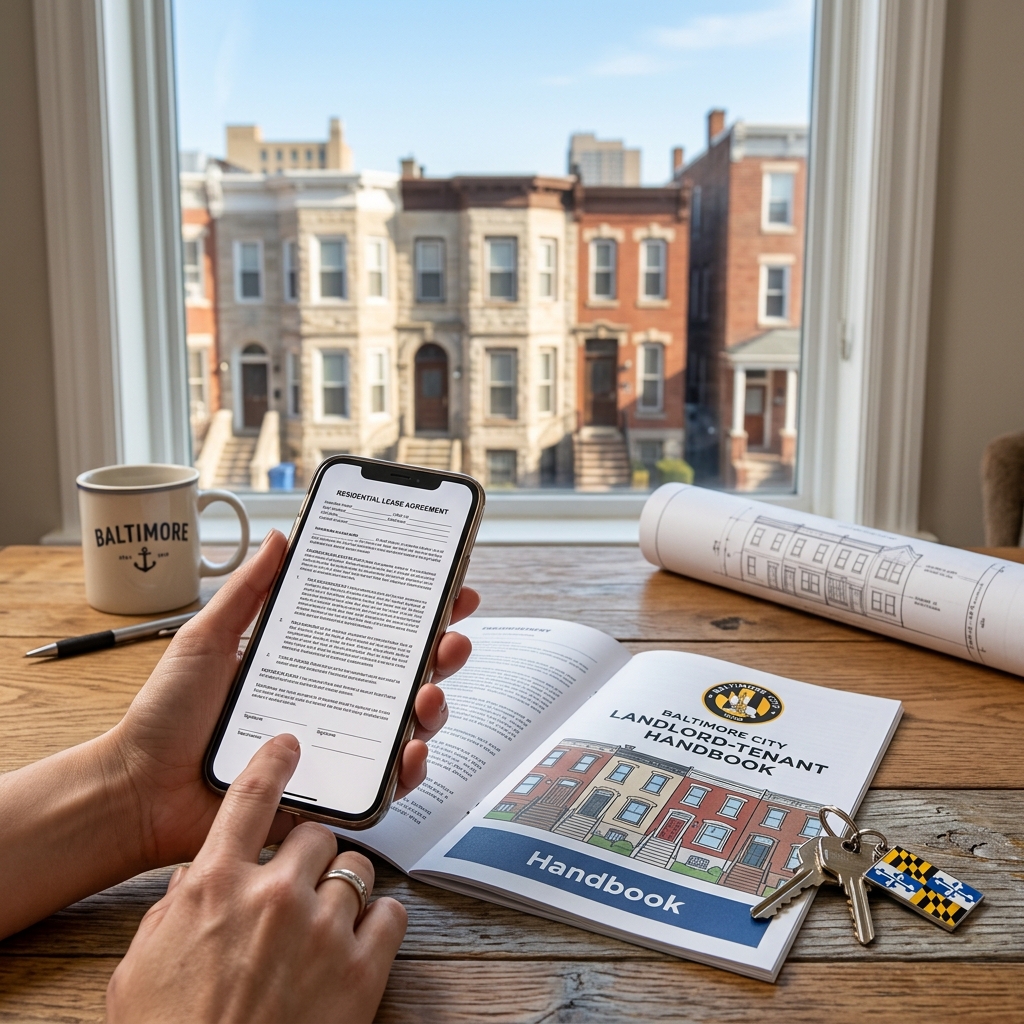
Baltimore City has a detailed set of rental and housing laws designed to protect both tenants and landlords, with a strong emphasis on safe housing, fair treatment, and clear procedures for resolving disputes.
This guide explains the core rules that apply to residential rentals in Baltimore City, including habitability standards, lease requirements, property licensing, rent escrow, and the legal eviction process.
Core Legal Framework in Baltimore City
Although Maryland has statewide landlord–tenant rules, Baltimore City adds its own local requirements that must be followed for any residential rental located within city limits.
Local laws cover issues such as the warranty of habitability, special rent escrow procedures, mandatory registration and licensing of rentals, and detailed notice rules for evictions and late fees.
- State law sets general rights and duties for residential leases and rent disputes.
- City ordinances add extra protections and procedures specific to Baltimore City.
- Housing codes establish minimum safety and maintenance standards for rental units.
Habitability: Right to a Safe and Livable Home
Every residential lease in Baltimore City, whether written or oral, includes an implied promise by the landlord that the dwelling is fit for human habitation.
This warranty of habitability is continuous; it applies not just at move-in but throughout the tenancy. If conditions become unsafe later, tenants may still pursue remedies.
Conditions That Violate Habitability Standards
A rental unit is generally considered unfit for human habitation when serious defects endanger the tenant’s life, health, or safety.
Examples of serious defects include:
- Vermin or rodent infestations
- Persistent lack of heat during cold weather
- No running water or no hot water
- No electricity or dangerous electrical problems
- Severe plumbing leaks, structural hazards, or significant mold
Under Maryland law, tenants can use rent escrow in court when these serious conditions exist and the landlord fails to fix them after proper notice.
Landlord’s Duty to Repair
When a tenant notifies the landlord of a serious defect, the landlord must make repairs within a reasonable time, using diligence and avoiding unnecessary delay.
More than 30 days is generally presumed to be an unreasonable delay for serious problems affecting habitability.
- Tenants should provide written notice describing the problem and the date it was discovered.
- Landlords must respond promptly and arrange qualified repairs, especially for issues affecting safety.
- If the landlord does not act, tenants may seek legal remedies, including rent escrow or claims for breach of the warranty of habitability.
Residential Leases: Required Information and Terms
In Baltimore City, residential leases must contain certain disclosures and follow specific rules on late fees and other charges.
Even when a lease is not in writing, many legal protections still apply, including the warranty of habitability and the requirement for a fair eviction process.
Mandatory Lease Information
City law requires each residential lease to identify who is legally responsible for the property and who may receive legal documents regarding it.
- Owner details: name, address, and telephone number of the property owner; or
- Authorized agent: name, address, and telephone number of an agent who can receive court papers on the owner’s behalf.
Including this information ensures tenants know whom to contact for repairs, emergencies, and legal disputes.
Late Fees and Rent Payment Rules
Baltimore City limits when and how landlords can charge late fees for past-due rent.
- A residential lease must state that the landlord cannot apply late fees until the rent is more than 10 days past due.
- Late fees are generally capped; state guidance notes that landlords may not charge more than 5% of the monthly rent as a late fee in rent court.
- If the tenant receives government benefits on a date later than the rent due date and provides written proof, the lease must prevent late fees until after the benefit is disbursed.
These rules protect tenants from excessive penalties and give them a short grace period to make payments before extra charges apply.
Notice to End or Renew a Tenancy
Written leases typically specify how much notice is required from tenants and landlords when ending or renewing a tenancy.
| Situation | Who Gives Notice | Typical Timing |
|---|---|---|
| Tenant ending a one-year-or-less term lease | Tenant | About 30 days before end of rental period (or longer if the lease requires it) |
| Tenant ending a month-to-month tenancy | Tenant | At least one rental period’s written notice, often around 30 days |
| Landlord ending tenancy for holding over | Landlord | Proper written notice as required by state and local law before filing in court |
| Landlord ending tenancy for breach of lease | Landlord | Typically one month’s written notice; 14 days if there is a safety threat |
Tenants should review their lease for specific notice requirements and, when in doubt, provide written notice well in advance of the intended move-out date.
Property Registration and Rental Licensing
Baltimore City requires most non-owner-occupied rental properties to be registered and licensed before they are legally rented.
The city’s Department of Housing and Community Development (DHCD) oversees the registration and licensing process, including inspections.
Which Properties Must Be Registered and Licensed?
Owners of non-owner-occupied dwellings and rooming houses must file an annual registration statement with DHCD.
- Single-family homes rented to tenants
- Multifamily buildings with one or more rental units
- Rooming or boarding houses where rooms are rented individually
Prior to renting, these properties must obtain a rental license and comply with applicable city housing codes.
Why Licensing Matters for Tenants
A current rental license indicates that the property has met basic code requirements and passed required inspections.
- Tenants can search license status through DHCD resources.
- Unlicensed properties may face enforcement actions, and in some circumstances, lack of a license can affect rent collection or legal actions.
- Licensing encourages landlords to maintain safe and habitable units consistent with the housing code.
Rent Escrow: A Tool for Serious Housing Problems
Rent escrow allows tenants to pay rent into a court-controlled account when serious defects threaten health or safety and the landlord has failed to make repairs.
Baltimore City has its own rent escrow law, similar to Maryland’s statewide process, but city residents must use the local version.
When Tenants May Use Rent Escrow
Tenants may ask the District Court to set up rent escrow when there are major problems and the landlord has not repaired them after proper notice and time.
- Serious leaks or structural hazards
- Dangerous electrical or heating issues
- Lack of essential utilities like water or electricity
- Severe infestations or other conditions that pose health risks
The tenant must continue paying rent into escrow, not withholding it entirely; the court then decides how the funds are handled and what repairs or remedies are appropriate.
Steps to Start Rent Escrow
The District Court must establish the escrow account; tenants cannot create their own informal escrow arrangement for legal protection.
- Provide written notice to the landlord describing the serious defects.
- Allow adequate time for the landlord to make repairs.
- If problems persist, file a rent escrow action in the local District Court.
- Attend the court hearing and present evidence of the conditions and prior notice.
During rent escrow proceedings, the court may reduce rent, order repairs, or even terminate the lease depending on the severity of the conditions.
Protection Against Retaliation
Maryland law prohibits landlords from retaliating against tenants who assert their rights or complain about unsafe conditions.
- Landlords may not evict, raise rent, or cut services just because a tenant complained to housing authorities or the courts about conditions.
- Joining a tenant organization or participating in legal proceedings cannot be used as a reason for adverse actions.
- If a tenant believes retaliation has occurred, they can raise this issue in court as a defense.
These protections encourage tenants to report serious housing problems without fear of losing their homes solely for asserting legal rights.
Eviction Rules and Procedural Safeguards
Landlords in Baltimore City must follow specific legal procedures before removing a tenant from a rental unit.
An eviction can occur only after a court judgment and a warrant of restitution, and the actual removal is supervised by the sheriff.
Grounds for Eviction
Common legal reasons for eviction include nonpayment of rent, holding over after a lease ends, and serious breaches of the lease.
- Nonpayment of rent: Landlords may file after rent is due and required notice of intent to file has been given.
- Holding over: Tenants remain after the lease term ends without a new agreement, and proper written notice has been provided.
- Breach of lease: Tenants violate important lease terms, and the landlord issues written notice (usually 30 days; 14 days for safety threats).
Minor or technical violations are typically insufficient to justify eviction; the breach must be serious.
Legal Eviction Process
Landlords cannot simply change locks, shut off utilities, or verbally order tenants to leave. Self-help evictions are not allowed.
- Notice of intent: Written notice is required before filing certain cases, such as nonpayment or breach of lease.
- Court filing: The landlord files an action in District Court, and the tenant receives a court summons.
- Hearing: Both parties present evidence. Tenants should attend and may raise defenses such as habitability issues or retaliation.
- Judgment: If the landlord wins, the court may enter judgment for unpaid rent and grant a warrant of restitution.
- Sheriff’s eviction: The sheriff carries out the eviction according to the warrant; tenants may stop some nonpayment evictions by paying all rent owed before the sheriff arrives.
Tenants also have limited rights to appeal, generally within a few days of the judgment, depending on the type of case.
Practical Tips for Tenants and Landlords
Understanding and following Baltimore City rental laws can help prevent disputes and protect both parties’ rights.
For Tenants
- Request a written lease and keep copies of all agreements and communications.
- Document problems with photos, dates, and written notices to the landlord.
- Check if the property is properly registered and licensed with DHCD.
- Attend all court hearings, especially for nonpayment of rent and eviction cases.
- Seek legal help if facing serious conditions, retaliation, or eviction.
For Landlords
- Ensure the property meets habitability standards before and during the tenancy.
- Register and license all non-owner-occupied rentals and comply with inspection requirements.
- Include required information in leases, such as owner or agent contact details and proper late-fee provisions.
- Respond quickly to repair requests and keep records of maintenance.
- Follow legal procedures for notices, court filings, and evictions, avoiding self-help actions.
Frequently Asked Questions
1. Does my landlord have to give me a written lease?
While oral leases are recognized, Maryland guidance encourages written leases, especially for longer tenancies or when landlords own multiple units. A written lease makes it easier to confirm rent amounts, notice periods, and rules on late fees.
2. What can I do if my rental has serious safety issues?
First, notify your landlord in writing and allow a reasonable time for repairs. If the problems remain and they endanger health or safety, you may ask the District Court to set up a rent escrow account and seek other remedies for breach of the warranty of habitability.
3. Can my landlord evict me without going to court?
No. Landlords cannot legally evict you by changing locks, shutting off utilities, or ordering you to leave without a court judgment. A lawful eviction requires a court order and a sheriff-supervised removal using a warrant of restitution.
4. Are there limits on late fees for rent?
Yes. Baltimore City requires a 10-day grace period before late fees can be applied, and state guidance limits late fees to no more than 5% of the monthly rent in rent court. Leases must include appropriate late-fee provisions consistent with these rules.
5. How do I know if my rental is licensed?
All non-owner-occupied rental properties in Baltimore City must be registered and licensed through DHCD, and tenants can check license status using city resources. If your rental is not licensed, you may contact DHCD or seek legal advice about your options.
References
- Baltimore City Rental and Housing Laws — Maryland People’s Law Library. 2024-01-10. https://www.peoples-law.org/baltimore-city-rental-and-housing-laws
- Landlord-Tenant Disputes — Office of the Attorney General of Maryland. 2023-06-15. https://oag.maryland.gov/i-need-to/landlord-tenant-disputes
- § 7-3. Information required. — City of Baltimore Law Library. 2021-04-30. https://codes.baltimorecity.gov/us/md/cities/baltimore/code/13/7-3
- Property Registration and Rental Licensing — Baltimore City Department of Housing & Community Development. 2024-10-01. https://www.baltimorecity.gov/dhcd/our-work/permit-inspections/property-registration
- Update on Baltimore City Landlord-Tenant Laws — Gordon Feinblatt LLC. 2021-05-07. https://www.gfrlaw.com/what-we-do/insights/update-baltimore-city-landlord-tenant-laws
- Top 10 Tenant’s Rights in Maryland — Public Justice Center. 2019-04-26. https://www.publicjustice.org/wp-content/uploads/2019/09/Top_10_Tenants_Rights_in_MD_4-26-19.pdf
Similar Articles








Read full bio of medha deb


