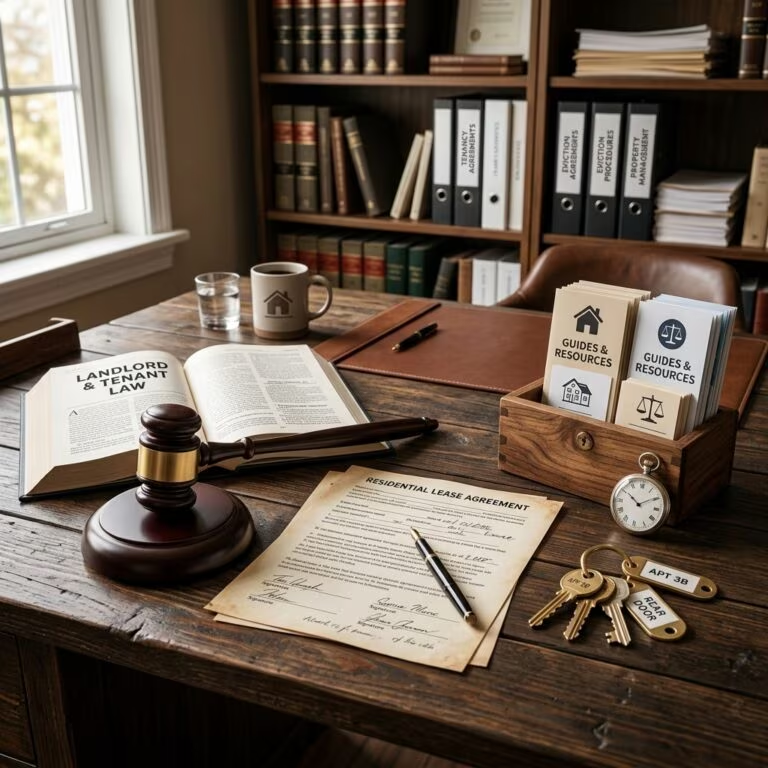
Anne Arundel County, Maryland, uses a combination of local codes and state law to regulate rental housing. These rules set minimum standards for habitability, require licenses for certain properties, protect tenants from discrimination, and outline how evictions must be handled. Understanding these requirements helps both landlords and tenants avoid disputes and stay in compliance with the law.
1. Core Rental Standards: What Makes a Home Legally Habitable?
Before a dwelling unit can be rented or occupied, it must be safe, sanitary, and suitable for human habitation. Local housing codes and state law define a baseline of features and conditions that every rental must meet.
1.1 Minimum Health and Safety Requirements
The Anne Arundel County property maintenance and housing codes set specific expectations for basic services and structural safety. Maryland’s statewide tenant protections also require that rental housing be fit for human habitation.
- Kitchen and sanitary facilities: Units must have functioning kitchen and toilet facilities, including safe drinking water and waste disposal.
- Hot and cold running water: Plumbing systems must provide hot water for bathing and cleaning, and cold water for everyday use.
- Heating and ventilation: The property must have adequate heating to maintain safe indoor temperatures and sufficient ventilation to prevent moisture and mold.
- Lighting and electrical safety: Electrical systems must be properly installed, with enough lighting for safe occupancy and no exposed or hazardous wiring.
- Fire safety: The code requires smoke alarms and other safety measures, as well as safe means of exit in case of fire.
- Structural soundness: Floors, walls, and roofs must be stable, weather-resistant, and free from serious defects.
1.2 Cleanliness and Sanitary Conditions
Local rules prohibit renting out units that are dirty or unsafe. A landlord may not lease a dwelling unless it is clean, sanitary, and in compliance with applicable county and state laws.
Examples of conditions that can violate habitability standards include:
- Persistent infestations of rodents or insects not caused by a tenant’s misuse
- Sewage backups or broken plumbing that is not promptly repaired
- Accumulations of trash that attract pests or create health risks
- Mold growth resulting from leaks or inadequate ventilation
Tenants have a duty to keep their own living space reasonably clean, but landlords remain responsible for the structural and systems issues that affect the entire building.
1.3 Typical Habitability Checklist for Landlords
While each property is unique, landlords can use a simple checklist before renting out a unit:
- Verify that all utilities (water, electric, gas, heat) are functional and safe.
- Confirm working smoke detectors and, where required, carbon monoxide alarms.
- Check for leaks, dampness, or visible mold in kitchens, bathrooms, and basements.
- Inspect doors and windows for proper locks, weatherproofing, and ease of exit.
- Ensure common areas (hallways, stairwells, laundry rooms) are clean and well lit.
2. Rental Licensing and Local Oversight
Anne Arundel County regulates certain types of rental housing through operating licenses. These licenses help the county track properties, enforce safety standards, and respond to complaints.
2.1 When a Rental License Is Required
Under county law, operators of some multi-tenant properties must obtain a license from the Department of Inspections and Permits.
- Multiple dwellings: Buildings containing several independent dwelling units rented to different households generally require a license.
- Rooming houses: Properties that rent individual rooms, often with shared kitchen or bathroom facilities, must also be licensed.
- Separate licenses: Each qualifying building needs its own license; licensing is not blanket coverage for all properties owned.
2.2 Licensing Fees and Inspections
License fees are typically based on the number of rooming or dwelling units in the building. As part of the licensing process, and sometimes on a periodic basis, county officials may inspect properties to confirm compliance with housing codes.
Landlords should expect that an inspection may review:
- Fire safety equipment and emergency exits
- Condition of plumbing, heating, and electrical systems
- Sanitary conditions in common areas and shared facilities
- Signs of overcrowding or unsafe use of space
2.3 Consequences of Operating Without a License
Operating a multiple dwelling or rooming house without the required license can lead to enforcement actions, including fines and orders to correct violations.
In addition, unlicensed operation can complicate court proceedings if a landlord files for eviction or rent collection. Judges may consider whether the landlord has followed licensing requirements when evaluating the case.
3. Fair Housing Protections in Anne Arundel County
Fair housing rules prohibit discrimination in renting or selling homes. Anne Arundel County applies both federal and state protections and adds its own list of protected characteristics.
3.1 Protected Classes Under Local Law
It is unlawful under county law to discriminate in housing based on the following characteristics.
| Protected Category | Examples of Coverage |
|---|---|
| Race and color | Refusing to rent to applicants because of their race or skin color |
| Religion and creed | Denying housing based on religious beliefs or practices |
| National origin, ancestry, citizenship | Discriminating against people from particular countries or ethnic backgrounds |
| Sex, sexual orientation, gender identity or expression | Unequal treatment based on gender, LGBTQ+ status, or gender expression |
| Familial and marital status | Refusing to rent to families with children or to unmarried couples |
| Disability | Failing to provide reasonable accommodations or denying accessible units |
| Age | Setting arbitrary age limits for renting, except in lawful senior housing |
| Occupation and source of income | Rejecting tenants because they rely on vouchers or specific income sources |
3.2 Examples of Unlawful Housing Discrimination
Discrimination can appear at any stage of the housing process, from advertising to lease enforcement.
- Advertising units in ways that discourage certain groups from applying, such as “no children” or “Christians preferred.”
- Charging higher rent, security deposits, or fees to applicants based on protected characteristics.
- Refusing reasonable accommodations for tenants with disabilities, such as allowing service animals or making minor accessibility modifications where required.
- Harassing or retaliating against tenants who assert their fair housing rights or file complaints.
3.3 Where to Report Suspected Discrimination
Tenants or homebuyers who believe they have experienced unlawful discrimination in Anne Arundel County can contact the county’s Human Relations Commission for help.
They may also seek assistance from statewide or federal agencies, such as the Maryland Commission on Civil Rights and the U.S. Department of Housing and Urban Development, which enforce broader fair housing laws.
4. Eviction Rules and Recent Local Changes
Eviction is tightly regulated under Maryland law and local ordinances. Anne Arundel County has adopted new procedures that affect notice periods and how tenant belongings are treated after an eviction.[10]
4.1 Statewide Framework for Evictions
Under Maryland law, a landlord must file a case in District Court to evict a tenant; self-help evictions are illegal. The court determines whether the landlord has legal grounds, such as nonpayment of rent, breach of lease, or holding over after the lease ends.
- Court filing: The landlord starts the process by filing the appropriate complaint in District Court.
- Hearing: Both sides may present evidence and arguments to a judge.
- Judgment and warrant: If the landlord wins, the court may issue a judgment and a warrant of restitution authorizing the sheriff to carry out the eviction.
4.2 Anne Arundel County’s Eviction Notice Requirements
Recent changes in Anne Arundel County’s local law expanded the notice period that tenants receive before an eviction is executed.[10]
- Notice period: Landlords must provide at least 14 days’ notice before the eviction is carried out, an increase from the previous 6-day notice requirement.
- Purpose of notice: This extended period gives tenants more time to prepare, seek assistance, move belongings, or negotiate with the landlord.
4.3 Treatment of Tenant Belongings After Eviction
The county has also changed how tenant possessions are handled once the eviction is complete. The practice of immediately placing belongings on the street has been ended.[10]
- No street placement: Tenant property may no longer be routinely moved to the curb as part of the eviction.[10]
- Locked premises: After the eviction, the rental unit is locked, and items left inside may be treated as abandoned under local rules.
- Waiting period: Landlords are required to wait a short period (for example, 24 hours) before disposing of or selling remaining property, but tenants ordinarily cannot re-enter to retrieve it during that time.
These provisions have raised legal questions because similar rules in another Maryland jurisdiction have been challenged on constitutional grounds.
4.4 Legal Assistance and Self-Help Resources
Tenants facing eviction in Anne Arundel County can access multiple free or low-cost resources.
- District Court Help Centers offer in-person assistance with landlord–tenant cases.
- Maryland Court Self-Help Centers provide phone and online chat support for civil legal matters statewide.
- Local organizations and legal aid providers can help with advice, representation, or mediation in housing disputes.
5. Practical Tips for Landlords and Tenants
Knowing the law is only part of maintaining a stable rental relationship. Clear communication, thorough documentation, and respect for rights on both sides can prevent many problems.
5.1 Best Practices for Landlords
- Use detailed written leases: Include names of the parties, property description, rent amount and due dates, lease term, security deposit, maintenance responsibilities, and rules for conduct.
- Follow security deposit limits: Under Maryland law, security deposits are capped (commonly at no more than two months’ rent) and must be handled according to state rules.
- Respond promptly to repairs: Address maintenance requests quickly, especially those involving heat, water, or safety, to maintain habitability.
- Respect privacy: Provide reasonable notice before entering a tenant’s home, except in emergencies such as fires or major leaks.
- Document interactions: Keep records of rent payments, notices, repair requests, and inspections to support your position if disputes arise.
5.2 Best Practices for Tenants
- Read the lease carefully: Understand rent obligations, rules on guests, pets, and noise, and procedures for requesting repairs.
- Pay rent on time: Late payments can quickly lead to court actions; tenants should communicate early if they anticipate problems.
- Report problems in writing: Notify the landlord promptly about serious issues affecting health or safety and keep copies of emails or letters.
- Maintain cleanliness: Keep the unit reasonably clean and avoid damage beyond normal wear and tear.
- Seek help early in eviction situations: Contact legal aid or court help centers as soon as a summons or notice is received.
5.3 Local Housing Resource Portal
Anne Arundel County operates a housing resource portal that consolidates information about rental licensing, unsafe condition reporting, and links to legal and mediation services.
Both landlords and tenants can use this portal to:
- Check licensing requirements and forms for rental properties
- Report suspected housing code violations or unsafe conditions
- Locate assistance for eviction avoidance or legal representation
6. Frequently Asked Questions (FAQs)
6.1 Does every landlord in Anne Arundel County need a rental license?
Not every rental requires a license, but operators of multiple dwellings and rooming houses generally must obtain one from the Department of Inspections and Permits. Each qualifying building needs its own license, and fees are typically based on the number of units.
6.2 Can a landlord rent out a unit that needs repairs?
A landlord may not legally rent a dwelling that is unfit for human occupancy or out of compliance with property maintenance and housing codes. Some minor cosmetic issues are acceptable, but serious problems with heat, water, structural safety, or sanitation must be addressed before renting.
6.3 What should a tenant do if they believe they’re facing discrimination?
Tenants who suspect discrimination based on protected characteristics—such as race, disability, familial status, or source of income—can file a complaint with the Anne Arundel County Human Relations Commission and may also contact state or federal fair housing agencies.
6.4 How much notice must a landlord give before an eviction in Anne Arundel County?
Under local law, landlords must now provide at least 14 days’ notice before an eviction is executed, an increase from the prior 6-day period. This notice requirement is separate from the court process, which is governed by Maryland state law.
6.5 Are tenant belongings still placed on the curb during evictions?
No. Anne Arundel County has ended the practice of immediately moving tenant belongings to the curb during an eviction. Property left in the locked unit may be handled as abandoned after a short waiting period, although legal debates continue about this approach.[10]
6.6 Where can renters find free help with eviction or housing issues?
Renters can seek assistance from District Court Help Centers, the Maryland Courts Self-Help Center, local legal aid organizations, and county housing resources. These services offer information, brief legal advice, and sometimes representation for landlord–tenant disputes.
References
- Anne Arundel County Rental and Housing Laws — Maryland People’s Law Library. 2024-05-01. https://www.peoples-law.org/anne-arundel-county-rental-and-housing-laws
- Fair Housing — Anne Arundel County Government. 2023-03-10. https://www.aacounty.org/human-relations-commission/fair-housing
- Maryland Tenants’ Bill of Rights — Maryland Department of Housing and Community Development. 2024-01-15. https://dhcd.maryland.gov/Tenant-Landlord-Affairs/Documents/Tenant-Bill-of-Rights-V2.pdf
- Anne Arundel County Rental License Information and Housing Resource Portal — Anne Arundel County Government. 2023-11-20. https://www.aacounty.org/housing-resource-portal
- Anne Arundel enacts eviction law similar to one struck in Baltimore — The Daily Record. 2026-07-09. https://thedailyrecord.com/2026/07/09/anne-arundel-eviction-law-baltimore/
- Resources for Renters — Arundel Community Development Services. 2023-09-01. https://acdsinc.org/operation-eviction-intervention-resources-for-renters/
- How to Build Solid Landlord-Tenant Relationships in Anne Arundel County, MD — Mainstay Management. 2022-08-15. https://www.mainstaymanagement.com/solid-landlord-tenant-relationships-anne-arundel-county-md/